

West Virginia Van Crash Injuries
When Someone Says You Were Partly to Blame
This page explains West Virginia's modified comparative fault rule in plain language, and how it can affect an injury claim after a van crash.
Published November 4, 2026
Searching for modified comparative fault West Virginia van crash answers? This page explains the rule in plain words. If you were hurt and someone says you were partly to blame, this rule matters a lot. It can decide whether your recovery is reduced or cut off.
What Does Comparative Fault Mean in a West Virginia Van Crash?
Comparative fault divides blame among everyone who helped cause a crash, using percentages. Under W. Va. Code § 55-7-13a, comparative fault is the degree to which a person’s fault was a proximate cause of an alleged personal injury or death or damage to property, expressed as a percentage, and recovery is predicated on each person’s percentage of fault. That section says recovery is based on each person’s percentage of fault.
Fault can be shared by a van driver, another motorist, a pedestrian, or the injured person. Riding as a passenger does not automatically mean a person bears no fault. Each crash turns on its own facts.
“Modified” means the rule has a limit. Generally, an injured person who shares some blame may still recover, but the amount can shrink. In some situations, the share of blame can block recovery entirely.
Serious injuries raise the stakes. Brain and spinal cord injuries often mean long treatment and lost work. You can read more about these claims on our catastrophic injury claims page.
If you were hurt in a van crash and told you were partly to blame, you don't have to sort out that question alone. You can request a free case review with the firm. Talk it through with Big Bubba — the first case review is free, confidential, and carries no obligation.
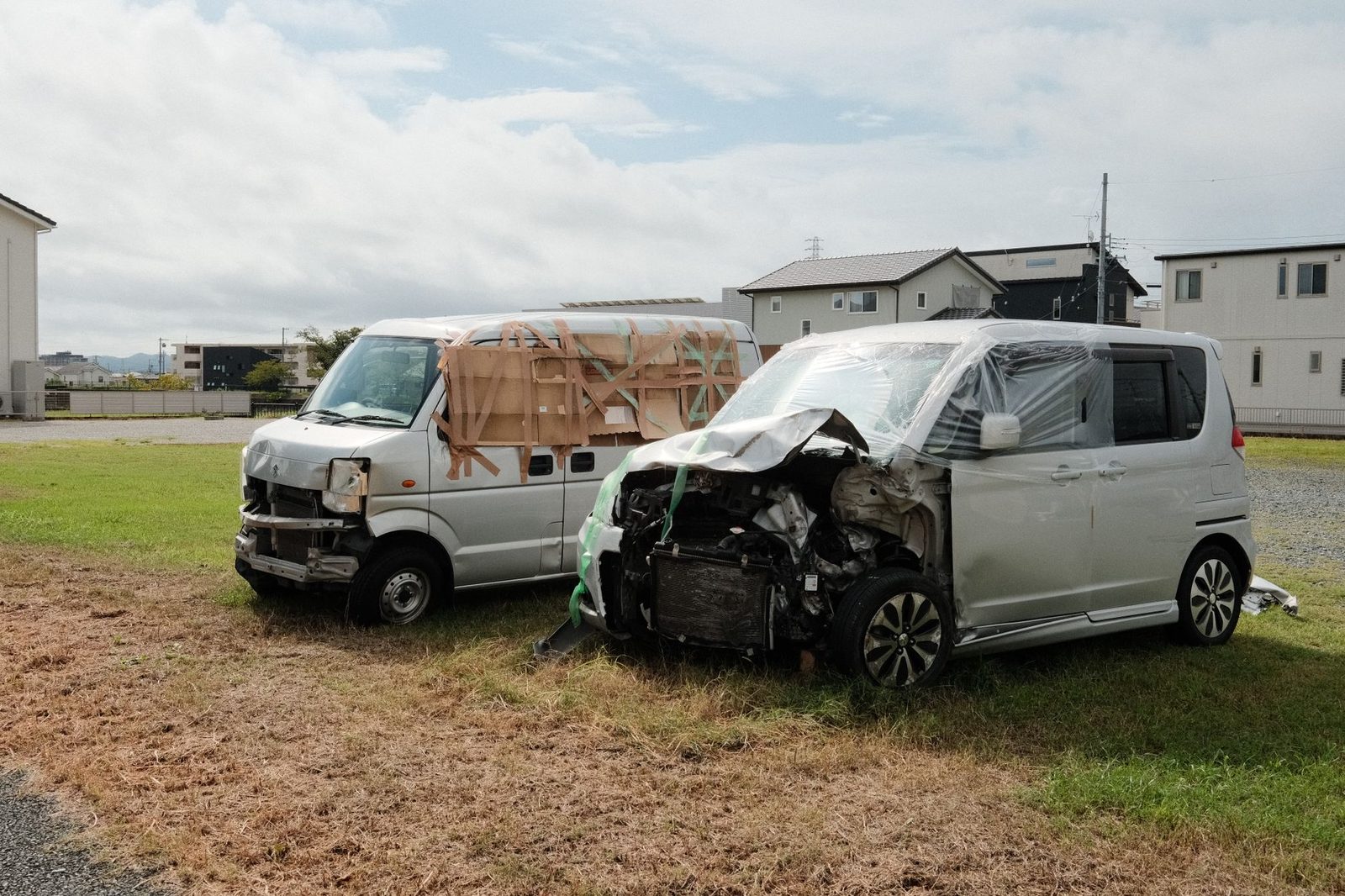
How does West Virginia’s modified comparative fault rule reduce or eliminate recovery when the injured person is partly to blame for a van crash?
In West Virginia, being partly at fault generally reduces your recovery by your percentage of fault. Your fault generally bars recovery only when it is greater than the combined fault of everyone else responsible. That comes from W. Va. Code § 55-7-13c.
Here is a simple example with made-up numbers. Suppose total damages are set at 100 points, and the injured passenger is assigned 30 percent of the fault. The recovery is reduced by 30 percent, leaving 70 points.
The bar works differently. Suppose you are assigned 51 percent and the other parties together carry 49 percent. Your fault is greater than theirs, so recovery may be eliminated.
The line falls at the comparison, not at a fixed number. Under W. Va. Code § 55-7-13c, any fault chargeable to the plaintiff does not bar recovery unless the plaintiff’s fault is greater than the combined fault of all other persons responsible for the total damages, and if the plaintiff’s fault is less than that combined fault, recovery is reduced in proportion to the plaintiff’s degree of fault. Their recovery is reduced in proportion to their fault.
How Is Fault Divided When More Than One Driver Is Involved?
When several people share blame, each person’s percentage counts, and the total must equal 100 percent. W. Va. Code § 55-7-13a sets that rule for a particular incident or injury: the total must equal either zero percent or one hundred percent.
Take a crash with three drivers. The van driver might be assigned 40 percent, another motorist 35 percent, and the injured person 25 percent. The injured person’s share is smaller than the others’ combined share, so the reduction would apply rather than a bar.
Defendants generally pay only their own share of compensatory damages, not each other’s. Under W. Va. Code § 55-7-13a, the liability of each person is allocated to that person in direct proportion to that person’s percentage of fault. See W. Va. Code § 55-7-13c.
Some parties may not be in the lawsuit at all. Under W. Va. Code § 55-7-13d, fault of a nonparty is considered if the plaintiff entered into a settlement agreement with the nonparty or if a defending party gives notice no later than one hundred eighty days after service of process upon that defendant that the nonparty was wholly or partially at fault, with the notice filed with the court and served upon all parties to the action designating the nonparty. In actions involving fault of more than one person, unless all parties agree otherwise, the court must instruct the jury to answer special questions about the percentage of fault allocated to each party and nonparty; if there is no jury, the court must make findings indicating those percentages instead.
Which Van Crash Facts Often Affect the Fault Percentage?
The facts that decide fault usually center on what each driver did and whether they acted with reasonable care. The type of van and how it was used can change the questions that come up.
Passenger vans, shuttle or rideshare vans, and work vans can each raise different issues. For some commercial vehicles that require a commercial driver’s license, W. Va. Code § 55-7-32 defines an “employer defendant,” but that section does not cover vehicles primarily engaged in transporting passengers. That term can include the vehicle’s owner, the operator’s employer, and an entity with legal control over the vehicle or its operator.
Common disputed facts include lane position, speed, signaling, following distance, visibility, and weather or road conditions. For work vans carrying goods, cargo securement may matter. Federal rules require each commercial motor vehicle transporting cargo on public roads to be loaded and secured so the cargo does not leak, spill, blow, or fall from the vehicle, under 49 C.F.R. § 393.100.
Inspection records may also be relevant. Federal rules require periodic inspection of commercial motor vehicles, as set out in 49 C.F.R. § 396.17.
What Evidence Is Used to Decide Who Was at Fault?
Fault is decided from the full record, not from one document. The crash report is often the first place people look. Its conclusions may be useful, but they are not always the final word.
Other evidence may also be relevant. These include witness statements, photographs, dashcam or vehicle data, scene measurements, and medical records that show how the injuries happened.
For a commercial van, maintenance logs, inspection records, and driver schedules may also matter. Whether any item helps depends on the facts of the crash.
Keep your own notes too. Write down what you remember soon after the crash, and save any photos you took. Early details often fade over time.
Can an Insurer Dispute Fault in a Van Crash Claim?
Yes. Some insurers may dispute a claim or assign a higher share of fault to the injured person. An insurer’s fault number is not a court ruling. It is one side’s position in a negotiation.
Disputes are often resolved through negotiation. Some are decided in court, where a judge or jury applies the rule in the statute.
Protect your position by keeping records. Save the crash report, photos, medical bills, treatment notes, and letters from any insurer. Write down the date and summary of each phone call.
Do not sign a statement about fault without first understanding what it says. Ask questions before you answer questions about how the crash happened.
Not sure what your next step is?
Talk it through with Big Bubba — the first case review is free, confidential, and carries no obligation.

Reach Out to the Firm About Your Van Crash
If you are reading this after a van crash, you may be sore, missing work, and hearing that you were partly to blame. You may also be worried about a family member’s recovery. That is a lot to carry.
The question of how much fault applies to you, and whether the rule could limit what you recover, can feel impossible to answer on your own. The firm handles car and commercial vehicle accident claims across West Virginia, and that is a good place to start.
To talk through your situation, request a free case review with the firm at bigbubba.com/contact. The review is confidential and comes with no obligation to continue.