
Car and Truck Accident Claims | West Virginia
Recorded Statement After a Crash in West Virginia: Know What to Say Before You Speak
An insurance adjuster may ask to record your account soon after a crash. Here is what to know before you answer, and how the firm can help you prepare.
Published October 25, 2026
The Short Answer: You Do Not Have to Give a Recorded Statement Before You Understand Your Injuries
You don’t have to answer an adjuster’s questions on the spot. You can ask for time before you give a recorded statement, and anything you say early can be used later in the claim.
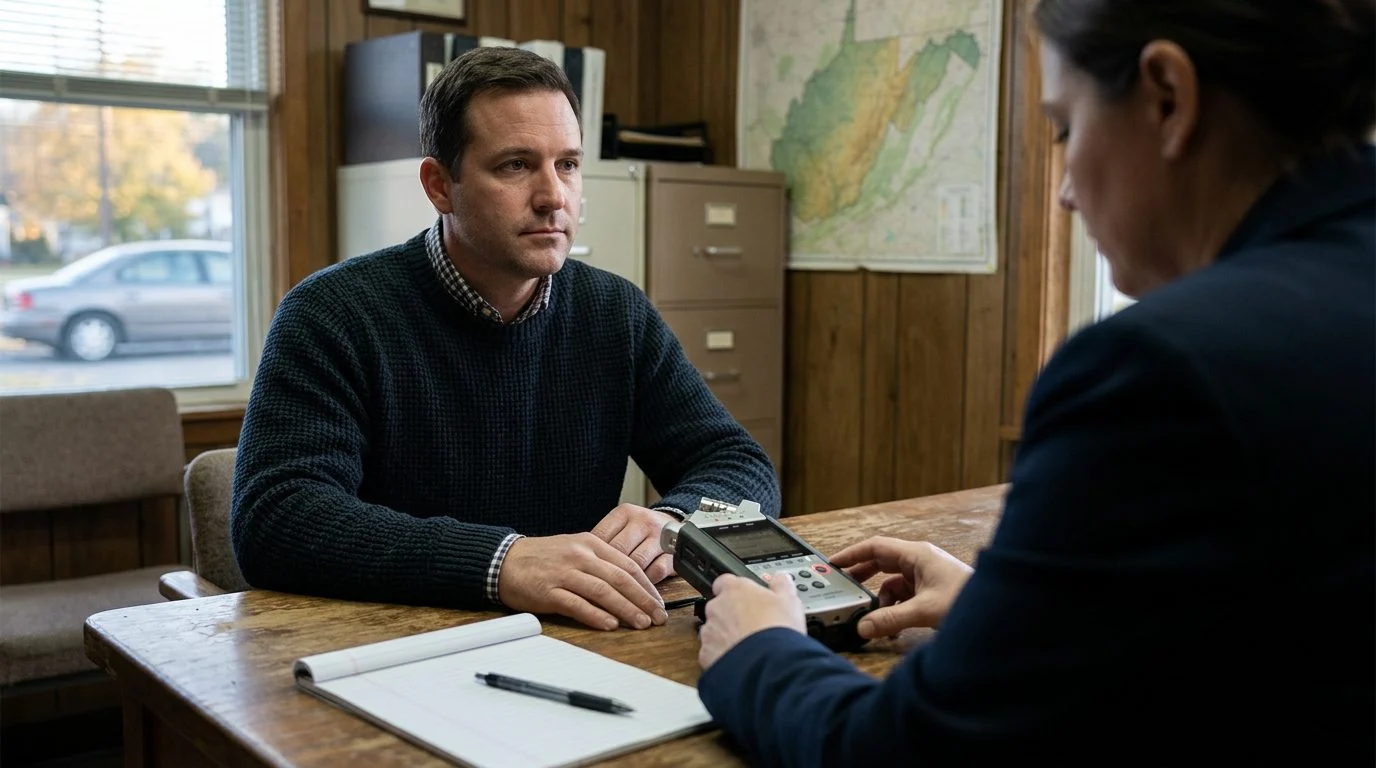
A recorded statement is a phone or video interview that the adjuster records. The adjuster may ask how the crash happened, where you were headed, how you feel, and what hurts. The recording can be kept in the insurer’s claim file.
The request is just that, a request. You can say you need more time, and you can ask that any questions be sent in writing.
West Virginia law limits some early contact too. Under W. Va. Code § 55-7-11a, for twenty days after a personal injury, no one may try to obtain a statement for use in a settlement. That rule applies when the injured person is an inpatient in any hospital or is partially or totally unable to engage in their usual trade, profession or occupation.
If an adjuster has called while your injuries are still being evaluated, reach out for a free case review before you decide what to say. Talk it through with Big Bubba — the first case review is free, confidential, and carries no obligation.

Why Insurance Adjusters Ask for Recorded Statements
Adjusters ask for recorded statements to gather information the insurer uses to evaluate a claim. The request is a normal part of an adjuster’s work, but the answers go into the insurer’s file.
Adjusters commonly ask about the time and place of the crash, the lanes and speeds involved, and who was in each vehicle. They also ask about your injuries and what you can no longer do at home or at work. Each answer is recorded in your own voice.
Keep the tone in mind. An adjuster can sound friendly and brief. The insurer’s interests, though, are not the same as yours, even when the call feels routine.
West Virginia gives injured people a specific route when they believe an insurer acted unfairly. Under W. Va. Code § 33-11-4a, a third-party claimant may not bring a private cause of action or any other action against any person for an unfair claims settlement practice. The sole remedy is an administrative complaint filed with the Commissioner. In plain terms, that complaint goes to the state regulator, not to a lawsuit against the adjuster.
How an Early Recorded Statement Can Be Used Later
Words said early can be compared later with medical records, later accounts, and the claim itself. A statement can be read as a fact about your injury long after the call ends.
A short answer such as “I’m fine” or “I’m not hurting much” can be used later. This can happen even when symptoms appear after the call. Pain and confusion often change over days and weeks, so an early answer may not match a later diagnosis.
Fault can matter too. Under W. Va. Code § 55-7-13c, a plaintiff’s fault does not bar recovery unless it is greater than the combined fault of all other persons. If it is less, recovery is reduced in proportion to the plaintiff’s degree of fault. Early descriptions of how the crash happened can become part of that fault debate.
If a statement was obtained in violation of the twenty-day rule, the law gives the injured person a way to respond. Any settlement, release of liability, or statement obtained in violation of this section may be disavowed by the injured person at any time within one hundred eighty days from the date of the personal injury, as set out in W. Va. Code § 55-7-11a. Disavowal is done by a written statement sent to the person who broke the rule.
Why Injury Questions Matter Most When Injuries Are Catastrophic
For catastrophic injuries, early answers about your condition may be incomplete, and that can matter later. The firm handles catastrophic injuries, traumatic brain injury, and spinal cord injury cases in West Virginia.
Some brain injuries cause symptoms that show up days after a crash rather than right away. A person who says they feel fine on the first call may describe things differently after more testing. Memory, focus, and mood can change as the picture develops.
A spinal cord injury may still be under evaluation early on. Early descriptions of how well a person can move, feel, or work may change as tests come back.
The practical point is simple. Describing an injury as minor on a recorded line can later be read as a full account. Let the medical picture develop before you give a detailed account of your injuries.
Your Own Policy and the Other Driver’s Insurer Are Different Questions
The other driver’s insurer and your own insurer can ask questions for different reasons. Treat each call on its own terms.
The other driver’s insurer is evaluating a claim made against its own policyholder. Your own insurer may ask about the crash under the terms of your own policy.
Your own policy may also include uninsured or underinsured motorist coverage. Under W. Va. Code § 33-6-31, a policy must provide an option to pay the insured what they are legally entitled to recover from the owner or operator of an uninsured or underinsured motor vehicle. W. Va. Code § 33-6-31 reads: “unless it contains an endorsement or provisions undertaking to pay the insured all sums which he or she is legally entitled to recover as damages from the owner or operator of an uninsured motor vehicle, within limits which shall be no less than the requirements of section two, article four, chapter seventeen-d of this code, as amended from time to time: Provided, That such policy or contract shall provide an option to the insured with appropriately adjusted premiums to pay the insured all sums which he or she shall be legally entitled to recover as damages from the owner or operator of an uninsured motor vehicle up to an amount of $100,000 because of bodily injury to or death of one person.”
Questions about which policies apply can be detailed, and the answers depend on the facts. Coverage questions and fault questions are different, so keep answers short. Say only what you know, and ask what each question is for before you answer it.
How to Decline or Postpone a Recorded Statement
You can decline or postpone a recorded statement by saying so plainly and asking for the request in writing. Clear words work best.
Try phrases like these:
- “I’m not ready to give a recorded statement today.”
- “I need time to review the claim before I answer questions.”
- “I’m still receiving medical care, and I can’t yet describe the full extent of my injuries.”
- “Please send your request in writing, with the questions you want answered.”
Keep a simple written record. Note the caller’s name, the company, the claim number, the date and time, and what they asked for.
If a call feels rushed, you can end it and call back when you’re ready. These steps don’t end the request, but they give you room to think before you speak.
Not sure what your next step is?
Talk it through with Big Bubba — the first case review is free, confidential, and carries no obligation.
Families Facing a Wrongful Death Claim Also Get Recorded Statement Requests
Families of someone killed in a crash may also be asked for a recorded statement. The questions can cover that person’s injuries, condition, or final hours.
The same caution applies. A family member’s words can be used in the claim, so take time before you answer detailed questions.
Wrongful death claims follow their own rules. Under W. Va. Code § 55-7-6, the action must be brought by the personal representative of the deceased person. It must be commenced within two years after the death, subject to the provisions of section eighteen, article two, chapter fifty-five. W. Va. Code § 55-7-6 reads: “The provisions of this section shall not apply to actions brought for the death of any person occurring prior to July 1, 1988.”
Under W. Va. Code § 55-7-6, a jury’s verdict must include the damages it lists, though damages are not limited to that list. Those categories include sorrow, mental anguish, and solace, and reasonably expected loss of income and services. They also include care and treatment expenses and reasonable funeral expenses. The timing of a statement matters for family members too.
If an Adjuster Has Already Called You, Here Is Where to Start
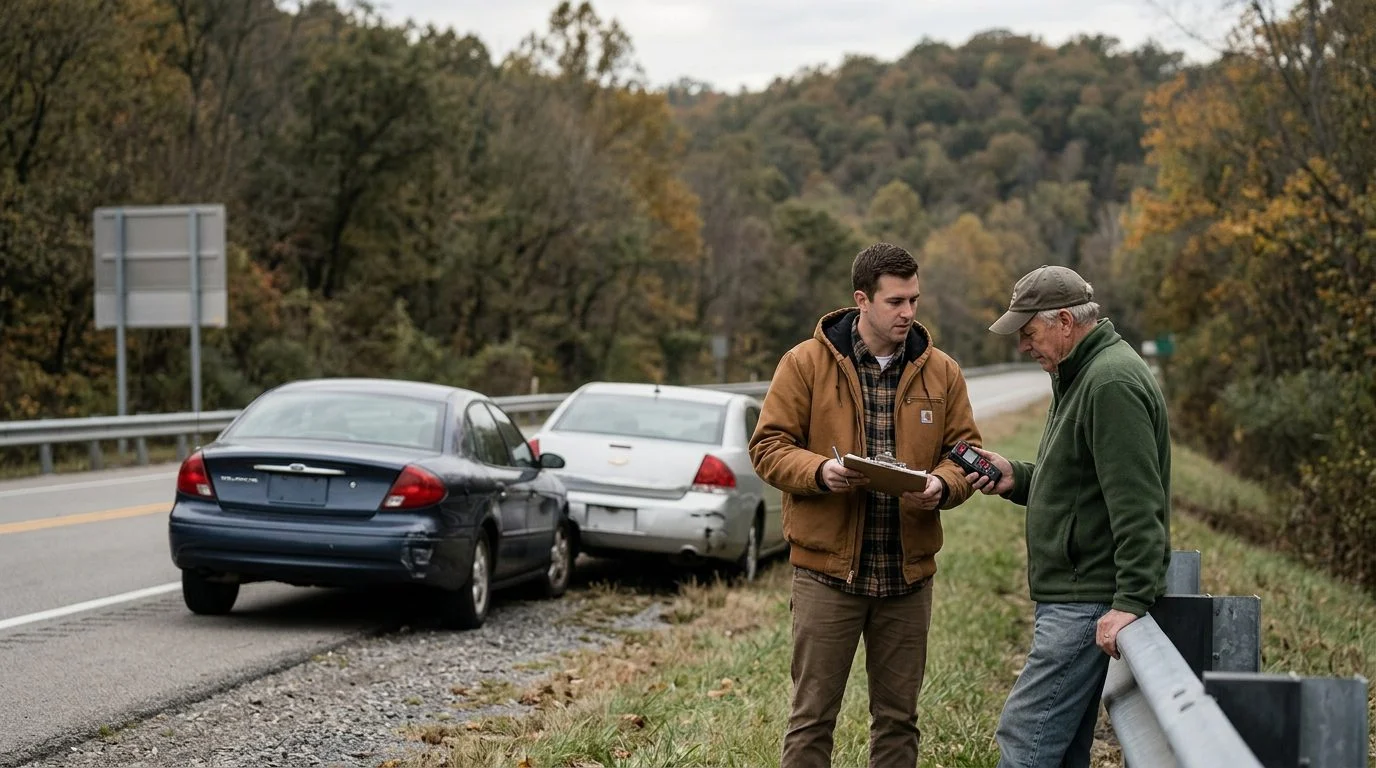
If an adjuster has already called, you can pause before answering. Start by asking for the request in writing, then decide what you are ready to say.
The firm handles car accidents, truck accidents, commercial vehicle accidents, catastrophic injuries, traumatic brain injury, spinal cord injury, and wrongful death. We serve injured people and families across West Virginia, including Charleston, Huntington, and Morgantown.
If an adjuster is asking for a recorded statement while your injuries are still being evaluated, you can reach out for a free case review before you decide what to say. Request a free case review
Common Questions
Do I have to answer an adjuster’s questions right away?
You can ask for time. You can also ask for the questions in writing before you respond.
Can an early recorded statement be used later?
It can. Early words may be compared with later medical records and accounts in the claim.
Related practice areas
- Glasgow Coma Scale Score After a Crash in West Virginia