
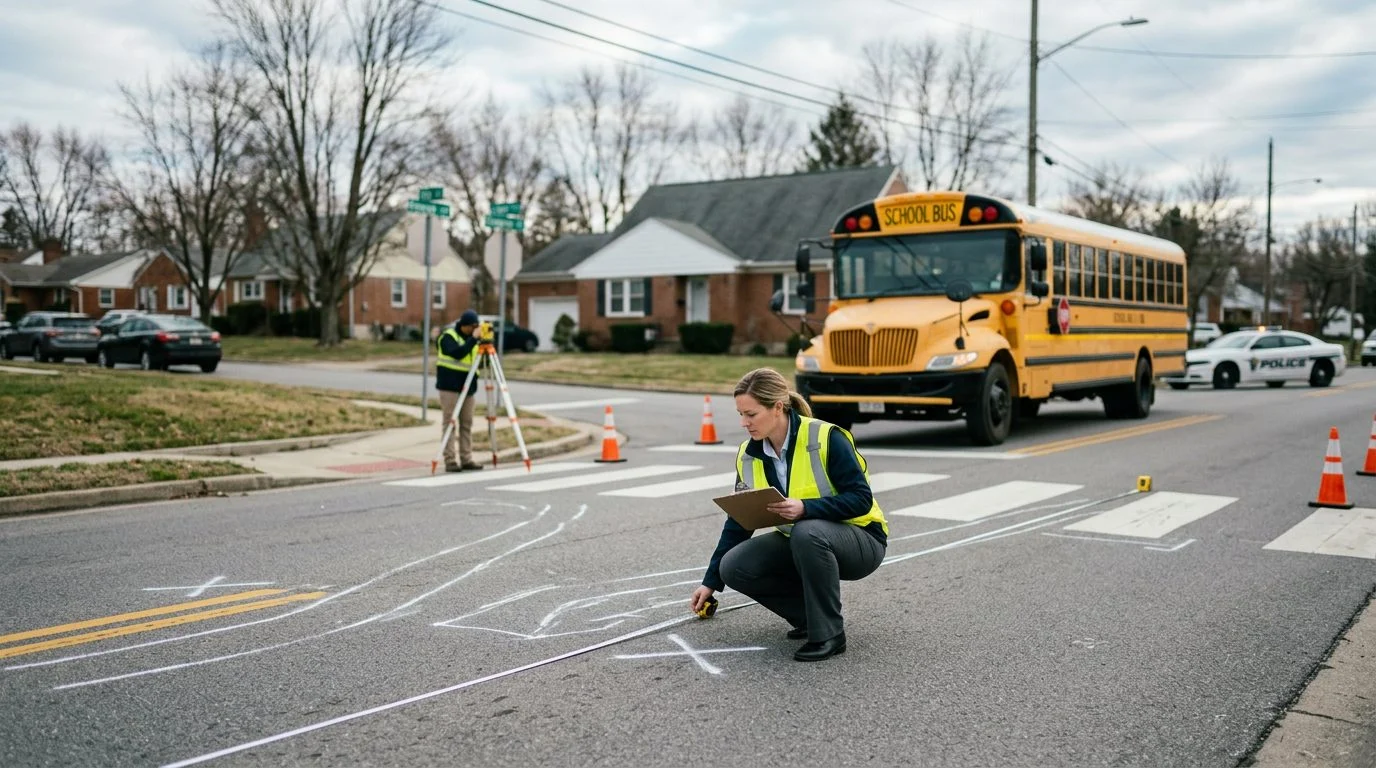
West Virginia school bus accident claims
Hurt in a School Bus Crash? Talk to Our Firm About Your Case
We represent students, passengers, and families across West Virginia after school bus collisions, including serious injuries and wrongful death. Reach out to start a free case review.
Published November 6, 2026
If a school bus or commercial bus crash hurt you or someone you love, a West Virginia injury claim may be available. This page explains what these claims cover, who may be responsible, which deadlines can apply, and how the firm can help you decide your next step.
What a School Bus or Commercial Bus Crash Injury Claim Covers
A bus crash injury claim is a legal claim for physical, emotional, and financial harm. The harm comes from a crash involving a school bus, a charter or motorcoach, or another commercial passenger bus.
These claims may be brought by:
- Injured passengers
- Pedestrians and occupants of other vehicles hurt in the crash
- Families in wrongful death cases, when a crash causes a death
Injuries in these crashes can include traumatic brain injury, spinal cord injury, broken bones, and other catastrophic injuries. The losses a claim may address can include medical treatment, rehabilitation, lost income, and the effect on daily life. Which losses apply depends on the facts.
For wrongful death, the West Virginia wrongful death statute says the claim is brought by the decedent’s personal representative. The statute also provides that the jury’s verdict shall include, but may not be limited to, damages for sorrow and mental anguish and reasonable funeral expenses.
Not sure what your next step is?
Talk it through with Big Bubba — the first case review is free, confidential, and carries no obligation.
Who May Be Responsible After a Bus Crash
More than one party may be responsible after a bus crash. The right parties depend on who controlled the bus and how the crash happened.
Parties that may be involved include:
- The bus driver
- The school district or company that operates the bus
- A contracted transportation company
- A maintenance provider
- A manufacturer, if a defect played a role
- Another driver, if that driver was at fault
Common fault questions include driver fatigue or distraction, speed, mechanical failure, poor maintenance, inadequate training, and weather or road conditions. Records often answer those questions. Federal driver qualification file rules require motor carriers to keep records for each driver they employ.
In a truck or commercial vehicle crash, the details of how a company hired and checked its driver may be one of several things worth looking into, depending on the facts.
West Virginia also divides fault by percentage. Under the state fault allocation statute, an injured person’s own fault generally does not bar recovery unless it is greater than the combined fault of everyone else. Any recovery is reduced by the injured person’s share. If another driver was at fault, that driver’s insurer may become involved. Some insurers may dispute a claim.
Deadlines for Bus Crash Injury Claims
West Virginia generally allows two years to file a personal injury lawsuit, and exceptions may apply. The state personal injury time limit sets this general rule.
Wrongful death claims have their own deadline. Under the wrongful death statute, an action generally must start within two years after the death. W. Va. Code § 55-7-6 reads: “The provisions of this section shall not apply to actions brought for the death of any person occurring prior to July 1, 1988.”
Claims against a public body, such as a school board, may follow different rules. The political subdivision time limit statute generally sets a two-year period. It also includes a special rule for a child under ten at the time of injury. Under W. Va. Code § 29-12a-6, an action against a political subdivision brought by or on behalf of a minor who was under the age of ten at the time of the injury shall be commenced within two years after the cause of action arose or after the injury, death or loss was discovered or reasonably should have been discovered, whichever last occurs, or prior to the minor’s twelfth birthday, whichever provides the longer period.
Records also have time limits. Federal rules generally require a motor carrier to keep a periodic inspection report for fourteen months from the inspection date, as the federal inspection recordkeeping rule states. After that period, records may no longer be on file. Reaching out early gives the firm time to check which deadlines may apply to your situation.
How a Bus Crash Injury Claim Moves Forward
A bus crash claim typically starts with a free case review, followed by records requests and steps to preserve evidence. The review is a confidential first conversation, and it carries no obligation to continue.
- Free case review. You tell the firm what happened, including the date, the place, and your injuries.
- Fact review. The firm looks at the crash, the injuries, and the parties involved. It then identifies which records to request.
- Preservation and records requests. The firm may send letters asking that evidence be kept. It may request crash reports, inspection and maintenance records, driver files, and medical records.
- Medical and loss review. The firm works with medical providers to review your losses. This includes future care needs where they apply.
- Negotiation or a lawsuit. Depending on the facts and the parties, the claim may move toward talks with insurers or a court filing.
Each stage can take a different amount of time. The length depends on the injuries, the number of parties, and the records. No fixed timeline can be promised.
How the Firm Handles Bus Crash Claims
The firm handles car accident, truck accident, commercial vehicle, catastrophic injury, traumatic brain injury, spinal cord injury, and wrongful death claims across West Virginia. The firm explains each step in plain language and keeps injured people and families updated.
A team of support staff helps gather records and keep the process organized. Families with a wrongful death claim can ask how damages may be divided.
We serve injury victims in Charleston, Huntington, Morgantown, Wheeling, Martinsburg, Parkersburg, Beckley, Clarksburg, Fairmont, and Weirton. The free case review is an offer. It gives you a chance to explain your situation before you decide anything.
Frequently Asked Questions About Bus Crash Injury Claims
Can a passenger on a school bus bring a claim?
Passengers may have a claim, depending on the facts. The facts include who was at fault and how the crash happened.
What if the bus driver worked for a contractor?
The contractor, the school district, or both may be possible parties. It depends on the facts.
Can an insurer dispute my claim?
Some insurers may dispute a claim. Talking with the firm early can help you understand your options.
Does a child’s claim have a different deadline?
Claims against a public body may follow different time limits. A child under ten may have a longer period under state law.
What should I do first after a bus crash?
Get medical care. Keep records of your treatment and the details of the crash.
Not sure what your next step is?
Talk it through with Big Bubba — the first case review is free, confidential, and carries no obligation.

What to Do First After a Bus Crash
Get medical care first, even if your injuries seem minor. Write down the date, time, and location of the crash. Note the bus number if you know it, and the names of anyone who saw it.
Keep records of medical visits, bills, and any letters from insurers. West Virginia law limits settlement talks in the first twenty days after an injury in some situations. The injury settlement timing statute addresses this. Take care before you sign anything or give a recorded statement.
If a school bus or commercial bus crash has left you or someone you love seriously hurt, tell us what happened. We’ll review the facts with you in a free case review and explain the options that may apply.