
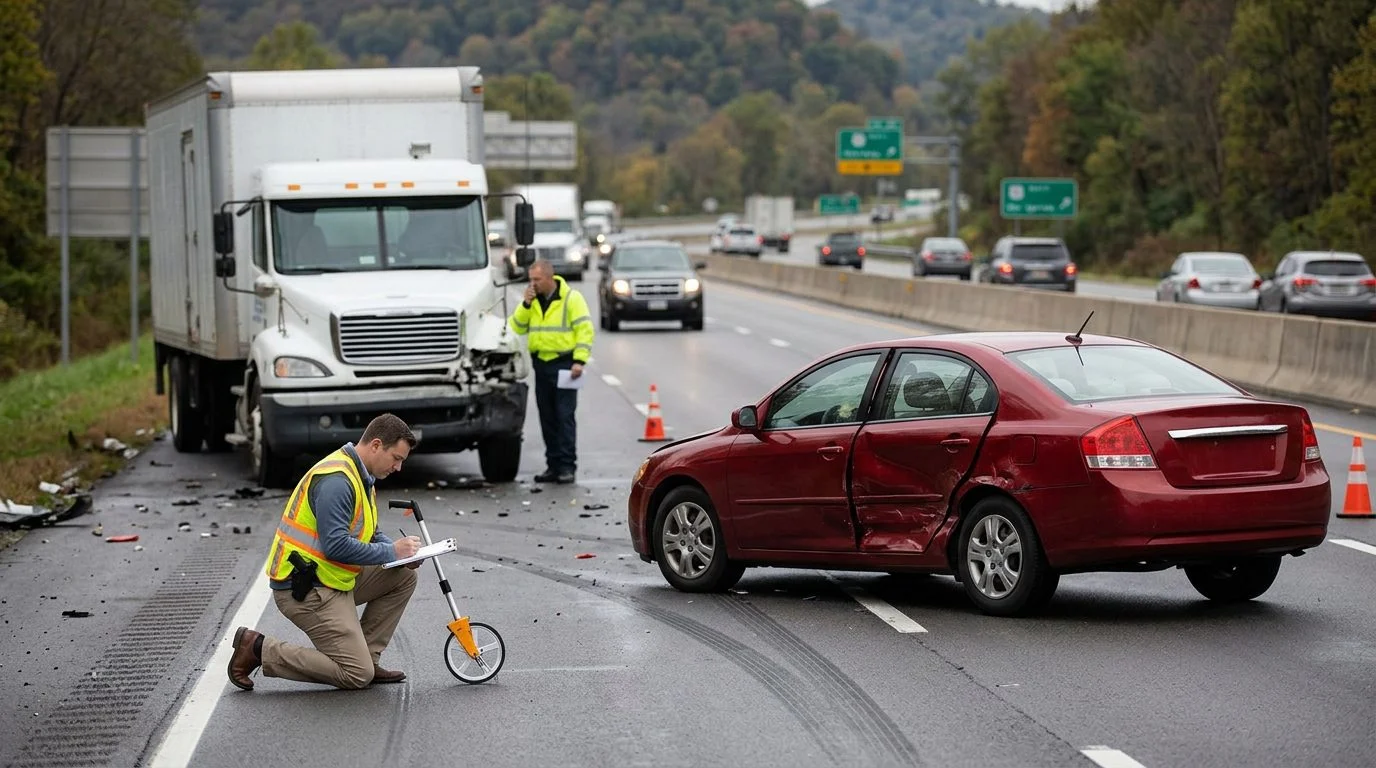
Spinal Cord Injury | Serving West Virginia Crash Victims
Spinal Cord Injury Not Showing on X-Ray? Your Symptoms Still Matter
Some spinal cord injuries do not appear on a standard X-ray. Big Bubba Injury Law represents people hurt in car and truck crashes across West Virginia, including families facing wrongful death.
Published October 29, 2026
Short Answer: Yes, a Spinal Cord Injury Can Be Missed on an X-Ray
Yes. A spinal cord injury can be real even when it is not showing on X-ray after a crash. Medical literature calls this SCIWORA, short for spinal cord injury without radiographic abnormality. MedlinePlus confirms that car accidents can cause spinal cord injury.
A normal X-ray does not mean nothing happened. It means the film did not show a bone fracture or a clear shift in alignment. The spinal cord is soft nerve tissue inside the spinal canal, and a plain film is not built to show it.
If you were told your scan was clear but you still feel numbness, weakness, or pain, that gap is hard to live with. Many people in this position feel dismissed. Your symptoms deserve a careful medical look, and this page explains what that looks like.
If a clear X-ray still doesn't match the numbness or weakness you feel after a crash, you don't have to sort it out alone. We invite you to request a free case review. Talk it through with Big Bubba — the first case review is free, confidential, and carries no obligation.

Why an X-Ray Can Look Normal When the Spinal Cord Is Hurt
An X-ray mainly shows bone and how the spine lines up. It does not show the cord itself. That is the core reason a clear film does not rule out nerve damage.
During a crash, the neck or back can bend, twist, or stretch hard in a split second. The bones may then sit back in their normal position. Nothing looks broken on the film, yet the cord underneath can still be injured.
Swelling, bruising, or bleeding inside the cord may also be invisible on a basic X-ray. MedlinePlus on spinal cord injury causes notes that weakness, paralysis, and sensory loss may result from motor vehicle accidents. Those symptoms tell a provider to look further.
What is SCIWORA?
SCIWORA means spinal cord injury without radiographic abnormality. It describes a cord injury where standard imaging shows no bone injury. Doctors still treat these symptoms seriously.
Does a normal X-ray rule out a spinal cord injury?
No. A normal X-ray alone does not settle the question. Your symptoms and a neurological exam guide which tests come next.
Other Spinal Injuries That Can Sit Alongside a Clear X-Ray
Some injuries to the spine’s soft tissue can cause real pain even when no bone is broken. A clear X-ray may miss them too.
A ligament sprain in the neck or back can cause ongoing pain and stiffness. Ligaments hold the spine together, and a basic film does not show them well.
A disc can bulge or herniate and press on a nearby nerve. The result may be pain, numbness, or weakness in an arm or leg. That pattern does not always match a bone injury, so a provider checks the nerves directly.
Nerve compression in the neck or lower back can also send symptoms into the hands, arms, feet, or legs. You may notice a grip that feels weak or a foot that drags. Those signs call for follow-up, even when the bones look normal.
A full picture often takes more than one test and a hands-on exam. The right mix depends on the facts of the crash and the symptoms you have. Keep track of every new change.
Symptoms That Deserve Medical Follow-Up After a Crash
Numbness, tingling, weakness, balance trouble, and bladder or bowel changes deserve prompt medical attention after any crash. Don’t wait to see whether they fade.
According to MedlinePlus on spinal cord injury, a car accident can lead to permanent paralysis, loss of function, or loss of sensation below the injury site. That is why early evaluation matters.
Watch for these signs:
- Numbness, tingling, or burning in the arms, hands, legs, or feet.
- Weakness or loss of movement in a limb.
- Trouble walking, balancing, or using the hands for small tasks.
- Neck or back pain that spreads or grows worse over hours or days.
- Changes in bladder or bowel control, or in sexual function.
Symptoms can appear late, sometimes days after the crash. A first scan that looked normal does not close the question. Sudden weakness and loss of bladder or bowel control need urgent medical care right away.
How Doctors Evaluate a Possible Spinal Cord Injury
A medical provider usually combines a neurological exam with imaging. The exam checks strength, sensation, reflexes, and coordination. Imaging then shows what the exam suggests.
X-rays show bone and alignment. CT scans give more detailed pictures of bone. MRI shows soft tissue, including the cord, discs, and ligaments. Each test answers a different question.
Clinical researchers also study how function returns after traumatic spinal cord injury, including timing and prognosis. PMC study on natural recovery shows why early and repeated evaluation matters.
Which tests you need depends on the facts of the crash and your symptoms. The treating provider decides the order and scope. Ask your provider to explain what each test is checking.
Why Records and Timing Matter After a Crash
Seeing a medical provider soon after a crash creates a dated record. That record links your symptoms to the crash. Gaps in care can make that link harder to show later.
Describe symptoms accurately and completely at every visit. Say when each one started, what makes it better or worse, and what has changed. Vague notes are easy to misread.
Keep copies of imaging reports, discharge papers, and follow-up instructions. Write down new symptoms as they appear, with dates. A simple daily journal can help.
Timing matters for the legal side too. West Virginia requires that a personal action for personal injuries, for which no limitation is otherwise prescribed, be brought within two years after the right to bring it has accrued (W. Va. Code § 55-2-12). Records and a clear timeline are often central when a spinal injury is evaluated after a car or truck crash.
Not sure what your next step is?
Talk it through with Big Bubba — the first case review is free, confidential, and carries no obligation.
Spinal Cord Injuries in Car and Truck Crashes Across West Virginia
The firm handles car accidents, truck accidents, and commercial vehicle accidents, including serious spinal and brain injuries. We serve Charleston and communities across West Virginia.
Crash risk is real here. The Insurance Institute for Highway Safety state fatality statistics page offers state-by-state data on motor-vehicle crash deaths.
A spinal or brain injury can change daily work, family roles, and long-term plans. For a broader view of serious injury claims, see our catastrophic injuries overview.
If a Normal X-Ray Does Not Match How You Feel, Take the Next Step
If a spinal cord injury not showing on X-ray after crash is still causing you problems, you may be living with uncertainty every day. You might be caring for a parent or spouse who cannot describe what they feel. You might be wondering what a confusing diagnosis means for your work and family.
Those worries are real, and they often grow when the scans come back clear. You don’t have to work through them alone.
If you want to talk through the crash, your symptoms, and the records you already have, reach out to the firm for a free case review at the firm’s contact page.