
Car & Truck Crashes | West Virginia
Hurt by a Company Driver? Here Is What to Know
When the driver who hurt you was working for a company, more than one party may be involved. Here is a plain-language starting point for crash victims and families across West Virginia.
Published November 7, 2026
In many cases, the company behind a driver can be named in a lawsuit after a serious crash in West Virginia. Whether it can be held responsible depends on the facts, including the driver’s job, who owned the vehicle, and what happened before the crash.
This page covers West Virginia injury and wrongful death law. Many readers are dealing with a hospital stay, a serious injury, or a loss in the family while they try to understand their options. That is a lot to carry at once, so this guide breaks the questions into parts.
A lawsuit is not the same as a claim with the driver’s own insurance company. More than one party may be involved, and each may have different records and different defenses.
The Short Answer: Can You Sue the Company Behind the Driver?
A company may be sued along with the driver when the company’s own role connected it to the crash. Claims against a trucking company can involve different legal theories, and which ones apply depends on the facts of each crash.
Vicarious liability asks whether the driver was working for the company. The company’s own decisions, such as how it hired or supervised the driver, may be relevant in some cases. Ownership and control asks who held legal control over the truck or the driver at the time.
West Virginia law uses broad language on that last point. The state’s commercial vehicle statute covers owners, employers, and others who hold legal control over a vehicle or its operator. The statute has limits on which vehicles and which claims it covers, so the details matter.
If a company vehicle left you or someone you love seriously hurt, we can review what may apply to your case in a free case review. Talk it through with Big Bubba — the first case review is free, confidential, and carries no obligation.
Who Can Be Named After a Company Driver Causes a Crash
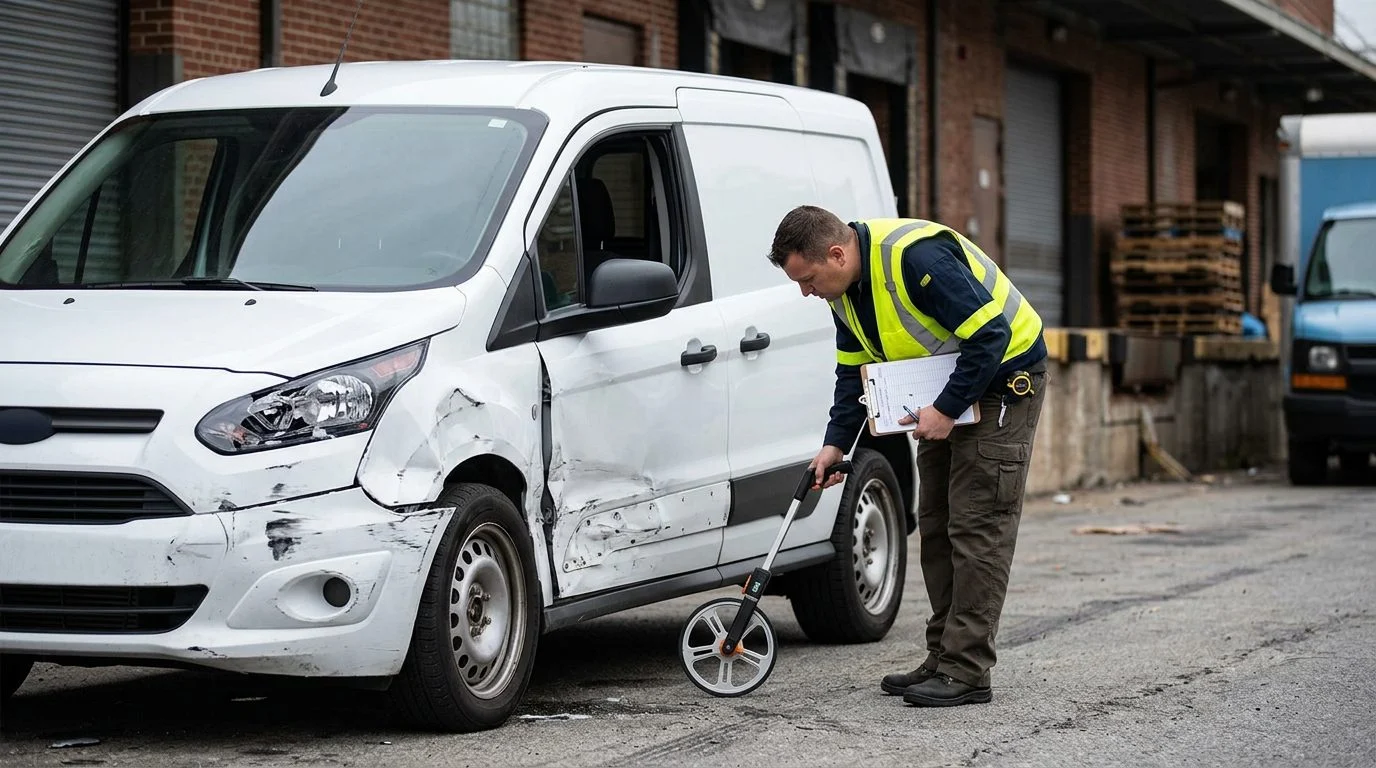
Several parties may be connected to a commercial crash, and the driver is only one of them. Depending on the facts, that can include the employer, the vehicle’s owner, a leasing company, or a contractor who maintained the truck.
West Virginia’s commercial vehicle statute defines an “employer defendant” to include the owner of the vehicle, the employer of the person operating it, and any other entity that owns, leases, rents, or holds legal control over the vehicle or operator. See W. Va. Code § 55-7-32. The statute applies to personal injury and wrongful death actions involving commercial motor vehicles that require a commercial driver’s license, but it does not include buses, school buses, or other vehicles primarily engaged in transporting passengers. It applies only to causes of action arising after the July 1, 2024 effective date.
Paperwork is often a starting point. The company name on the truck, the registration, and the shipping papers may point to the carrier. They may not show the full picture, though. A lease, a dispatch arrangement, or a repair contract can change who held control.
Federal rules also matter for many interstate trucks. A USDOT Number can help identify the carrier, but it does not decide liability by itself.
Vicarious Liability: When the Company Answers for Its Driver’s Conduct
Vicarious liability means a company may answer for a driver’s negligence when the driver was working for the company. Whether the driver was doing the company’s business at the time of the crash may be an important question in some cases.
Courts look at the facts around the trip. A driver on a dispatched load, a delivery route, or a drive to a job site may be viewed differently than a driver on a personal errand. The records of where the driver was and what the driver was doing often matter.
Exceptions may apply, and companies often push back. A company may argue the driver was off the clock, on a personal trip, or outside the scope of the job. That argument is common in commercial crash cases.
Ownership adds another layer. The statute discussed above treats the owner of a commercial vehicle as an employer defendant.
Direct Negligence Claims: Hiring, Training, Supervision, and Retention
Federal rules show what a company should keep on file. Under 49 C.F.R. § 391.51, a motor carrier’s driver qualification file must include items such as the driver’s employment application, motor vehicle records from licensing authorities, and a medical examiner’s certificate.
Federal rules also place duties on the carrier. Under 49 C.F.R. § 390.11, when a rule in part 325 of subchapter A or in this subchapter imposes a duty on a driver or a prohibition on the driver, it is the motor carrier’s duty to require observance of it. If the motor carrier is a driver, the driver is likewise bound. That point can matter when a company says the driver alone was responsible.
Evidence That Often Matters in Company Driver Crash Cases
The records a company keeps are often among the most useful evidence after a serious commercial vehicle crash. Some records may be lost or overwritten over time, so early questions about them can matter.
Hours-of-service records are one example. Under 49 C.F.R. § 395.8, a motor carrier must require each driver to record duty status for each 24-hour period, except for a private motor carrier of passengers (nonbusiness). These records may show when the driver was driving and when the driver was resting.
Post-accident testing rules are another. Attempts to give an alcohol test stop after eight hours, and controlled substance test attempts stop after 32 hours.
Some vehicles may also record speed and braking data before a crash. Dispatch messages, maintenance and inspection files, and cargo paperwork may help show what the company knew and when it knew it.
Catastrophic Injuries and What a Company Claim May Involve
Catastrophic injuries, such as traumatic brain injury and spinal cord injury, may require care over a long period. A claim may need to account for that care, which is why medical records matter so much.
Your treating doctors decide how severe an injury is and what recovery may look like. An article cannot predict how a brain or spinal cord injury will heal. Recovery differs from person to person, and it may take a long time to know what daily life will look like.
A company claim may address future medical care, rehabilitation, adaptive equipment, home changes, and changes to work and family roles. Planning for those needs usually takes input from the medical team and from people who know the person’s daily life.
Keep copies of discharge papers, bills, and appointment notes. Keep a simple written record of symptoms and limits in your own words. Follow the guidance your treating team gives you.
Not sure what your next step is?
Talk it through with Big Bubba — the first case review is free, confidential, and carries no obligation.
Wrongful Death Claims When a Company Driver Is Involved
In West Virginia, a wrongful death claim is generally brought by the personal representative of the person who died. That representative must be duly appointed, and the claim is brought in that person’s name. W. Va. Code § 55-7-6 sets out this rule.
The same statute describes the kinds of damages a jury may consider. These can include sorrow, mental anguish, and solace; reasonably expected loss of income and of services, care, and protection; expenses for care and hospitalization tied to the injury; and reasonable funeral expenses. The jury or court may direct how damages are shared among survivors.
A company driver may connect to a wrongful death claim through the same routes discussed above: vicarious liability, direct negligence, and ownership or control. Families often face funeral planning, records requests, and grief at the same time. Those pressures can make legal reading feel overwhelming.
Time Limits, Notice, and How Insurers May Respond
West Virginia generally allows two years to file many personal injury and wrongful death claims, and exceptions may apply. For personal injury, W. Va. Code § 55-2-12 sets a two-year period from when the right to sue arose. For wrongful death, W. Va. Code § 55-7-6 generally runs two years from the date of death.
Early contact has its own rule. Under W. Va. Code § 55-7-11a, within twenty days after a personal injury, while the injured person is in the hospital or unable to work, no one may negotiate or attempt to negotiate a settlement, obtain or attempt to obtain a partial or general release of liability, or obtain a statement for settlement, with limited exceptions. A settlement, release, or statement obtained in violation may be disavowed by the injured person within one hundred eighty days from the date of the injury, by signing a written disavowal and sending a copy to the person who violated the rule; for a settlement or release to be kept out of evidence, any money paid for it must be returned.
Some insurers may dispute a claim, question fault, or ask for a recorded statement. Fault is also divided under W. Va. Code § 55-7-13c. Each defendant is generally liable only for its own share of fault.
Can an insurance adjuster ask for a recorded statement?
Some insurers may ask for a recorded statement after a crash. You can ask what the statement is for before you agree to give one.
How long do I have to file a wrongful death claim in West Virginia?
West Virginia generally allows two years from the date of death, and exceptions may apply (W. Va. Code § 55-7-6). Because the deadline matters, it’s wise to review it early.
Can I still recover if I was partly at fault?
West Virginia uses comparative fault, so a recovery may be reduced by your share of fault (W. Va. Code § 55-7-13c). Recovery may be barred only if your fault is greater than the combined fault of everyone else responsible. W. Va. Code § 55-7-13c reads: “(c) Any fault chargeable to the plaintiff shall not bar recovery by the plaintiff unless the plaintiff’s fault is greater than the combined fault of all other persons responsible for the total amount of damages, if any, to be awarded.”

Deciding Your Next Step After a Serious Crash
If a company vehicle left you or someone you love badly hurt, you may be facing a hospital stay, a long recovery, or a family trying to make sense of a death. You may be the one reading this for a parent, a spouse, or an adult child.
The main points are these. A company may be a defendant in some cases. Several legal routes may apply. Records, deadlines, and insurer contact can all affect what happens next.
The firm handles car accidents, truck accidents, commercial vehicle accidents, catastrophic injuries, traumatic brain injury, spinal cord injury, and wrongful death claims. We serve West Virginia injury victims. If you want to talk through your situation, contact the firm for a free case review. The review is confidential and carries no obligation to continue.