
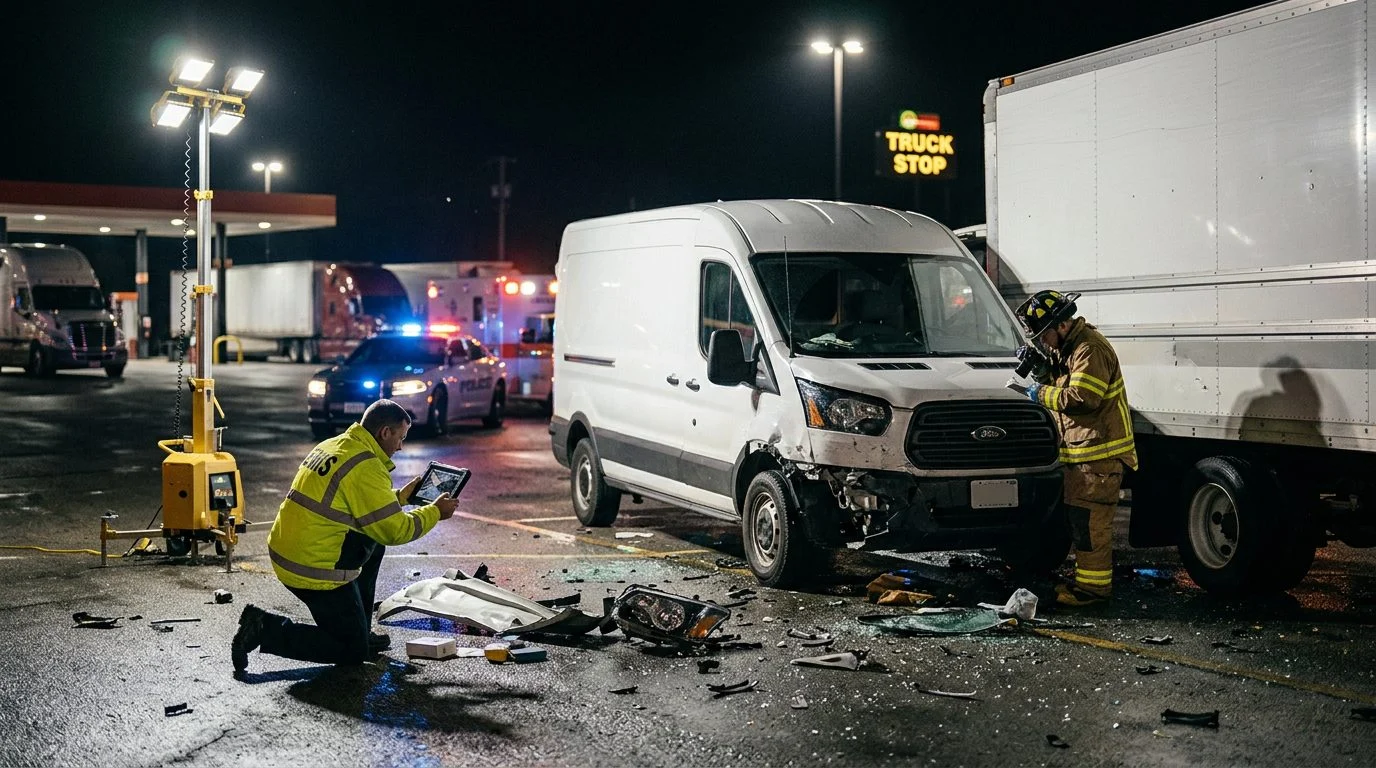
Work van crashes in West Virginia
Work Van Crash Evidence: Why Early Action Matters
Some of the most useful facts after a work van crash may sit in company systems, not on the road. Learn which records may matter and why some of them need to be preserved quickly.
Published November 2, 2026
A crash involving a work van can leave you hurt, grieving, or simply trying to understand what happened. Some of the most useful facts may sit inside company systems rather than on the road. This page explains which records may matter and why some of them are time-sensitive.
Which evidence should be preserved after a work van crash, such as GPS and telematics data, dash cam footage, driver hours logs, and dispatch records?
The main categories are vehicle location and telematics data, onboard camera footage, driver hours records, and dispatch communications. Which of these exist depends on the vehicle and the employer’s systems. A work van is a vehicle a company owns or uses for its business, so the employer often controls the records that matter most.
Telematics is a plain term for data a fleet system records about a vehicle, such as where it traveled and when. Dash cams are cameras mounted in a vehicle that may record the road ahead or the cab. Dispatch records include messages, job assignments, scheduling notes, and call logs that show who directed a trip.
A common early step is a written preservation request. It asks the company to keep the records tied to the crash and names the types you want kept. Keep your own copy of anything you send, along with the date you sent it.
Not sure what your next step is?
Talk it through with Big Bubba — the first case review is free, confidential, and carries no obligation.
Why do work van crash records need attention early?
Many fleet systems overwrite or purge data on schedules the company sets. If nobody asks for certain records to be kept, they may be lost in the normal cycle of the system.
Federal rules for some commercial vehicles set minimum retention periods for company records. After those periods, the records may be destroyed at the discretion of each company’s management. 49 C.F.R. § 379.3 states this. A retention period is a minimum, not a promise that a record will still exist later. Whether these rules cover a given van depends on its weight, use, and classification.
Some insurers or employers may dispute a claim or be slow to share records. Do not assume they will be kept automatically. The Sedona Conference ESI guidance calls for active management of electronically stored information in civil cases, including company records. The real risk is time. Records that were never saved are hard to recover later.
What can GPS and telematics data show after a work van crash?
Telematics data may show a vehicle’s location, route, speed, braking, and engine events over a period of time. It may help build a timeline of the minutes before a crash. How useful it is depends on how the system records and time-stamps events.
For covered commercial motor vehicles, an electronic logging device (ELD) automatically records the date, time, geographic location, engine hours, vehicle miles, and driver and vehicle identification. 49 C.F.R. § 395.26 lists these data elements.
The same rule says an ELD records an intermediate entry while the vehicle is moving if no other entry was made in the past hour. That means location may not appear every minute. Gaps in the data can matter, so ask what the system captured and when.
A work van outside those federal rules may still have GPS tracking used for dispatch or fuel purposes. Those records may differ from an ELD’s, and the company’s system settings control what is kept.
How do dash cam footage and onboard camera recordings fit into the evidence?
Dash cam footage is video from a camera mounted in a vehicle. It may show the road, traffic signals, and the vehicle’s path before a crash. Whether footage still exists depends on the device settings and whether someone saved it.
Many dash cams record on a loop. They write over older video after a set time or when storage fills up. A camera that records over itself may lose the lead-up to a crash unless the file was saved or locked.
Some cameras save a clip automatically when they detect a sudden impact. Others have a separate interior camera. Ask whether any camera was installed and, if so, whether the company stored video from the day of the crash.
Footage may help answer questions about road conditions, signals, speed, and lane position. It does not answer every question, and its content is not known until someone reviews it. Photos on your phone and messages with the company also belong on your list of records to keep.
What might driver hours logs and dispatch records add?
Driver hours logs show when a driver was driving, on duty, resting, or off duty. Dispatch records show who assigned the trip and when. Together they may show what the driver was doing before the crash.
Federal hours-of-service rules govern driving time and rest for covered commercial vehicles. Drivers record their duty status, and under 49 C.F.R. § 395.8 that record must list the shipping document number(s) or the shipper’s name and commodity. 49 C.F.R. § 395.8 sets out these requirements. The same section bars drivers and motor carriers from making any false report in connection with a duty status.
Federal rules also say a motor carrier must not alter or erase the original hours-of-service information or the source data used to provide it. Under 49 C.F.R. § 395.30, a driver and the motor carrier must ensure that the driver’s ELD records are accurate.
West Virginia has a statute for some commercial vehicle cases. W. Va. Code § 55-7-32 limits certain noneconomic damages against an employer defendant that has commercial motor vehicle insurance of at least $3 million for each occurrence, and it lists exceptions, including driving beyond hours-of-operation limits. It applies only to certain vehicles, so its reach to a given van depends on the vehicle’s classification.
Dispatch records may show when a trip started and who was directing the driver. How much they reveal depends on what the company kept.
What can you do next if a loved one or you were hurt in a work van crash?
Start by writing down what you remember and saving what you already have. Keep photos, the crash report, medical papers, and a list of anyone from the company or insurer who has contacted you.
Dealing with injuries, a loss, and questions from a company or insurer at the same time is hard. Write your timeline while memories are fresh, and note names and phone numbers from the scene.
A crash report is usually obtained from the agency that investigated the crash. The Monongalia County Sheriff crash report FAQ explains how the process works in that county.
For more on serious injury claims in West Virginia, read our catastrophic injury claims page.
If the crash has you juggling medical care, work, and calls from the company or insurer, you don’t have to sort out the records alone. Request a free case review and talk through which records may matter in your situation.