
Wrongful Death Claims
When a Crash Takes a Life in West Virginia
Big Bubba helps families pursue wrongful death claims after fatal car and truck accidents. We handle the legal fight so you can grieve.
Published October 04, 2026
Wrongful Death Claims After a Fatal Crash in West Virginia
When a crash kills someone due to another person’s or business’s negligence, the responsible party may be liable for damages in a civil lawsuit seeking compensation for the family’s loss, under West Virginia’s wrongful death statute. The claim is brought by the deceased’s personal representative. This is separate from any criminal charges the at-fault driver may face.
Losing a family member in a fatal crash is devastating. Beyond the emotional toll, families often face immediate financial strain: funeral costs, lost income, and the burden of rebuilding their lives. A wrongful death claim can help recover those losses and hold the responsible party accountable.
If you're unsure whether you qualify, we can review your situation during a free case review. Talk it through with our team — the first case review is free, confidential, and carries no obligation.
What Is a Wrongful Death Claim After a Fatal Crash?
A wrongful death claim is a civil action, brought by the deceased’s personal representative, that may arise when someone dies because of another person’s or entity’s negligence or wrongful act in a car, truck, or commercial vehicle crash, under West Virginia’s wrongful death statute.
This is a civil matter, separate from criminal prosecution. A driver can face both a criminal charge (like vehicular homicide) and a civil wrongful death claim at the same time. The criminal case is handled by prosecutors; the civil claim is your family’s right to seek compensation.
In West Virginia, wrongful death claims must be filed within a specific deadline set by state law. Acting quickly helps preserve evidence and protects your right to pursue the claim.
Who Can File a Wrongful Death Claim in West Virginia?
Not everyone can file. West Virginia law limits who has the right to bring a wrongful death claim.
A West Virginia wrongful death action is brought by and in the name of the decedent’s duly appointed personal representative.
The personal representative doesn’t need to be named in a will. If the deceased had no will, the county commission or its clerk decides who may administer the estate, and we can guide that process.
Eligibility depends on your family relationship to the deceased and, in some cases, whether you relied on them for financial support. If you’re unsure whether you qualify, we can review your situation during a free case review.
What Does a Wrongful Death Claim Cover?
Wrongful death damages compensate families for concrete losses and, in some cases, emotional harm caused by the death.
Recoverable damages typically include:
- Medical and emergency expenses incurred before death (hospital bills, ambulance costs, emergency care)
- Funeral and burial costs (often substantial and immediate)
- Lost wages and income the deceased would have earned during their remaining lifetime
- Loss of financial support to surviving family members (groceries, housing, utilities, education)
- Loss of companionship, guidance, and emotional support, which West Virginia law includes in damages for sorrow, mental anguish, and solace
- Punitive damages in rare cases of actual malice or a conscious, reckless and outrageous indifference to the health, safety and welfare of others (designed to punish and deter)
Calculating these damages requires careful analysis of the deceased’s age, health, earning potential, and family circumstances. We work with financial professionals and medical professionals to build a complete picture of your family’s losses.
Types of Fatal Crashes We Handle
We represent families across West Virginia after fatal crashes involving:
- Car accidents: head-on collisions, rear-end crashes, multi-vehicle pileups, single-vehicle crashes caused by road defects or third-party negligence
- Commercial truck accidents: 18-wheeler collisions, delivery truck crashes, commercial vehicle failures
- Negligent drivers: speeding, impaired driving, distracted driving, reckless behavior
- Defective vehicles or parts: brake failure, tire blowout, steering defects
- Road hazards: poor maintenance, inadequate signage, dangerous road conditions
In each case, we investigate to identify who was at fault—the driver, a vehicle manufacturer, a government entity responsible for road maintenance, an employer, or multiple parties.
Not sure what your next step is?
Talk it through with our team — the first case review is free, confidential, and carries no obligation.
How the Wrongful Death Claim Process Works
The wrongful death process has clear steps. Understanding what happens at each stage helps you know what to expect.
Step 1: Free Case Review
We meet with you to gather facts about the crash, the deceased, and your family’s circumstances. We listen to your story and ask questions to understand the full picture. This is your free case review—no obligation, no cost.
Step 2: Investigation
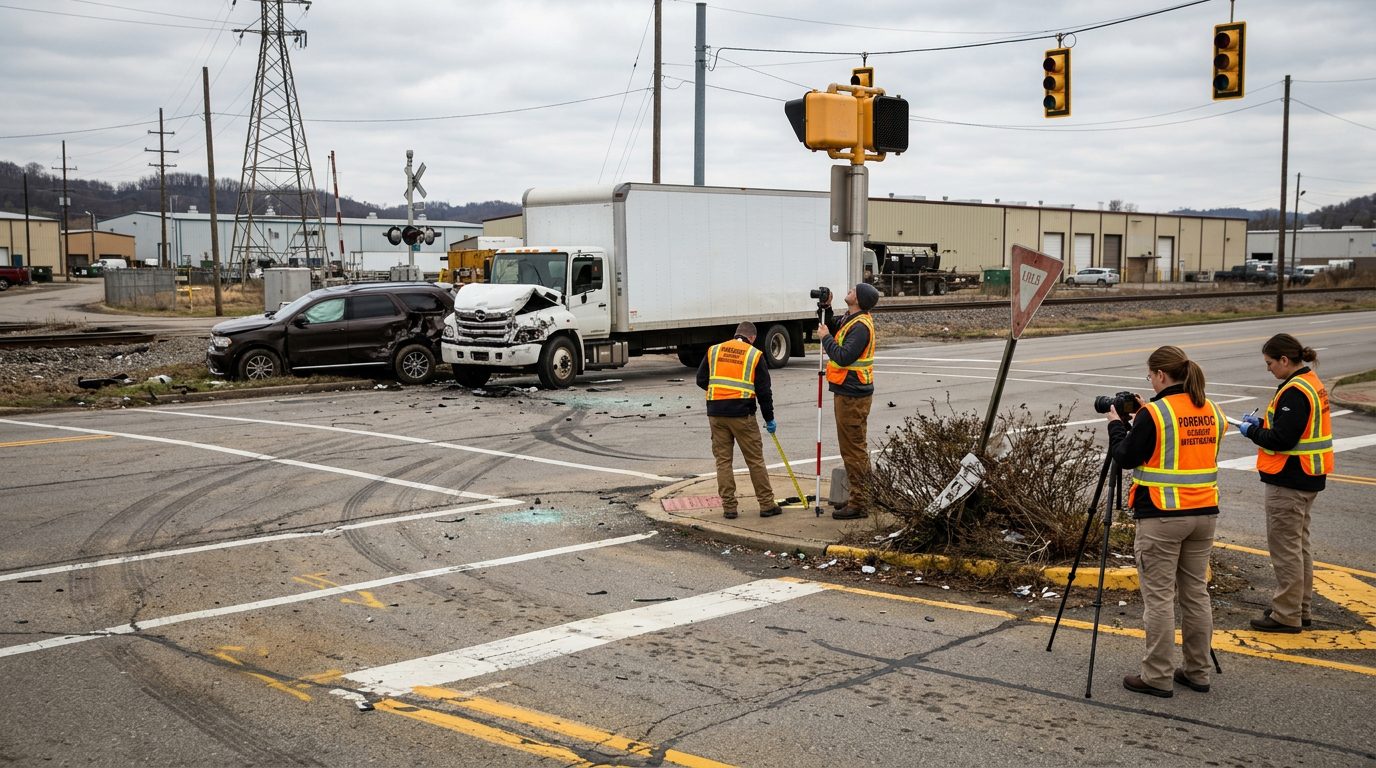
We obtain police reports, witness statements, medical records, and accident reconstruction analysis. We gather evidence of negligence: Was the driver speeding? Did they run a red light? Was the truck improperly maintained? We leave no stone unturned.
Step 3: Determining Liability
We identify who was at fault. In some crashes, liability may be easier to establish. In others, multiple parties share responsibility. West Virginia follows a modified comparative fault rule: if your deceased family member was partially at fault, damages are reduced proportionally, but you can still recover unless the deceased was more than 50% at fault.
Step 4: Calculating Damages
We assess all losses: medical costs, lost income, funeral expenses, and non-economic damages like loss of companionship. We work with economists and other experts to project lifetime earnings and support the deceased would have provided.
Step 5: Demand and Negotiation
We present a detailed claim to the at-fault party’s insurance company or legal team. We explain the facts, liability, and damages. Insurance companies often respond with a lower offer. We negotiate firmly on your behalf.
Step 6: Settlement or Litigation
Most wrongful death cases settle during negotiation. If the insurance company won’t offer fair value, we prepare for trial. We file suit, conduct discovery (exchanging evidence with the other side), take depositions, and prepare witnesses. We’re ready to present your case to a jury if needed.
Step 7: Distribution
If we recover money, funds are generally distributed to eligible family members under West Virginia law, and exceptions may apply. We handle the paperwork involved in distributing any recovery.
Timeline: What to Expect
Wrongful death cases don’t follow a fixed schedule, but here’s what typically happens:
Immediate (first weeks): Police investigation concludes, medical examiner’s report is released, and initial evidence is gathered.
Early phase: We conduct our case review, investigation, and liability assessment. We begin calculating damages.
Negotiation phase: We send a demand letter, the insurance company responds, and settlement discussions begin. How long this phase lasts depends on the facts of each case.
Litigation phase (if needed): If settlement talks stall, we file suit. Court proceedings, discovery, and trial preparation can extend 1–3+ years.
Statute of Limitations: West Virginia law generally sets a two-year deadline from the date of death to file a wrongful death claim. Acting quickly preserves your rights and allows us to investigate while evidence is fresh.
How Wrongful Death Claims Are Handled After a Crash
Big Bubba Injury Law handles wrongful death claims across West Virginia arising from car, truck, and commercial vehicle crashes. Here’s what we bring to your case:
What matters in a fatal-crash case. Certain facts matter most in wrongful death cases. Insurance companies look closely at the evidence, so a case needs to stand up to scrutiny.
Investigation resources. We work with accident reconstruction professionals, medical professionals, and investigators. We don’t rely on the police report alone; we dig deeper.
Negotiation strength. We prepare every case for trial.
Compassionate approach. We understand the emotional and financial burden families face. We handle the legal work so you can grieve and begin to heal.
Statewide reach. We serve families across all 55 West Virginia counties, including Charleston, Huntington, Morgantown, Wheeling, Martinsburg, Parkersburg, Beckley, Clarksburg, Fairmont, and Weirton.
Common Questions About Wrongful Death Claims
How long do I have to file a wrongful death claim?
West Virginia law generally requires wrongful death claims to be filed within two years from the date of death, though exceptions may apply. The sooner you act, the better we can preserve evidence and investigate.
Can I file if the deceased had no will or estate?
Yes. We can help identify eligible family members and file on their behalf. If the deceased left no will, the county commission or its clerk decides who may administer the estate.
What if the at-fault driver was uninsured or underinsured?
We explore uninsured and underinsured motorist coverage on your own policies, commercial vehicle insurance, and other sources of recovery. There are often multiple avenues to compensation.
Will my case go to trial?
Most wrongful death cases settle, but we prepare every case for trial. If the insurance company won’t offer fair value, we’re ready to take your case to court.
What if the deceased was partially at fault for the crash?
West Virginia follows a modified comparative fault rule. Your damages are reduced by the deceased’s percentage of fault, but you can still recover unless the deceased was more than 50% at fault.
How long does the process take?
Timeline varies. Simple settlements may resolve in months. Complex cases or trials can take longer. We keep you informed every step of the way.

Have questions about what happened?
Ask our team directly. The first conversation is free, confidential, and there is no obligation to continue.
What We Need From You to Get Started
To begin your free case review, have the following information ready:
- Basic information about the deceased and the crash (date, location, circumstances)
- Names and contact information for family members who may be eligible to file
- Any police reports, medical records, or documentation you have
- Information about insurance coverage (the at-fault driver’s policy, commercial vehicle coverage, etc.)
- Details about the deceased’s income, employment, and financial dependents
You don’t need to have everything perfectly organized. We’ll help you gather what we need.
If someone you love died in a crash caused by another driver or vehicle failure, you may have a wrongful death claim. Families in your situation can reach out to us to discuss their options and understand what comes next. Contact us for a free case review.
Related practice areas
- Catastrophic Injuries
- Spinal Cord Injury Claims in West Virginia | Big Bubba