
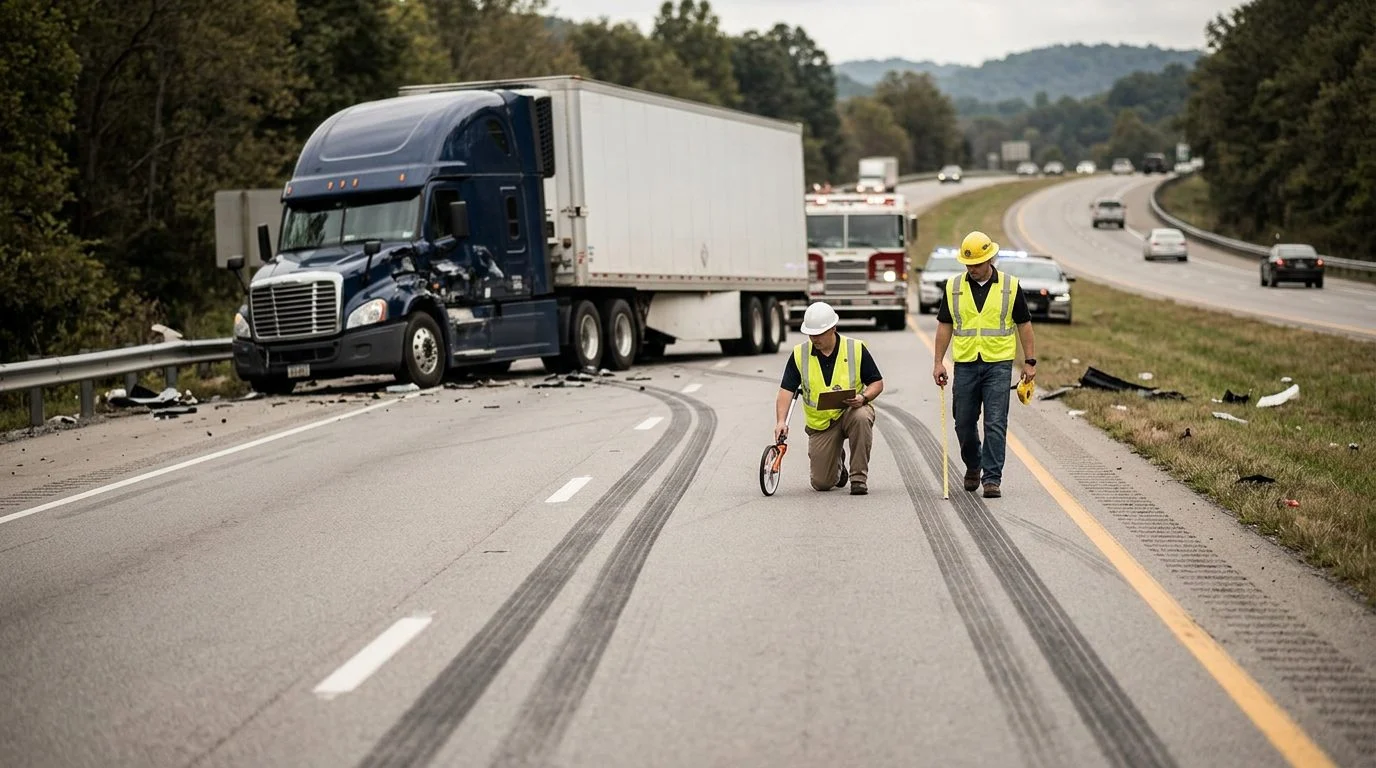
Commercial Vehicle Accidents
Commercial Vehicle Accidents in Beckley, WV
When a commercial truck or delivery vehicle hits you, the injuries are often catastrophic. Big Bubba fights for people seriously hurt in these crashes.
Published October 03, 2026
Commercial vehicle accidents in Beckley cause injuries that are often catastrophic because commercial trucks, delivery vehicles, and tractor-trailers weigh far more and carry far more momentum than passenger cars. When a commercial vehicle hits you, the consequences are different—and so is the legal case that follows.
Commercial Vehicle Accidents in Beckley: Why They’re Different
Commercial vehicles—tractor-trailers, delivery trucks, box trucks, dump trucks, cement mixers—carry size, weight, and momentum that cause catastrophic injuries that passenger-car crashes rarely do. Beckley sits on US Route 19, a major north-south corridor for commercial traffic, and near Interstate 77, which brings heavy truck volume through Raleigh County daily. You see commercial vehicles on local roads, on the highways, and at intersections throughout the region.
What makes a commercial vehicle accident different from a car crash is the complexity of liability. In a car accident, you typically deal with two drivers and two insurance policies. In a commercial vehicle crash, you may face the truck driver, the trucking company, the vehicle owner or lessor, the cargo company, multiple insurance carriers, and federal regulations that govern how trucks must operate. Liability is layered, and proving who is responsible requires investigation, expert analysis, and knowledge of both state law and federal trucking rules.
Injuries from commercial vehicle collisions tend to be severe: traumatic brain injury, spinal cord damage, crush injuries, internal bleeding, and wrongful death. The sheer force involved means that even “minor” crashes often result in life-altering harm.
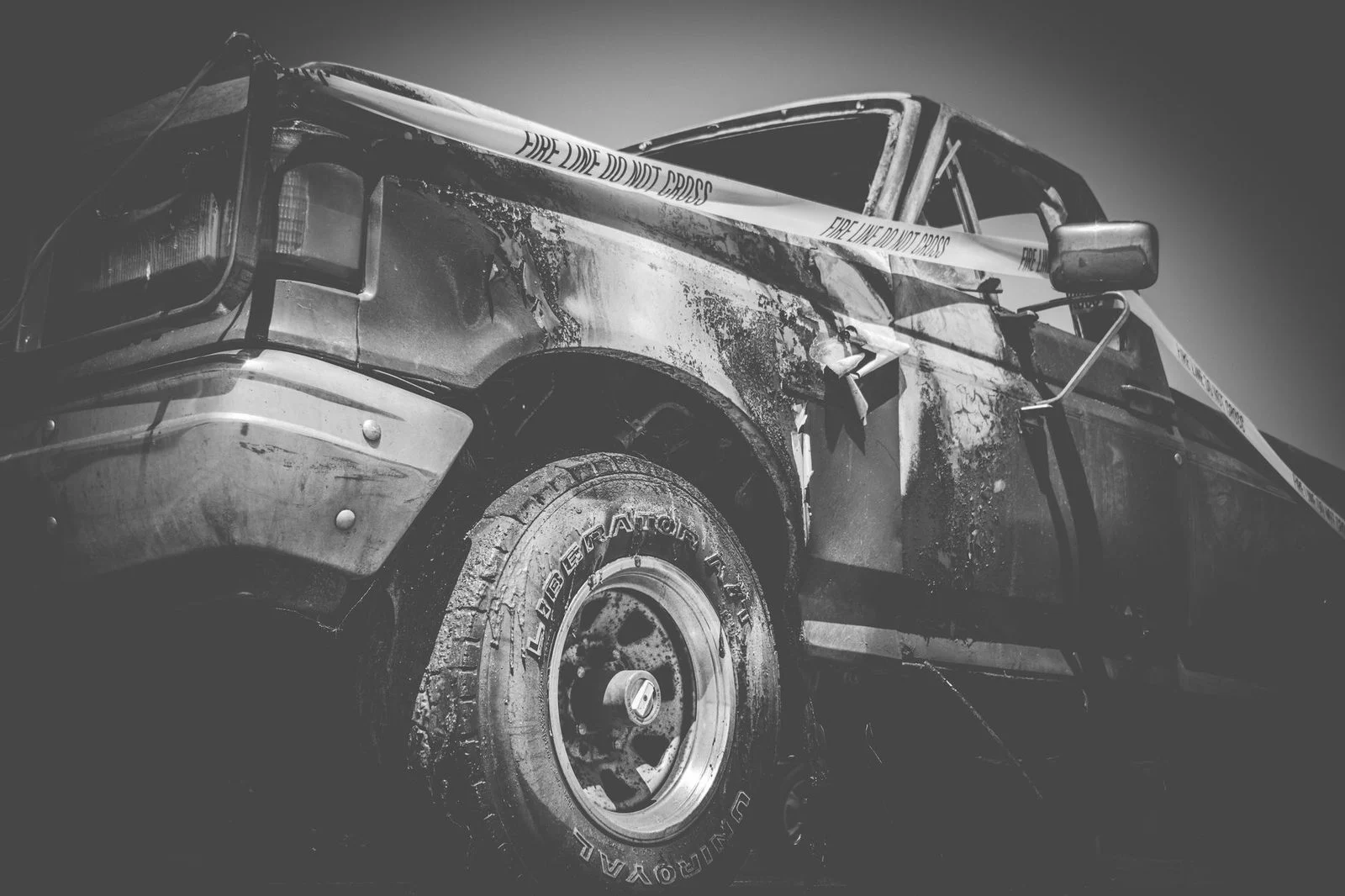
If you are injured in a commercial vehicle accident, you may be entitled to compensation for your losses. Talk it through with our team — the first case review is free, confidential, and carries no obligation.
Common Types of Commercial Vehicle Accidents in Beckley
Understanding how commercial vehicle accidents happen helps explain why they cause such serious injuries.
Jackknife crashes occur when the trailer swings out perpendicular to the cab, often blocking multiple lanes and trapping nearby vehicles. A jackknife can happen when a driver brakes suddenly on wet or icy roads, or when the trailer weight shifts during a turn.
Rollover accidents happen because commercial vehicles have a high center of gravity and uneven weight distribution. A truck can tip on a curve, during an emergency maneuver, or if cargo is loaded improperly. A rollover can crush vehicles nearby or eject cargo onto the roadway.
Underride collisions are among the most dangerous. A smaller vehicle—a car, SUV, or motorcycle—slides under the trailer, often decapitating or crushing the occupants. The height difference between a passenger car and a trailer bed makes underride crashes nearly always fatal or catastrophically injurious.
Rear-end crashes happen because commercial vehicles take much longer to stop than cars. A truck traveling at highway speed may need 600 feet or more to come to a complete stop. If a truck hits a car from behind, the car is crushed, and occupants suffer severe injuries.
Wide-turn accidents occur because large trucks need extra space to turn. A driver may misjudge the turn radius and strike a vehicle, a pedestrian, or property in an adjacent lane.
Blind-spot collisions result from the large blind spots that commercial vehicles have. A truck driver may not see a car or motorcycle before changing lanes or turning, leading to a sideswipe or T-bone crash.
Injuries From Commercial Vehicle Crashes
The force and weight involved in commercial vehicle accidents produce injuries that are often life-altering.
Traumatic brain injury (TBI) results from impact, whiplash, or penetrating head trauma. A TBI can cause immediate loss of consciousness, memory loss, cognitive changes, personality shifts, difficulty concentrating, mood swings, and chronic headaches. Some TBI victims never fully recover.
Spinal cord injury damages the spine and can result in partial or complete paralysis, loss of sensation, chronic pain, loss of bladder or bowel control, and lifelong care needs. A spinal cord injury may require years of rehabilitation and ongoing medical treatment.
Internal injuries from blunt force trauma can rupture organs, cause internal bleeding, or damage the chest, abdomen, or pelvis. Internal injuries may not be immediately obvious and can be life-threatening if not treated quickly.
Crush injuries occur when a limb or the torso is trapped under the vehicle or cargo. Crush injuries can require amputation or cause compartment syndrome, a condition that can lead to permanent disability or death.
Wrongful death claims arise when a commercial vehicle crash kills a family member. Under W. Va. Code § 55-7-6, a wrongful-death claim is brought by the personal representative of the person who died, and the damages may include reasonable funeral expenses, lost income and the services the decedent would reasonably have provided, and sorrow, mental anguish, and solace, which may include companionship.
What to Do After a Commercial Vehicle Accident in Beckley
Your actions in the minutes and hours after a commercial vehicle accident can protect your health and preserve evidence for your case.
Call 911 immediately if anyone is injured or the vehicles are blocking traffic. Let emergency responders assess injuries and document the scene.
Move to a safe location if possible. If you cannot safely exit your vehicle, stay inside with your seatbelt fastened and your hazard lights on.
Do not admit fault. Stick to facts when speaking to the other driver or police. Say only what you observed: “The truck was traveling in my lane” or “I did not see the truck before it hit me.” Do not apologize, speculate, or accept blame.
Get the truck driver’s information: name, company name, phone number, and insurance information. Note the truck’s license plate and any company markings or logos. If the driver refuses to provide information, report this to police.
Take photos of the accident scene, vehicle damage, road conditions, traffic signs, and the commercial vehicle. Photograph the truck’s cargo, any spilled material, and the overall scene from multiple angles. These photos are critical evidence.
Get contact information from witnesses. Ask them to stay until police arrive if possible. Write down their names, phone numbers, and what they saw.
Request a copy of the police report. Note the report number and the officer’s name. You will need this report for your insurance claim and your legal case.
Seek medical attention even if you feel okay. Some injuries—internal bleeding, spinal cord damage, traumatic brain injury—may not show symptoms for hours or days. A medical evaluation creates a documented record of your injuries.
Do not post about the accident on social media. Insurance companies and defense attorneys monitor social media. Anything you post can be used against you. Do not discuss the accident with anyone except your doctor and your lawyer.
Contact Big Bubba as soon as possible. Early investigation and evidence preservation are critical in commercial vehicle cases. The sooner we begin, the sooner we can secure black box data, witness statements, maintenance records, and other evidence before it is lost or destroyed.
Not sure what your next step is?
Talk it through with our team — the first case review is free, confidential, and carries no obligation.
Why Commercial Vehicle Accident Cases Are Complex
Commercial vehicle accident cases are more complex than car accidents because federal law, state law, and industry practice all intersect.
Federal trucking regulations govern hours of service, vehicle maintenance, cargo loading, and driver qualifications. 49 CFR § 395.3 limits commercial drivers to 11 hours of driving within a 14-hour window and 60/70-hour limits per week.
The trucking company may be liable for the driver’s actions under the doctrine of respondeat superior (the employer is responsible for the employee’s negligence), or for negligent hiring, training, or supervision.
Commercial vehicles carry higher insurance limits than personal cars. Multiple insurance policies may apply—the driver’s policy, the company’s policy, the vehicle owner’s policy, and cargo insurance. Identifying all available insurance is essential to maximizing your recovery.
Black boxes and electronic logging devices in commercial trucks can record speed, braking, acceleration, and hours of operation. This data is critical evidence and can prove whether the driver was speeding, braking suddenly, or violating hours-of-service rules at the time of the crash. Black box data must be preserved immediately—many trucking companies will destroy or overwrite this data if given the chance.
Cargo loading violations or improper weight distribution can cause jackknife crashes or rollovers. If cargo was loaded unsafely or shifted during transit, the cargo company or the trucking company may be liable.
Maintenance records, inspection reports, and driver logs must be preserved and reviewed. Federal rules require motor carriers to systematically inspect, repair, and maintain their vehicles, and if known defects such as faulty brakes, worn tires, or mechanical problems contributed to the crash, the company’s failure to do so may be evidence of negligence, depending on the facts.
Expert witnesses are often necessary. An accident reconstructionist can analyze the crash dynamics and prove how the accident happened. A medical doctor can explain your injuries and prognosis. A trucking industry specialist can testify about industry standards, federal regulations, and whether the driver or company violated those standards.
Liability in Beckley Commercial Vehicle Accidents
Determining who is responsible in a commercial vehicle accident requires careful investigation.
The truck driver may be liable if they were speeding, distracted, fatigued, impaired, or violated traffic laws. If the driver was texting, eating, or adjusting the radio at the time of the crash, that conduct may bear on whether the driver was negligent, since fault must still be proven and is allocated among the parties and nonparties involved.
The trucking company may be liable if they failed to maintain the vehicle, hired an unqualified driver, or pressured the driver to violate hours-of-service rules. If the company’s culture rewards drivers for meeting unrealistic delivery schedules, forcing drivers to speed or skip required rest breaks, the company may be found at fault for the resulting crash, depending on the facts and how fault is divided among the parties.
The vehicle owner or lessor may be liable if they knew the vehicle was unsafe or failed to repair known defects. If a truck was leased to a company and the owner knew the brakes were faulty, the owner may be found at fault, depending on the facts.
The cargo company may be liable if cargo was loaded improperly, causing the truck to become unstable or shift during transit.
Third parties may share liability in some cases. If another driver’s actions contributed to the crash, or if a road defect or traffic signal malfunction played a role, those parties may be liable.
West Virginia follows a modified comparative fault rule: W. Va. Code § 55-7-13c allows you to recover damages even if you are partially at fault, as long as your fault is not greater than 50%. This means that even if you share some responsibility for the accident, you may still have a claim against the commercial vehicle driver or company.
Compensation in Commercial Vehicle Accident Cases
If you are injured in a commercial vehicle accident, you may be entitled to compensation for your losses.
Economic damages include medical bills, surgery, hospitalization, rehabilitation, ongoing therapy, prescription medications, medical equipment, lost wages, and loss of earning capacity. If your injuries prevent you from working, you can recover the income you lost and the income you will lose in the future.
Non-economic damages include pain and suffering, emotional distress, loss of enjoyment of life, disfigurement, and disability. These damages compensate you for the harm you suffered beyond direct financial loss.
Wrongful death damages, under W. Va. Code § 55-7-6, include funeral and burial expenses, loss of financial support, and loss of companionship and guidance. If your spouse, child, or parent was killed in a commercial vehicle crash, a wrongful-death claim can be brought by the personal representative of the person who died.
Punitive damages may be available only if clear and convincing evidence shows the defendant acted with actual malice or a conscious, reckless and outrageous indifference to the health, safety and welfare of others. If the trucking company’s conduct involved actual malice or a conscious, reckless and outrageous indifference to the health, safety and welfare of others, and a plaintiff proves this by clear and convincing evidence, punitive damages may be awarded in addition to compensatory damages, subject to a statutory limit.
Most commercial vehicle accident cases settle before trial, but Big Bubba is prepared to take your case to trial if the insurance company will not offer fair compensation. Whether to accept a settlement offer is always your decision, and we will advise you on whether an offer is fair.
How Big Bubba Handles Commercial Vehicle Accident Cases
Our approach to commercial vehicle accident cases is thorough, aggressive, and focused on your recovery.
Immediate investigation begins the moment you contact us. We preserve evidence, obtain the police report, and interview witnesses while memories are fresh. We issue a preservation letter to the trucking company, demanding that they preserve all evidence, including the black box, maintenance records, driver logs, and dispatch communications.
Expert consultation connects you with accident reconstructionists, medical experts, and trucking industry professionals who can analyze your case and testify if necessary.
Regulatory review examines federal trucking regulations, maintenance records, driver logs, and black box data to identify violations and negligence. These records can contain evidence that helps show liability.
Insurance negotiation involves communicating with all insurance carriers and holding them accountable for fair compensation. Whether to accept any offer is always your decision; we negotiate on your behalf.
Medical advocacy means we coordinate your care, ensure your medical providers document your injuries thoroughly, and fight for coverage of all necessary treatment. We work with your doctors to build a complete medical record that supports your claim.
Trial readiness means that if settlement talks stall, we prepare your case for trial and are ready to present your story to a jury.
Have questions about what happened?
Ask our team directly. The first conversation is free, confidential, and there is no obligation to continue.
Serving Beckley and Raleigh County
We serve Beckley injury victims and families across Raleigh County and all 55 West Virginia counties. Beckley sits on US Route 19, a major corridor for commercial traffic. Contact us to talk about a serious injury or wrongful death case.
Your Free Case Review Awaits
If you or a family member was injured in a commercial vehicle accident in Beckley, you have questions and you need answers now. The statute of limitations for personal-injury claims in West Virginia generally allows two years from when the right to bring the claim accrues, and exceptions may apply, so time is important. Big Bubba is ready to listen to what happened, explain your rights, and tell you what comes next—at no cost and with no obligation.
Related practice areas
- Commercial Vehicle Accidents in West Virginia: Your Rights & Next Steps