
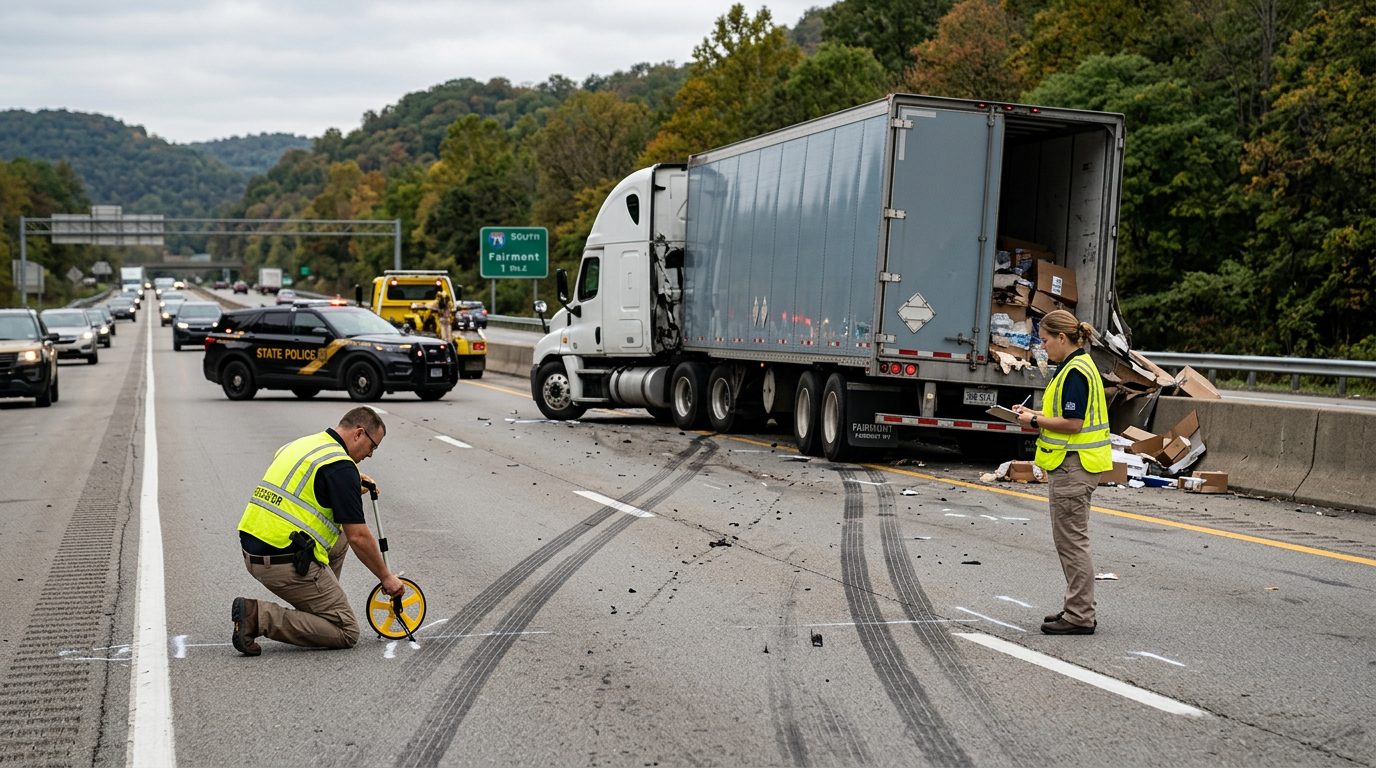
Commercial Vehicle Accidents
Hit by a Commercial Truck in Fairmont? We're Here to Help.
When a commercial vehicle causes serious injury, you need a firm that understands the stakes. Big Bubba Injury Law serves Fairmont injury victims hurt in crashes involving delivery trucks, tractor-trailers, and other commercial vehicles.
Published October 04, 2026
Commercial vehicle accidents in Fairmont happen regularly because of the city’s location on major transportation corridors—Interstate 79 and US Route 19 bring constant commercial traffic through the area. When a semi-truck, delivery van, box truck, or other large commercial vehicle collides with a passenger car or injures a pedestrian or cyclist, the results are often far more severe than typical car accidents. The weight, size, and force involved mean catastrophic injuries and complex liability questions.
If you’ve been hurt in a commercial vehicle accident in Fairmont, understanding what makes these crashes different—and what your legal options are—is the first step toward recovery.
Commercial Vehicle Accidents Happen on Fairmont Roads
Fairmont sits at a crossroads for commercial transportation in North-Central West Virginia. Interstate 79 runs north-south through the region, and US Route 19 carries additional truck traffic. Delivery services, regional trucking companies, and long-haul operators move goods through Fairmont daily.
These vehicles are fundamentally different from passenger cars. An 18-wheeler can weigh 80,000 pounds or more—roughly 15 times heavier than a typical sedan. That mass and momentum mean that even at moderate speeds, a commercial vehicle crash produces forces that cause severe injuries: traumatic brain injuries, spinal cord injuries, multiple fractures, and internal bleeding.
Fairmont residents and workers—whether commuting on I-79, working in commercial zones, or traveling local roads—face ongoing exposure to commercial traffic and the risks it carries.
Not sure what your next step is?
Talk it through with our team — the first case review is free, confidential, and carries no obligation.
Why Commercial Vehicle Accidents Are Different
Commercial vehicle accidents differ from passenger-car crashes in three critical ways: severity, liability complexity, and evidence preservation.
Severity. Commercial vehicles have large blind spots and require significantly longer stopping distances than cars. That difference means commercial vehicle crashes often occur at higher speeds or with less warning, resulting in more catastrophic injuries.
Liability complexity. In a passenger-car accident, usually one or two drivers are at fault. In a commercial vehicle crash, multiple parties may share responsibility:
- The commercial driver (for speeding, fatigue, improper lane changes, or failure to yield)
- The trucking company or vehicle owner (for negligent hiring, inadequate training, poor maintenance, or unsafe scheduling practices)
- A maintenance contractor (for failing to repair brakes, tires, or other critical systems)
- A loading company (for improper cargo securement)
Each party may carry insurance, and each may have a legal duty to you. That means your claim may involve multiple defendants and multiple insurance policies—and it means the investigation and negotiation are more complex.
Evidence preservation. Commercial vehicles are required by federal law to maintain logbooks, maintenance records, and dispatch communications. These documents are crucial to establishing negligence. But they can disappear quickly if not preserved. A lawyer who acts fast can secure these records before they are lost or destroyed.
Common Causes of Commercial Vehicle Accidents in Fairmont
Commercial vehicle accidents in West Virginia and across the country share common causes rooted in driver behavior, company practices, and vehicle maintenance:
- Driver fatigue. Federal law limits commercial drivers to a maximum of 11 hours of driving within a 14-hour window, with additional weekly limits. Many drivers and companies ignore these rules or falsify logbooks to meet delivery schedules.
- Inadequate vehicle maintenance. Worn brakes, bald tires, faulty steering, and mechanical failures are common in trucks that haven’t been properly inspected or serviced.
- Improper loading or cargo shift. Cargo that shifts during transit can cause the truck to become unstable, especially on curves or during braking.
- Speeding or unsafe operation. Commercial drivers may exceed safe speeds for road conditions, especially on highways like I-79.
- Failure to yield or improper lane changes. Large trucks require more space and time to change lanes or turn. Drivers who fail to account for this cause collisions.
- Company negligence. Trucking companies that pressure drivers to meet unrealistic schedules, fail to hire qualified drivers, or skimp on maintenance create conditions for accidents.
Injuries from Commercial Vehicle Crashes
The force of a commercial vehicle collision often causes injuries that are not immediately apparent. Some people feel fine at the accident scene but develop symptoms hours or days later—a sign of traumatic brain injury or internal bleeding.
Common injuries from commercial vehicle crashes include:
- Traumatic brain injury (TBI). Ranging from concussion to severe brain damage, TBIs can cause cognitive problems, memory loss, personality changes, and long-term disability.
- Spinal cord injury (SCI). Damage to the spinal cord can result in partial or complete paralysis, loss of sensation, and permanent disability requiring lifelong care.
- Multiple fractures and crush injuries. The weight of a commercial vehicle can crush limbs and break multiple bones.
- Internal injuries. Bleeding in the abdomen, chest, or head may not be visible but can be life-threatening.
- Wrongful death. When a commercial vehicle crash kills a family member, surviving relatives face not only grief but also financial loss and the need for legal recovery.
Recovery from these injuries often requires extended hospitalization, surgery, rehabilitation, and ongoing medical care. Many people cannot return to work, incurring lost wages and mounting medical debt.
Have questions about what happened?
Ask our team directly. The first conversation is free, confidential, and there is no obligation to continue.
What to Do After a Commercial Vehicle Accident in Fairmont
Your actions in the first hours and days after a commercial vehicle accident can significantly affect your health, safety, and legal rights.
Immediately after the crash:
- Seek medical attention. Call 911 if anyone is injured. Even if you feel okay, go to an emergency room or urgent care. Some injuries—brain and spinal cord injuries especially—develop over hours.
- Call police. Request a police report and get the report number. The official record is important evidence.
- Document the scene. Take photos of vehicle damage, road conditions, traffic signs, and weather. Photograph the commercial vehicle’s markings: company name, phone number, license plate, and DOT (Department of Transportation) number.
- Get witness information. Ask bystanders, other drivers, or nearby workers for their names, phone numbers, and email addresses.
- Do not discuss fault. Do not apologize or make statements about who caused the accident. Do not sign anything except the police report.
In the days following:
- Preserve evidence. Keep all medical records, receipts, photographs, and written communications related to the accident.
- Contact a lawyer before speaking with insurance. Insurance adjusters for the trucking company will contact you. Do not give a recorded statement or sign a release without legal advice. A lawyer can protect your rights and help you pursue fair compensation.
Legal Responsibility in Commercial Vehicle Accidents
West Virginia law holds people and companies responsible for injuries caused by negligence. In a commercial vehicle accident, negligence can take many forms.
The driver may be liable if they were speeding, fatigued, distracted, or operating unsafely.
The trucking company or vehicle owner may be liable for:
- Negligent hiring (employing a driver with a poor safety record or inadequate training)
- Negligent supervision (failing to monitor driver behavior or enforce safety policies)
- Negligent maintenance (allowing the vehicle to fall into disrepair)
- Negligent scheduling (pressuring drivers to meet unrealistic deadlines that encourage speeding or fatigue)
Safety violations can be evidence of negligence. When a commercial driver violates federal hours-of-service regulations or state safety rules, that violation is strong evidence of negligence.
West Virginia’s comparative fault rule. Under West Virginia Code § 55-7-13c, you can recover damages even if you are partially at fault—as long as your fault is not greater than the combined fault of all other parties. For example, if you were 30% at fault and the commercial driver and company were 70% at fault, you can recover 70% of your damages. This rule means that even if you made a mistake, you may still have a claim.
Why You Need a Lawyer for a Commercial Vehicle Accident
Commercial vehicle accident cases are complex, and the stakes are high. Trucking companies and their insurance carriers have experienced legal teams and adjusters. They know how to minimize payouts and shift blame.
You need representation on your side because:
- Liability is complicated. Multiple defendants, multiple insurance policies, and regulatory violations require careful investigation and legal strategy.
- Evidence disappears quickly. Logbooks, maintenance records, dispatch communications, and vehicle data can be lost or destroyed. A lawyer acts fast to preserve this evidence.
- Your damages must be documented. Medical expenses, lost wages, pain and suffering, and permanent disability must be carefully calculated and supported by evidence. Insurance companies will challenge your numbers.
- Settlement negotiations take preparation. Trucking companies and insurers may make initial offers below what your claim is worth. A lawyer can evaluate your claim and negotiate on your behalf.
- You can focus on recovery. While your lawyer handles investigation, negotiation, and legal proceedings, you can concentrate on healing.
Want to know where you stand?
Tell us what happened and our team will walk you through the options available to you, at no cost.
Serving Fairmont Injury Victims
Big Bubba represents people seriously hurt in commercial vehicle accidents across West Virginia, including Fairmont and the surrounding region. We handle cases involving 18-wheelers, delivery trucks, box trucks, and other commercial vehicles. We understand the physical, emotional, and financial toll of a serious accident.
We work on a contingency basis: no fee unless we recover for you. You are responsible for court costs and case expenses. We’re ready to listen to your story, answer your questions, and explain your legal options in plain language.
Frequently Asked Questions
How long do I have to file a lawsuit after a commercial vehicle accident in Fairmont?
Under West Virginia Code § 55-2-12, you generally have two years from when your right to bring a personal-injury lawsuit accrued to file it, and exceptions may apply. Don’t wait—contact a lawyer as soon as possible to preserve evidence and protect your rights.
Can I recover if I was partially at fault in a commercial vehicle accident?
Yes. West Virginia’s comparative fault rule allows you to recover even if you are partially at fault, as long as your fault is not greater than the combined fault of all other parties (W. Va. Code § 55-7-13c).
What damages can I recover?
You may recover medical expenses, lost wages, pain and suffering, permanent disability, and other economic and non-economic losses. In wrongful death cases, surviving family members may recover funeral expenses and loss of companionship.
What should I do with medical records and documents from the accident?
Keep all medical records, bills, receipts, photographs, police reports, and written communications. These documents are evidence of your injuries and damages. Provide them to your lawyer.
Why do commercial vehicle accidents cause more severe injuries?
Commercial vehicles are much heavier and larger than passenger cars. The force and momentum involved in a collision with a commercial vehicle produce more severe trauma to the human body.
If you’ve been hit by a commercial truck or delivery vehicle in Fairmont and are facing medical bills, lost work, or ongoing pain, you don’t have to navigate the insurance claims and liability questions alone—reach out to tell Big Bubba what happened.
Related practice areas
- Commercial Vehicle Accidents in West Virginia: Your Rights & Next Steps
- Commercial Vehicle Accidents Clarksburg WV | Legal Guide