
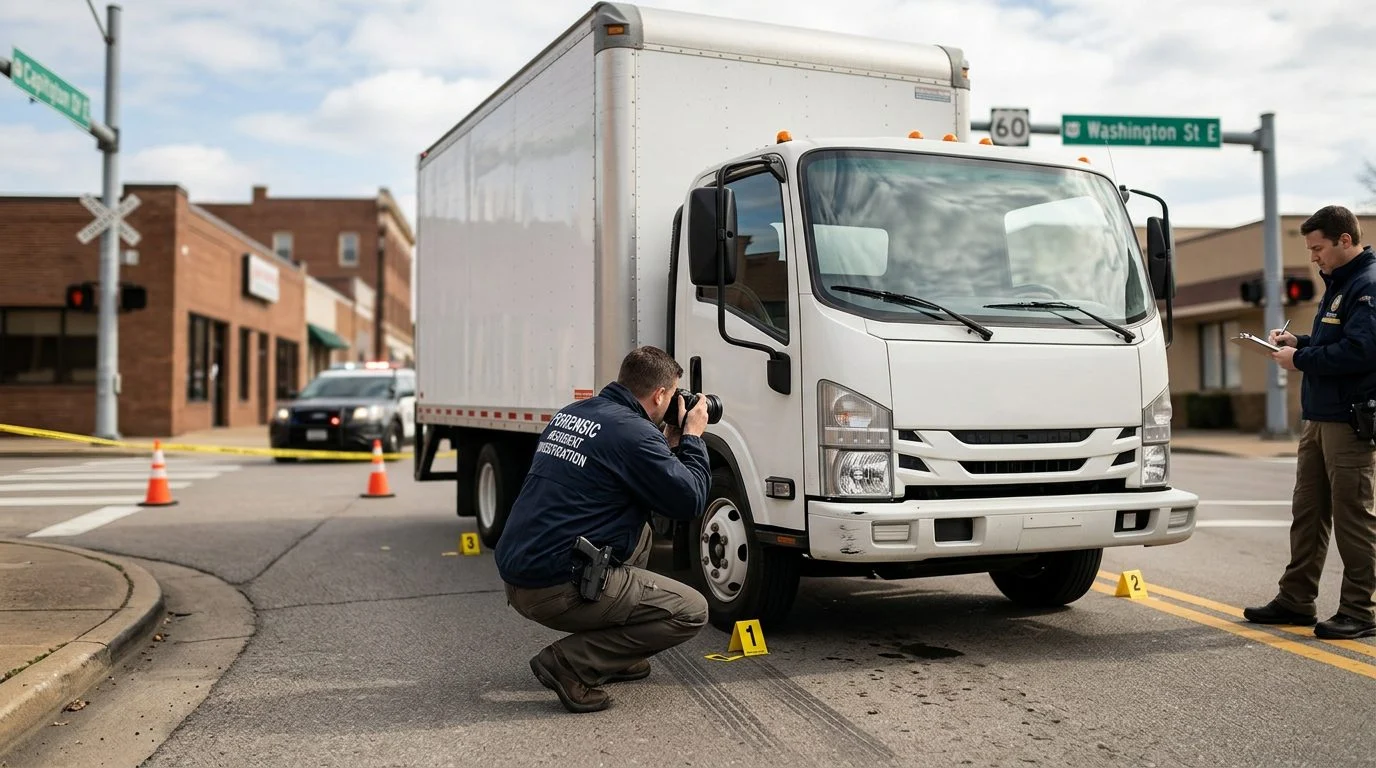
Commercial Vehicle Accident Claims | Charleston, WV
Hurt in a Commercial Vehicle Crash? Start with a Free Case Review
Big Bubba Injury Law represents people injured in crashes involving commercial trucks and other commercial vehicles. We serve Charleston and communities across West Virginia.
Published October 11, 2026
Commercial Vehicle Accidents: Serving Charleston, WV Injury Victims
A commercial vehicle accident is a crash involving a truck, bus or other vehicle used for work. These cases generally involve more parties, company records and federal rules than an ordinary car crash. If you’re looking for a commercial vehicle accidents law firm Charleston, this page explains how these claims generally work. Big Bubba Injury Law serves injured people across West Virginia, including Charleston.
Not sure what your next step is?
Talk it through with our team — the first case review is free, confidential, and carries no obligation.
What a Commercial Vehicle Accident Case Involves
A commercial vehicle accident case generally starts with a crash involving a vehicle used for business. Common examples include tractor-trailers, semi trucks, box trucks, delivery vans and commercial buses. Because a company may own, lease or operate the vehicle, these cases can involve more parties and records than a typical car claim.
This page is for people hurt in these crashes, including drivers, passengers and pedestrians. It is also for families in wrongful death cases, where a loved one dies because of a crash.
Big Bubba Injury Law handles car accidents, truck accidents, commercial vehicle accidents, catastrophic injuries, traumatic brain injury, spinal cord injury and wrongful death. The firm offers a free case review, a first meeting to look at your situation and your options. Each case depends on its own facts, so no two claims look the same.
Vehicles and Injuries Covered in Commercial Vehicle Cases
Commercial vehicle cases can involve several kinds of vehicles and injuries. Each one can raise different questions.
- Tractor-trailers and semi trucks
- Box trucks and other heavy trucks
- Delivery and commercial vans
- Commercial buses
Crash patterns that come up in these cases include rear-end collisions, jackknife crashes, lane-change crashes, rollovers and underride crashes. What caused a given crash depends on the facts.
According to the Insurance Institute for Highway Safety, large trucks often weigh 20 to 30 times as much as passenger vehicles. That size difference can affect how a crash unfolds. It does not decide fault in any particular case.
Some crashes cause catastrophic injuries, such as traumatic brain injury or spinal cord injury. These injuries may need long-term medical care. How each one affects a person varies, and recovery is individual. We do not describe fixed recovery paths.
Wrongful death claims arise when a person dies because of another’s wrongful act. Under W. Va. Code § 55-7-6, these claims are generally brought by the personal representative of the deceased person’s estate. Who may share in any recovery depends on West Virginia law and the facts.
Who May Be Responsible After a Commercial Vehicle Crash
Responsibility generally depends on the facts of each crash, and more than one party may be involved. Parties that may be considered include:
- The driver
- The motor carrier or employer
- The vehicle owner or lessor
- A maintenance or repair provider
- A company that loaded or secured the cargo
- Another driver or a property owner
Employer liability is generally a fact-specific question. Under W. Va. Code § 55-7-32, employers of commercial motor vehicles may face claims, and the statute includes limits that may apply depending on the facts. Claims such as negligent hiring or supervision generally depend on what a company knew or should have known. Exceptions may apply. See Clark v. Shores.
Under W. Va. Code § 55-7-13c, a plaintiff’s own fault generally does not bar recovery unless it is greater than the combined fault of all other responsible persons. Recovery is generally reduced in proportion to the plaintiff’s share of fault. Exceptions may apply depending on the facts.
Have questions about what happened?
Ask our team directly. The first conversation is free, confidential, and there is no obligation to continue.
How the Process Generally Works, Step by Step
The process generally moves from first contact to investigation, then to a claim or lawsuit. The steps and timing depend on the facts of each case.
- First contact. You tell us what happened, and when and where it happened.
- Free case review. We look at the crash, your injuries and any papers you have.
- Early requests. Where it fits the case, we may send records requests or preservation letters.
- Investigation. This may include police reports, medical records and, when needed, a review of how the crash happened.
- Claim presentation. Claims are generally presented to the insurers involved, and talks may follow.
- Lawsuit, if needed. If a resolution is not reached, a lawsuit may be filed, depending on the facts.
Timing is variable. A simple claim may move differently from a case involving serious injuries, several parties or a wrongful death. General information cannot predict how long your matter will take.
Insurers may contact injured people directly. You can choose how to respond to any insurer and whether to speak with a lawyer first.
Evidence and Early Steps That May Matter
Early evidence can be important, but its effect depends on the facts of each case. Evidence that may be relevant includes:
- Police and crash reports
- Photos and video from the scene
- Names of witnesses
- Medical records, bills and notes on symptoms
- Driver logs, inspection and maintenance records
- Dispatch and cargo records
Federal rules generally require drivers to record their duty status. They also bar tampering with an electronic logging device so it stops recording accurately. Under federal regulation § 395.8, a motor carrier subject to those rules generally must require each driver it uses to record the driver’s duty status for each 24-hour period, although exceptions may apply. Federal rules also generally require employers to test surviving drivers for alcohol and drugs after certain crashes. Timing depends on the crash type and any citation. Some records may be kept only for set periods, so asking for them early may matter.
Under W. Va. Code § 55-7-11a, some settlement talks and releases are generally restricted during the first twenty days after an injury. This applies when the injured person is hospitalized or unable to work. Statements to insurers can affect a claim in some cases, so it may help to speak with a lawyer before giving a recorded statement.
Seek medical care for any injury. Keep notes on symptoms, treatment and missed work. This is general guidance, not legal advice.
Deadlines matter too. Under W. Va. Code § 55-2-12, a personal injury action generally must be brought within two years after the right to bring it accrues. Exceptions may apply. Missing a deadline may affect your ability to sue.
Serving Charleston and Surrounding West Virginia Communities
We serve Charleston and Kanawha County injury victims. We also serve people across all 55 West Virginia counties.
Interstate 64, Interstate 77 and Interstate 79 run through or near the Charleston area. Commercial trucks travel these routes. A crash on them may involve a carrier based outside West Virginia. When that happens, additional federal or state rules may apply, depending on the facts.
Big Bubba Injury Law is a West Virginia personal injury firm. We handle the matters listed on this page for injured people and families statewide. Each case is reviewed on its own facts.
Want to know where you stand?
Tell us what happened and our team will walk you through the options available to you, at no cost.
Common Questions About Commercial Vehicle Accident Claims
Here are short answers to common questions. Each answer depends on the facts of your situation.
Do I have to talk to the truck company’s insurer?
Generally, you can choose whether to give a recorded statement. Exceptions may apply depending on the facts.
How long do these cases take?
Timing is variable. It depends on the facts, the injuries and whether a resolution is reached. This page cannot predict a timeline.
Can I still bring a claim if I was partly at fault?
Generally, West Virginia’s modified comparative fault rule may allow recovery if your fault is not greater than the combined fault of others (W. Va. Code § 55-7-13c). Exceptions may apply depending on the facts.
Who can file a wrongful death claim?
Generally, the personal representative of the deceased person’s estate brings the claim under West Virginia law. Who shares in any recovery depends on the facts and the statute.
Will my case go to trial?
Cases can resolve in different ways. Whether one goes to trial depends on the facts, and no outcome can be predicted here.
Related practice areas
- Commercial Vehicle Accidents in West Virginia: Your Rights & Next Steps
- Commercial Vehicle Accidents Law Firm West Virginia