
Morgantown, WV | Commercial Vehicle Accident Injury Help
Hurt in a Commercial Vehicle Crash Near Morgantown? Tell Bubba What Happened.
Big Bubba Injury Law represents people seriously hurt in crashes involving commercial vehicles and commercial trucks. We serve Morgantown and communities across West Virginia. Request a free case review that is confidential and comes with no obligation to continue.
Published October 29, 2026
Commercial Vehicle Accidents Law Firm Morgantown, WV
Big Bubba Injury Law is a commercial vehicle accidents law firm that serves Morgantown and communities across West Virginia. If a semi, box truck, or other business vehicle hurt you or someone you love, more than one party may share responsibility. West Virginia sets firm time limits for filing claims, and key crash records can be lost quickly. This page explains who may be responsible, what evidence matters, and what to expect after you reach out.

What Counts as a Commercial Vehicle Accident
A commercial vehicle accident is a crash involving a vehicle used for business, freight, or work. Common examples include:
- Tractor-trailers and semi trucks
- Box trucks and delivery vans
- Buses and other vehicles that carry people for business
- Dump trucks and other work trucks used on job sites
Commercial vehicles are often far heavier than passenger cars. A loaded tractor-trailer can weigh many times more than a sedan, so these crashes often cause more severe injuries. This page is written for drivers, passengers, pedestrians, and families of people killed in these crashes. Crashes on Morgantown streets and on nearby highways such as I-79 and I-68 can involve commercial traffic, including in Monongalia County.
If that describes your crash, you can tell Bubba what happened through the firm’s contact page.
Who Can Be Held Responsible After a Commercial Vehicle Crash
More than one person or company can share responsibility after a commercial vehicle crash. The driver is only one possible party. Others may include:
- The driver whose actions caused the crash
- The motor carrier that employs or contracts with the driver
- The owner or lessor of the vehicle
- A freight broker or shipper that chose the carrier
- Maintenance or loading contractors whose work played a role
In Montgomery v. Caribe Transport II, LLC (2026), the U.S. Supreme Court held that a state-law negligent-hiring claim against a broker falls within a federal safety exception.
Under W. Va. Code § 55-7-13c, each defendant is generally liable only for its own percentage of fault. Under W. Va. Code § 55-7-13d, fault of a nonparty is considered if the plaintiff entered into a settlement agreement with the nonparty or if a defending party gives notice no later than one hundred eighty days after service of process upon that defendant that the nonparty was wholly or partially at fault (W. Va. Code § 55-7-13d). Commercial trucks are often insured under different policies than personal cars, so the firm works to identify every insurer early.
Evidence That Matters Early in a Commercial Vehicle Case
Much of the key evidence is held by the trucking company, not by the injured person. Requesting it quickly matters. Important evidence includes:
- Hours-of-service and electronic logging records. Except for private motor carriers of passengers (nonbusiness), federal rules require motor carriers to make drivers record duty status for each 24-hour period (49 C.F.R. § 395.8). The same rule bars false reports in connection with a duty status.
- Driver qualification files. Each motor carrier must keep a file for every driver it employs, and keep it while the driver works there and for three years after (49 C.F.R. § 391.51).
- Vehicle data. Engine data, dash camera video, and GPS records can show speed and braking.
- Post-crash testing records. Federal rules may require drug and alcohol testing after some commercial vehicle crashes (FMCSA).
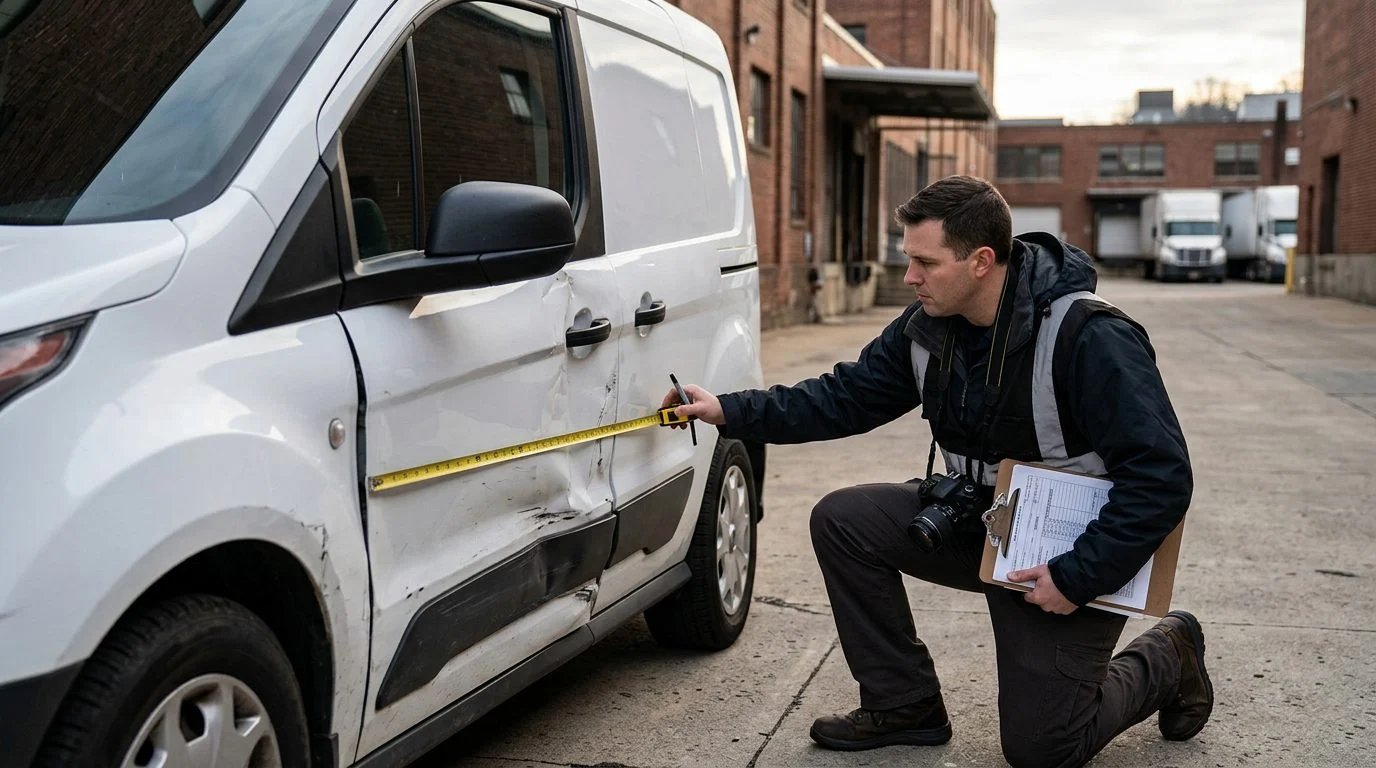
- Scene evidence. Police reports, witness names, and photos from the scene.
Federal rules allow records to be kept with any technology that accurately reflects the information and stays accessible (49 C.F.R. § 379.7). Ask for a free case review soon, so the firm can help identify and request these records while they still exist.
Injuries and Losses the Firm Handles
The firm handles claims for catastrophic injuries, traumatic brain injury, spinal cord injury, and wrongful death after car and commercial vehicle crashes.
- Catastrophic injuries: serious internal injuries, multiple fractures, amputations, and severe burns.
- Traumatic brain injury: including concussions with symptoms that last. Doctors often track these injuries over time, so ongoing records matter.
- Spinal cord injury: including paralysis and long-term medical and daily-living needs.
- Wrongful death: claims brought for families after a fatal crash.
Economic losses are money-based, such as medical bills, lost wages, and future care needs. Non-economic losses include pain, suffering, and loss of companionship. In a West Virginia wrongful death case, the jury’s verdict shall include, but may not be limited to, damages for sorrow, mental anguish, and solace, including society, companionship, comfort, guidance, kindly offices and advice of the decedent. It may also consider lost income, care expenses, and reasonable funeral expenses (W. Va. Code § 55-7-6). That cap has conditions and exceptions, and it applies only to causes of action arising after July 1, 2024.
How Fault Is Shared and Filing Deadlines in West Virginia
In West Virginia, you can still recover if you were partly at fault. Your recovery is reduced by your share of fault. Under W. Va. Code § 55-7-13c, your fault bars recovery only if it is greater than the combined fault of everyone else responsible. If it is less, your recovery is reduced in proportion to your fault.
Under W. Va. Code § 55-2-12, every personal action for which no limitation is otherwise prescribed must be brought within two years after the right to bring it accrues if it is for damages for personal injuries. Under W. Va. Code § 55-7-6, a wrongful death action shall be commenced within two years after the death of the deceased person, subject to the provisions of section eighteen, article two, chapter fifty-five. W. Va. Code § 55-7-6 reads: “The provisions of this section shall not apply to actions brought for the death of any person occurring prior to July 1, 1988.” The exact deadline in your case depends on the facts, so acting early protects your options.
An insurance claim is not a lawsuit. Talks with an insurer do not change the court filing deadlines.
How the Process Works After You Reach Out
After you contact the firm, the process usually moves through five stages:
- Free case review. You describe the crash, your injuries, and the people and companies involved.
- Records gathering. The firm collects medical records, the crash report, and details about the vehicle and its owner.
- Preservation and investigation. The firm sends written requests to the carrier and other possible responsible parties to keep evidence.
- Medical documentation. Settlement talks usually wait until treatment shows the full picture.
- Negotiation or lawsuit. The firm negotiates with insurers and, if needed, files suit in the proper West Virginia court.
Early contact from an insurer deserves care. Under W. Va. Code § 55-7-11a, a settlement, release or statement obtained in violation of the statute’s twenty-day restriction may be disavowed by the injured person at any time within one hundred eighty days from the date of the personal injury, by executing a written statement of disavowal and forwarding a copy to the person who violated the section; the settlement, release or statement may not be admissible in evidence for any purpose in any court or other proceeding relating to the personal injury if any consideration paid is repaid or returned to the person who paid it at the time the copy is forwarded (W. Va. Code § 55-7-11a). Each stage can take time, especially in catastrophic and wrongful death cases.
Questions People Ask Before Calling a Lawyer
You can talk with the firm before you give any statement to an insurer. Here are common questions.
Should I give a recorded statement to the trucking company’s insurer?
Talk with the firm first, since it can advise you on those calls.
What if the truck driver is from another state?
Federal trucking rules apply to many interstate carriers, and the firm reviews which rules fit your crash.
Does a rural road near Morgantown change my claim?
The location affects which records and witnesses matter, so the firm looks closely at the scene details.
What if my family member died in the crash?
A personal representative of the deceased person brings the wrongful death action by and in the name of the personal representative (W. Va. Code § 55-7-6).
Do I need a police report before I reach out?
You don’t. The firm can help request the crash report.
What to Do Next After a Morgantown Commercial Vehicle Crash
Right after a crash, get medical care and follow your treatment plan. Keep these habits in place while your claim is open:
- Keep records of medical bills, prescriptions, and missed work.
- Write down what you remember while the details are fresh.
- Avoid posting about the crash on social media.
Big Bubba Injury Law is a personal injury firm focused on car accidents, truck and commercial vehicle accidents, catastrophic injuries, traumatic brain injury, spinal cord injury, and wrongful death. The firm serves Morgantown and communities across West Virginia. Support staff help with records and scheduling.
If a commercial vehicle crash left you or someone you love hurt near Morgantown, reach out to the firm now, while the details are still clear.