
Semi Truck Accidents | West Virginia
Semi Truck Accident Settlement Timeline: What to Expect
How long a semi truck accident claim takes to settle depends on the facts of each case, so timing varies widely. Claims involving catastrophic injury generally take longer, although exceptions may apply depending on the facts. Here's what happens at each stage.
Published October 02, 2026
How Long Does a Semi Truck Accident Settlement Take?
Semi truck accident settlements rarely follow a single timeline. Understanding the phases of settlement helps you plan financially and emotionally while your claim moves forward.
Not sure what your next step is?
Talk it through with our team — the first case review is free, confidential, and carries no obligation.
The Settlement Timeline: What to Expect
Settlement discussions generally depend on your medical condition stabilizing and the full scope of your injuries becoming clear, although this varies with the facts of each case. Settling before treatment is complete can mean that the full extent of your injuries is not yet known when you decide whether to accept an offer.
In catastrophic-injury cases—traumatic brain injuries, spinal cord injuries, wrongful death—the timeline may extend beyond straightforward accident claims, depending on the facts of each case, because these injuries can involve longer medical evaluation, specialist consultation, and documentation of long-term care needs. A semi truck accident settlement involves five distinct phases: medical treatment and documentation, investigation and evidence collection, demand letter and initial negotiations, possible litigation, and discovery or trial.
Phase 1: Medical Treatment and Documentation (Weeks to Months)
Your medical condition must stabilize before settlement discussions can meaningfully begin. This phase includes emergency care, ongoing treatment, specialist consultations, and comprehensive medical records gathering.
Insurance companies generally look for a clear picture of your injuries and long-term prognosis before making an offer, although this depends on the facts of each case. If you settle too early, before treatment is finished or before doctors can predict your recovery, your medical documentation may not yet reflect the full extent of your injuries. This phase can last weeks for minor injuries or many months for catastrophic injuries requiring multiple surgeries, rehabilitation, or ongoing specialist care.
Your medical records can be important evidence in documenting your injuries. Appointments, test results, and treatment recommendations may be relevant evidence in documenting your injuries and treatment, depending on the facts of your case.
Phase 2: Investigation and Evidence Collection (Weeks to Months)
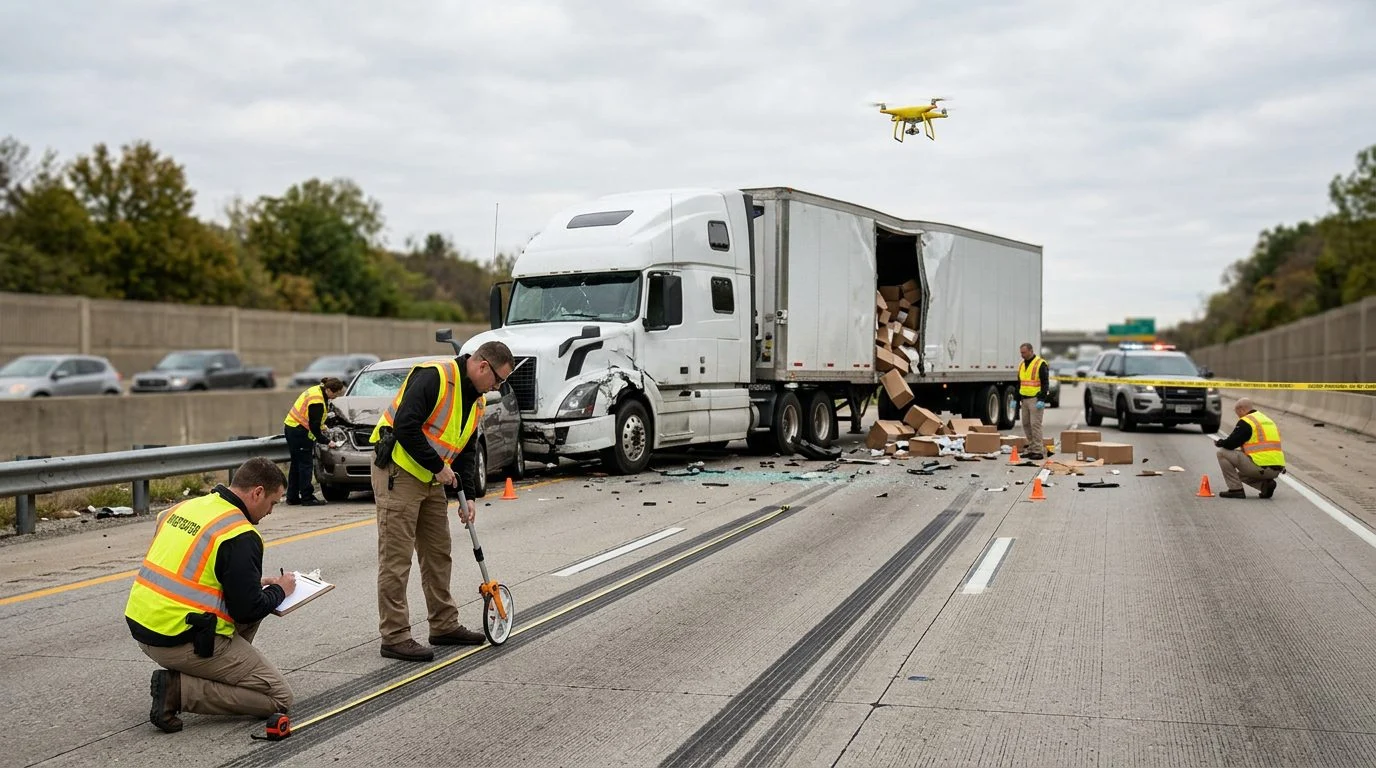
While you’re receiving medical care, investigators examine the accident scene, obtain police reports, collect witness statements, and preserve vehicle damage evidence. This phase can be more complex in semi truck accidents than in standard vehicle collisions, depending on the facts of each case.
Commercial truck accidents require investigation of federal hours-of-service regulations, driver logs, maintenance records, company safety policies, and industry standards. Federal hours-of-service regulations generally limit how long commercial truck drivers may drive and be on duty, and exceptions may apply depending on the facts. Violations of these rules may be important evidence when fault is investigated.
The strength and clarity of evidence may affect how quickly the insurance company moves toward settlement, depending on the facts of the case. Delays in obtaining records from the trucking company, the Federal Motor Carrier Safety Administration, or government agencies can significantly extend this phase.
Phase 3: Demand Letter and Initial Negotiations (Weeks to Months)
A demand letter presents your injuries, medical expenses, lost wages, pain and suffering, and other damages to the insurance company along with a settlement request. This letter is your first formal claim for compensation.
The insurer’s response time varies widely. Some respond within weeks; others take months. An initial offer may be lower than the demand, depending on the facts of the case and the insurer’s position. Back-and-forth negotiation is standard. How quickly this phase resolves depends on the facts of your case, including how clearly liability can be established.
An insurer may want to close a claim while also seeking to limit the amount it pays, and its approach can vary with the facts of each case.
Phase 4: Filing a Lawsuit (If Necessary)
If settlement negotiations stall, a lawsuit may be filed in West Virginia state or federal court. Filing suit does not necessarily lead to faster resolution, and depending on the facts it may lengthen the timeline because it starts formal legal procedures.
Once a lawsuit is filed, the case enters the discovery phase. Many cases settle during or after discovery, even after a lawsuit is filed, as both sides gain a clearer picture of the case’s strength and the likely outcome at trial.
Have questions about what happened?
Ask our team directly. The first conversation is free, confidential, and there is no obligation to continue.
Phase 5: Discovery and Pre-Trial (Timing Varies by Case)
Discovery involves exchanging evidence, written questions called interrogatories, and sworn statements called depositions. Both sides question each other’s witnesses and experts under oath.
Expert witnesses may be retained to testify about accident reconstruction, medical causation, or trucking industry standards. This phase is often the longest and most expensive part of litigation. Settlement discussions frequently resume during discovery as the evidence becomes clearer and both sides assess their position.
Factors That Affect How Long Settlement Takes
Injury severity. Catastrophic injuries like traumatic brain injury and spinal cord injury require longer medical evaluation and typically result in longer negotiations because lifetime care needs must be documented and valued.
Liability clarity. Cases where fault is obvious settle faster. Disputed liability cases—where both sides argue the other driver caused the accident—take longer to resolve.
Insurance company responsiveness. Some insurers move quickly; others delay deliberately, hoping you’ll accept less out of desperation.
Medical complexity. Cases requiring multiple specialists or ongoing treatment extend the timeline because your medical condition continues to evolve.
Evidence availability. Delays in obtaining trucking company records, maintenance logs, driver information, or federal records slow the entire process.
Number of parties involved. Multiple vehicles, multiple insurers, or multiple defendants complicate and lengthen settlement because each party must agree.
Whether a lawsuit is filed. Litigation significantly extends the timeline, but sometimes leads to better outcomes because formal discovery forces transparency.
Why Timelines Vary So Much
Semi truck accidents are inherently complex. Federal trucking regulations, commercial insurance policies, serious injuries, and the involvement of large trucking companies all add layers of complexity that standard vehicle accidents don’t have.
No two accidents are identical. Your specific circumstances—the type and severity of your injury, whether liability is clear, how the insurance company behaves, and whether a lawsuit becomes necessary—determine your timeline. Catastrophic injuries and wrongful death claims involve additional legal and emotional complexity that can extend timelines beyond those of injury claims.
What You Can Do to Keep Your Claim Moving
Follow all medical treatment recommendations and keep detailed records of appointments, expenses, and symptoms. This documentation supports your claim’s value and helps your legal team understand your full recovery needs.
Respond promptly to requests for information from your legal representative or the insurance company. Delays on your end slow the entire process.
Preserve all evidence: photos, videos, witness contact information, and communications with the trucking company or insurer. Evidence that disappears cannot be used to support your claim.
Avoid posting about your accident or injuries on social media. Insurance companies monitor these accounts and may use your posts against you.
Keep a journal of how your injuries affect your daily life, work, and relationships. This supports your claim’s value and helps document your recovery.
Want to know where you stand?
Tell us what happened and our team will walk you through the options available to you, at no cost.
Moving Forward After a Semi Truck Accident
If you’re waiting for your semi truck accident claim to settle and feel stuck, or if you haven’t yet filed a claim and want to understand your options, a case review can clarify where you stand and what a realistic timeline looks like for your specific situation. If you are uncertain about timelines, trying to plan your recovery, or wondering whether to pursue a claim, it can help to talk through what happens next. A conversation about your accident can help you understand what to expect in the months ahead.
Big Bubba | West Virginia Truck Accident Law
Representing people seriously hurt in semi truck accidents, commercial vehicle collisions, and catastrophic injuries across West Virginia.
The Settlement Phases
Medical Stabilization & Investigation
Settlement cannot begin until your medical condition stabilizes and the full scope of your injuries becomes clear. We gather medical records, accident reports, and evidence of liability during this phase.
Demand & Negotiation
Once we have a complete picture of your injuries and damages, we prepare and send a demand to the at-fault party's insurance company. Negotiation back-and-forth usually takes 2–6 months, depending on complexity and whether liability is disputed.
Settlement Agreement or Litigation
If negotiation succeeds, we reach a settlement agreement and you receive payment after final paperwork is signed. If not, we file a lawsuit. Litigation adds 6–18+ months, depending on court schedules and case complexity.
Payment & Resolution
Once settled or a judgment is entered, funds are disbursed after any liens or medical payments are resolved. You receive your portion of the recovery.
Why Catastrophic Injuries Take Longer
Cases involving traumatic brain injury, spinal cord injury, or permanent disability require more time to fully understand long-term medical needs, lost earning capacity, and lifetime care costs. Rushing to settle before these facts are clear can leave you with far less than your claim is worth.
What Affects Your Timeline
Clarity of Liability
If fault is clear, settlement moves faster. Disputed liability—common in multi-vehicle or commercial truck crashes—adds months of investigation and negotiation.
Injury Severity
Straightforward injuries settle sooner. Catastrophic injuries require time to document long-term prognosis, rehabilitation needs, and lifetime medical costs.
Insurance Company Response
Some insurers respond quickly; others delay. We push for timely responses and are prepared to file suit if necessary.
Court Availability
If your case goes to trial, local court schedules affect timing. Some cases wait months for a trial date.
About Costs and Fees
We work on a contingency basis: no fees unless there is a recovery. You are responsible for court costs and case expenses. We discuss all costs upfront so you understand what to expect.
Ready to Move Forward?
Related practice areas
- Commercial Vehicle Accidents in West Virginia: Your Rights & Next Steps
- Semi-Truck Accident Lawyer in West Virginia | Big Bubba