
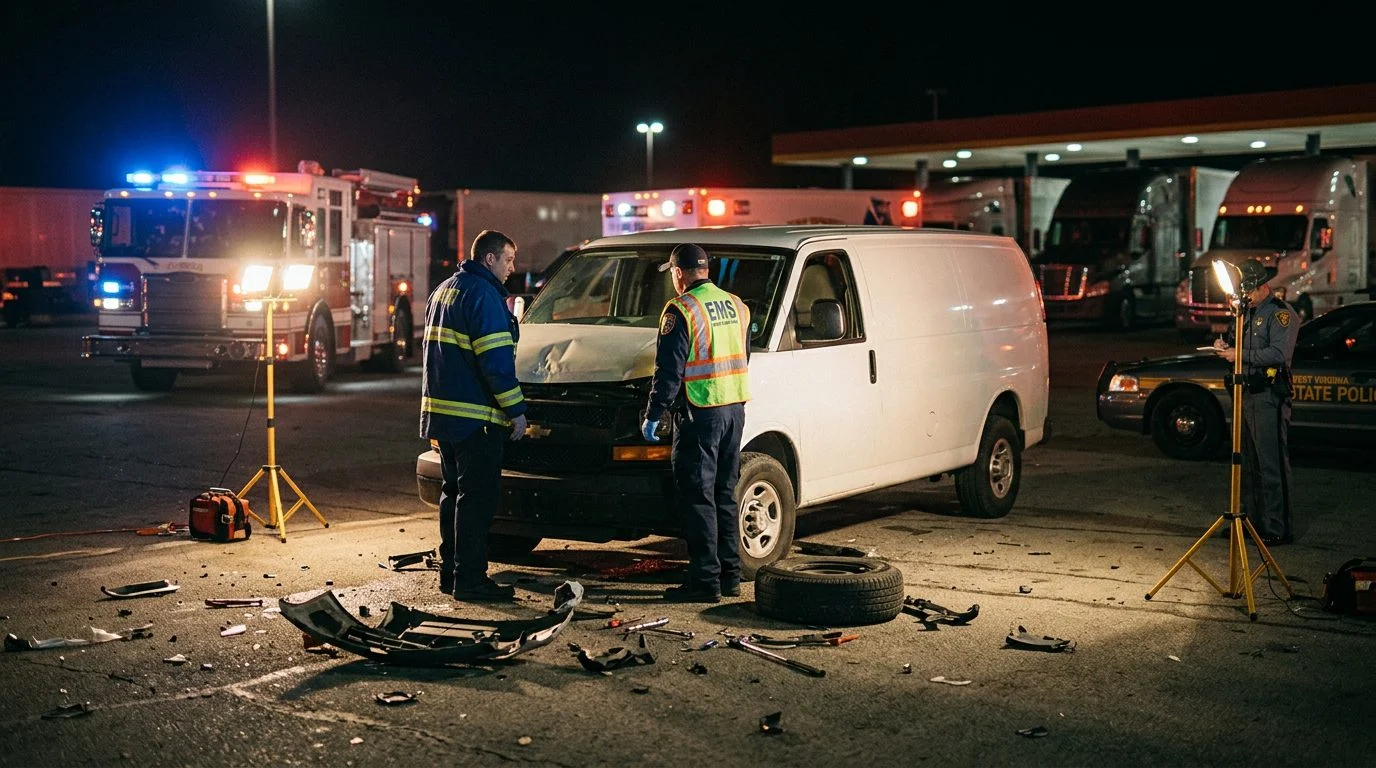
Work Van Accident | West Virginia
Hurt in a Work Van Accident? Here's What to Do Next
Immediate steps to protect your health, your rights, and your recovery.
Published October 01, 2026
Work Van Accident: What to Do Next in West Virginia
If you’ve been in a work van accident, your immediate priority is safety and medical care—then understanding who’s responsible and what rights you have. A work van accident can leave you injured, confused about liability, and unsure whether you’re covered by workers’ compensation alone or whether you have a claim against another driver or party.
This guide walks you through the practical steps to take right now, the liability rules that apply in West Virginia, and when it makes sense to talk to someone about your situation.
Not sure what your next step is?
Talk it through with our team — the first case review is free, confidential, and carries no obligation.
What Happens Right After a Work Van Accident
The moments after a crash are disorienting and sometimes painful. Your first job is to get safe and check for injuries.
Check for injuries and move to safety if possible. If anyone is hurt or the vehicles are blocking traffic, call 911 right away. Do not stay in a damaged vehicle in the roadway. If you can move safely, get to the shoulder or a nearby safe location.
Call 911 if there is injury or significant damage. A police report creates an official record of the accident. Even if damage seems minor, a report protects you later.
Document the scene with photos and witness information. Take pictures of vehicle damage, road conditions, traffic signs, and the overall scene. Write down the names, phone numbers, and addresses of anyone who saw the crash. Get the other driver’s name, phone number, insurance company, policy number, vehicle make and model, and license plate.
Report the accident to your employer and supervisor as soon as safely possible. Your employer needs to know. Do not delay this—it’s required for workers’ compensation and your employer’s insurance.
Do not admit fault or apologize at the scene. Stick to facts: “I was traveling north on Main Street when the other vehicle entered my lane.” Avoid statements like “I wasn’t paying attention” or “I’m sorry.” These can be used against you later.
Exchange information with other drivers, but do not discuss the accident. Be polite and factual. Provide your name, phone, and insurance details. You do not have to discuss how the crash happened or who you think caused it.
Who Is Liable in a Work Van Accident
Liability—who is legally responsible—depends on who caused the crash and the circumstances. In West Virginia, a fault-based insurance state, the at-fault driver’s insurance typically covers damages.
Your employer may be liable under vicarious liability. An employer can sometimes be held responsible for a crash its driver caused even if the employer wasn’t directly at fault, but if you were injured while performing your own work duties, an employer covered by workers’ compensation generally is not liable in damages for your injuries, however they occurred. Your own medical bills and lost wages are generally addressed through workers’ compensation rather than a damages claim against your employer.
The other driver may be liable if their negligence caused the crash. If the other driver was speeding, distracted, ran a red light, or violated a traffic law, they may be at fault. Their insurance may help cover your damages, depending on the facts of the crash and the terms of the policy.
Multiple parties can share liability. In some accidents, both drivers share fault. West Virginia recognizes comparative negligence (shared fault). You can still recover damages even if you were partially at fault, as long as your fault is not greater than the combined fault of all others responsible.
Your employer’s commercial policy and your own insurance may both come into play. Your employer carries commercial vehicle insurance. You may also have personal auto insurance. The insurers will investigate to determine who pays.
Injuries From Work Van Accidents
Common injuries include traumatic brain injury, spinal cord damage, broken bones, and internal injuries. Traumatic brain injury (TBI) can result from impact to the head, even without loss of consciousness. Symptoms may include headache, confusion, memory problems, dizziness, or mood changes. Spinal cord injuries can cause partial or complete paralysis, loss of sensation, or chronic pain, and these injuries often require long-term medical care and can permanently affect your ability to work.
Seek medical attention immediately, even if you feel fine. Some injuries don’t show symptoms for hours or days. A medical evaluation creates a record linking your injuries to the accident. This documentation is critical for both workers’ compensation and any third-party claim.
Keep all medical records and document your symptoms and treatment. Save bills, test results, therapy notes, and prescriptions. Photograph visible injuries. Write down how your injuries affect daily activities and work. This evidence supports your claim.
Have questions about what happened?
Ask our team directly. The first conversation is free, confidential, and there is no obligation to continue.
Your Rights as an Employee After a Work Van Accident
West Virginia law protects injured employees in several ways.
You have the right to workers’ compensation benefits if injured during work duties. Workers’ compensation covers medical treatment, rehabilitation, and wage replacement while you recover. You do not have to prove fault—only that the injury happened at work.
You may also have the right to pursue a personal injury claim against a negligent third party. If another driver caused the crash, you may be able to bring a claim against that driver for damages beyond workers’ compensation, such as pain and suffering or permanent disability. Workers’ compensation and a third-party claim are separate.
Your employer cannot retaliate against you for reporting an injury or accident. It is illegal for your employer to fire, demote, or punish you for filing a workers’ compensation claim or reporting the accident.
You have the right to medical treatment and wage replacement under West Virginia law. Your employer’s workers’ compensation insurance must cover reasonable and necessary medical care related to your injury.
Do not sign anything or give a recorded statement without understanding your rights. Insurance adjusters may ask you to sign forms or record your account of the accident. Before you do, make sure you understand what you’re signing and what it means. You have the right to take time and think it over.
Insurance and Reporting Considerations
How you report the accident matters. Be strategic and careful.
Report the accident to your employer’s insurance company promptly. Delays can complicate your claim. But remember: the insurance company works for your employer, not for you.
Be truthful but careful in your statement. Stick to facts you know directly: what you were doing, what you saw, what happened. Do not guess, speculate, or offer opinions. Do not say things like “The other driver was reckless” or “I think I have a concussion.” Stick to “I was stopped at a red light” or “I have a headache.”
Do not accept a settlement offer without understanding the full extent of your injuries. Some injuries take weeks or months to fully appear. A quick settlement can lock you into a lower amount. If you’re seriously hurt, do not rush.
Keep copies of all accident reports, medical records, and correspondence. Create a file. Save emails, letters, and documents. You may need this evidence later.
When to Reach Out for Legal Guidance
You don’t need a lawyer for every accident. But certain situations call for a conversation.
Reach out if you suffered serious injuries—traumatic brain injury, spinal cord damage, broken bones, or injuries causing significant pain or disability. These injuries often require ongoing care and can affect your ability to work long-term.
Reach out if the accident was caused by another driver’s negligence. You may have a claim against that driver’s insurance separate from workers’ compensation.
Reach out if your employer or their insurance company is pressuring you or denying your claim. You have rights, and you shouldn’t face that pressure alone.
Reach out if you’re unsure whether you have a claim beyond workers’ compensation. Many injured workers don’t realize they can pursue a third-party claim. A conversation can clarify your options.
Reach out if medical bills are mounting or you cannot return to work. Serious injuries can create financial strain. You may have options to recover damages.
Frequently Asked Questions
What should I do if I feel fine right after the accident?
Seek medical attention anyway. Some injuries don’t cause symptoms immediately. A medical evaluation creates a record and protects your health.
Can I be fired for reporting a work van accident?
No. West Virginia law prohibits employer retaliation for reporting workplace injuries or filing a workers’ compensation claim.
Do I have to choose between workers’ compensation and a lawsuit?
No. You can receive workers’ compensation benefits and pursue a separate claim against a negligent third party who caused the crash.
How long do I have to file a claim in West Virginia?
What if I was partially at fault for the work van accident?
If you’ve been hurt in a work van accident and you’re trying to figure out whether you have a claim beyond workers’ compensation, or if another driver caused the crash, you can reach out to talk through what happened and what comes next. There’s no obligation—just a chance to understand your options.
Seek Medical Care First—Even If You Feel Fine
Some injuries don't show symptoms right away. A medical evaluation creates a record of your condition and protects your health. Don't wait to see if pain develops later.
What to Do After a Work Van Accident
Get Medical Attention
See a doctor or go to an emergency room, even if you don't feel injured. Document your condition and any symptoms, no matter how minor they seem.
Report the Accident
Tell your employer and supervisor about the accident. West Virginia law protects you from retaliation for reporting workplace injuries.
Gather Information
Write down what happened, where it occurred, who was present, and any damage to the vehicle. Take photos if it's safe to do so.
Keep Records
Save all medical records, treatment bills, accident reports, and communications with your employer. These documents matter for your case.
Want to know where you stand?
Tell us what happened and our team will walk you through the options available to you, at no cost.
Why You Need a Lawyer After a Work Van Accident
Protect Your Rights
You have protections under West Virginia law. A lawyer can help you understand and assert those protections in dealings with your employer and insurers.
Handle the Paperwork
Accident claims involve forms, deadlines, and legal requirements. We manage the details so you can focus on healing.
Fight for Fair Compensation
You deserve recovery for medical bills, lost wages, pain, and suffering. We advocate for the full value of your claim.
You're Not Alone
We work with you every step of the way, answering your questions and keeping you informed about your case.
Ready to Discuss Your Work Van Accident?
Related practice areas
- Truck Accident Injuries: Broken Bones & Ligament Damage