
Spinal Cord Injury | West Virginia
Living With Quadriplegia After a West Virginia Crash
A serious spinal cord injury can change your health, your work, and your family's daily routine. The firm is here to listen and help you think through what comes next.
Published November 25, 2026
If a crash has left you or someone you love unable to move the arms or legs, you may be looking for clear answers while decisions pile up. In short, quadriplegia is a spinal cord injury in the neck that can affect all four limbs and the trunk. In West Virginia, a personal injury lawsuit generally must be filed within two years, and exceptions may apply (W. Va. Code § 55-2-12). This page explains the medical picture, the state rules that shape a claim, and the records that matter most.
What Quadriplegia Means After a Crash
Quadriplegia, also called tetraplegia, is a loss of movement and feeling in the arms, trunk and legs. It generally comes from injury to the spinal cord in the neck, which is called the cervical spine. The spinal cord carries signals between the brain and the body. When it is hurt in the neck, signals to the areas below may be blocked or weakened.
This page is written for injured adults in West Virginia. It is also written for the spouses, parents and adult children who are researching on their behalf. Many readers are doing this while a loved one is still in the hospital or in rehabilitation. The first weeks often feel like a blur of transfers, doctor visits and phone calls. You don’t have to sort out every question at once.
We serve injury victims across West Virginia, including Charleston, Huntington, Morgantown, Wheeling, Martinsburg, Parkersburg, Beckley, Clarksburg, Fairmont and Weirton. We handle car accident, commercial truck and commercial vehicle claims, along with catastrophic injury, spinal cord injury and wrongful death matters.
If a crash has left someone you love with quadriplegia, you don't have to work out the claim alone. Reach out to us and tell us what happened. Talk it through with Big Bubba — the first case review is free, confidential, and carries no obligation.

How a Crash Can Cause Quadriplegia
A crash can cause quadriplegia when a sudden force injures the cervical spinal cord. Common examples include a hard stop, a rollover, or an impact with a large truck. The force can damage the cord even when bones are not broken, so imaging matters.
Injuries higher in the neck are generally associated with a wider loss of function. More of the body’s signal pathways pass through that area. The level of the injury is one of the first details a medical team records.
Doctors describe spinal cord injuries as complete or incomplete. The ASIA Impairment Scale is a common way to classify them. A complete injury generally means no function is present below the injury level. An incomplete injury generally means some function may remain. The medical team makes this classification over time, not in the first hours.
That is why early records matter. The first imaging, the exam notes and the early descriptions of movement and feeling help document the level and completeness of the injury. Those details shape the medical picture, and the medical picture shapes how a claim is built.
What Quadriplegia Affects and How It Differs From Paraplegia
Quadriplegia generally affects the arms, hands, trunk and legs. Paraplegia generally affects the legs and lower trunk. So people with paraplegia often keep more use of their arms and hands. That difference can matter when you are deciding how to pursue a claim.
Common effects of quadriplegia include:
- Arm and hand movement, grip and fine motor control
- Trunk balance and sitting stability
- Breathing support in some cases
- Bladder and bowel control
- Temperature regulation and sensation
The exact pattern differs from person to person. It depends on the injury level and on whether the injury is complete or incomplete.
Daily life often needs equipment, home modifications and in-home care. A West Virginia spinal cord injury study looks at how injury severity, rehabilitation access and insurance status relate to long-term function and mobility. Rehabilitation records can help show what daily life requires.
How West Virginia Law Shapes a Claim After a Crash
West Virginia generally allows two years to file a personal injury lawsuit, and exceptions may apply. The filing period is set by W. Va. Code § 55-2-12. Waiting can put a claim at risk, so it helps to act early.
Under W. Va. Code § 55-7-13a, comparative fault means the degree to which a person’s fault was a proximate cause of an alleged personal injury, death, or property damage, expressed as a percentage, and liability is allocated to each person in direct proportion to that percentage of fault. Under W. Va. Code § 55-7-13c, fault chargeable to the injured person generally does not bar recovery unless that person’s fault is greater than the combined fault of all others responsible. If it is less, the recovery is reduced in proportion to that person’s share of fault.
In a truck or company vehicle crash, more than one party may be considered. W. Va. Code § 55-7-32 defines an “employer defendant” to include the vehicle’s owner, the operator’s employer, and any person holding legal control over the vehicle or operator. Which parties may be responsible depends on the facts.
If another driver was at fault, the injured person may have a claim against that driver and the driver’s insurer. Fault is decided from the facts of the crash, not from the injury alone.
If a crash injury leads to death, a wrongful death action generally must be brought within two years after the death, under W. Va. Code § 55-7-6. That action is generally brought by the decedent’s personal representative.
What Compensation May Cover After a Spinal Cord Injury
The amount in any claim depends on the medical evidence, the facts of the crash and the insurance involved. Every case turns on its own records.
Categories that may be considered in an injury claim include:
- Past and future medical care and rehabilitation
- Equipment, home modifications and attendant care
- Lost earnings and reduced ability to earn in the future
- Pain, suffering and loss of enjoyment of life
Future care needs are generally documented with input from treating physicians. In some cases, life-care and vocational professionals also contribute. Those needs often shape how a claim is evaluated.
For a wrongful death claim, the statute lists different categories. Under W. Va. Code § 55-7-6, they include sorrow, mental anguish and solace, reasonably expected loss of income and services, care and treatment expenses, and reasonable funeral expenses.
Some insurers may dispute the extent of an injury or the expense of future care. Clear, complete records help answer that question. Also, under W. Va. Code § 55-7-25, a complaint in these cases may not state a specific dollar amount of damages.
Evidence and Records That Matter Early
The records that commonly matter fall into a few groups. Start with the crash report and the medical chart. Then add the people and details from the scene.
Under W. Va. Code § 17C-4-7, an investigating officer must prepare a report for a crash that causes bodily injury or death. For a crash that causes bodily injury or death, or total property damage to an apparent extent of $1,000 or more, the report is due within 24 hours after the investigation is complete. If the investigating officer cannot complete the investigation within 10 days of the crash, a preliminary report is due on the 10th day after the crash, and the final report is due within 24 hours of completing the investigation (W. Va. Code § 17C-4-7). The same statute generally requires the investigating officer, upon request, to share owner, operator and insurance information with the other involved parties and their insurance agents within 24 hours of the crash, at no cost, and this duty may apply whether or not the accident report has been completed.
Medical records commonly include:
- Emergency, trauma and hospital admission notes
- Imaging such as MRI and CT scans
- Surgical notes and rehabilitation records
- A physician’s written description of the injury level and whether it is complete or incomplete
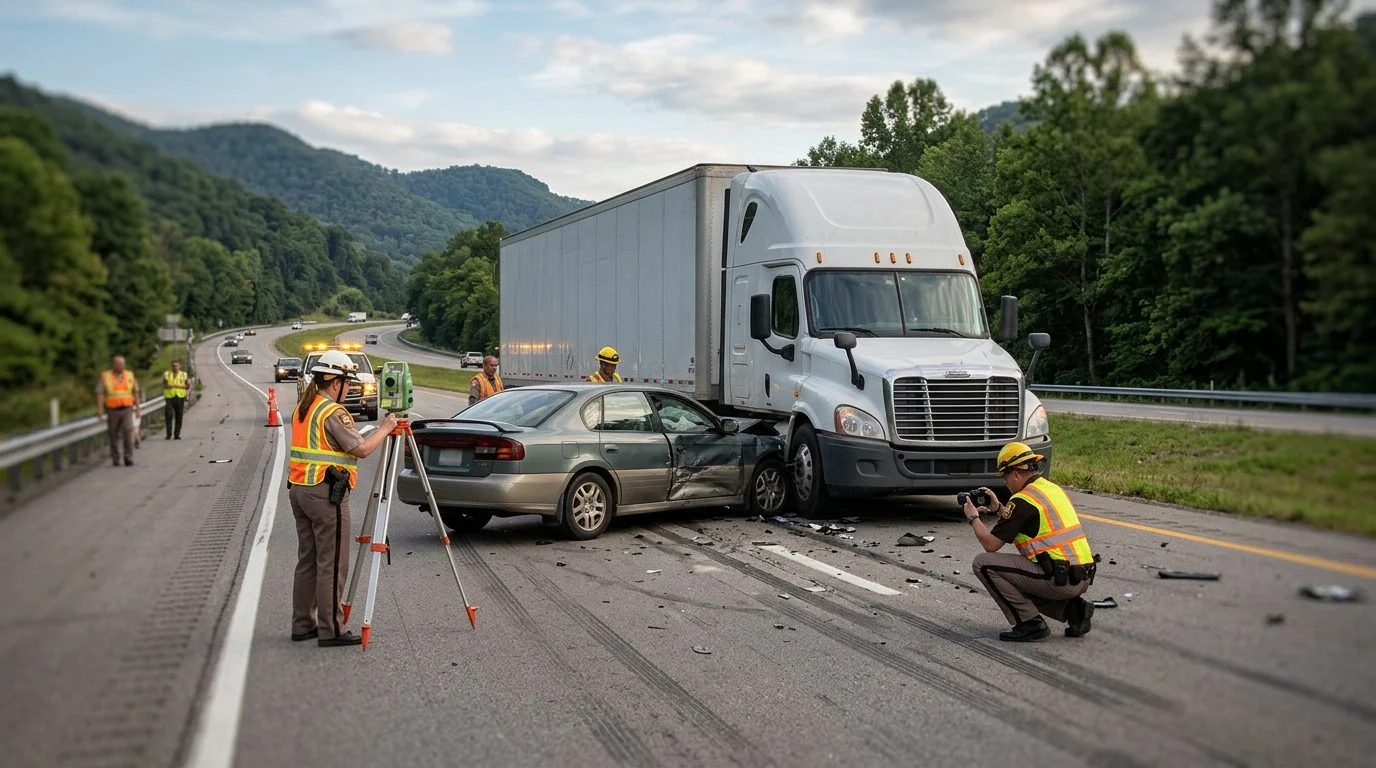
Scene details can also help. Photos, witness names, vehicle damage and, in a truck case, driver logs and maintenance records may be relevant, depending on the facts.
The firm offers a free case review. It is a confidential meeting with no obligation to continue. You can explain what happened and bring the records you already have.
Case timelines vary. Medical stability often needs to be reached before the full effect of the injury can be understood. The firm will keep the family informed as the case moves forward.
Not sure what your next step is?
Talk it through with Big Bubba — the first case review is free, confidential, and carries no obligation.
Common Questions About Quadriplegia Claims in West Virginia
Is West Virginia a no-fault state for car accidents?
West Virginia is generally described as an at-fault state. Injury claims generally look to the at-fault driver’s liability coverage.
Can a family bring a claim if the injured person has died?
A wrongful death claim may be available. It is generally brought by the personal representative within two years of the death (W. Va. Code § 55-7-6).
Does a quadriplegia diagnosis mean the case goes to trial?
Many claims resolve without a trial. Some do not, depending on the facts and how the insurer responds.
What is the difference between complete and incomplete injuries?
A complete injury generally means no function is present below the injury level. An incomplete injury generally means some function may remain.

Understanding Your Next Steps
You may still be researching, and you may be reading this for someone else. You don’t have to decide anything today.
The free case review is an offer. It is a confidential meeting with no obligation to continue. You can explain what happened and ask about the injury and the claim.
If a crash has left someone you love with quadriplegia, you can tell Big Bubba what happened through our contact page. We can talk through what comes next.