
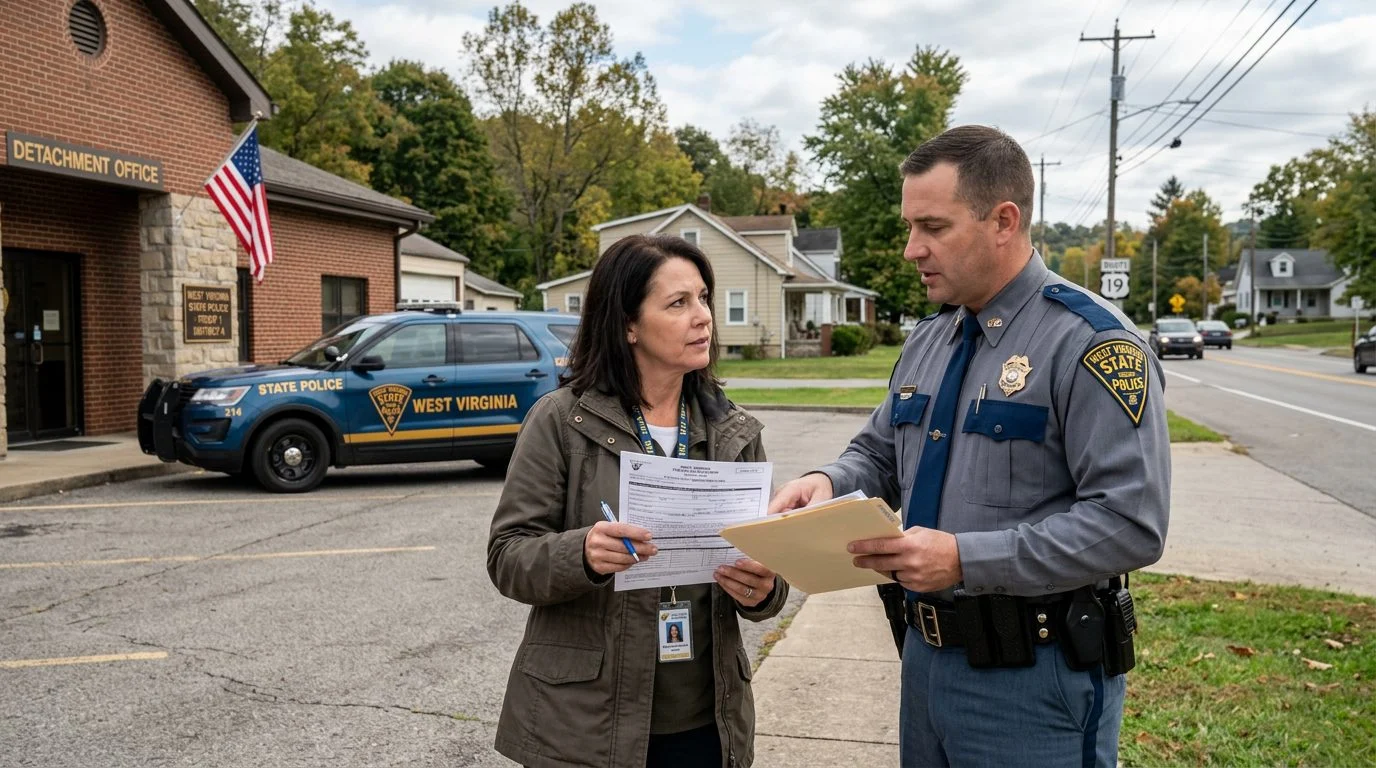
West Virginia Crash Reports
Getting a Copy of Your West Virginia Crash Report
A plain-language guide to requesting the official report, what it can and cannot show, and how to bring it into your next conversation with the firm.
Published November 16, 2026
After a crash, many people need police paperwork before they can make sense of what happened. The agency that responded to the crash usually holds the report, and people involved in the crash can typically ask for it. Here is how the process generally works in West Virginia.
What an Incident Report Is and How It Differs From Other Records
An incident report is the written record a police agency creates after an officer responds to a crash. People also call it a crash report or accident report. Under W. Va. Code § 17c-4-7, an investigating officer must prepare a report when a crash occurring on the public streets or highways of this state causes bodily injury or death, or total property damage to an apparent extent of $1,000 or more.
Other records are different. Hospital and clinic charts are medical records. An insurance company builds its own claim file. Your notes, texts, and photos are personal records. Each one can help tell the story, but none of them is the officer’s report.
The report records what the officer saw and documented at the scene. That is a separate question from who is legally responsible for the crash. A report can be useful evidence without settling fault on its own.
If a crash has left you trying to piece together what happened, you can reach out for a free case review to talk through your situation, with no obligation to continue. Talk it through with Big Bubba — the first case review is free, confidential, and carries no obligation.
Who Can Request a Copy of the Report
Drivers and passengers who were in the crash can usually ask for a copy. The Parkersburg Police Department’s crash report FAQ says crash participants and insurance representatives can request a Parkersburg crash report and obtain a copy (Parkersburg Police Department crash report FAQs).
Family members and legal representatives may also ask. Each agency sets its own rules, so confirm what it requires before you submit a request.
Expect to give identifying details. The date, the location, and the names of the people involved help the agency find the right file. If you are not named in the report, the agency may limit what it releases to you. Having those details ready can prevent delays.
Where to Ask for the Report
Ask the agency that responded to the crash. That is usually the State Police, a county sheriff, or a city police department. State law requires a driver in a crash resulting in injury to or death of any person or total property damage to an apparent extent of $1,000 or more to immediately give notice to the local police if the crash occurs within a municipality, otherwise to the county sheriff or the nearest West Virginia State Police office (W. Va. Code § 17c-4-6).
Request steps differ by agency. Some accept requests in person, some by mail, and some through an online portal. The Beckley Police Department posts its own crash report request process, which shows how one city handles these requests (Beckley Police Department crash report requests).
Write down the crash location, the date, and the unit that came to the scene. Those facts usually point you to the right agency. Then confirm the current process before you send anything.
What the Report Typically Includes
A typical crash report lists the date, time, and location. It also lists the drivers, passengers, and vehicles involved, and often insurance details. Many reports include the officer’s narrative and a diagram of the scene.
State law sets a standard for detail. W. Va. Code § 17c-4-9 says the report format must disclose the cause of the crash, the conditions then existing, and the persons and vehicles involved.
The officer may also note road and weather conditions and statements made at the scene. Those notes can help. They can also be wrong or incomplete. If something looks inaccurate, ask the agency how it handles corrections.
A report’s findings are not the final word on fault. West Virginia Code § 55-7-13a defines comparative fault as the degree to which a person’s fault was a proximate cause of an alleged personal injury, death, or property damage, expressed as a percentage, and provides that recovery in these actions is based on comparative fault principles (W. Va. Code § 55-7-13a). Under W. Va. Code § 55-7-13c, a plaintiff’s fault generally does not bar recovery unless it is greater than the combined fault of all other persons responsible for the total amount of damages. Any recovery is then reduced in proportion to that person’s own fault. Other evidence may matter, depending on the facts.
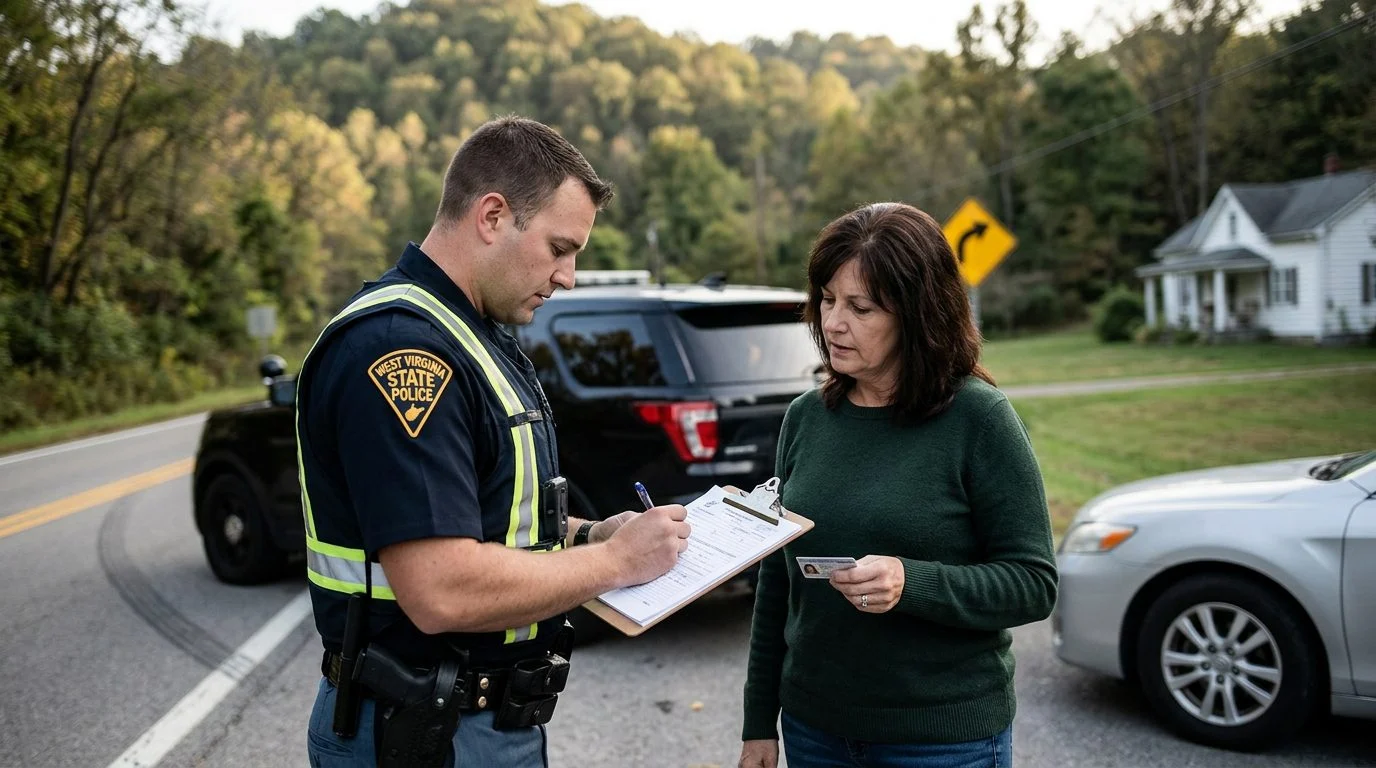
Is an Incident Report a Public Record?
Release rules are not the same everywhere, though. Whether you can get a particular report depends on the agency and the records rules that apply to it.
Timing matters too. An officer must submit the report within 24 hours after finishing the investigation. If the investigation runs past 10 days, a preliminary report goes in on day 10 (W. Va. Code § 17c-4-7).
Insurance information follows a separate path. The same section requires the investigating officer, within 24 hours of a motor vehicle crash, to share each party’s owner, operator, and insurance information with the other involved parties upon request, at no cost, even if the report is not finished.
Ask the responding agency how it handles its records. That answer is more reliable than an assumption about who can get what.
How to Document the Incident Yourself
Start writing down what you remember as soon as it is safe. Include the date, time, weather, road conditions, and the direction each vehicle was traveling. Small details fade quickly.
Take photos before vehicles are moved or repaired. Capture the damage, the scene, traffic signals, and any visible road hazards. Wide shots and close-ups both help.
Collect names, phone numbers, insurance details, and license information from everyone involved. W. Va. Code § 17c-4-3 requires a driver in a crash that causes injury or death, or damage to a vehicle driven or attended by a person, to provide their name, a valid telephone number, the year, make, model and last four digits of the vehicle identification number of the vehicle they are driving, and proof of insurance, if physically able. The driver can also give that information to an investigating officer at the scene.
After a serious head injury, memory can be unreliable. Keep a simple written timeline from the start.
Not sure what your next step is?
Talk it through with Big Bubba — the first case review is free, confidential, and carries no obligation.
Why the Report Matters Alongside Medical Records
The crash report and the medical record describe the same event from different angles. The report covers the scene. The medical record covers the injury and the treatment.
Some brain and spinal cord injuries do not show clear symptoms right away. Keep every visit summary, referral, test result, and discharge paper. Those papers help the record stay complete over time.
Questions about what a head or spinal injury means for recovery belong with your treating provider.
Reaching Out About Your Situation
If you are still sorting out what happened, you do not have to do it alone. Many people reading this are in a hospital waiting room or caring for a relative after a crash, with no clear record yet. You may be deciding whether to request the report now or first write down what you remember.
We serve injury victims across West Virginia. We handle car, truck, and commercial vehicle crash claims, along with wrongful death cases for families.
Quick Answers
Can I get the report if I was only a passenger?
Crash participants can request a report in some agencies, such as Parkersburg. Ask the responding agency whether passengers qualify.
How soon will the report be written?
The officer must submit the report within 24 hours after finishing the investigation.
If a crash has left you or someone you love facing hard questions, you can contact the firm for a free case review and talk through which records may matter.
Related practice areas
- Traumatic Brain Injury from Car and Truck Accidents in West Virginia
- Do You Have to Have Underinsured Motorist Coverage in WV?