
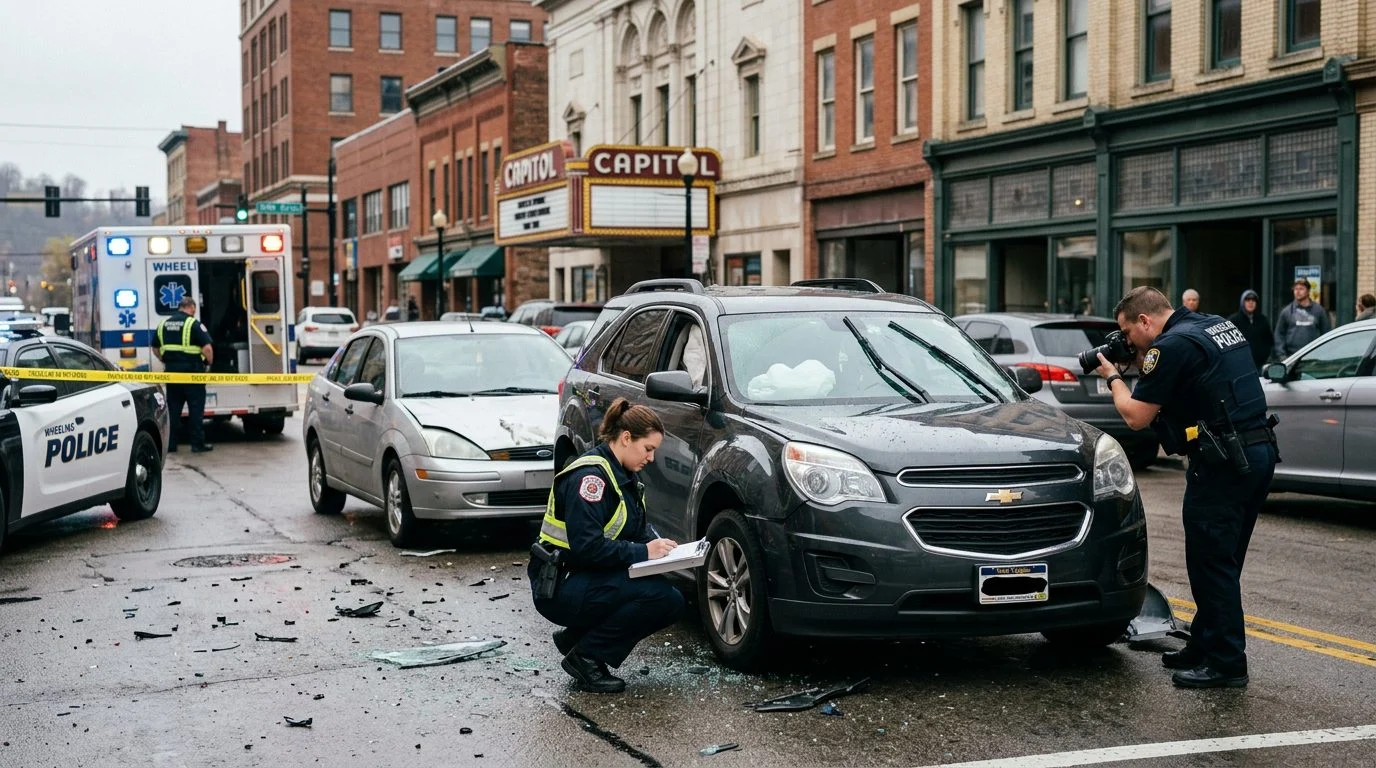
Car Accidents | Wheeling and Weirton
Hurt in a Northern Panhandle Car Crash? Talk to Our Team
Whether you were in a passenger car, a pickup, or a large truck, we help people across the Northern Panhandle sort out what comes next.
Published November 10, 2026
After a crash, many people in the Northern Panhandle, West Virginia, look for a car accident lawyer. Their first question is often simple: can I seek compensation for what happened to me?
If another person’s carelessness caused your injuries, you may have a claim. West Virginia’s deadline statute generally allows two years to file, and exceptions may apply (W. Va. Code § 55-2-12).
What Car Accident Injury Claims Cover in the Northern Panhandle
A car accident injury claim asks the at-fault party, or their insurer, to pay for losses the crash caused. Those losses can include medical bills, lost wages, and pain and suffering.
Claims rest on proof. Medical records, bills, pay records and a clear account of how the injury affects daily life all help show what happened and what it took from you.
This page is for drivers, passengers, pedestrians and families who were hurt or lost a loved one in a crash. We serve Wheeling and Weirton injury victims and the surrounding Northern Panhandle communities.
Timing matters. W. Va. Code § 55-2-12 generally allows two years to bring a personal injury action, and exceptions may apply. Because evidence can fade and deadlines can be tricky, it helps to ask about your timeline early.
Not sure what your next step is?
Talk it through with Big Bubba — the first case review is free, confidential, and carries no obligation.

Crash Types the Firm Handles
The firm handles car accidents, truck and commercial vehicle crashes, catastrophic injuries, traumatic brain injury, spinal cord injury and wrongful death claims.
- Car accidents: rear-end, intersection, lane-change and head-on collisions on city streets, county roads and highways.
- Truck accidents: crashes involving tractor-trailers and other large trucks, where more than one party may share responsibility.
- Commercial vehicle accidents: crashes involving vans and work vehicles driven for a business. Whether the business may be responsible depends on the facts.
- Catastrophic injuries: injuries that may need long-term care or limit the ability to work.
- Wrongful death: claims brought by families after a fatal crash. West Virginia law says these actions are brought by the deceased person’s personal representative, under W. Va. Code § 55-7-6.
Truck crashes often involve federal rules. Federal rules may require drug and alcohol testing for certain commercial drivers after a crash, as described in FMCSA post-accident testing rules. Early action can help preserve these records.
Serious Injuries That Need Careful Medical Follow-Up
Serious injuries need prompt medical care, and follow-up visits create the records a claim often depends on.
Traumatic brain injury can range from a concussion to more severe damage. Some symptoms, such as headaches, memory problems or trouble concentrating, may appear days or weeks after the crash.
Spinal cord injury can affect movement, feeling, and bladder or bowel function. Some people need ongoing treatment and rehabilitation.
A few habits help:
- Keep every appointment and follow the treatment plan.
- Tell providers about every symptom, even ones that seem minor.
- Ask for copies of records and bills as they arrive.
Emergency room visits, imaging and referrals to other doctors usually leave a paper trail. Some injuries take a long time to settle. A claim may need to account for future medical care, when a doctor supports that care with records.
How a Car Accident Injury Claim Typically Works
A claim usually moves from an initial review to investigation, insurance discussions and, when needed, a lawsuit.
- Contact the firm. A free case review is confidential and carries no obligation to continue.
- Tell the firm what happened. Share the crash facts, the people involved and the medical care you have received.
- Gather the records. The firm may collect the crash report, medical records, photos, vehicle damage details and witness information.
- Identify who may be liable. That could be another driver, a trucking company, a vehicle owner or another party.
- Present the claim. Some insurers may dispute fault or how serious the injuries are. That can lead to negotiation or a lawsuit.
Timelines vary. Claims involving serious injuries or several parties often take longer. The firm will explain next steps as the matter moves forward.
Evidence That May Matter After a Crash
The evidence that matters most shows how the crash happened and how it hurt you.
- Crash report: the investigating agency’s report, which may list the parties, witnesses and officer observations.
- Photos: vehicles, roadway, traffic signals, skid marks and visible injuries, taken as soon as possible.
- Witnesses and video: names and contact details, plus any dashcam or nearby business video that still exists.
- Truck records: for commercial crashes, driver logs, maintenance history and dispatch information may be relevant, depending on the facts. Federal vehicle maintenance record rules require motor carriers, except private motor carriers of passengers (nonbusiness), to keep the records required by that section, including inspection and repair records, for one year where the vehicle is housed or maintained, and six months after it leaves their control.
- Work records: pay stubs, employer letters and records of time missed from work.
- A daily journal: notes on pain, limits and appointments can show how the injury affects you over time.
How the Firm Serves Wheeling and Weirton
We serve Wheeling and Weirton injury victims and nearby Northern Panhandle communities. Wheeling sits in Ohio County and Weirton sits in Hancock County. The firm also serves injury victims across West Virginia.
- The firm’s work centers on car accidents, truck and commercial vehicle crashes, catastrophic injuries, traumatic brain injury, spinal cord injury and wrongful death.
- Support staff help with scheduling, document requests and questions about the claim.
- The firm explains each stage in plain language, so you can make informed decisions.
- You can reach the firm by phone or through the contact page.
Not sure what your next step is?
Talk it through with Big Bubba — the first case review is free, confidential, and carries no obligation.

Common Questions About Car Accident Claims in Wheeling and Weirton
Shared fault does not automatically end a claim in West Virginia.
Can I still have a claim if I was partly at fault?
West Virginia generally reduces recovery by your share of fault (W. Va. Code § 55-7-13c). Recovery is barred only when your fault is greater than everyone else’s combined, and exceptions may apply.
What if the other driver has no insurance?
West Virginia law requires auto policies to include uninsured motorist coverage and to offer underinsured coverage as an option. W. Va. Code § 33-6-31 sets out these rules, and a review of your own policy can show what may apply.
Do I need medical care if I feel fine after a crash?
Some injuries, including brain injuries, may not show symptoms right away. Early medical evaluation creates records that may matter later.
Can a family bring a claim after a fatal crash?
West Virginia generally requires wrongful death actions to be brought by the personal representative, within two years of death (W. Va. Code § 55-7-6). Exceptions may apply, so families should ask early.
If a crash on a Northern Panhandle road left you or someone you love hurt, Big Bubba can help you sort out the injuries, the at-fault party and what comes next. Request a free case review or call the firm about your case.