
West Virginia Resident Guide
Hurt in a Car Accident Out of State? Know Your Next Steps
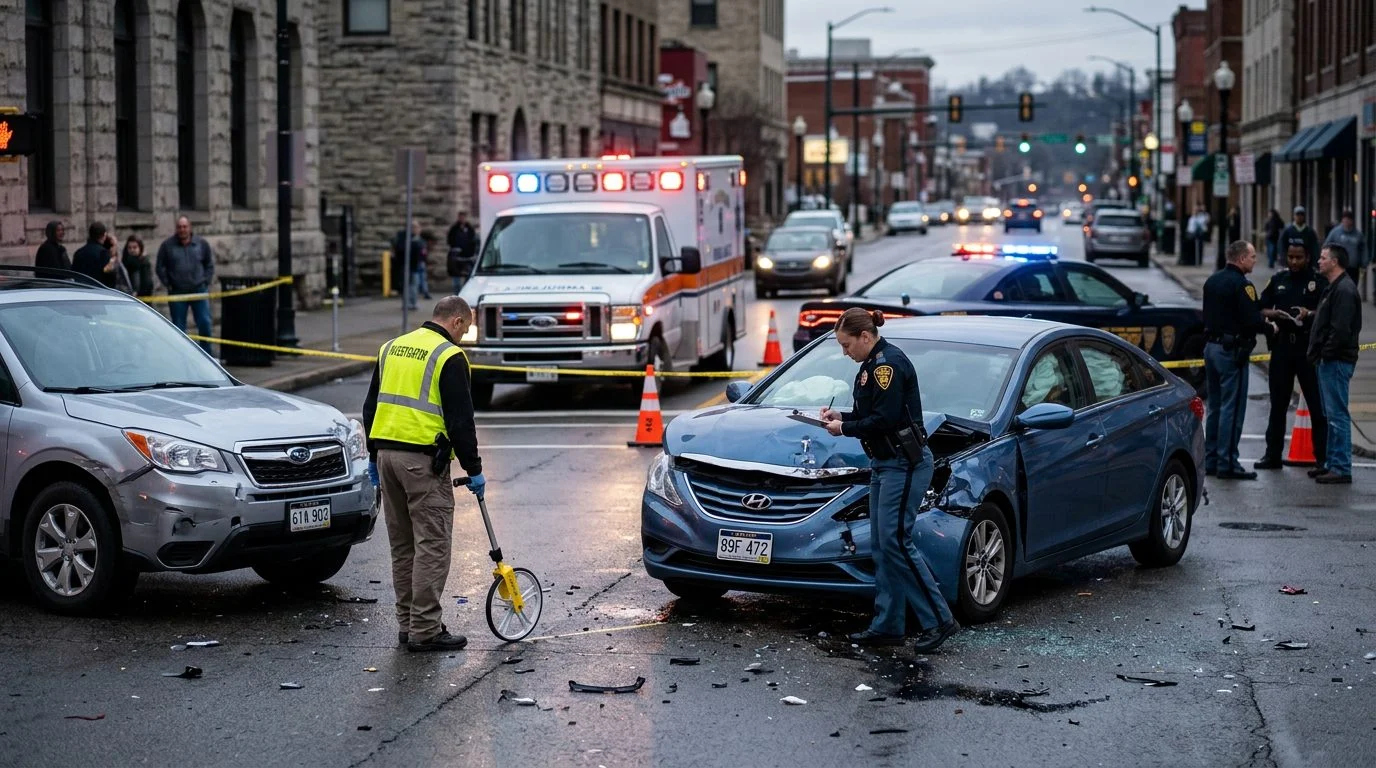
West Virginia residents injured in crashes in other states often have questions about which rules may apply and where to turn next. We handle car, truck and commercial vehicle accident claims for injured people and families across West Virginia.
Published November 5, 2026
Why a Crash Across the State Line Raises Different Questions
A crash in another state does not automatically mean that state’s rules control your whole claim. For a West Virginia resident, the crash location is one question among several.
If you are a car accident out of state West Virginia resident, you may be dealing with a rental car, an unexpected hospital bill, a damaged vehicle, and calls from an insurance company in a place you don’t know well. It is normal to feel rushed and confused.
This page covers the questions that often come up in this situation. Which state’s law may apply? Which filing deadline may count? Which insurance may respond? How might fault be examined? The answers depend on the facts, so this page offers general information, not a decision about your case.
If you live in West Virginia and were hurt in a crash in another state, you don't have to sort out these questions alone. You can reach out to the firm for a free case review. Talk it through with Big Bubba — the first case review is free, confidential, and carries no obligation.
How Courts Decide Which State’s Law Applies
Those connections can include where the crash happened, where the injured person lives, and where the other people involved are based.
Other approaches exist, so the answer may differ from one case to the next. A West Virginia resident hurt in Ohio may find that Ohio rules are part of the discussion, while West Virginia rules may still matter.
This can be true even when another state’s substantive rules govern the claim itself.
Keep a simple record of where you live, where you received treatment, and where your vehicle is registered. These facts can help show which connections exist.
Which Deadline May Control Your Claim
West Virginia generally allows two years to bring a personal injury claim, and exceptions may apply. W. Va. Code § 55-2-12 sets this general limit for personal injury and property damage claims.
Under W. Va. Code § 55-2-12, the period for bringing a personal action for damages for personal injuries is within two years after the right to bring the action has accrued, and other types of matters may have a different period. For this reason, one deadline is not enough to plan around.
Missing a deadline can affect or end a claim, depending on the facts. Write down the date of the crash today. Then note each deadline that may apply to your situation, so none passes unnoticed while you focus on recovery.
Insurance When the Crash Happened Out of State
For a car accident out of state West Virginia resident, the at-fault driver’s liability insurance may be a source of payment for bodily injury and property damage. Your own policy may also matter, depending on its terms and the facts.
W. Va. Code § 33-6-31 defines an uninsured motor vehicle. W. Va. Code § 33-6-31 reads: “unless it contains an endorsement or provisions undertaking to pay the insured all sums which he or she is legally entitled to recover as damages from the owner or operator of an uninsured motor vehicle, within limits which shall be no less than the requirements of section two, article four, chapter seventeen-d of this code, as amended from time to time: Provided, That such policy or contract shall provide an option to the insured with appropriately adjusted premiums to pay the insured all sums which he or she shall be legally entitled to recover as damages from the owner or operator of an uninsured motor vehicle up to an amount of $100,000 because of bodily injury to or death of one person.” It includes a vehicle without the required bodily injury liability insurance and property damage liability insurance, both in the amounts specified by section two, article four, chapter seventeen-d of this code, a vehicle whose insurer denies coverage, and a vehicle without a self-insurance certificate. The same statute treats a vehicle as uninsured if the owner or operator is unknown.
Recovery under these coverages is subject to conditions set out in the statute.
Some insurers may dispute a claim. Understanding the difference between liability coverage and your own uninsured or underinsured coverage can help you ask the right questions. For definitions, see our bodily injury and property damage liability guide.
Fault in Out-of-State Crashes, Including Rear-End Collisions
Fault is usually decided by looking at what each driver did before and during the crash. Speed, following distance, signals, braking, and lane position are common points of review.
W. Va. Code § 55-7-13c says a plaintiff’s fault does not bar recovery unless it is greater than the combined fault of all other responsible persons. If it is less, the recovery is reduced in proportion to the plaintiff’s fault. W. Va. Code § 55-7-13a explains that fault is allocated by percentage, and those percentages must total either zero or one hundred percent.
Those are West Virginia rules. Other states may calculate shared fault differently, which can change the result depending on where the claim is decided.
Many people ask who is at fault when a car hits the back of their vehicle. In many rear-end crashes, the following driver’s conduct is examined first. The facts may show otherwise, such as a sudden stop with no clear reason. If another driver was at fault, the claim may be made against that driver and their insurer. More on this topic is in our rear-end collision fault guide.
No-Fault States and How They Change the Process
Some states use no-fault systems.
The limits differ from state to state, so the rules of the crash state matter.
Find out which system applies in the state where your crash happened. This affects which insurer you should contact first and which forms or deadlines may apply. Keep every letter and claim number, even if the first insurer’s answer seems unclear.
Not sure what your next step is?
Talk it through with Big Bubba — the first case review is free, confidential, and carries no obligation.
Police Reports, Evidence, and Records Across State Lines
The police agency in the state where the crash happened usually holds the crash report. That agency may charge a copy fee set by its own rules, and the wait for a copy can vary.
Some evidence is time-sensitive. Photos of the scene and vehicle damage, witness names and phone numbers, the other driver’s insurance information, and any traffic camera or dashcam footage can disappear quickly. Save what you have now, including messages and receipts.
Records from out-of-state hospitals and clinics usually need a written request. Those records may take time to arrive, so start the request early.
For a commercial truck crash, federal rules set post-accident testing requirements for commercial motor vehicle drivers, including time limits. See FMCSA post-accident testing rules for the federal standard.
Brain and Spinal Injuries From an Out-of-State Crash
Brain and spinal injuries may not show their full effects right away. Symptoms can appear hours or days after a crash, and some grow over time.
See a doctor promptly and describe every symptom. Mention headaches, memory changes, dizziness, numbness, tingling, weakness, or mood changes, even if they seem minor. Early records can matter later when the full picture is reviewed.
Recovery time varies from person to person, and no one can promise how a particular injury will heal. Medical decisions are personal and should be made with your own doctors. For more on this, read traumatic brain injury claims and our guide on what to tell your doctor after a head injury in a car accident.
Wrongful Death When a West Virginia Family Member Dies in Another State
When a West Virginia resident dies in an out-of-state crash, families often face hard questions about which state’s wrongful death law applies and who may bring the claim. The answers depend on the facts and the states involved.
Under W. Va. Code § 55-7-6, a wrongful death action must be commenced within two years after the death, subject to the provisions of section eighteen, article two, chapter fifty-five. W. Va. Code § 55-7-6 reads: “The provisions of this section shall not apply to actions brought for the death of any person occurring prior to July 1, 1988.” It is brought by and in the name of the personal representative who has been duly appointed. A personal representative appointed in another state may have additional steps under the same statute.
The statute lets a jury, or the court in a case tried without a jury, award such damages as to it may seem fair and just. These include sorrow, mental anguish, and solace; reasonably expected loss of income and of services, care, and assistance; expenses for care and treatment tied to the injury; and reasonable funeral expenses. W. Va. Code § 55-7-5 addresses liability when a wrongful act causes death.
Grief and pressure often arrive together. Funeral planning, estate matters, and insurance calls can all happen at once. Families can take the time they need, and our wrongful death claims guide explains the process in more detail.

Statements to Insurers and Next Steps After an Out-of-State Crash
Insurers may ask for a recorded statement early in a claim. It can help to pause, review what you know, and think before you speak.
W. Va. Code § 55-7-11a limits settlement negotiations and statements in the first twenty days after an injury, when the injured person is a hospital inpatient or is partially or totally unable to engage in his or her usual trade, profession or occupation. Learn more in our guide on what not to tell an insurance company after an accident.
Can a West Virginia resident sue after a crash in another state?
A West Virginia resident may be able to bring a claim after a crash in another state. Which state’s rules apply depends on the facts.
What is the deadline for a West Virginia personal injury claim?
West Virginia generally allows two years, and exceptions may apply. W. Va. Code § 55-2-12 states this general rule.
Who is usually at fault in a rear-end crash?
Fault depends on the facts. The following driver’s conduct is often examined first, but other evidence can change the picture.
Does West Virginia reduce recovery when the injured person shares fault?
Under W. Va. Code § 55-7-13c, recovery may be reduced in proportion to the injured person’s fault. It may be barred if that fault is greater than the combined fault of all others. W. Va. Code § 55-7-13c reads: “(c) Any fault chargeable to the plaintiff shall not bar recovery by the plaintiff unless the plaintiff’s fault is greater than the combined fault of all other persons responsible for the total amount of damages, if any, to be awarded.”
If you are a car accident out of state West Virginia resident and you have questions about which laws may apply, you can reach out to the firm. We can talk through your situation and request a free case review of the facts you have so far.