
Car Accidents | West Virginia
Hurt in a Crash Caused by a Dangerous Road? Tell Us What Happened.
Road conditions, missing warnings and poor maintenance can contribute to serious crashes. We help injured people and families understand their options.
Published November 15, 2026
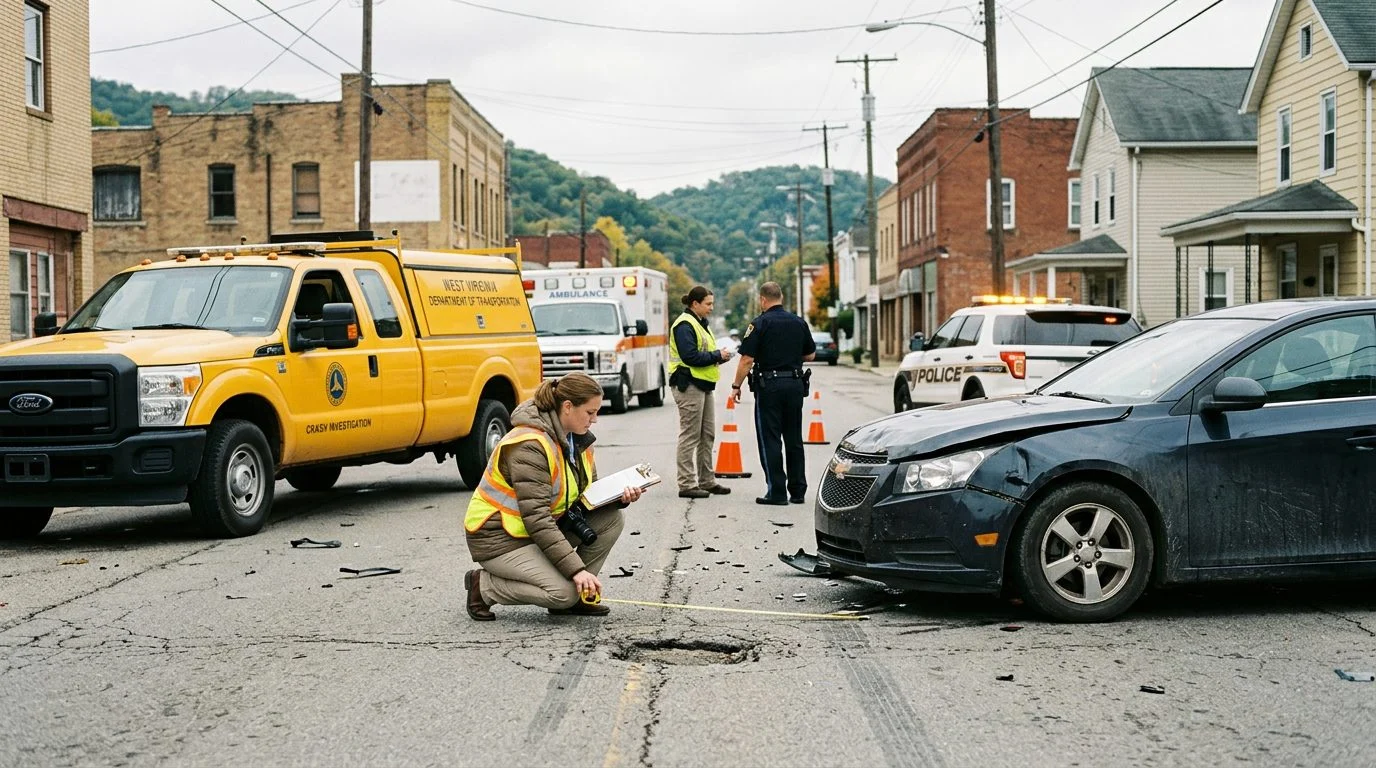
A pothole, a sinkhole, or a missing stop sign can turn a car accident into a serious injury. If a road defect hurt you or someone you love, you may be asking who can be held responsible. Short answer: you may be able to bring a claim against a city, a county, or the State, but these claims follow stricter rules than a crash with another driver. Immunity, notice requirements, and strict deadlines all matter. This page explains the basics in plain words.
Why a Road Defect Crash Often Works Differently
A road defect crash happens when a hazard in the road itself causes or worsens a crash. Common examples include a pothole that jolts a car out of its lane, a sinkhole that opens under a tire, a missing or hidden traffic sign, a washed-out shoulder, and debris left on the pavement.
In an ordinary crash, you make a claim against the other driver and that driver’s insurer. A road defect claim is different. The target is usually a government body that owns or maintains the road. Those bodies have legal protections called immunity, which limit when they can be sued.
That is why the steps and deadlines can feel unfamiliar. A claim may also raise questions about who else shared the blame, such as a contractor who worked on the road. Four questions usually shape these cases: who maintains the road, what immunity may apply, whether the government had notice of the hazard, and which deadlines apply. The sections below cover each one, along with evidence and injuries.
If a broken road left you hurt, you may have questions about who is responsible and which deadlines apply. We're here to talk those through with you. Talk it through with Big Bubba — the first case review is free, confidential, and carries no obligation.
Who Maintains the Road Decides Who You May Sue
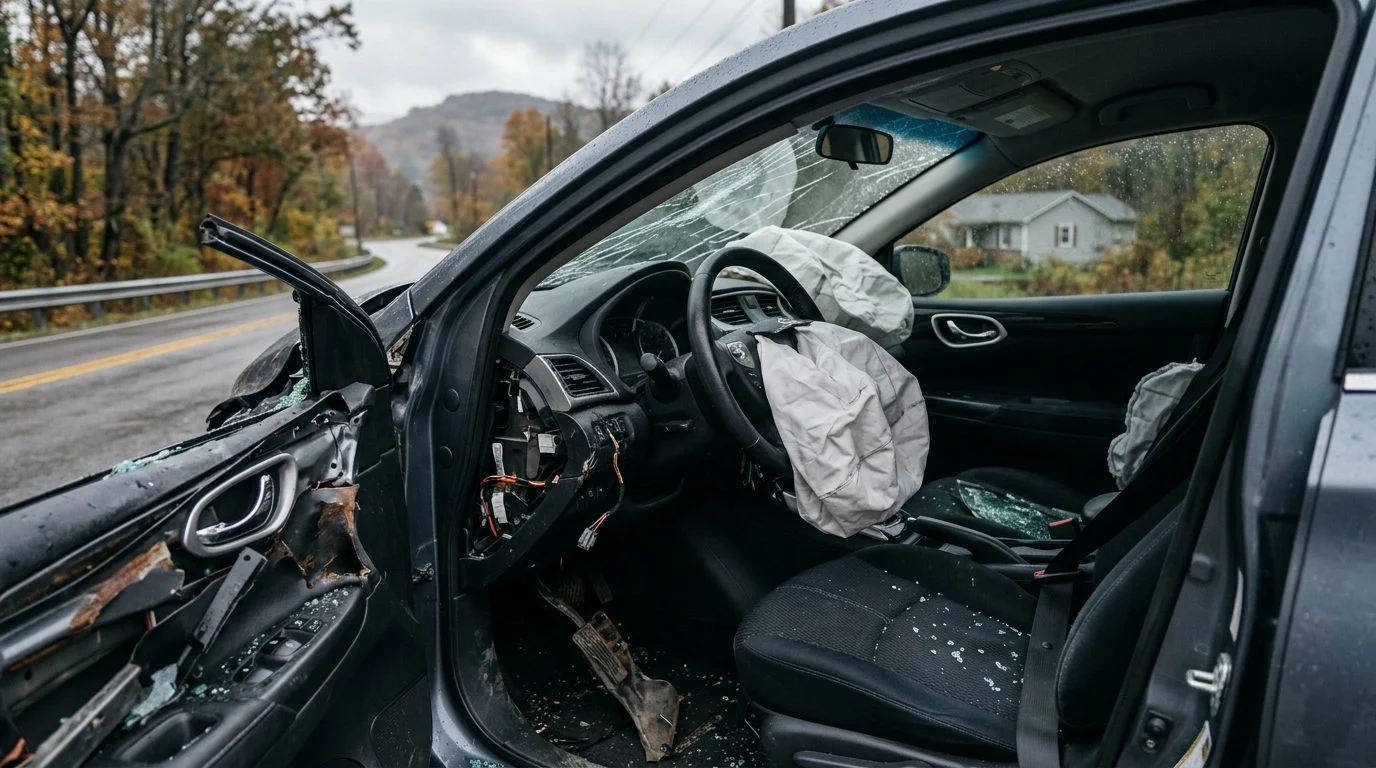
The government body that maintains a road is generally the one a claim would target. State highways are generally the responsibility of the West Virginia Division of Highways. City streets are typically the city’s responsibility, and county roads are typically the county’s.
Ownership is not always clear from the road itself. A state route can run through a city, and a road can change hands along its length. Paint, signs, and appearance do not always show who owns a given stretch.
The crash report can help narrow it down. Under W. Va. Code § 17c-4-16, when a motor vehicle crash report prepared by a State Police member, a Division of Natural Resources police officer, a county sheriff’s department member, or a municipal police officer in the regular course of their duties shows damage to a bridge, sign, guardrail, or other property, exclusive of licensed motor vehicles, belonging to the Division of Highways or a municipality, a copy of the report goes to the Commissioner of the Division of Highways or the municipality’s mayor, as applicable. Check the report for any mention of damaged property, and note the road name, mile marker, or nearest landmark.
Once you know the owner, the next question is which legal framework applies. Cities and counties fall under different rules than the State, and the sections below explain both.
Suing the State: Immunity and Notice Steps
Claims against the State of West Virginia generally face legal protections that limit when the State can be sued. Claims against its agencies also follow special steps, so a driver should not assume the usual rules apply.
One rule is clear. Under W. Va. Code § 55-2-19, every statute of limitation applies to the state unless a statute expressly provides otherwise. That means the State is not exempt from filing deadlines.
Notice is another step. Under W. Va. Code § 55-17-3, a person with a claim against a governmental agency generally must send written notice by certified mail, return receipt requested, at least 30 days before filing suit. The notice goes to the agency’s chief officer and to the Attorney General. It must describe the claim and the relief sought.
The timing has several parts. If notice reaches the chief officer, the statute of limitations is tolled, or paused, for 30 days from the date notice is provided and, if the return receipt shows the agency received the notice, for an additional 30 days from the date of the returned receipt. If the return receipt shows delivery, the pause runs 30 days from the date of that receipt. If 90 days pass after notice without a lawsuit, the notice expires, and before suit may be filed, new notice must be sent, accompanied by a second or subsequent notice fee of $250 to the attorney general and a second or subsequent notice fee of $250 to the chief officer of the governmental agency.
Each crash brings its own facts, and those facts shape how a claim is built. Keep the timing rules in mind from the first day.
Suing a City or County: Immunity and Road Duty
Cities and counties are generally not liable for damages, except in the situations that W. Va. Code § 29-12a-4 lists. Two of those situations matter most for road defect crashes.
First, a political subdivision is liable for injury caused by its negligent failure to keep public roads, highways, streets, avenues, alleys, sidewalks, bridges, aqueducts, viaducts, or public grounds within the political subdivision open, in repair, or free from nuisance, except that it is a full defense to such liability, when a bridge within a municipality is involved, that the municipality does not have the responsibility for maintaining or inspecting the bridge. A pothole that a city knew about and left unrepaired may fit within that category.
Second, a city or county may be liable for injury caused by the negligent operation of a vehicle by its employees within the scope of their work. A crash involving a city or county work truck is one example.
The same law also lists immunities. W. Va. Code § 29-12a-5 covers several, including inspection functions, such as failing to make an inspection or making an inadequate one. Employees generally have immunity too, unless their acts were manifestly outside the scope of employment, malicious, in bad faith, wanton, or reckless, or liability is expressly imposed upon the employee by a provision of this code.
Two more points matter. A defendant may give notice that a nonparty, such as a contractor, was partly at fault. W. Va. Code § 55-7-13d provides that fault of a nonparty shall be considered if the plaintiff entered into a settlement agreement with the nonparty or if a defending party gives notice no later than one hundred eighty days after service of process upon said defendant that a nonparty was wholly or partially at fault, and other provisions of the section also apply. Also, a complaint against a political subdivision may not name a specific dollar amount for damages. See W. Va. Code § 29-12a-6.
Notice: What the Government Knew or Should Have Known
Many road defect claims turn on whether the government knew about the hazard, or should have known, before the crash. Notice is central to that question.
Evidence on notice may include prior complaints from drivers, repair requests, maintenance logs, inspection records, and how long the defect had been visible. A hazard that suddenly appeared may raise different questions than one that stayed in the road for months. That difference may matter, depending on the facts.
Some of these records may be available through a request to the agency that maintains the road. Your crash report is also an early piece of the picture. Under W. Va. Code § 17c-4-7, the investigating officer must prepare a report within 24 hours after completing the investigation. That applies to crashes occurring on public streets or highways of this state involving bodily injury, death, or total property damage to an apparent extent of $1,000 or more.
Write down what you remember about the road while it is fresh. Note where the hazard was, what it looked like, and whether other drivers were avoiding it.
Deadlines and Notice Requirements to Keep in Mind
West Virginia generally allows two years to file a personal injury lawsuit, and exceptions may apply. Under W. Va. Code § 55-2-12, a personal injury action must be brought within two years after the right to bring it accrues.
Claims against a city or county follow a parallel rule. Under W. Va. Code § 29-12a-6, the two-year period generally runs from when the cause of action arose, or from when the injury was discovered or reasonably should have been discovered, whichever last occurs. A shorter period in another statute may apply. The period may also be tolled if the government committed fraud or collusion by concealing or misrepresenting material facts about the injury.
Notice adds another clock.
Do not wait to learn which deadline applies to you. Missing a deadline may bar a claim, so an early review of the dates is wise.
Not sure what your next step is?
Talk it through with Big Bubba — the first case review is free, confidential, and carries no obligation.
Evidence That May Matter After a Road Defect Crash
Photos of the hazard, taken soon after the crash, are a useful first step. Keep the original image files and note the date and time.
Other evidence to gather includes:
- Photos and video of the defect, the surrounding road, and your vehicle damage
- The police crash report and the investigating officer’s name
- Names and contact details of witnesses
- Weather and lighting conditions at the time
- Towing, repair, and rental receipts
Keep the damaged vehicle if you can, and document the damage before any repairs. Under W. Va. Code § 17c-4-7, the officer must provide owner, operator, and insurance information to each involved party, on request, within 24 hours. Ask for it while the details are fresh.
Start a written injury journal. Each day, note pain, sleep, missed work, and tasks you cannot do. A journal can show how the crash affected daily life, and it may support your medical records.
Vehicle Damage, Insurance, and Pothole Reimbursement Questions
Your own auto policy may cover pothole damage to your vehicle if it includes that type of coverage. Read the coverage section of your policy to see what it includes.
Some insurers may dispute a claim, so keep copies of your policy, claim letters, repair estimates, and every message you exchange.
A vehicle damage claim and an injury claim may move on separate tracks. A request for reimbursement from a government body is a different process from an injury claim, and it may carry its own deadlines.
Serious injuries need their own paper trail. Medical records, provider notes, and bills are separate from repair estimates, so keep both sets of records organized.
Serious Injuries From a Road Defect Crash
A road defect crash can cause a traumatic brain injury or a spinal cord injury. Some symptoms may appear days or weeks after the crash, so prompt medical evaluation matters.
Tell your doctor about the road hazard, the crash, and every symptom, even small ones. Headaches, dizziness, numbness, weakness, and memory trouble can be easy to dismiss, but they may point to a larger problem.
In some crashes, speed also affects how severe the injuries are. The Insurance Institute for Highway Safety says speeding increases crash risk, stopping distance, and the likelihood of severe injuries.
Medical records can be central to showing how a crash affected a person’s health and daily life. Keep copies of discharge papers, imaging reports, therapy notes, and prescriptions.
If a Road Defect Played a Role in Your Crash
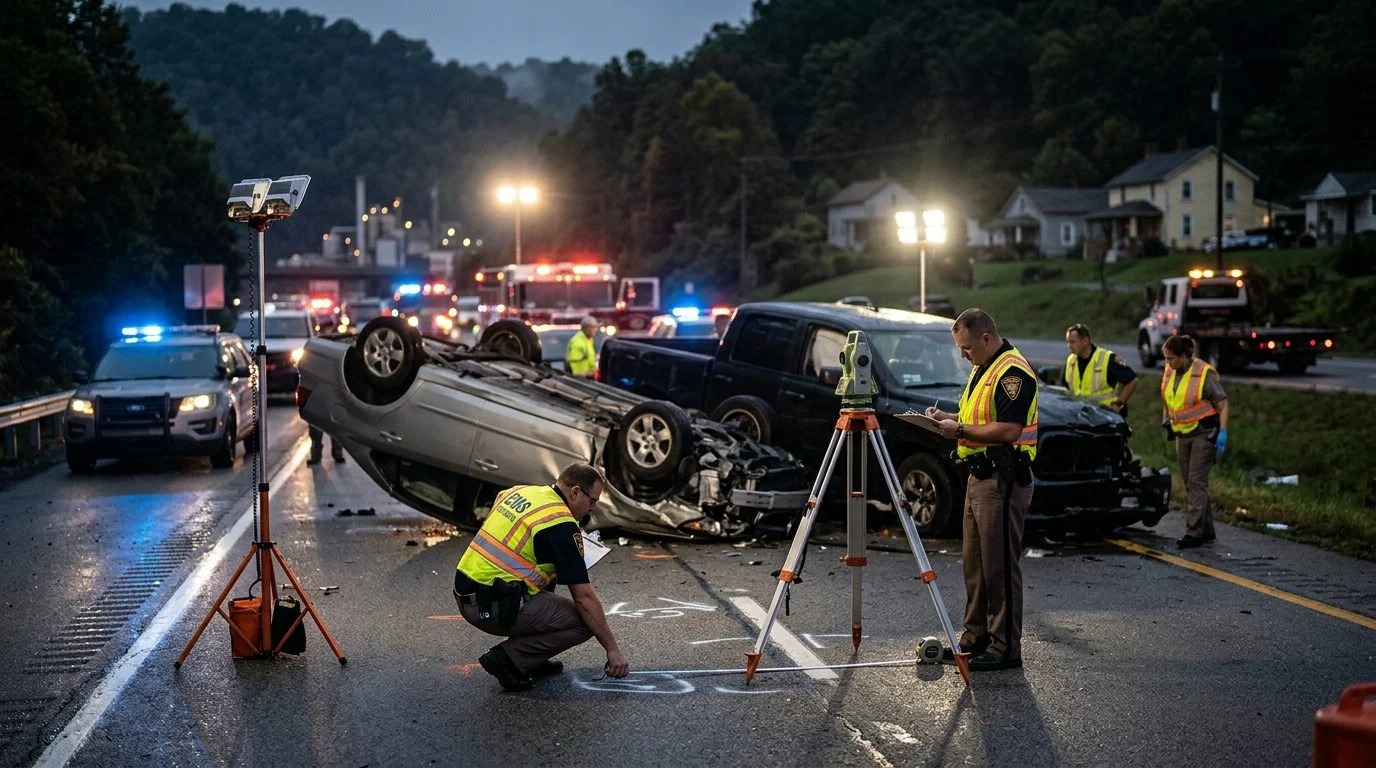
A crash on a broken road can leave you asking whether the State or a local government may be responsible. You may be dealing with medical care, a damaged car, time away from work, and a deadline you don’t fully understand.
Big Bubba handles car accident, truck accident, commercial vehicle, catastrophic injury, and wrongful death claims. We serve injury victims across West Virginia, including Charleston and Huntington, and we can talk through the questions in this guide.
Common Questions About a Road Defect Claim
Can you sue the State over a pothole crash in West Virginia?
You may be able to bring a claim against the State, but notice rules apply first. Written notice must generally be sent at least 30 days before filing an action against a governmental agency.
How long do you have to file a personal injury claim in West Virginia?
West Virginia generally allows two years for personal injury claims, and exceptions may apply.
Do you need to send notice before suing a state agency?
Generally, yes. West Virginia law requires written notice by certified mail at least 30 days before suit against a governmental agency.
If a broken road left you hurt, reach out to us to request a free case review. Tell us where the crash happened, what the road looked like, and what injuries you have, and we can discuss what comes next. Contact Big Bubba.