
Child Passenger Injuries | West Virginia
When a Child Hits Their Head in a Crash, Families Need Answers Fast
Car seats and boosters protect children, but a head impact can still cause harm. Here is what West Virginia families should know and how the firm can help.
Published November 19, 2026
A child’s head injury after a car accident in West Virginia can be easy to miss.
The short answer: any child who hits their head in a crash should be checked by a doctor promptly, even if they seem fine. If your child was hurt in a crash, this guide explains what to watch for, when to seek emergency care, what to document, and how West Virginia law can shape a child’s claim.
Can a Child Still Be Hurt in a Car Seat or Booster?
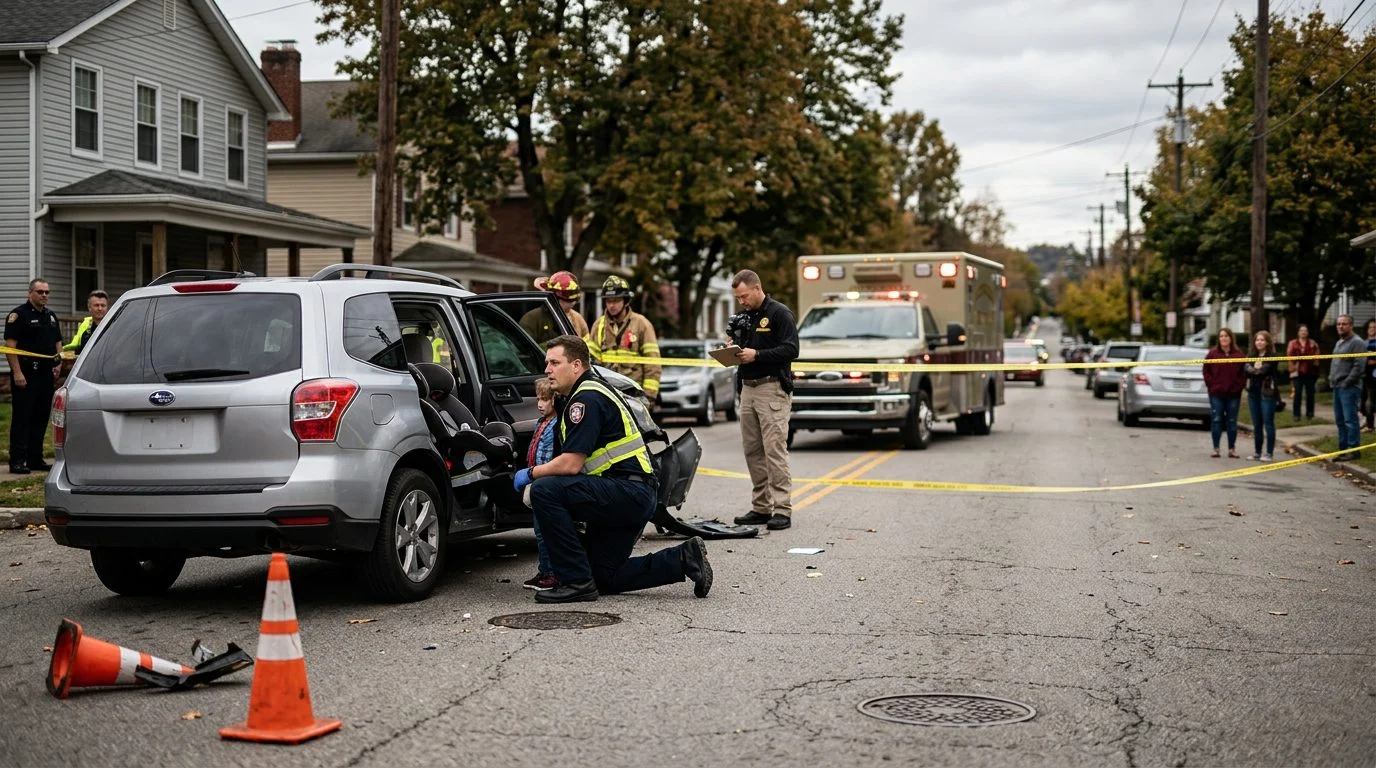
Yes. A car seat or booster lowers the risk of injury, but it does not stop every injury in a crash. A buckled child can still move, and the head can strike a window, a door, another seat, or the vehicle’s interior.
Parents often assume a child who seems fine at the scene is fine. That is a common mistake. Shock, fear, and crying can hide symptoms. Ask a doctor to check any child who hit their head, even if the child walks, talks, and wants to play. Tell the doctor the seat type and where your child was sitting. That history helps the examining team.
If your child hit their head in a West Virginia crash and you're weighing what it means for their future, you can reach out to us for a free case review. Talk it through with Big Bubba — the first case review is free, confidential, and carries no obligation.

Why Is a Child Head Injury Often Missed at First?
Young children often can’t describe a headache, dizziness, or confusion clearly. Parents usually have to watch behavior closely. A small child may cry more, nap differently, or refuse food. An older child may say “I’m fine” but seem slower, quieter, or less like themselves.
Symptoms can also show up hours or days after a crash. A delayed start does not make the injury less important. A child who looks fine on the first day may still need a medical check and follow-up.
Sleep and mood changes are common after a frightening event. They are hard to separate from injury symptoms at home. A doctor can sort out what is happening better than a guess can. The mistake many families make is waiting to see whether the child “walks it off.” Waiting can delay care that matters.
What Signs Mean a Child Needs Emergency Care Right Away?
Certain warning signs mean a child needs emergency care now, without waiting to see if they improve. Watch for:
- repeated vomiting
- unusual drowsiness or trouble waking up
- a seizure
- slurred speech
- weakness or numbness in an arm or leg
- pupils that are different sizes
- a headache that keeps getting worse
- a child who is not acting like themselves
Tell the emergency team exactly how the crash happened. Include the seat or booster type, where the child sat, and whether the head struck anything. Write these details down before you arrive, while they’re fresh. A clear account helps the team focus on the right areas.
Is a Child Hit by a Car More Vulnerable?
A child struck by a vehicle can face serious head and spine injuries. The force and angle of the impact shape what happens. Children have smaller bodies than adults, and doctors evaluate them with age and size in mind.
A crash can also injure the spine. The NINDS spinal cord injury information explains that spinal cord injuries from motor vehicle crashes can cause serious problems. Injuries high in the spinal cord can affect breathing. Neck pain, weakness, numbness, or trouble moving a limb needs urgent medical attention.
If your child was struck outside a vehicle, the same warning signs apply. Describe where and how the impact happened to the medical team.
How Long Can Concussion Symptoms Last in Children?
Concussion symptoms can last days or weeks, and recovery varies widely from child to child. Common signs include headache, irritability, sleep changes, trouble concentrating, and sensitivity to light or noise. Some children also struggle at school or with friends.
No single timeline fits every child. Some children improve within days. Others have symptoms for weeks or longer. Symptoms may change over time, so it helps to track them day by day.
Follow the treating doctor’s guidance on school, screen time, and physical activity. Don’t push a child back into full activity before the doctor clears it. Report any change in symptoms, even if the change seems small.
What Should Parents Document After a Child’s Crash?
Start a written record of symptoms and behavior on the day of the crash. Write down the date, what your child could and could not do, and any changes teachers or caregivers notice. Keep these records together:
- emergency department and follow-up visit notes
- imaging reports and prescriptions
- school attendance and classroom accommodations
- receipts for medical travel
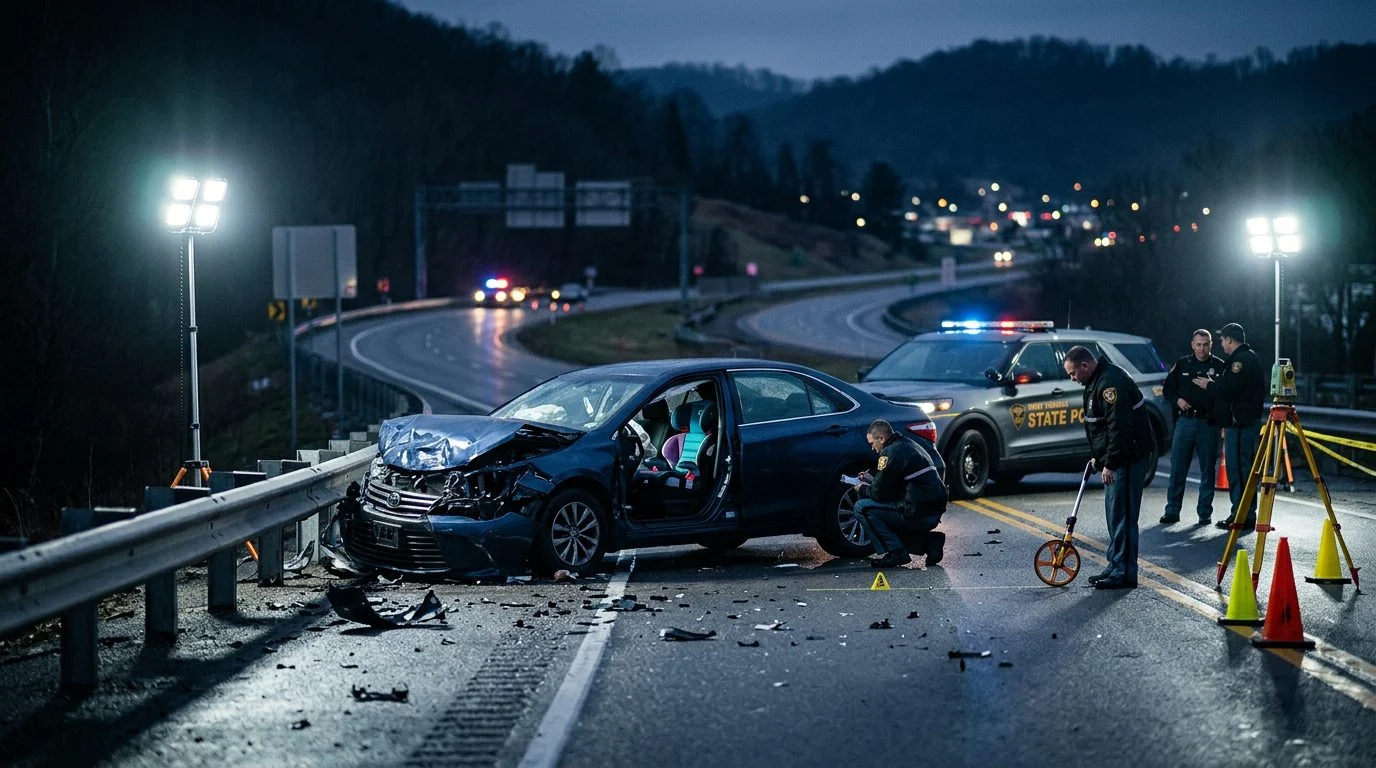
Photos of the vehicle, the seat or booster, and the scene can also help when taken soon after the crash. Ask the investigating law enforcement agency for its crash report. Under W. Va. Code § 17C-4-7, when an officer investigates a crash on the public streets or highways of this state resulting in bodily injury, death, or total property damage to an apparent extent of $1,000 or more, the officer must prepare a report within 24 hours after completing the investigation. Within 24 hours of a crash, the investigating officer must provide the owner, operator, and insurance information, upon request, to each of the other involved parties, at no cost, whether or not the crash report has been completed.
For a full symptom and records checklist, read the parent’s brain injury checklist.
Not sure what your next step is?
Talk it through with Big Bubba — the first case review is free, confidential, and carries no obligation.
How Are Claims for Minors Different in West Virginia?
For a child’s injury, West Virginia law generally allows more time to file than the two years that applies to most adults. Under W. Va. Code § 55-2-12, a personal injury action generally must be brought within two years after the right to sue accrues.
Under W. Va. Code § 55-2-15, a child who is an infant when the right accrues generally may sue within the same number of years after reaching full age that an adult would have. W. Va. Code § 55-2-15 reads: “(b) If any person to whom the right accrues to bring any personal action other than an action described in subsection (a) of this section, suit, or scire facias, or any bill to repeal a grant, shall be, at the time the same accrues, an infant or insane, the same may be brought within the like number of years after his or her becoming of full age or sane that is allowed to a person having no such impediment to bring the same after the right accrues, or after such acknowledgment as is mentioned in §55-2-8 of this code, except that it shall in no case be brought after 20 years from the time when the right accrues.” Exceptions may apply, so parents should not assume the adult deadline.
Fault rules also matter. West Virginia uses modified comparative fault under W. Va. Code § 55-7-13c. An injured person’s fault reduces recovery. It bars recovery only when that fault is greater than the combined fault of everyone else. W. Va. Code § 55-7-13c reads: “(c) Any fault chargeable to the plaintiff shall not bar recovery by the plaintiff unless the plaintiff’s fault is greater than the combined fault of all other persons responsible for the total amount of damages, if any, to be awarded.”
If another driver was at fault, that driver’s insurance may be involved. Insurance questions can get complicated when a child is hurt. For a child passenger, W. Va. Code § 17C-15-49a generally bars using a missing seat belt to show the child was negligent.
Next Steps for West Virginia Families
The main steps are a prompt medical check, watching for warning signs, keeping records, and preserving details about the crash. Each step supports your child’s health and any future claim.
If the driver who hit your child left the scene, state law requires a driver in a crash that injures someone to stop and stay at the scene, except that the driver may leave as may reasonably be necessary for the purpose of rendering assistance to any person injured in the crash. See W. Va. Code § 17C-4-1. Our pages on traumatic brain injury, catastrophic injuries, and wrongful death cover related situations.
We serve injury victims across West Virginia, including Charleston, Huntington, Morgantown, Wheeling, Martinsburg, Parkersburg, Beckley, Clarksburg, Fairmont, and Weirton. We handle car accident, truck accident, and catastrophic injury matters.
How soon should a child be checked after a head impact?
Soon, even if the child seems fine. Go to an emergency department right away if any warning sign appears.
Can a child’s seat belt use be used against them?
Generally no. For a child passenger, West Virginia law generally bars using a missing seat belt to show the child was negligent, under W. Va. Code § 17C-15-49a, though that evidence may be admissible to show negligence of the driver of the vehicle the child was riding in.
How do I get a crash report in West Virginia?
Ask the investigating law enforcement agency. The officer must prepare the report within 24 hours after finishing the investigation of a crash on the public streets or highways of this state that results in bodily injury to, or death of, any person, or total property damage to an apparent extent of $1,000 or more, under W. Va. Code § 17C-4-7.
If your child was hurt in a West Virginia crash and you’re deciding what to do next, reach out to us for a free case review.