
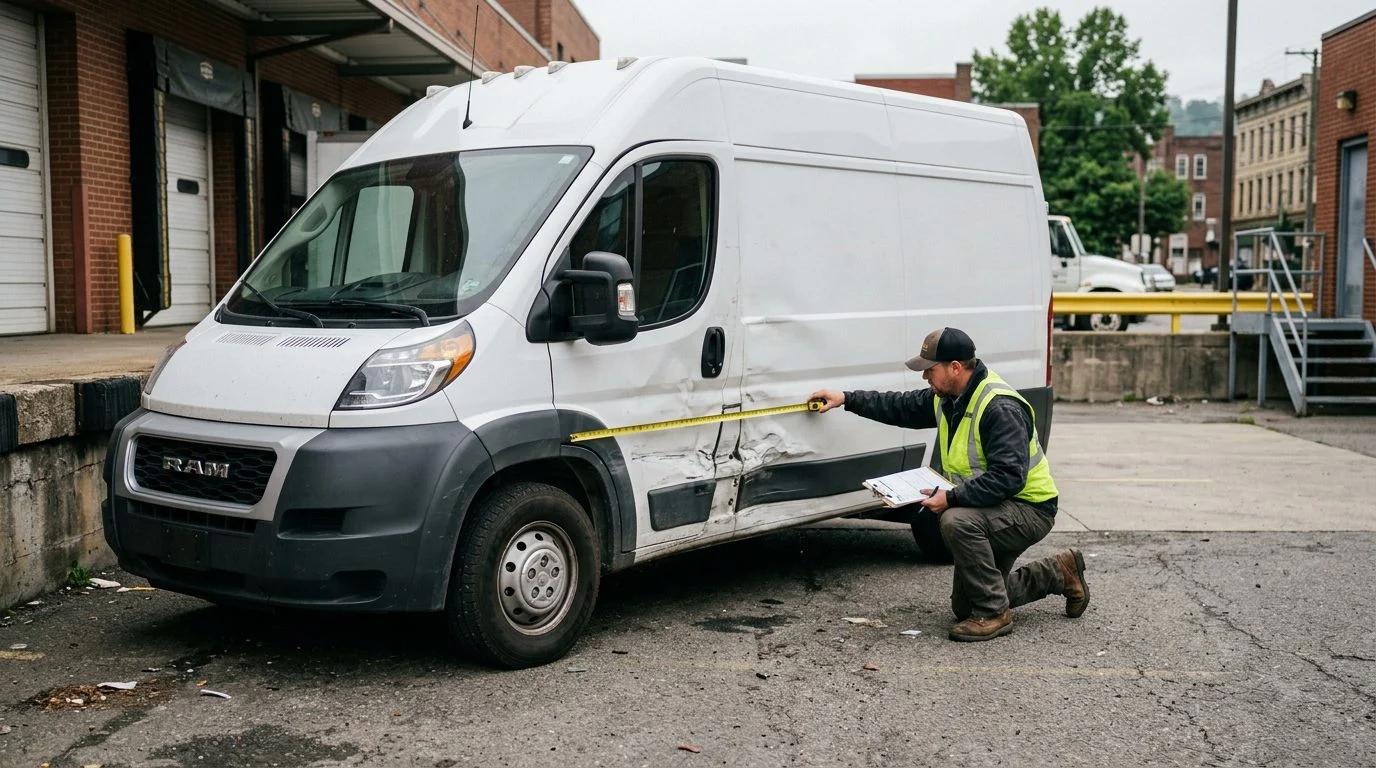
Commercial van accidents in West Virginia
Hurt in a Commercial Van Crash? Start with a Free Case Review
Work vehicles, company rules, and insurance questions can make a van crash hard to sort out. Tell us what happened, and we will help you understand your options.
Published November 11, 2026
If you were hurt in a commercial van accident in West Virginia, two questions probably matter most. Was the driver working at the time? And who may be responsible for the crash?
A commercial van accident claim can involve the driver, the employer, the van’s owner, or others, depending on the facts. The firm offers a free case review, a confidential first review with no obligation to continue, to help sort through both questions.
What counts as a commercial van accident in West Virginia?
A commercial van accident involves a van used for business. Common examples include deliveries, service calls, and crew transport.
The van may belong to an employer, a contractor, or the driver. Work use is one part of the picture. The size, weight, and use of the vehicle can also matter. A van that carries tools or parts for a job may still count as business use, even if it isn’t a large vehicle.
What matters most is why the van was on the road at the time of the crash. Federal rules govern many commercial vehicle operations. The Federal Motor Carrier Safety Regulations are published in Title 49 of the Code of Federal Regulations.
West Virginia’s civil law also uses a commercial motor vehicle definition. Whether a particular van fits may depend on the facts about the vehicle and how it was used.
These crashes can involve a passenger car, a pickup, a large truck, a motorcycle, a bicycle, or a pedestrian.
If a work van crash left you hurt or grieving, you don't have to sort out the work question alone. Tell the firm what happened through the contact page. Talk it through with Big Bubba — the first case review is free, confidential, and carries no obligation.

Why are work status and crash cause separate questions?
The first question is whether the driver was working or on a work errand. The second is how the crash happened and who contributed to it.
The two questions lead to different evidence. Work status can affect who may be responsible. Crash cause can affect how fault is divided.
Here is an example. A delivery driver on a scheduled route may point toward work status. A driver on a personal errand in the same van raises different questions. Both facts need to be written down.
Write these details down now, while they are fresh:
- The date, time, and route taken
- The trip’s purpose, such as a delivery or service call
- Markings, company name, and any numbers on the van
- The supervisor, dispatcher, or customer the driver reported to
- Names of witnesses and any nearby businesses that may have cameras
Each detail helps answer one of the two questions. None of them decides the outcome on its own.
Who may be responsible when a work van crashes?
A claim may involve the driver, the employer, the vehicle owner, a contractor or staffing company, a maintenance provider, or another driver. Which of these apply depends on the facts.
West Virginia’s statute defines an “employer defendant” broadly. It includes the owner of a commercial motor vehicle, the employer of the person driving it, and any entity that holds legal control over the vehicle or its operator. See W. Va. Code § 55-7-32.
An employer may be responsible for an employee’s driving in some circumstances. The work relationship and the work being done matter.
Independent contractor status can complicate a claim. Who controlled the work, the schedule, and the van can shape the answer. The facts decide it.
Staffing companies and vehicle maintenance providers may also play a role when their work is connected to the crash.
If another driver was at fault, that driver may also be part of the claim.
W. Va. Code § 55-7-13c generally reduces recovery in proportion to the injured person’s share of fault. Recovery is barred only when that share is greater than the combined fault of everyone else.
Some insurers may dispute a claim. Coverage questions can come up in commercial vehicle cases.
What injuries can follow a work van or commercial vehicle crash?
Work van and commercial vehicle crashes can cause traumatic brain injury, spinal cord injury, and other catastrophic injuries. They can also lead to wrongful death claims for families.
Some injuries don’t show their full effects right away. A concussion, for example, may bring symptoms that appear days later. Keep records of every medical visit and follow your providers’ advice.
Brain and spinal cord injuries can change how a person works, drives, and cares for family. The effects may last longer than the first hospital stay. Recovery differs from person to person.
For less severe injuries, a soft tissue injury guide may be a related read.
A wrongful death claim is brought by and in the name of the personal representative of the deceased person, who has been duly appointed in this state, or in any other state, territory or district of the United States, or in any foreign country. W. Va. Code § 55-7-6 lets the jury award such damages as it may seem fair and just and direct how they are distributed among the survivors. These include sorrow, mental anguish, and solace, lost income and services, medical and hospital expenses, and reasonable funeral expenses.
What evidence may matter in a work van claim?
The crash report, scene photos, and work records are often the first items to protect. Each may matter, depending on the facts.
- Crash report: Request a copy from the agency that investigated the crash.
- Photos and video: Scene images, vehicle damage, and any nearby business cameras.
- Work records: Dispatch or route logs, delivery schedules, phone and app records, and timekeeping.
- Vehicle records: Maintenance history, repair orders, inspection reports, telematics data, and dash camera footage.
- Driver testing: Federal rules may require drug and alcohol testing after some commercial motor vehicle crashes. See FMCSA drug and alcohol testing.
Work records and vehicle records often sit with a company, not with you. Asking for them early can matter. Evidence can also be lost or overwritten over time. Raising preservation early may matter, depending on the facts.
How does the free case review work?
The free case review is a confidential first review with no obligation to continue. It gives you a chance to explain what happened before you decide on any next step.
- Reach out. Use the contact page to start the conversation.
- Share the basics. Describe the date, place, injuries, and what you know about the van.
- Review the two questions. The firm looks at work status and crash cause.
- Discuss what may come next. The review may show missing information and the steps that may follow.
The review is a conversation, not a demand. You decide what to share and what to do next.
Bring what you have. That includes the date, location, employer name, van description, crash report number, medical provider names, and any letters from insurers. Missing items are common. The review can help identify them.
No timeline is promised for later steps. How long a claim takes depends on the facts.
The firm handles car accident, truck accident, commercial vehicle, catastrophic injury, traumatic brain injury, spinal cord injury, and wrongful death matters. We serve Charleston injury victims. We also serve Huntington, Morgantown, Wheeling, Martinsburg, Parkersburg, Beckley, Clarksburg, Fairmont, and Weirton injury victims. The firm serves injury victims across all 55 West Virginia counties.
Not sure what your next step is?
Talk it through with Big Bubba — the first case review is free, confidential, and carries no obligation.
Frequently asked questions
Do I need to know whether the driver was on the clock before I reach out?
No. The free case review is built to sort through work status and crash cause, and the answer may depend on the facts.
What if the van belonged to a contractor or a driver, not a large company?
Ownership and the work relationship may affect who may be responsible. The facts decide that question.
Can I still reach out if I was a passenger or a pedestrian?
Yes. Passengers, pedestrians, and other drivers may have claims, depending on the facts.
Do I have to talk to an insurer right away?
You don’t have to decide everything at once. Keep any insurer letters in one place so you can review them later.
How long do I have to file?
West Virginia generally allows two years for personal injury claims, and exceptions may apply. See W. Va. Code § 55-2-12. Under W. Va. Code § 55-7-6, wrongful death claims generally must be brought within two years of the decedent’s death, and exceptions may apply. See W. Va. Code § 55-7-6.

What to know about settlement talks after a work van crash
If a work van crash left you hurt or grieving, you may be weighing what to say to an insurer. West Virginia law limits some settlement talks in the first twenty days after an injury, while the injured person is in a hospital or partially or totally unable to engage in his or her usual trade, profession or occupation. See W. Va. Code § 55-7-11a.
That window is one reason to talk through the facts early. Keep any letters from insurers or employers together. They can show what has been said and when.
If a work van hit you or someone in your family, tell the firm what happened and request your free case review through the contact page.