
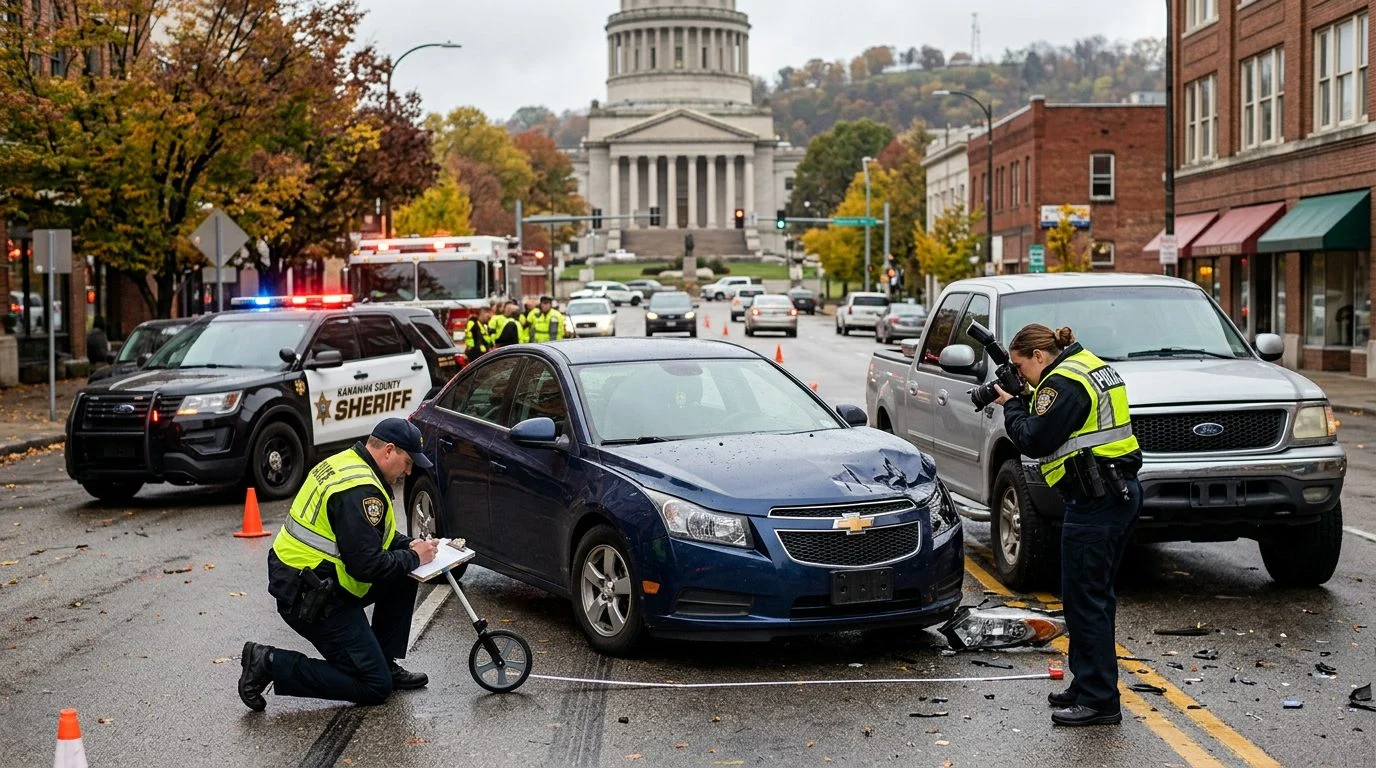
Car Accident Claims in West Virginia
Waiting on a Car Accident Claim? Here's What Affects the Pace
A plain-language look at the factors that can shape your timeline, and how the firm can help you understand where your case stands.
Published November 21, 2026
If you were hurt in a car crash in West Virginia, you probably want to know how long your claim will take. If you were hurt in a car accident, the seriousness of your injuries, the length of your treatment, and how the insurers respond may all affect the process.
Short Answer: Why There Is No Single Timeline
A car accident injury claim takes as long as its facts require. No reliable number can be given without looking at the specific case. Two claims from similar-looking crashes can move at very different speeds. One may resolve once the records are in. Another may slow down because fault is contested or the injuries are still being treated. Knowing the usual stages, and the factors that speed them up or slow them down, helps you know what to expect. It also helps you know which questions to ask.
If a crash has left you hurt and you're fielding calls from insurers, you don't have to sort out the timeline alone. Request a free case review with us. Talk it through with Big Bubba — the first case review is free, confidential, and carries no obligation.

The Usual Stages of a Car Accident Injury Claim
Most car accident injury claims move through the same general stages. Each stage can take a different amount of time.
Reporting the crash. Under W. Va. Code § 17c-4-6, a driver in a crash involving injury, death, or $1,000 or more in property damage must immediately, by the quickest means of communication, give notice of the crash to the local police department if it occurs within a municipality, otherwise to the county sheriff or the nearest State Police office. If the investigating officer cannot finish the investigation within 10 days of the crash, the officer must submit a preliminary report to the Division of Highways on the 10th day (W. Va. Code § 17c-4-7).
Notice to insurers. The claim is usually opened with the at-fault driver’s insurer. Your own insurer may also be involved, depending on your coverage.
Medical treatment and records. Diagnosis, treatment, and follow-up care form the backbone of most injury claims. Those records take time to request and to arrive.
Investigation. Insurers and the parties gather the police report, statements, photos, and vehicle damage evidence.
Demand and negotiation. The injured person’s side presents its losses, and the insurer responds. Each round of back-and-forth adds time.
Lawsuit, if needed. If negotiation does not resolve the claim, a lawsuit may be filed. That generally adds time.
Factors That Can Lengthen or Shorten the Process
The biggest factors are how serious the injuries are, whether fault is disputed, and how many parties and insurers are involved.
Serious injuries often take longer. The full extent of the harm may need time to document. A claim with a minor injury that heals fully may move faster, though the insurer’s response still matters.
Disputed fault adds steps. Under W. Va. Code § 55-7-13a, in an action for personal injury, property damage, or wrongful death, recovery is based on principles of comparative fault, and each person’s liability is allocated in direct proportion to that person’s percentage of fault. Under W. Va. Code § 55-7-13c, your fault generally does not bar recovery unless it is greater than the combined fault of all other persons responsible. If your fault is less, your recovery is reduced in proportion to your share. Both sides may need time to argue over percentages.
Multiple drivers, vehicle owners, or coverage sources add steps. Each one may have its own insurer and its own information to exchange.
Some insurers may dispute a claim or ask for more records. Each request can add time to the file.
Records can be slow. Medical files, police reports, and employment records depend on the providers and agencies involved.
A claim that goes to court generally takes longer than one settled through negotiation.
How Medical Treatment Timing Affects a Claim
Medical timing and claim timing are closely linked. Insurers and attorneys usually want to see what treating providers have documented before they judge an injury.
Recovery from brain and spinal cord injuries can be gradual. The length of treatment is often unknown early on. Some people improve steadily. Others need longer-term care. That can affect when anyone can say how the claim should be resolved. The related pages on traumatic brain injury and spinal cord injury cover these situations in more detail.
Medicare may also matter. Its reporting guidance explains how such claims are reported. If Medicare has paid for your care, that can affect when a settlement is finalized.
Follow your providers’ advice. Keep a file of appointments, bills, prescriptions, and symptom notes. Don’t rush medical decisions to fit a claim timeline. Your health comes first. The records you build along the way are often what the claim rests on.
West Virginia’s Filing Deadline for Car Accident Injury Claims
West Virginia generally allows two years to file a personal injury lawsuit, and exceptions may apply. Under W. Va. Code § 55-2-12, a personal action for personal injuries must be brought within two years after the right to bring it accrued.
This deadline is a statute of limitations, which is the legal time limit for filing suit.
Insurance talks and the filing deadline are separate tracks. A claim that is still being negotiated does not replace the lawsuit deadline. Write the date of the crash down early, along with the names of the people and insurers involved and the crash report number.
Missing the deadline can limit or end the ability to sue. That is why tracking it from the start matters.
When the At-Fault Driver Is Uninsured or Underinsured
If the at-fault driver has no insurance, or not enough, your own policy may help. This depends on the coverage you carry.
The statute describes an underinsured vehicle as one whose applicable liability limits are lower than the underinsured coverage you carried. Limits can also be lower after payments to others hurt in the same accident.
These claims run through your own insurer, which can add steps and time. Review your policy and any notices you received. If the other driver cannot be identified, the statute requires that, in order to recover under your uninsured motorist coverage, you notify your insurer within sixty days after the accident that you have a cause of action against that unknown person.
Not sure what your next step is?
Talk it through with Big Bubba — the first case review is free, confidential, and carries no obligation.
Evaluating a Settlement Offer and Its Timing
An early settlement offer may arrive before the full extent of your injuries is known. Take time to understand what it covers before you respond.
West Virginia has a special rule for the first 20 days after an injury. Under W. Va. Code § 55-7-11a, no person generally may negotiate a settlement with you, seek a release, or obtain a statement for those purposes during that window. The restriction applies while you are an inpatient in a hospital or partly or totally unable to work. Under W. Va. Code § 55-7-11a, a settlement, release of liability or statement entered into, obtained or made in violation of the section may be disavowed by the injured person at any time within one hundred eighty days from the date of the personal injury, by executing a written statement of disavowal and forwarding a copy of it to the person who violated the section; the settlement, release or statement then may not be admissible in evidence for any purpose in any court or other proceeding relating to the personal injury if any consideration paid is repaid or returned to the person who paid it.
Questions to consider include these. Does the offer cover ongoing care? Have you finished treatment? Does the release language affect future claims? A signed release can limit what you can pursue later.
When more than one party may be at fault, a release with one does not automatically bar a claim against another. Under W. Va. Code § 55-7-12, a release to one joint tort-feasor (a person whose wrongdoing contributed to the same harm) does not bar an action against another for the same cause of action.
Pedestrians and Other Road Users
People struck while walking, biking, or crossing the road follow the same general stages. Their insurance sources and evidence can differ, though.
Which insurance applies depends on the facts. Those facts include who was driving, who owns the vehicle, and what policies are in place.
The crash notice and report rules described above still apply to crashes involving injury. The same two-year general rule from W. Va. Code § 55-2-12 applies to many personal injury claims, and exceptions may apply. If you were hurt on foot, the firm’s related page on pedestrian injury claims in West Virginia offers more detail.

Where You May Be Right Now
If you are reading this while recovering from a crash, caring for a family member who was hurt, or sorting through bills and insurance letters you didn’t expect, you have a lot on your plate.
The decision in front of you is usually easy to name, even when the answer isn’t. Do you keep handling the insurer alone? Do you track the deadlines yourself? Do you talk with a firm about your own facts? Each path has its own timing. The right choice depends on your injuries, the crash, and the coverage you have.
We handle car accident, truck accident, and other injury claims across West Virginia. We serve Charleston, Huntington, Morgantown, Wheeling, Martinsburg, Parkersburg, Beckley, Clarksburg, Fairmont, and Weirton injury victims.
If you’re ready to talk about your own facts, request a free case review. The review is confidential and carries no obligation to continue.