
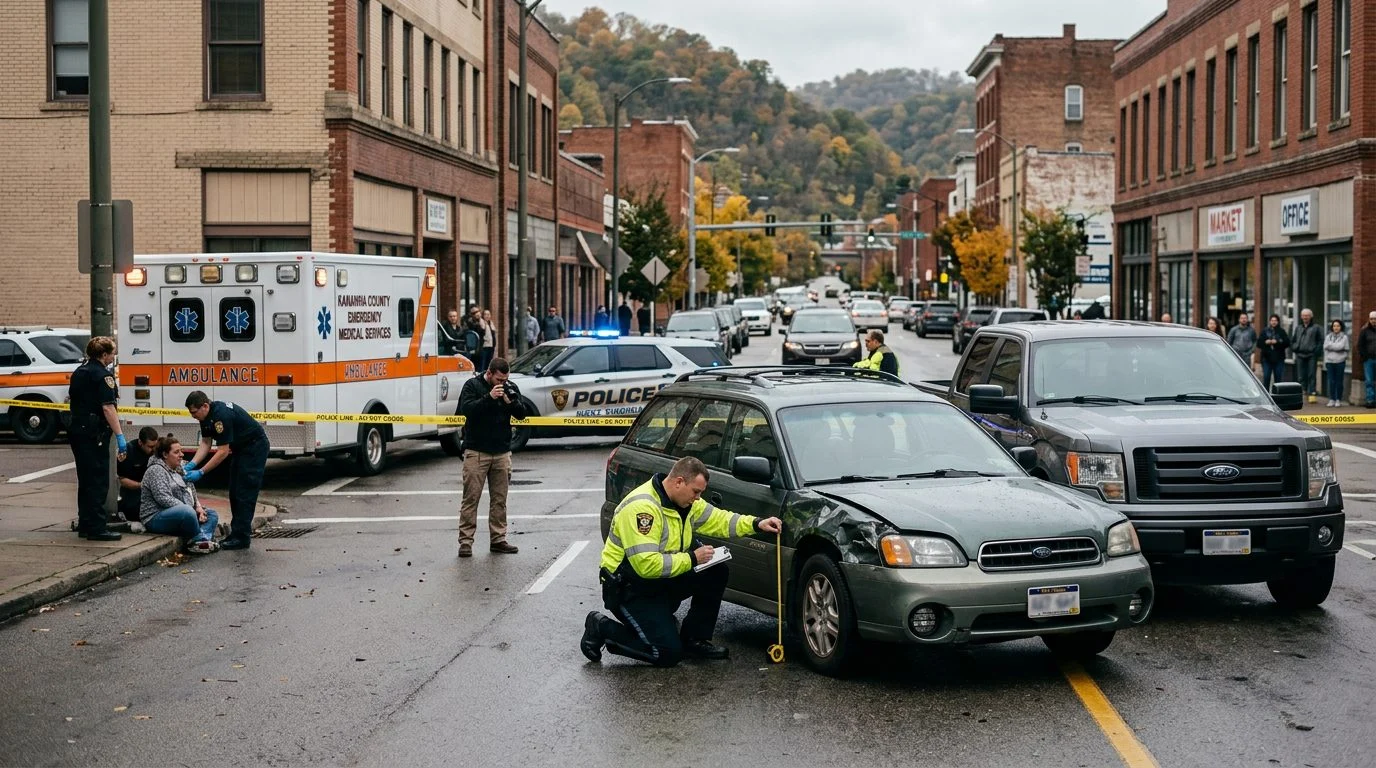
Car Accident Injuries | West Virginia
Understanding Compensation After a Car Accident in West Virginia
Every crash leaves its own mix of medical, financial and personal losses. Here is how the firm looks at them, and how you can start a conversation about your case.
Published November 19, 2026
After a car crash, one of the first questions is often how much compensation for car accident injuries is realistic. In West Virginia, there is no single answer. After a crash causes you losses, you may be able to recover compensation for them, and the value of each claim turns on its facts.
What Compensation Means After a Car Accident in West Virginia
Compensation is the money a person may recover for losses a crash caused. Where the at-fault driver is uninsured or underinsured, the injured person may rely on coverage under their own policy, and if an action is brought against that driver, the insurance company that issued that policy may need to receive a copy of the summons and complaint. If the claim does not resolve, a lawsuit may follow.
A claim is a request for payment made before any court is involved. Many claims settle without a lawsuit. When they do not, a lawsuit may be filed in court. Either way, the amount depends on the injuries, the losses, and how fault is shared.
No single figure applies to every crash. Two people with similar injuries can have very different claims, because their treatment, work history, records, and fault facts differ.
Many readers are recovering from injuries themselves. Others are a spouse, parent, or adult child trying to help while managing medical visits, insurance calls, and paperwork. Both situations are hard, and you don’t need every answer yet.
If a crash left you hurt and facing insurer letters, you don't have to sort it out alone. Reach out to the firm for a free case review of your own situation. Talk it through with Big Bubba — the first case review is free, confidential, and carries no obligation.

Economic Damages: The Measurable Financial Losses
Economic damages are the financial losses you can show with bills, pay records, and receipts. They are the easiest part of a claim to document.
Common examples include emergency room and hospital bills, follow-up visits, prescriptions, physical or occupational therapy, and medical equipment such as braces or a wheelchair. Vehicle repairs, a rental car, and other out-of-pocket losses from the crash can also count.
Lost wages cover time away from work during recovery. Lost earning capacity covers a longer-term problem, such as an injury that makes it hard to return to the same job or any job later on. Proof often includes pay stubs, employer letters, and doctor’s notes about work limits.
Documentation is what turns these losses into a claim. Keep every bill, insurance explanation of benefits, appointment summary, and repair estimate. Save texts or emails with your employer about missed shifts. A gap in paperwork can make a loss harder to prove.
Non-Economic Damages: Pain, Suffering, and Daily Life
Non-economic damages compensate for harm that has no receipt. Examples include physical pain, emotional distress, and loss of enjoyment of life. Many people call this pain and suffering.
These losses can include fear after a crash, sleep problems, anxiety about driving, or being unable to play with children or keep up with a hobby that mattered to you.
These losses are harder to measure than bills. They are usually described through medical records that note pain and physical limits, changes in your daily routine, and testimony from you and the people who see those changes, such as family, friends, and coworkers.
West Virginia law addresses these losses in general terms. How they apply to a particular claim turns on the facts of that case.
Factors That Affect the Value of an Injury Claim
Three main factors shape how an injury claim is evaluated. They are the type and severity of the injury, how consistently treatment has been followed, and the quality of the evidence.
Injury type matters a great deal. A spinal cord injury can result from trauma such as a car accident. The level and severity of the injury affect function and walking, according to the Christopher & Dana Reeve Foundation spinal cord injury fact sheet. Complete and incomplete injuries differ.
Serious injuries such as traumatic brain injury or spinal cord injury often mean longer treatment and more detailed medical records. No one can predict how long recovery will take, so records from each stage of care matter.
Consistent treatment matters too. Insurers may question gaps in care or treatment that began long after the crash. Following your doctor’s plan and reporting every symptom can help the medical record reflect the link between the crash and your injuries.
Evidence rounds out the picture. Police reports, photos of the vehicles and scene, witness names, and the timing of your first medical visit may all be relevant. Information gathered close to the crash is usually easier to support than memories pieced together months later.
How Fault Can Affect a Car Accident Recovery
Under W. Va. Code § 55-7-13a, “comparative fault” means the degree to which a person’s fault was a proximate cause of an alleged personal injury, death, or property damage, expressed as a percentage, and liability is allocated to each person in direct proportion to that percentage of fault. Under W. Va. Code § 55-7-13c, if your fault is less than that combined total, your recovery is reduced in proportion to your degree of fault.
Fault is expressed as a percentage. Under W. Va. Code § 55-7-13a, each person’s liability is allocated in direct proportion to that person’s percentage of fault, and the total must equal zero or one hundred percent.
Under W. Va. Code § 55-7-13d, that notice must be given no later than one hundred eighty days after service of process. If a nonparty is assigned a percentage of fault, the plaintiff’s recovery is reduced in proportion to that percentage.
If another driver was at fault, the police report is one document that may be relevant. Under W. Va. Code § 17C-4-7, an investigating officer must prepare a crash report within 24 hours after completing the investigation. That duty applies to crashes occurring on the public streets or highways of this state that cause bodily injury or death, or total property damage to an apparent extent of $1,000 or more.
Evaluating an Insurance Settlement Offer
A settlement offer is an insurer’s proposal to resolve a claim. It may arrive before the full extent of your injuries is known.
Some insurers may dispute a claim, question medical bills, or offer less than your documented losses. An early offer is not always the full picture, so it deserves a careful look.
West Virginia also limits early settlement contact.
Your own auto policy may also matter. Under W. Va. Code § 33-6-31, uninsured and underinsured motorist coverage is written to pay sums the insured is legally entitled to recover from an uninsured or underinsured motor vehicle’s owner or operator.
Before you respond to an offer, compare it with your documented economic and non-economic losses. Keep a written log of every call, letter, and email, with dates and names. For the first steps after a crash, read our related guide on crash reporting.
Not sure what your next step is?
Talk it through with Big Bubba — the first case review is free, confidential, and carries no obligation.
Time Limits for Filing a Car Accident Claim in West Virginia
West Virginia generally allows two years to bring a personal injury lawsuit, and exceptions may apply. Under W. Va. Code § 55-2-12, a personal action for damages for personal injuries must be brought within two years after the right to bring it has accrued.
Insurance claims and lawsuits follow different timelines. An open insurance claim is not the same as a filed lawsuit, so track both dates separately. A missed court deadline can affect what remains available to you.
When a crash causes a death, different rules apply. Under W. Va. Code § 55-7-6, a wrongful death action is brought in the name of the decedent’s personal representative and must be commenced within two years after the death, subject to related provisions of the code.
The same section says the verdict of the jury shall include, but may not be limited to, damages for sorrow, mental anguish, and solace. The verdict shall also include compensation for reasonably expected loss of income and of services, protection, care and assistance provided by the decedent, expenses for the care, treatment and hospitalization of the decedent, and reasonable funeral expenses.
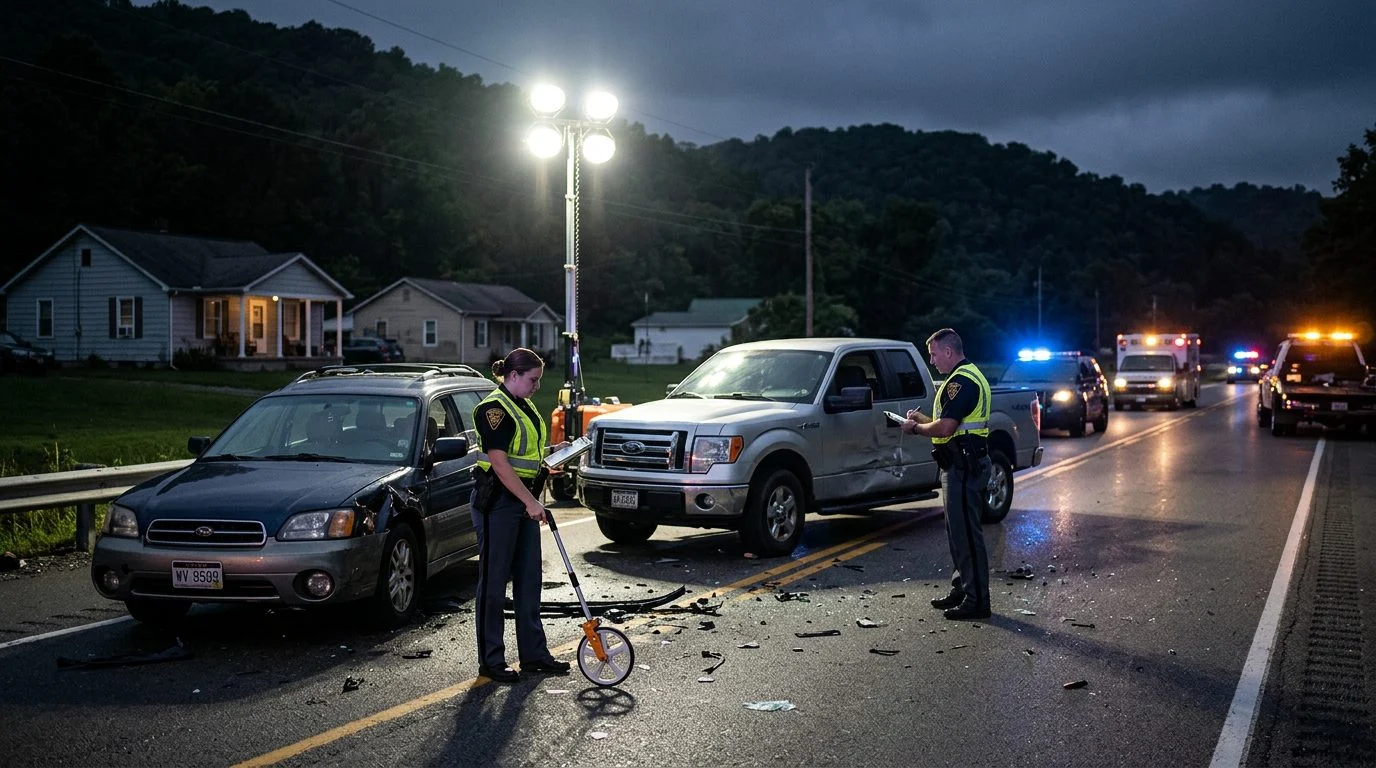
Talking Through Your Situation With the Firm
If you are recovering from a crash, or helping a family member through one, you may be holding medical bills, an insurer’s letter, and a settlement offer all at once. That is a lot to carry.
The firm handles car accident claims, truck accident and commercial vehicle claims, catastrophic injury cases, traumatic brain injury and spinal cord injury claims, and wrongful death cases. We serve injury victims across West Virginia, including Charleston and Huntington.
If you want to talk through the facts of your own crash, contact the firm to request a free case review. The review is confidential and carries no obligation to continue.