
Wrongful Death · West Virginia
Proving a Wrongful Death Claim in West Virginia
Losing someone you love is hard enough. Here is a plain-language look at the evidence and legal steps families often work through.
Published November 15, 2026
If someone you love died in a crash, you may be wondering what a court would need to see before a claim could move forward. In short, a family generally has to show that another person’s wrongful act, neglect, or default caused the death, and that the family suffered real losses because of it. This guide explains those proof points in plain language for car, truck, and commercial vehicle crashes in West Virginia.
What a Wrongful Death Suit Asks a Court to Decide
A wrongful death suit is a civil claim brought after a death caused by someone else’s wrongful act, neglect, or default. A criminal case is brought by the government, and a federal court’s explainer on civil and criminal cases describes how the two differ.
Under W. Va. Code § 55-7-5, when a wrongful act would have let the injured person sue, the responsible person or company can still be liable for damages after that person dies.
W. Va. Code § 55-7-6 says the action is brought in that representative’s name. The jury or court may also direct how damages are shared among survivors, such as a spouse, children, parents, and others who depended on the person who died. For a broader overview, see our wrongful death overview.
If you're trying to understand what happened to someone you love, you don't have to sort out the proof alone. We offer a free case review to talk through your family's situation. Talk it through with Big Bubba — the first case review is free, confidential, and carries no obligation.
The Elements a Family Generally Has to Establish
Causation means the family can connect that shortfall to the death. Damages are the losses the law lets the family seek.
Picture a driver who looked away and hit a line of stopped cars.
Fault can also be shared. If the other side argues the person who died bears some blame, W. Va. Code § 55-7-13c matters. That statute says a plaintiff’s fault does not bar recovery unless it is greater than the combined fault of all other persons responsible. If it is less, recovery is reduced in proportion to that share of fault.
Proving Duty and Breach: What Shows Someone Fell Short
Duty and breach are usually shown together, through what happened before and during the crash.
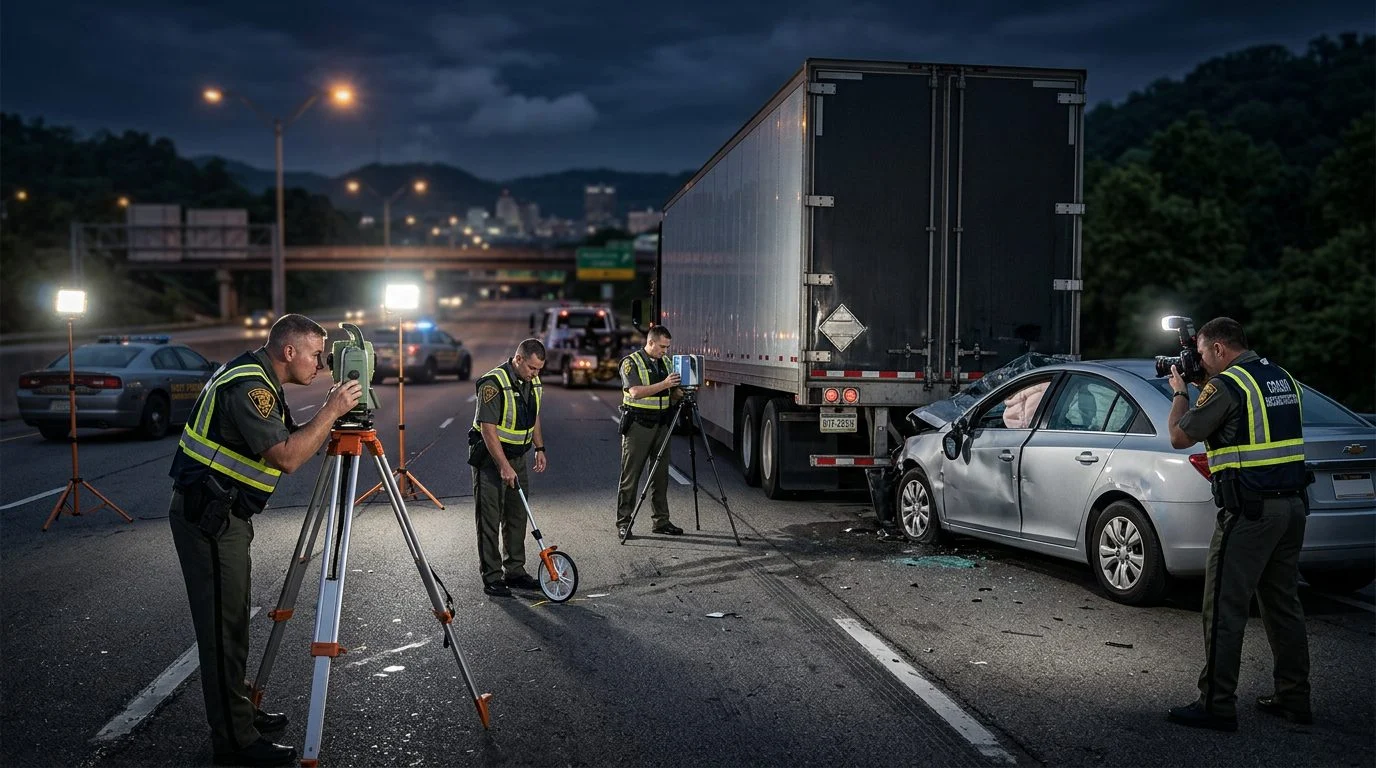
The police crash report is often the first record a family hears about. Under W. Va. Code § 17C-4-7, an officer who investigates a motor vehicle crash occurring on the public streets or highways of this state resulting in bodily injury, death, or total property damage to an apparent extent of $1,000 or more must prepare a report within 24 hours after completing the investigation. Under W. Va. Code § 17C-4-7, within 24 hours of a motor vehicle crash and upon request, the investigating officer must provide the owner, operator, and insurance information for all involved parties to each of the other involved parties and their insurance agents, at no cost, whether or not the accident report has been completed. A report is one piece of the picture, not the whole story.
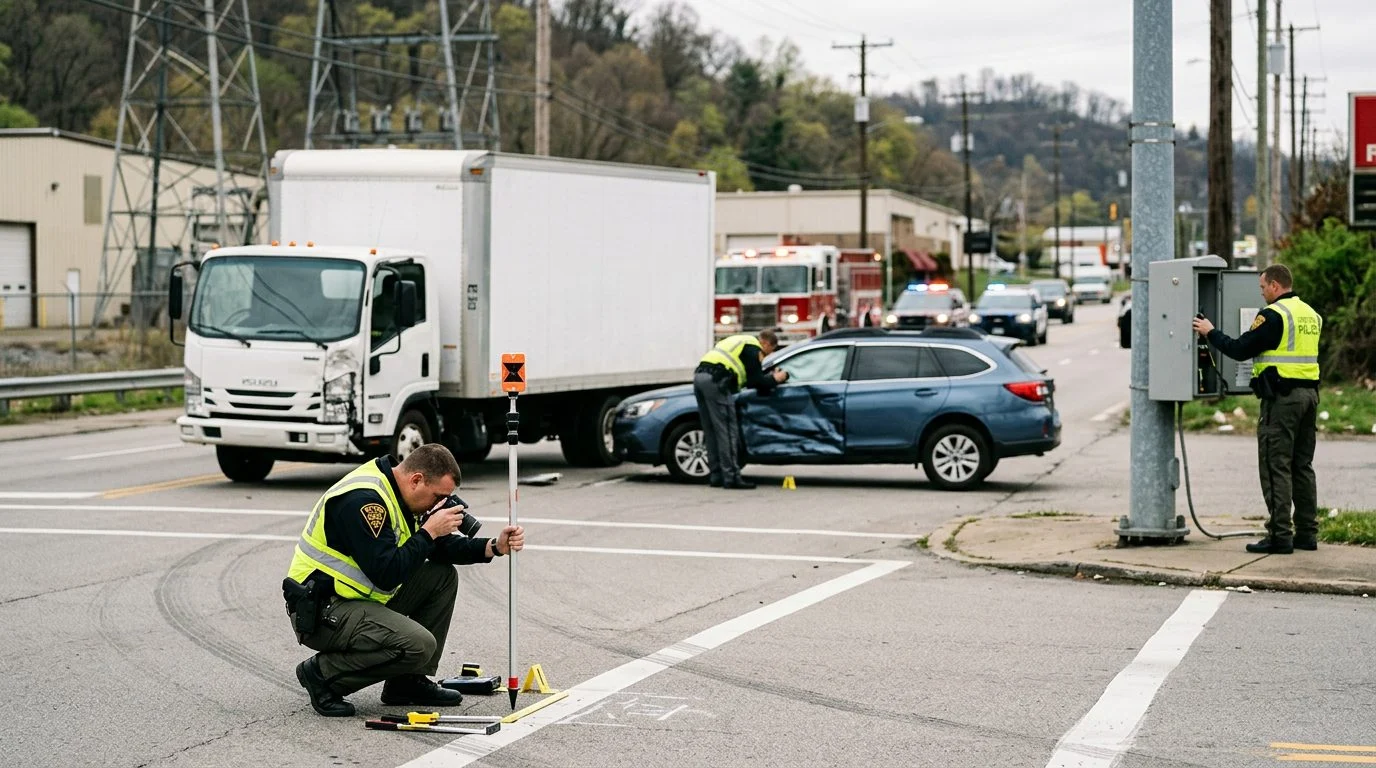
Other evidence commonly reviewed includes photos of the scene and vehicles, roadway and traffic records, nearby video, and witness statements. Phone records and vehicle event data may be relevant.
Commercial vehicle cases often involve more records. Under 49 C.F.R. § 395.8, a motor carrier must keep each driver’s records of duty status and supporting documents for at least six months from the date of receipt. Because six months is only a minimum, it helps to think early about which records exist.
Hours-of-service and maintenance records may also be relevant.
Proving Causation: Connecting the Breach to the Death
Causation means the family must link the wrongful act to the death itself, not just to the crash or to a condition that happened to be present.
Common evidence includes the death certificate, the medical examiner or coroner’s findings, the autopsy report, and emergency and hospital records. Under W. Va. Code § 17C-4-11, a coroner must report in writing, on or before the tenth day of each month, each traffic crash death in the jurisdiction from the preceding calendar month to the Division of Highways. That report includes the victim’s name, the date, time, and place of the crash, and the circumstances.
When death follows a brain or spinal cord injury, the medical record from the day of injury through the death carries much of the proof. Doctors’ notes, imaging, and care plans show how the injury progressed.
Expect the other side to raise other causes. Someone may argue an illness or an earlier condition led to the death. Medical records help sort out those competing explanations. A medical reviewer may be asked to explain the records to a court. That reviewer’s job is to interpret the records, not to decide the case.
Proving Damages: The Losses the Family Can Document
West Virginia law lists the damages a jury may consider in a wrongful death case. Under W. Va. Code § 55-7-6, the verdict may include sorrow, mental anguish, and solace, including companionship, comfort, guidance, and advice from the person who died. It may also include expected loss of income and of services, protection, care, and assistance the person provided.
Expenses for care, treatment, and hospitalization from the injury may be included. So may reasonable funeral expenses. The statute requires the jury to state funeral, hospital, and medical amounts separately.
Good records make these losses easier to show. Useful items include pay stubs, tax returns, medical bills, funeral receipts, and a written list of household tasks the person handled.
For some commercial vehicle cases, W. Va. Code § 55-7-32 limits noneconomic damages against an employer defendant. That limit is not available to an employer defendant that does not have commercial motor vehicle insurance in the aggregate amount of at least $3 million for each occurrence. It also does not apply in certain situations, such as when the operator was found to have been over hours-of-service limits.
Identifying Every Party That May Be Responsible
More than one party may share responsibility for a crash death. The driver is one possibility. Others may include the vehicle owner, the motor carrier, a maintenance contractor, or a vehicle manufacturer, depending on what caused the crash.
For commercial vehicles, the employer’s role matters. W. Va. Code § 55-7-32 defines an employer defendant to include the vehicle owner, the operator’s employer, and others with legal control of the vehicle. Under W. Va. Code § 55-7-13d, the statute does not stop a person from being held liable for fault assigned to an agent or servant acting for that person.
Under W. Va. Code § 55-7-13d, a defending party may generally give notice, within the period the statute sets after service of process, that a nonparty was wholly or partially at fault, and the statute’s other terms and exceptions may apply. The notice must be filed with the court and served on all parties, and it must name the nonparty with its last known address (or the best identification possible under the circumstances) and give a brief basis for believing that nonparty at fault.
Insurance adds another layer. Some insurers may dispute a claim, and a family may deal with more than one carrier. Identifying each potentially responsible party early helps make sure each one is asked to keep its own records. Who is responsible is a question the facts answer.
Not sure what your next step is?
Talk it through with Big Bubba — the first case review is free, confidential, and carries no obligation.
Preserving Evidence and Watching the Deadlines
Evidence can be lost or overwritten, so early steps matter. West Virginia generally allows two years from the date of death to bring a wrongful death action under W. Va. Code § 55-7-6, and exceptions may apply.
Families can help protect evidence in a few practical ways. Keep the vehicle and any personal items from the crash if they are still held. Save photos, texts, and social media posts. Write down what witnesses said while memories are fresh. Keep bills, receipts, and records in one place.
Don’t assume the deadline has not started. Some claims are resolved through negotiation, and others go to court. Which path applies depends on how the evidence and the parties line up.
Understanding Your Family’s Situation
If you’re reading this while planning a funeral, sorting hospital bills, or opening insurance letters, you’re carrying a lot. You don’t need every answer before you ask for help.
Big Bubba Injury Law handles wrongful death claims arising from car, truck, and commercial vehicle crashes, and from catastrophic brain and spinal cord injuries. We serve families across West Virginia.
Who can bring a wrongful death suit in West Virginia?
The personal representative generally brings the action under W. Va. Code § 55-7-6.
Does a police crash report decide who was at fault?
A crash report is one piece of evidence. It does not settle fault on its own.
A free case review is a confidential conversation. You describe what happened, and the firm talks through how these proof points may apply to your family’s facts. There is no obligation to continue. If you’d like to start that conversation, you can request a free case review with Big Bubba Injury Law at your own pace.
Related practice areas
- Traumatic Brain Injury from Car and Truck Accidents in West Virginia
- Car Accident Injury Claim After an ER Visit in West Virginia
- Brain Injury Car Accident Claim vs Minor Injury Claim in WV
- West Virginia Spinal Cord Injury Car Accident Checklist