
Car Accidents | West Virginia
Hurt in an I-79 or I-64 Crash? Know Your First Steps.
Plain-language guidance for injured drivers, passengers, and families after an interstate collision.
Published November 21, 2026
If you were hurt in an I-79 car accident in West Virginia, or someone you love was, you probably have many questions. This guide explains what matters most in the days after an interstate crash.
The short answer: get medical care, gather information at the scene, and keep your records. West Virginia generally allows two years to file most injury lawsuits, and exceptions may apply (W. Va. Code § 55-2-12). Fault is often shared, so how the crash happened matters.
Why Crashes on I-79 and I-64 Can Be Different
Crashes on I-79 and I-64 often involve high speeds, sudden slowdowns, and heavy traffic. Both interstates carry drivers through hilly, curvy terrain, and that can change how a crash unfolds.
I-79 runs through many of West Virginia’s northern and central counties. I-64 crosses the southern and central part of the state. Drivers on both routes share lanes with long-haul trucks, merging traffic, and fast vehicles.
Mountain grades, curves, fog, rain, and winter ice may affect stopping distance and visibility. These conditions may be relevant to how a crash happened, depending on the facts.
Speed changes matter too. A car that slows quickly can be struck from behind. A large truck also needs much more distance to stop than a passenger car.
We serve Charleston injury victims. We also serve Huntington, Morgantown, and Clarksburg injury victims. If a brain injury is part of your situation, our page on traumatic brain injury after a car accident explains more.
If a crash on I-79 or I-64 left you or someone you love hurt, you don't have to work out the next steps alone. The firm can talk through what happened with you. Talk it through with Big Bubba — the first case review is free, confidential, and carries no obligation.

Common Crash Patterns on These Corridors
Crashes on these routes often fall into a few familiar patterns. Knowing them can help you describe what happened to your doctor and to others.
Rear-end collisions happen when traffic suddenly slows. A driver who is watching the road ahead may not have time to stop, especially when a backup forms around a bend or a rise.
Chain crashes start with one impact and then pull in other vehicles. A driver who cannot stop in time may hit a car that is already stopped. The first impact may be followed by several more.
Lane-change and merge collisions happen when a driver moves over without seeing another vehicle. They also happen when traffic bunches up at an on-ramp or in a work zone.
Crashes involving tractor-trailers and other commercial vehicles often bring more parties into a claim. The driver, the trucking company, and the company that leased the truck may all have a role. Those cases can involve more insurance policies and more records.
What to Do at the Scene and in the First Days
At the scene, call 911 and ask for both police and medical help. Ask for help even if injuries seem minor.
If you can, move to a safe spot, turn on your hazard lights, and stay out of active lanes.
Under W. Va. Code § 17c-4-3, the driver of a vehicle involved in a crash resulting in injury, death, or damage to a vehicle generally must, if physically able, give the other party their name, a valid telephone number, the year, make, model, and last four digits of the vehicle identification number, and proof of security and financial responsibility, which may include insurance information. The same statute requires the driver of any vehicle involved in a crash resulting in injury to or death of any person, if physically able to do so, to render reasonable assistance to the injured person, including carrying, or making arrangements for carrying, the person to a physician, surgeon or hospital when treatment is apparently necessary or the injured person requests it.
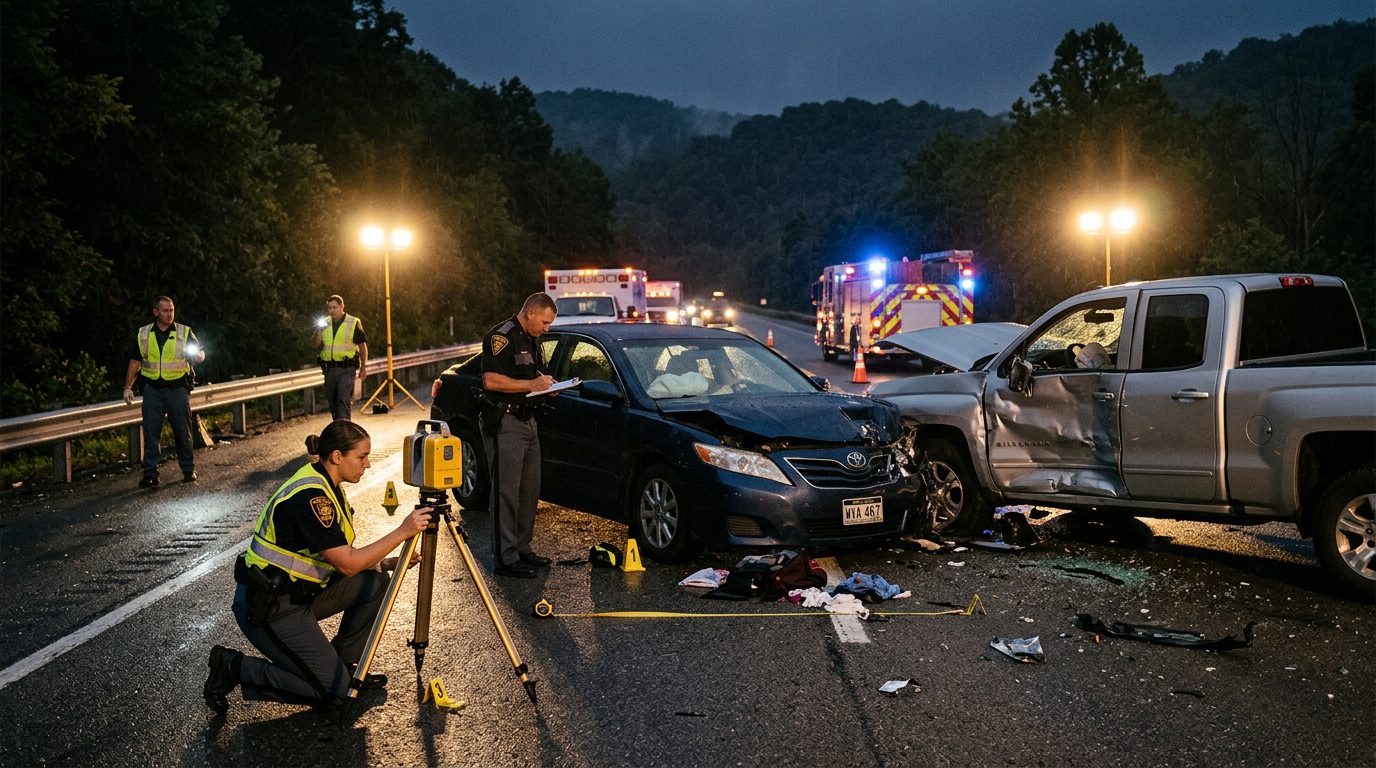
Take photos of the vehicles, the roadway, visible injuries, and the weather when it is safe. Write down the mile marker or exit, and get names of any witnesses.
Ask the investigating agency for the crash report. Under W. Va. Code § 17c-4-7, for crashes on public streets or highways that result in bodily injury, death, or total property damage to an apparent extent of $1,000 or more, the investigating officer generally must prepare a report within 24 hours after finishing the investigation. Within 24 hours of a motor vehicle crash, the officer must also share owner, operator, and insurance information upon request with the other parties and each party’s respective insurance agents, at no cost, whether or not the accident report has been completed.
Why Medical Evaluation Comes First
See a medical provider soon after any crash, even if you feel fine. Some injuries do not show symptoms right away.
Concussions and other brain injuries may bring headaches, confusion, dizziness, or memory trouble hours or days later. Neck and back injuries can also become more noticeable over time. Spinal cord injuries are serious and generally need urgent care.
Prompt care does two things. It checks for injuries that need treatment now. It also creates a medical record that links symptoms to the crash. That record may matter later if you bring a claim.
Follow the treatment plan you are given. Keep copies of bills, prescriptions, and notes about pain or missed work. These details help show what changed after the crash.
Seat Belts and Injury Claims
West Virginia’s safety belt evidence rules govern when evidence that an occupant of a passenger vehicle failed to use a safety belt is admissible in a civil action.
Seat belts protect people in serious crashes. A belt can still cause bruising, and some people have chest, abdominal, or neck injuries from belt force. A doctor should check any pain after a crash.
Whether a belt was worn can come up in a claim, but the law limits how. For an adult driver or passenger, evidence of not wearing a belt generally cannot show that person was negligent (W. Va. Code § 17c-15-49a).
That same statute may allow the evidence on a different question, whether the missing belt made injuries worse. That use requires proof that meets Rule 702 of the West Virginia Rules of Evidence. For a child passenger, the statute bars that evidence from showing the child’s negligence or worsened damages, though the evidence may be admissible to show negligence of the driver of the passenger vehicle.
Fault, Insurance, and Who May Be Responsible
West Virginia generally uses a modified comparative fault rule. Your own share of fault can reduce what you recover. Under W. Va. Code § 55-7-13c, your fault generally does not bar recovery unless it is greater than the combined fault of everyone else responsible. If it is less, your recovery is reduced by your share.
If another driver was at fault, that driver’s liability insurance may be involved. Your own policy may also offer uninsured or underinsured motorist coverage. West Virginia law addresses these coverages in W. Va. Code § 33-6-31.
Some insurers may dispute a claim, ask for a recorded statement, or question how injuries happened. Under W. Va. Code § 55-7-11a, a settlement generally cannot be negotiated within twenty days of the injury while the injured person is hospitalized or unable to work.
When a commercial motor vehicle is involved, the employer may be a defendant. W. Va. Code § 55-7-32 limits some noneconomic damages against certain employers. That limit does not apply in every case, and it depends on the employer’s insurance and the listed exceptions.
Not sure what your next step is?
Talk it through with Big Bubba — the first case review is free, confidential, and carries no obligation.
Deadlines and Wrongful Death Claims
West Virginia generally allows two years to file most personal injury lawsuits, and exceptions may apply. The period is set by W. Va. Code § 55-2-12. It starts when the right to sue arises.
Wrongful death follows a separate rule. Under W. Va. Code § 55-7-6, a wrongful death action is generally brought by the personal representative of the deceased person’s estate. It generally must start within two years after the death.
The same statute lists damages a jury may consider. These include sorrow, mental anguish, and loss of companionship. Under W. Va. Code § 55-7-6, for deaths occurring on or after July 1, 1988, the jury’s verdict may include damages for sorrow, mental anguish, and solace; reasonably expected loss of the decedent’s income and of the services, protection, care, and assistance the decedent provided; expenses for the care, treatment, and hospitalization of the decedent incident to the injury; and reasonable funeral expenses.
Commercial truck crashes can also involve federal testing rules. The FMCSA post-accident testing rules set alcohol and drug testing requirements for drivers involved in certain crashes. Timing can matter for that evidence.
Information Worth Gathering After Your Crash
If you are still piecing together what happened, you are not alone in that. You may be recovering from your own injuries. You may also be worried about a parent, child, or spouse hurt on I-79 or I-64.
The firm handles car accident claims, truck accident and commercial vehicle claims, catastrophic injuries, traumatic brain injury, spinal cord injury, and wrongful death cases. We serve injury victims across West Virginia.
If you want to talk through your crash, you can contact the firm to request a free case review.