
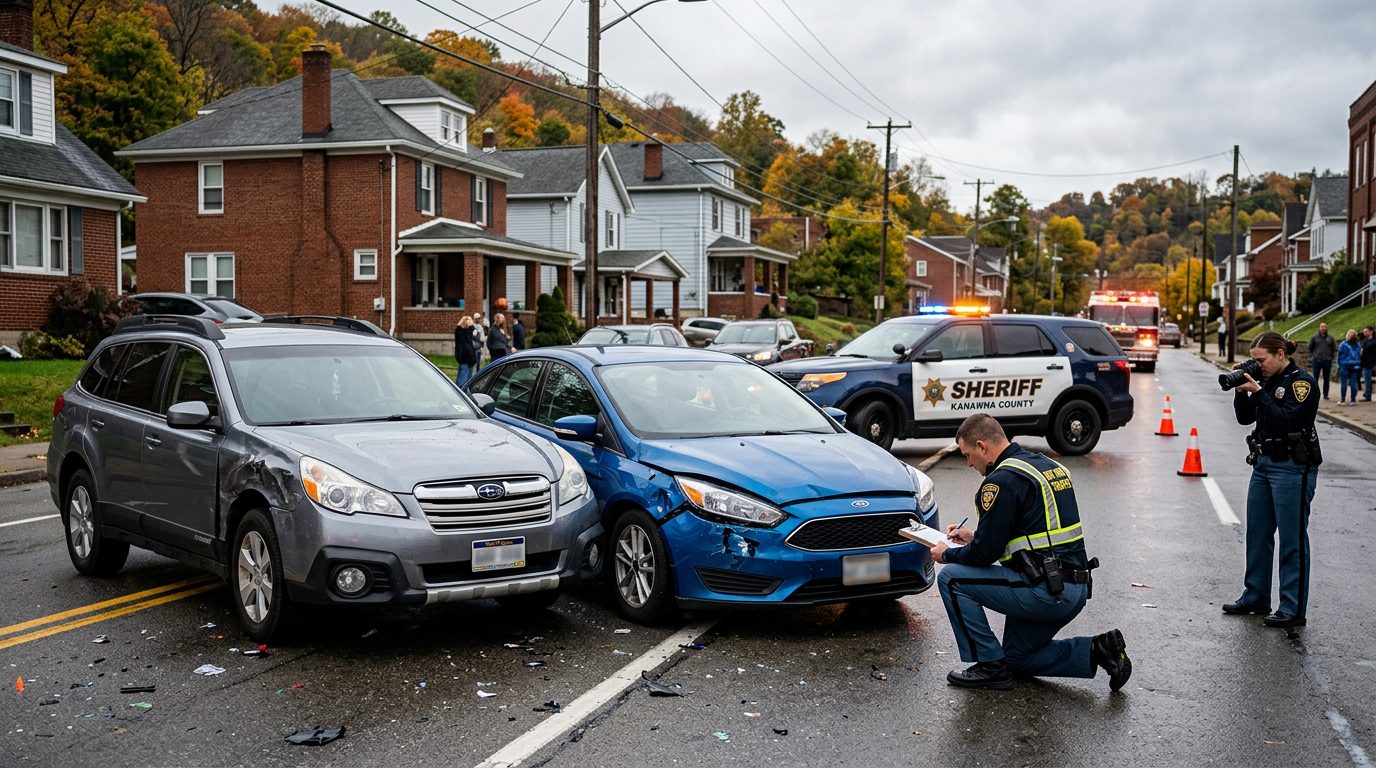
Car Accident Claims in West Virginia
Your Car Is Damaged. Your Claim Deserves Clear Answers.
Vehicle repairs, rental costs, and belongings lost in a crash all need to be tracked. Here is how to organize the claim and what to bring when you reach out.
Published November 13, 2026
A crash can leave you with a damaged car, a rental you can’t keep for long, and a bag of belongings nobody has written down. If you’re working out a property damage claim after a car accident in West Virginia, start with two questions: who was at fault, and which insurance policies apply?
Often, the at-fault driver’s liability insurance is the first place a vehicle or property claim goes. Your own policy may also respond, depending on the coverage you carry. This page explains each type of loss, the proof that helps, and the deadlines to watch.
What Property Damage Means After a Car Accident in West Virginia
Property damage covers the physical losses a crash causes to things you own. It is separate from an injury claim, though both can come from the same wreck. Most property losses fall into four groups:
- Your vehicle, including repairs or a total loss
- A rental or loaner car while yours is out of service
- Personal items inside the car, such as phones, car seats and tools
- Towing, storage and other out-of-pocket costs
Property losses are often handled separately from injury claims. One crash can produce both, and each can move on its own track.
Fault matters. Under W. Va. Code § 55-7-13a, “comparative fault” means the degree to which a person’s fault was a proximate cause of an alleged personal injury, death, or property damage, expressed as a percentage. Under W. Va. Code § 55-7-13a, fault is allocated among everyone who proximately caused the damages, including you, for property damage as well as injury. Under W. Va. Code § 55-7-13c, your recovery is generally reduced by your own share of fault. It is barred only if your fault is greater than the combined fault of everyone else responsible.
If your car, rental costs or belongings are still unresolved after a crash, you can reach out to us for a free case review to talk through your options. Talk it through with Big Bubba — the first case review is free, confidential, and carries no obligation.

Reporting the Crash and Documenting the Damage
Records made at the scene or soon after may be relevant to a property claim, depending on the facts. Take photos before anything is moved, if it is safe to do so. Capture each vehicle from several angles, the wider scene, license plates and visible damage to any property inside.
Write down what you remember while it’s fresh. Note the time, the weather, each vehicle’s direction of travel and what each driver said. Collect names, phone numbers, insurance details and witness contacts.
Keep every receipt for towing, storage, rental and repairs. Save estimates, text messages and voicemails about the crash. These show what was lost and when.
Request the police crash report once it’s available, and read it closely. Check names, insurance details, vehicle descriptions and the description of the damage. If something is wrong, tell the investigating agency and your insurer in writing.
Whose Insurance Pays for Vehicle Damage
The at-fault driver’s liability coverage is often the first insurer to see a vehicle damage claim. Liability coverage may pay for damage the insured driver caused, up to the policy limits, depending on the policy and the facts. You can present your claim to that insurer directly.
Your own collision coverage may pay to repair your car, depending on your policy. Your insurer may then seek reimbursement from the at-fault driver’s insurer. The policy terms decide how that works.
Comprehensive coverage may apply to losses that are not from a collision, such as a falling branch or an animal strike. It is a separate part of the policy, so check your declarations page.
Some insurers may dispute a claim. If you believe an insurer treated you unfairly, state law limits your options. Under W. Va. Code § 33-11-4a, a third-party claimant’s sole remedy for an unfair claims settlement practice is an administrative complaint with the Insurance Commissioner, filed as soon as practicable and no later than one year after the practice is discovered. A good-faith disagreement over the value of a claim is not an unfair claims settlement practice under that statute.
Repair Versus Total Loss and How a Vehicle Is Valued
A total loss is a claim where the insurer pays the vehicle’s value instead of paying for repairs. This usually happens when repair costs are close to or more than what the car was worth before the crash.
Many policies base a total loss payment on the vehicle’s actual cash value at the time of the crash. Insurers may look at comparable vehicles for sale nearby and at the car’s condition. Ask how the value was calculated, and check the numbers against what you know about the car.
Send information the insurer may have missed. That includes options, mileage, recent repairs and upgrades. Photos and maintenance records help show the car’s true condition.
Ask before you authorize major repairs, so the damage can be inspected and documented first.
If you still owe money on the car, the lender may be named on the claim. A loan or lease balance can affect how a total loss payment is divided. Ask your insurer and lender how the payment will be handled, since the details vary by policy and lender.
Rental Cars, Loss of Use and Transportation Costs
A rental car may be covered by the at-fault driver’s liability claim or by your own rental reimbursement coverage, depending on the policy. Find out which one applies early, so the rental doesn’t end without a plan.
Loss of use is the value of the time you’re without a car you can use. It can include days a vehicle sits in a shop, waits for an inspection, or waits for a total loss decision.
Keep a log of each day you were without a car and why. Write down the date, the reason, and any delay caused by a shop or an insurer.
Expect questions about how long a rental should last. Insurers may dispute the length of a rental, especially when a repair or total loss decision takes time. Keep the rental agreement, invoices and all correspondence.
Ride-share, bus and other transportation costs can also be claimed when they follow from the crash. Save each receipt and note why you needed the trip.
Personal Items Inside the Vehicle
Personal items damaged in a crash may be recoverable from the at-fault driver’s liability coverage, depending on the facts and the proof. Common losses include phones, car seats and child safety items, bags, tools, medical equipment, clothing and work gear.
Your homeowner’s or renter’s policy may sometimes cover items kept in a vehicle. That depends on the policy’s terms, so read the personal property section and any vehicle exclusions.
Make an inventory now. For each item, write the name, approximate age, purchase date if you know it, and its condition. Photograph items before they’re thrown away. Keep packaging, receipts or online order history if you have them.
Don’t discard damaged child safety items until you have photographed them and noted their condition. Ask your insurer before you dispose of anything of value.
Not sure what your next step is?
Talk it through with Big Bubba — the first case review is free, confidential, and carries no obligation.
Diminished Value and Other Vehicle-Related Losses
Diminished value is the lower market value a repaired car may keep after a crash. Even good repairs can leave a vehicle with a crash history that sells for less.
Whether a claim for that loss is available depends on the policy and the facts. Insurers may handle it differently, so ask how the claim is reviewed.
Other losses can include aftermarket equipment, custom modifications and cargo that was damaged. Photograph each item, keep receipts and note installation dates.
Be complete about prior damage and repairs. Insurers may ask about the vehicle’s history. Sharing the full picture early may help keep the claim clear, depending on the facts.
When the Other Driver Cannot Be Identified or Is Uninsured
If the other driver can’t be found or has no insurance, your own coverage may be a source of recovery. The specific terms decide how far that coverage reaches.
West Virginia law generally requires a motor vehicle policy to include uninsured motorist terms. Under W. Va. Code § 33-6-31, the policy must contain an endorsement or provisions for sums the insured is legally entitled to recover from an uninsured motor vehicle’s owner or operator.
Hit-and-run crashes add extra steps. If you are physically able, report the crash to police, unless a police officer has already investigated the accident. Write down what you saw: the vehicle’s color, make and model, partial plate numbers, direction of travel, and any witness names. These details help investigators and your insurer.
Check your policy language early, since some policies set shorter notice periods for these claims.
Deadlines and Preserving Your Claim
West Virginia generally allows two years to file a property damage lawsuit, and exceptions may apply. Under W. Va. Code § 55-2-12, a personal action for damage to property generally must be brought within two years after the right to bring it accrues.
That same section sets a two-year period for personal injury damages. A single crash can start the same clock for both kinds of claim.
Insurance deadlines can come earlier. Policies often set notice and proof-of-loss requirements. Missing those steps can complicate a claim even when the lawsuit deadline is still open.
Keep the vehicle and damaged items unaltered until the insurer has inspected them or the claim is resolved. Talk with your insurer before you sell salvage or discard parts.
Keep a simple log of every call. Record the date, time, the person’s name and what was said. Save letters and emails too. Confirm the deadlines that apply to your facts, since timing depends on when the claim accrued, the policy and the parties involved.

Talking to Your Family About Your Crash Claim and Next Steps
If someone you love was in the crash, you may be handling the property claim while they recover. A damaged car, a rental that may end soon and a list of lost belongings can feel like too much at once.
Some families split the work. One person keeps the photos and receipts, and another keeps the call log and the policy papers. A simple split makes the paperwork easier to manage.
If the crash also caused injuries, the property claim runs alongside the injury claim. You can read more about traumatic brain injury after a crash.
We serve West Virginia injury victims, including people dealing with car accident, truck accident and commercial vehicle claims. If your vehicle, rental costs or belongings are still unresolved, you can contact the firm for a free case review, with no obligation to continue, to talk through the property losses and the deadlines that may apply.