
Rear End Car Accident Lawyer West Virginia | Big Bubba
Published October 27, 2026
A rear end car accident lawyer in West Virginia helps people hurt when another vehicle strikes them from behind. Rear-end crashes can look simple, but fault is often disputed. Some injuries also take days to show up.
Big Bubba Injury Law handles car crashes, commercial truck and commercial vehicle crashes, catastrophic brain and spinal cord injuries, and wrongful death cases. We serve Charleston, Huntington, Morgantown, Wheeling, Martinsburg, Parkersburg, Beckley, Clarksburg, Fairmont, and Weirton, and injury victims across all 55 West Virginia counties. This guide explains who can bring a claim, how fault works, and what to do next.
What a Rear-End Car Accident Injury Claim Is and Who It Is For
A rear-end injury claim seeks compensation from the driver who hit the back of another vehicle. It can also reach other parties whose conduct caused the crash.
This type of claim often fits:
- Drivers and passengers in the vehicle that was hit.
- Pedestrians and cyclists struck from behind.
- Families of a person killed in a rear-end crash. These are wrongful death claims.
Crashes involving commercial trucks or other commercial vehicles can involve more parties. The company that owns, leases, or controls the vehicle may be involved. These cases also tend to involve more records. Federal rules can require drug and alcohol testing after some commercial vehicle crashes. The firm handles these cases too. Each crash turns on its own facts, so the first step is a close look at what happened.
Who Is at Fault in a Rear-End Crash?
Fault in a rear-end crash depends on what each driver did. The front driver can share the blame.
Claims often point to a front driver who stopped suddenly, cut in front of another car, drove with brake lights out, or backed up in a travel lane. Insurers often argue that the rear driver followed too closely, was distracted, or drove too fast for conditions. Both stories get tested against the evidence.
Under W. Va. Code § 55-7-13a, “comparative fault” means the degree to which a person’s fault was a proximate cause of an alleged personal injury, death, or damage to property, expressed as a percentage, and in an action for personal injury or wrongful death, recovery is predicated on comparative fault principles. Under W. Va. Code § 55-7-13c, your recovery is reduced in proportion to your own share of fault. You are barred only if your fault is greater than the combined fault of all other persons responsible. Under W. Va. Code § 55-7-13c, any fault chargeable to the plaintiff does not bar recovery unless the plaintiff’s fault is greater than the combined fault of all other persons responsible for the total amount of damages, if any, to be awarded.
Because of this rule, a fault dispute can change how much you recover, not just whether you can recover. That is why the firm reviews the full sequence of events.
Evidence That Supports a Rear-End Claim
Early evidence matters most in rear-end claims, because some of it disappears quickly.
- Police crash report. It lists the drivers, statements, road conditions, and the officer’s observations.
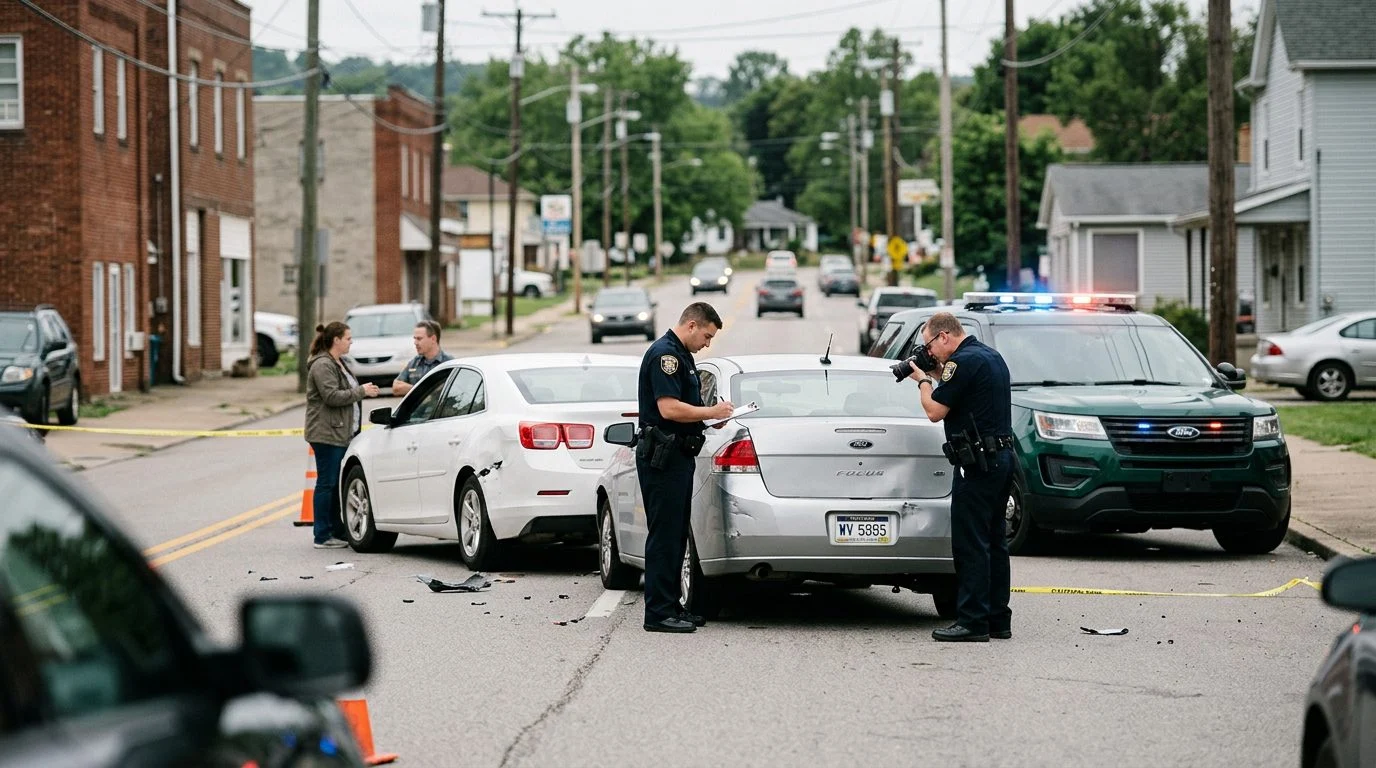
- Photos of both vehicles. Capture damage, skid marks, debris, and the scene as soon as it is safe.
- Video. Dashcam, traffic camera, and nearby business footage can be overwritten quickly.
- Vehicle data. Some vehicles store speed and braking information from the seconds before impact.
- Witness names. Get contact details from anyone who saw the crash.
- Statements at the scene. Write down what the other driver said about braking, phones, or the road.
- Medical records. Records from the first emergency or urgent-care visit tie your injuries to the crash.
Keep copies of everything in one place. Good records make the timeline easier to prove.
Serious Injuries That Can Follow a Rear-End Impact
A rear-end impact can cause injuries that range from neck strain to brain and spinal cord damage. The injuries that matter most are often the ones that take time to show.
- Soft-tissue injuries. Neck and back pain and stiffness are common after sudden forward and backward motion.
- Traumatic brain injury. The head can move quickly, even without striking anything. Possible signs include headaches, dizziness, memory or focus trouble, sleep changes, and mood changes.
- Spinal cord injury. Numbness, tingling, weakness, or loss of function can signal serious damage. Some injuries need long-term care.
- Fractures and internal injuries. Chain-reaction crashes can push one vehicle into another and add new harm.
Get medical care promptly, even when symptoms seem mild. Tell your doctor about every symptom, including ones that appear later. Brain and spinal cord injuries that cause lasting impairment are catastrophic injuries, and the firm handles those cases too.
What a Rear-End Injury Claim Can Cover
A rear-end claim can seek compensation for medical costs, lost income, property damage, and pain and suffering.
- Medical costs, past and future. This covers emergency care, imaging, surgery, rehabilitation, medication, and ongoing treatment tied to the crash.
- Lost income. This covers time off work and lost earning ability when injuries limit your work.
- Property damage. This covers your vehicle, personal items, and rental or transportation costs.
- Pain and suffering. This covers physical pain, emotional distress, and loss of daily activities.
- In a wrongful death action, under W. Va. Code § 55-7-6, the jury’s verdict shall include, but may not be limited to, damages for sorrow, mental anguish, and solace, which may include society, companionship, comfort, guidance, kindly offices and advice of the decedent. It may also cover lost income and services, medical and hospital care, and reasonable funeral expenses.
Under W. Va. Code § 55-7-32, in a civil action for personal injury or wrongful death involving the operation of a commercial motor vehicle that requires a commercial driver’s license, the maximum noneconomic damages recoverable by each person injured or killed against an employer defendant may not exceed $5 million for each occurrence. The statute excludes vehicles serving as common carriers of passengers, school buses, commercial motor vehicles as defined in §17E-1-3(7)(C), and any other vehicle primarily engaged in transporting passengers, and the limit increases for inflation beginning January 1, 2026, though not to more than 150 percent of the original amounts. In general terms, noneconomic loss refers to harms such as pain and suffering rather than bills. The cap applies only if the employer carries at least $3 million in commercial motor vehicle insurance. It does not apply in several listed situations, such as when a driver is found to have been impaired.
Each claim depends on its own injuries, evidence, and fault. No one can promise a result or an amount.
How the Process Works, Step by Step
A rear-end claim usually moves through five steps, from a free case review to resolution.
- Free case review. You describe the crash, your injuries, and any police or insurance contact. The firm explains possible claims and what it would need next.
- Evidence gathering. The firm requests the crash report and works to preserve video, photos, and vehicle data.
- Insurance contact. The firm can handle communication with insurers, so you do not have to negotiate alone.
- Medical picture. Treatment continues. The claim should reflect your full recovery needs, including symptoms that appear later.
- Resolution. A claim may settle through negotiation or, if needed, a lawsuit. Timing varies with the injuries and the case.
You can ask questions at every step.
How Long You Have to File, and What to Do Right After a Crash
In West Virginia, a wrongful death action must be commenced within two years after the death of the deceased person, subject to the provisions of section eighteen, article two, chapter fifty-five (W. Va. Code § 55-7-6).
Under West Virginia law, wrongful death claims must be commenced within two years after the death of the deceased person, subject to the provisions of section eighteen, article two, chapter fifty-five (W. Va. Code § 55-7-6). Under W. Va. Code § 55-7-6, the action is brought by the personal representative of the deceased person. The clock keeps running while you wait, so waiting can shorten your time to act.
For the first twenty days after an injury, some settlement steps are restricted. If you are in the hospital or unable to work, the other side generally cannot negotiate a settlement or ask you for a release during that time. W. Va. Code § 55-7-11a sets these limits.
Right after a crash, focus on these steps:
- Move to safety and call the police.
- Exchange information and get witness names.
- Photograph the scene and both vehicles.
- Get a medical evaluation.
- Think before giving a recorded statement or signing anything from the other insurer.
Keep a symptom journal, and save every bill, prescription receipt, and missed-work record.
Frequently Asked Questions About Rear-End Crash Claims
Can I sue someone who rear-ended me in West Virginia?
Yes. A driver whose negligence causes a crash can be held responsible for the resulting injuries. Fault rules and time limits still apply.
What if the other driver says I stopped suddenly?
The firm reviews braking, traffic conditions, and any video or vehicle data to test that account. Both sides’ accounts get checked against the evidence.
What if my symptoms seemed minor at first?
Symptoms can change over time, so report every one to your medical provider. Early medical records help connect later symptoms to the crash.
Does a rear end car accident lawyer in West Virginia handle truck crashes?
Yes. Big Bubba Injury Law handles commercial truck and commercial vehicle rear-end crashes, which can involve additional parties and records.
Do I have to go to court?
Some claims settle without a lawsuit, while others need one. The firm prepares each claim for either path.

Talk With the Firm About Your Rear-End Crash
If another vehicle hit you from behind, the firm can review your crash facts with you. This matters most if you’re dealing with pain, medical bills, or calls from an insurer and aren’t sure who is responsible.
Bring the police report, photos, or medical notes you have. You don’t need them to start the conversation. Request a free case review with Big Bubba Injury Law.