
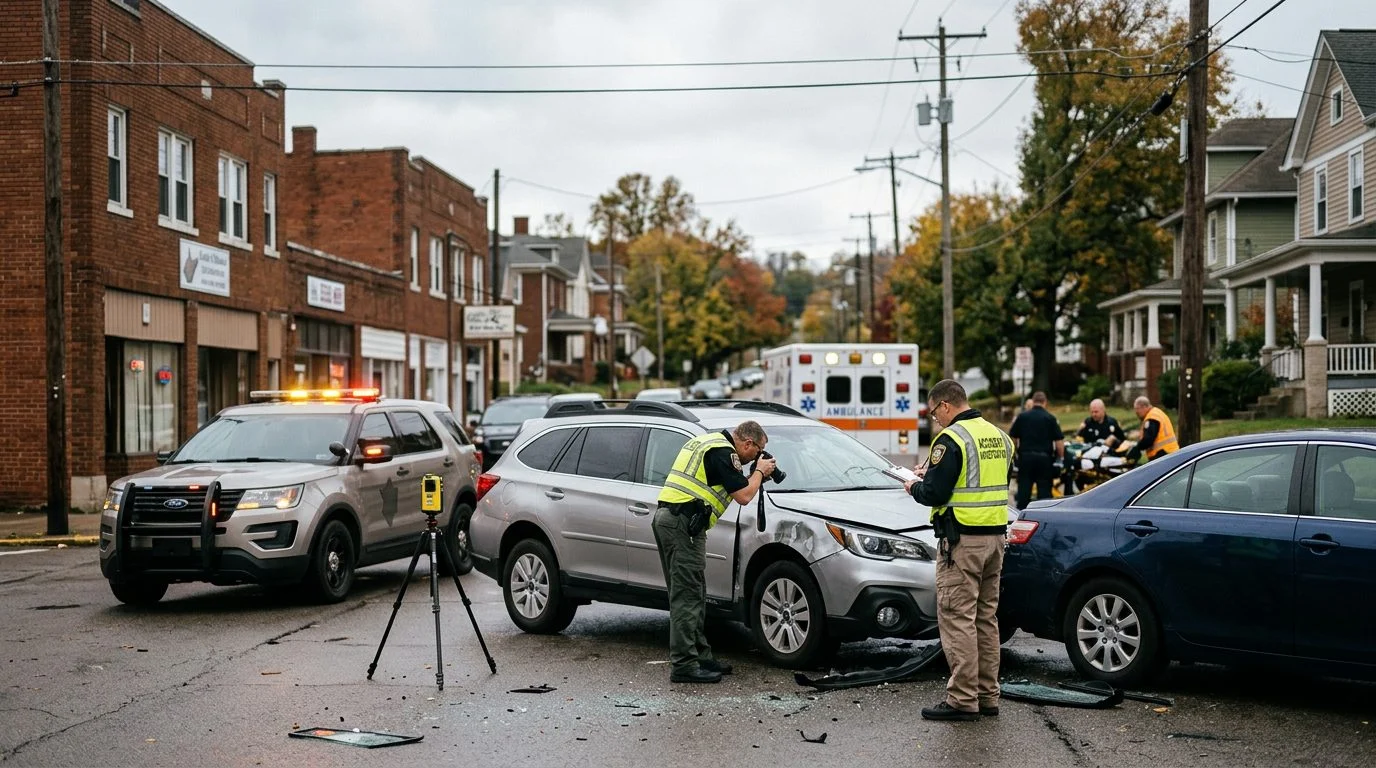
Car Accident Injuries | West Virginia
Hit Your Head in a Crash? Know When to See a Neurologist
Some head injury symptoms need emergency care right away. Others call for careful follow-up over days or weeks. Here is how to think through the next steps, and how to reach out to us about what happened.
Published November 22, 2026
If you hit your head in a car crash, you may be wondering whether you need to see a neurologist. Yes, a neurologist can be the right doctor after a car accident head injury, especially when symptoms continue or are hard to explain. Every head injury after a crash deserves a medical check first, and some warning signs call for emergency care right away.
Why a Head Injury After a Crash Deserves a Medical Check
A head injury after a crash should be checked by a doctor, even if you feel fine at the scene. Symptoms may not show up right away. People may first notice trouble with focus, memory, or sleep hours or days later.
Concussion is a traumatic brain injury. A study of the CDC Heads Up materials notes that concussions may have serious short- and long-term consequences. That study looks at youth sports, so it offers general guidance rather than crash-specific data.
Waiting to see whether symptoms fade can be risky. A medical check lets a doctor look for problems early, while the injury is still being assessed. You do not have to lose consciousness to have a brain injury, so a “I feel okay” reaction is not enough reason to skip a visit.
If you're trying to make sense of a head injury from a crash for someone you love, you don't have to sort out the medical and legal questions alone. Talk it through with Big Bubba — the first case review is free, confidential, and carries no obligation.

Does a Neurologist Treat Head Injuries?
Yes, neurologists evaluate and treat conditions of the brain, spinal cord, and nerves. A neurologist can assess a head injury and how it affects thinking, balance, vision, and movement.
What a Neurological Visit May Include
A neurological visit may start with a review of your symptoms and your health history. The doctor may then perform a neurological exam to check memory, speech, coordination, and how your eyes and muscles respond. If the doctor thinks it’s needed, imaging may be ordered to look at the brain.
Tell the doctor about prior head injuries, medications, and other health conditions. These details can change how symptoms are read.
Which Doctor to See First
After a crash, emergency care comes first if warning signs appear. Otherwise, some people start with a primary care doctor, who may refer them to a neurologist. The right next step depends on your symptoms and your treating physician’s judgment.
Common Neurological Symptoms After a Car Accident
Symptoms after a head injury may include headache, dizziness, nausea, confusion, memory trouble, and trouble concentrating. Sleep changes, irritability, and sensitivity to light or noise can also appear. This list is a general guide, not a diagnosis.
Symptoms can be subtle. They may come and go, and they can look like stress or tiredness. A person may blame a long day or a bad night’s sleep and miss an injury that needs care. Don’t assume a symptom is unrelated to the crash just because it showed up later.
The same symptoms can have many causes. A medical professional has to work out what is happening in a given case. Symptoms that persist or get worse are a reason to contact your doctor again.
Warning Signs That Need Emergency Care Right Away
Get emergency care right away for a worsening headache, unequal pupils, confusion, or trouble waking up after a head injury. The Mayo Clinic concussion guidance says these signs require immediate medical care.
Other signs that call for urgent evaluation include repeated vomiting, a seizure, slurred speech, and weakness or numbness in the face, arm, or leg.
If someone cannot be moved safely, call 911 right away. Children and older adults can show signs differently, so check them promptly.
Getting From the Emergency Room to Neurology Follow-Up
After an emergency visit, your treating physician may recommend follow-up with a neurologist, especially if symptoms persist. Follow-up visits let the doctor track changes over time.
Keep a written symptom log with dates, times, and how symptoms affect sleep, work, and daily tasks. Keep discharge instructions, referrals, appointment notes, and prescription records in one folder. Bring the log and papers to every visit.
Write down your questions before each appointment. Ask what may have caused the symptoms and which changes should prompt a call back to the doctor.
Report every symptom, including ones that seem minor. A common mistake is playing down symptoms to get back to normal life. Another is skipping follow-up because you feel somewhat better.
How Head Injuries Can Affect Work, Daily Life, and Recovery
Recovery after a head injury varies with the type and severity of the injury and with a person’s overall health. Your treating physician is the right source for what to expect in your case.
Concentration, memory, and fatigue can make work or school harder. Some people need time away from certain tasks, such as driving or long shifts, while they recover. Your doctor can advise what is safe.
Keep a record of missed work, missed school, and tasks you can no longer do. Those notes may matter later, depending on the facts.
Family members often help with appointments, medications, and daily routines. If you are helping a loved one, write down what you notice in their own words, as clearly as you can.
A crash can also cause a spinal cord injury, according to the Christopher & Dana Reeve Foundation. The level and severity of the injury affect function and walking.
Not sure what your next step is?
Talk it through with Big Bubba — the first case review is free, confidential, and carries no obligation.

How the Firm Helps People Hurt in Car Accidents Across West Virginia
We handle car accident, truck accident, commercial vehicle accident, catastrophic injury, traumatic brain injury, spinal cord injury, and wrongful death matters. We serve injury victims across West Virginia, including Charleston, Huntington, Morgantown, Wheeling, Martinsburg, Parkersburg, Beckley, Clarksburg, Fairmont, and Weirton.
If another driver was at fault, West Virginia generally allows two years to file a personal injury claim, and exceptions may apply, under W. Va. Code § 55-2-12. Under W. Va. Code § 55-7-13c, a plaintiff’s fault does not bar recovery unless it is greater than the combined fault of others responsible. If the plaintiff’s fault is less than the combined fault of all other persons, recovery is reduced in proportion to the plaintiff’s degree of fault.
If you’re trying to make sense of a head injury from a crash for someone you love, you don’t have to work through the medical and legal questions alone. You can focus on medical care while the firm looks at the legal side. You can reach out to the firm for a free case review.