
Spinal Cord Injury | Car Crashes | West Virginia
A Spinal Cord Injury Changes Everything. We Can Help You Understand Your Options.
Our firm represents people and families across West Virginia after serious car crash injuries, and we take the time to listen to what happened.
Published November 12, 2026
If someone you love was hurt in a car or truck crash in West Virginia, you may be searching for answers while still in shock. Here is the short version: a spinal cord injury is serious and needs emergency care. West Virginia generally allows two years to file a personal injury claim, though exceptions may apply (W. Va. Code § 55-2-12). This page explains the warning signs, how fault is reviewed, and what a free case review involves.
What a Spinal Cord Injury From a Car Crash Involves
A spinal cord injury is damage to the bundle of nerves that carries messages between the brain and the rest of the body. Most of these injuries come from sudden trauma to the spine.
The Christopher & Dana Reeve Foundation notes that trauma, such as a car accident, can cause a spinal cord injury. It also explains that complete and incomplete injuries differ.
What a person can feel or move depends on where the injury sits on the spine and how severe it is. A physician makes the diagnosis.
Many people who search this topic are researching for someone else. A parent, spouse, or adult child may be asking because the injured person cannot yet read, decide, or sign papers. That is a normal place to start.
We handle catastrophic injury claims, including spinal cord injury, that arise from car and commercial vehicle crashes. We also handle traumatic brain injury and wrongful death matters.
If someone you love has numbness, weakness, or paralysis after a crash, you don't have to sort out the next steps alone. Reach out to us about your case. Talk it through with Big Bubba — the first case review is free, confidential, and carries no obligation.

Warning Signs That Need Emergency Medical Care
If anyone shows these signs after a crash, call 911 or go to the nearest emergency department right away:
- Numbness or loss of feeling in the arms, legs, hands, or feet
- Weakness or paralysis in any part of the body
- Severe pain or pressure in the head, neck, or back
- Odd positioning of the neck or back
- Trouble breathing
- Loss of bladder or bowel control
Some symptoms can appear hours or days after a crash. A person who feels fine at the scene may still be hurt. Don’t wait to see whether symptoms settle on their own.
Keep a written list of when each symptom started. Bring it to the emergency team and to every follow-up appointment.
How Car and Truck Crashes Can Cause Spinal Cord Injuries
Crashes can injure the spinal cord when the spine is twisted, forced past its normal range, or struck. The type of crash often shapes the injury.
A rear-end hit can snap the head and neck forward and back. A side impact can throw the body against a door frame or seat belt. Rollovers and ejections tend to cause more severe trauma.
Commercial trucks are heavy. Crashes involving them may cause more serious injuries, depending on the facts.
Commercial carriers must follow federal driving-time limits. Except as otherwise provided in 49 CFR 395.1, a driver of a property-carrying commercial motor vehicle may not drive after a period of 14 consecutive hours after coming on-duty following 10 consecutive hours off-duty. A driver also may not drive more than 11 hours in that period (49 CFR 395.3).
Motor carriers must keep records of duty status and supporting documents for at least 6 months from receipt (49 CFR 395.8). That short window is one reason to act early after a truck crash.
Who May Be Responsible and How Fault Is Reviewed
Fault is decided by looking at what each person did and whether it contributed to the crash and the injury.
West Virginia uses comparative fault. Under W. Va. Code § 55-7-13c, a plaintiff’s fault does not bar recovery unless it is greater than the combined fault of all others responsible. If it is less, recovery is reduced in proportion to the plaintiff’s share of fault.
If another driver was at fault, that driver may be responsible. An employer or another company may also share responsibility, depending on the facts. Under the same statute, each defendant’s share is generally limited to its own percentage of fault.
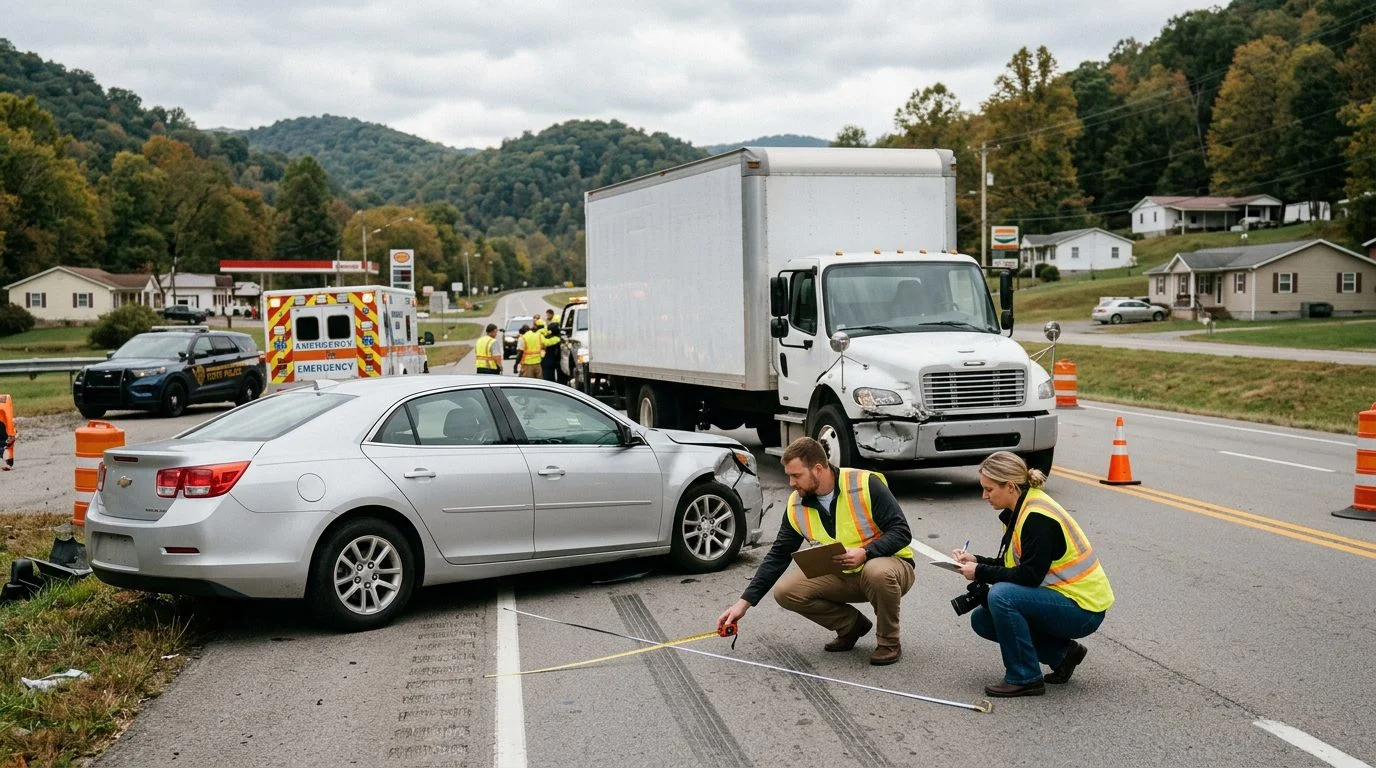
Evidence often reviewed includes the police crash report, photographs, medical records, witness statements, and vehicle damage. In truck cases, driver logs and maintenance records may also matter.
Some insurers may dispute a claim or question how an injury happened. Reviewing the evidence early helps answer those questions.
Deadlines and What West Virginia Generally Allows
West Virginia generally allows two years to file a personal injury lawsuit, and exceptions may apply. The rule is set out in W. Va. Code § 55-2-12.
Under W. Va. Code § 55-2-15, the time to bring a personal action may be extended for a person who was an infant or insane when the right accrued. Under subsection (b) of the same statute, for a person who was an infant or insane when the right accrued, the action may in no case be brought more than 20 years after the right accrues. W. Va. Code § 55-2-15 reads: “If any person to whom the right accrues to bring any personal action other than an action described in subsection (a) of this section, suit, or scire facias, or any bill to repeal a grant, shall be, at the time the same accrues.”
Under W. Va. Code § 55-2-15, that extension is subject to one exception: it shall in no case be brought after 20 years from the time when the right accrues. W. Va. Code § 55-7-11a addresses a different matter: settlement agreements, releases and statements made within twenty days of a personal injury while the injured person is an inpatient in a hospital or partially or totally unable to engage in his or her usual work. A call from an insurer soon after a crash is worth discussing with someone who can review it.
Keep medical bills, pay stubs, crash paperwork, photographs, and your symptom list. These records help any review move faster.
What a Free Case Review Covers, Step by Step
A free case review is a first conversation, offered with no obligation to continue. Here is how it typically works:
- Reach out. Call the firm or use the case review request form. Share basic facts about the crash and the injury.
- Review the facts. The firm looks at the type of crash, the injury details, and who may be responsible. It also asks what records you already have.
- Explain the options. The firm walks through general options and the questions to consider before you decide on next steps.
A spinal cord injury claim may address medical care, rehabilitation, lost income, and changes to daily living. Which of these apply depends on the facts.
We focus on serious car and truck crash injuries, including spinal cord and brain injuries and wrongful death. Our support staff help gather records. We serve Charleston, Huntington, Morgantown, Wheeling, Martinsburg, Parkersburg, Beckley, Clarksburg, Fairmont, Weirton, and other West Virginia injury victims.
Not sure what your next step is?
Talk it through with Big Bubba — the first case review is free, confidential, and carries no obligation.

Common Questions About Spinal Cord Injury Claims in West Virginia
Can I request a free case review if I’m not sure who was at fault?
Yes. Fault is examined from the evidence, and you can ask your questions during the review.
What if the other driver’s insurance company calls me?
Some insurers may ask for a recorded statement. It’s reasonable to get input before you say more.
Can a family member reach out for an injured loved one?
Yes. A family member can contact the firm on someone’s behalf, and the firm can explain what it needs.
If someone you love has numbness, weakness, or breathing trouble after a crash, you don’t have to sort out the next steps alone. Request a free case review to talk through your situation.