
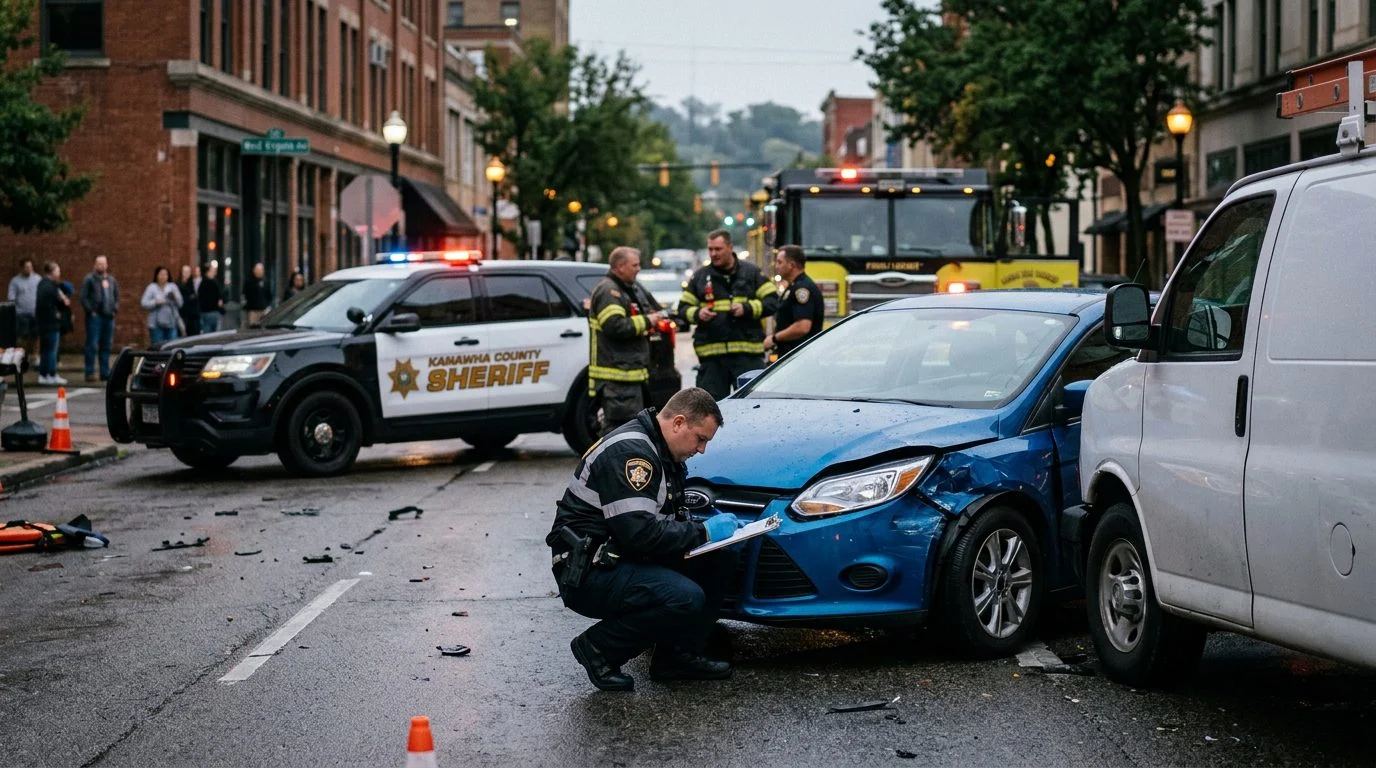
West Virginia Car Accident Claims
Hurt by a Driver on the Job? Learn Whether a Claim Against the Employer May Apply
When a driver's work may have played a part in a crash, the employer can sometimes be part of a claim. Here is how the facts shape that question in West Virginia.
Published November 2, 2026
Yes, you may be able to sue an employer when a driver caused a car accident in West Virginia, but the answer depends on the facts. The key questions are what the driver was doing, who the driver worked for, and how the vehicle was being used. This page walks through the main routes people ask about.
Why This Question Comes Up After a West Virginia Crash
After a crash with a working driver, families often face medical bills, missed paychecks, and hard questions. Most people first think of the driver. The company that employed that driver, or owned the vehicle, may also be part of the picture.
This page answers one question in general terms. It is not advice on your own case. If you were hurt in a serious way, such as a brain or spinal cord injury, the firm’s broader pages on traumatic brain injury and spinal cord injury cover those injuries in more depth.
If a worker's driving left you or someone you love hurt, you may have a claim worth reviewing, and the firm is glad to talk through what happened in a free case review. Talk it through with Big Bubba — the first case review is free, confidential, and carries no obligation.
Can You Sue a Company If Its Driver Hits You?
In many cases, an injured person may have a claim against the driver. In some situations, a claim may also reach the company the driver worked for.
Many courts use a general idea called respondeat superior. It means an employer may answer for negligence by an employee who was acting within the scope of work. Whether this applies often depends on what the driver was doing at the moment of the crash.
Work trips often fit this idea. Examples include a delivery run, a service call, or driving between job sites. A personal errand may be treated differently, depending on the facts. Even a short trip can matter if it was tied to the job.
That definition helps explain who may be part of a claim. It does not decide any case on its own.
When the Employer Itself May Be Liable
A claim against a company can rest on the company’s own choices, not only on the driver’s actions. Lawyers often describe three ideas.
Negligent hiring asks whether a company reasonably checked a driver’s background for the job.
These theories depend on the facts. They are not automatic. Federal rules also add duties for motor carriers. Under 49 C.F.R. § 391.23, which applies except as provided in subpart G, a motor carrier must make a written record with respect to each previous employer it contacts, or good faith efforts to do so. Records like these may be relevant in some cases.
Independent Contractors, Leased Drivers, and Other Setups
The relationship between the driver and the company can change the answer. The driver may have been an employee, an independent contractor, or a leased driver working for a carrier. Each setup can lead to different questions.
West Virginia courts may look at the facts of that relationship. Questions can include who controlled the work, how the driver was paid, and who supplied the truck or car. The answers may shape whether the company can be part of a claim.
The vehicle’s owner, a parent company, or a lessor may also be relevant, depending on the facts. Keep any lease, contract, pay record, or letter that describes the driver’s role. These papers may matter later, and they are easier to gather early, while memories and records are fresh.
West Virginia Crash Claims: Timing, Insurance, and Evidence
West Virginia generally allows two years to file a personal injury claim, and exceptions may apply. The general rule is in W. Va. Code § 55-2-12. Because deadlines can be complicated, it helps to check the timing early.
Early contact from an insurer can also raise timing questions. Under W. Va. Code § 55-7-11a, an injured person may disavow a settlement, release or statement obtained in violation of that section within one hundred eighty days from the date of the personal injury by signing a written statement of disavowal and sending a copy to the person who violated the section. For the settlement, release or statement to be kept out of evidence, any money paid for it must be repaid or returned when the copy is sent.
West Virginia uses comparative fault. Each person’s share of fault is set as a percentage, and those shares must add up to zero or one hundred percent, as stated in W. Va. Code § 55-7-13a. Insurance rules for commercial vehicles can matter too, depending on the facts, as covered in the commercial vehicle statute linked above.
Evidence that may be relevant includes the crash report, photos, witness names, the work assignment, dispatch or trip logs, and medical records. Some insurers may dispute a claim, so early documentation can help.
Wrongful Death and Families of Those Killed in Work-Related Crashes
If someone died in a crash, family members may have a wrongful death claim. W. Va. Code § 55-7-11a covers personal injury claims of a living, injured person, not wrongful death claims: within twenty days from the date of the personal injury, while the injured person is either an inpatient in any hospital or partially or totally unable to engage in his or her usual trade, profession or occupation, no person shall negotiate or attempt to negotiate a settlement of any claim for that personal injury with or on behalf of the injured person. It must be started within two years after the death, subject to the provisions of section eighteen, article two, chapter fifty-five, under W. Va. Code § 55-7-6. W. Va. Code § 55-7-6 reads: “The provisions of this section shall not apply to actions brought for the death of any person occurring prior to July 1, 1988.”
See W. Va. Code § 55-7-5. The employer questions in this article can arise in these cases too.
Families often have a great deal to handle at once. Keep the crash report, the employer’s contact information, and any letters from insurers in one folder. A calm, organized file makes it easier to review what happened.
Not sure what your next step is?
Talk it through with Big Bubba — the first case review is free, confidential, and carries no obligation.
Questions to Bring to a Free Case Review
Before any conversation, gather a few basic facts. Write down the driver’s name, the company’s name, the purpose of the trip, who owns the vehicle, and the crash report number. Note any witnesses too.
These facts often decide whether an employer may be responsible. The relationship between the driver and the company, and the purpose of the trip, matter most.
If a worker’s driving left you or someone you love hurt, you may have a claim worth reviewing. The firm offers a free case review, and you can contact the firm to talk through what happened.
Can I sue an employer if a driver caused a car accident in West Virginia?
It may be possible, depending on what the driver was doing and who the driver worked for. The facts decide the answer.
Can you sue a company if its driver hits you?
Sometimes. You may have a claim against the driver, and a claim against the company may be possible when the driver was doing work for it.
Do I have two years to sue after a crash?
West Virginia generally allows two years for personal injury claims, and exceptions may apply. Check the timing early.
Related practice areas
- Traumatic Brain Injury from Car and Truck Accidents in West Virginia
- Car Accidents in Charleston
- Car Accidents in Huntington
- Declined Ambulance After Car Accident West Virginia Claims