
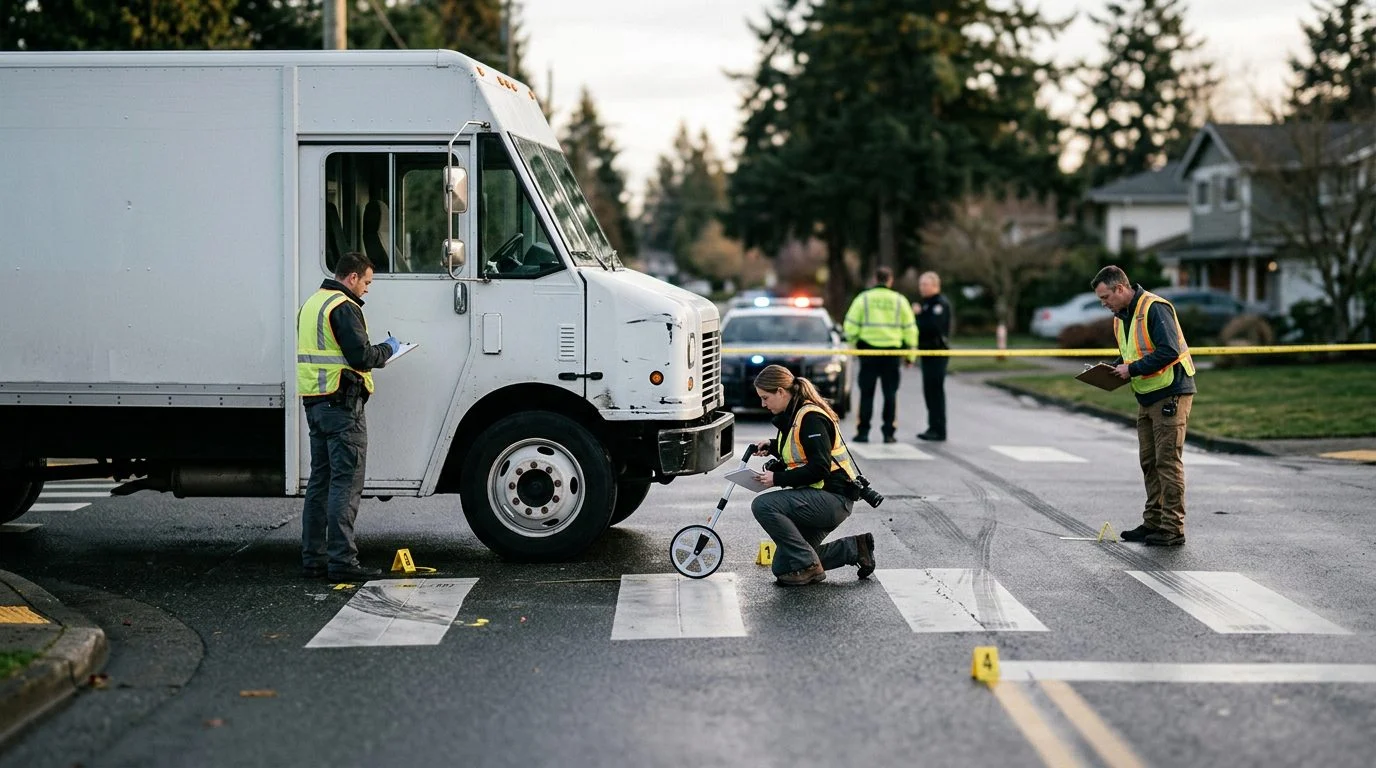
Commercial Vehicle Accidents
Traumatic Brain Injury from Commercial Vehicle Accidents
When a truck or commercial vehicle crash causes a head injury, the consequences can be life-altering. Big Bubba Injury Law helps West Virginia families understand their rights and pursue compensation for their injuries.
Published October 04, 2026
Traumatic Brain Injury from Commercial Vehicle Accidents: What You Need to Know
A traumatic brain injury (TBI) from a commercial vehicle accident occurs when the force of a crash causes the brain to move inside the skull, damaging brain tissue and disrupting normal brain function. Commercial vehicles—tractor-trailers, delivery trucks, commercial buses, and service vehicles—are generally heavier than passenger cars, which can mean greater impact force and more severe injuries. If you or a family member suffered a head injury in a commercial vehicle crash, understanding what happened, what to expect during recovery, and your legal rights is the first step toward getting help.

Not sure what your next step is?
Talk it through with our team — the first case review is free, confidential, and carries no obligation.
What Is a Traumatic Brain Injury from a Commercial Vehicle Accident?
A traumatic brain injury results from a sudden impact, jolt, or force that causes the brain to move inside the skull, damaging brain cells and disrupting normal function. Commercial vehicles create especially severe TBIs because of their size, weight, speed, and stopping distance compared to passenger cars.
Why commercial vehicles cause severe brain injuries:
- Size and weight: A loaded tractor-trailer weighs 80,000 pounds or more, compared to 3,000–4,000 pounds for a passenger car. The force of collision is proportionally greater.
- Speed and momentum: Commercial trucks take longer to stop and often travel at highway speeds, increasing collision force.
- Blind spots: Large blind spots on trucks increase the risk of side-impact and rear-end crashes that cause violent head movement.
- Cargo and load shifts: Unsecured cargo or improperly maintained vehicles can cause rollovers or secondary impacts.
Common scenarios that cause TBI in commercial vehicle crashes:
- Rear-end collision with a tractor-trailer at highway speed
- Side-impact crash with a delivery truck or commercial van
- Multi-vehicle pile-up involving commercial vehicles
- Rollover accident caused by improper cargo loading or maintenance failure
- Head-on collision with a commercial vehicle
Signs and Symptoms of Traumatic Brain Injury After a Commercial Vehicle Crash
Symptoms of traumatic brain injury may not appear immediately. Some injuries are obvious at the scene; others emerge hours or days later as swelling, internal bleeding, and neurological changes develop.
Physical symptoms:
- Headache (often severe and persistent)
- Dizziness or vertigo
- Nausea or vomiting
- Sensitivity to light or sound
- Balance problems or coordination difficulty
- Fatigue or excessive drowsiness
- Sleep disturbances
Cognitive symptoms:
- Difficulty concentrating or focusing
- Memory problems (trouble recalling events or learning new information)
- Confusion or disorientation
- Trouble with decision-making or problem-solving
- Slowed thinking or processing speed
Emotional and behavioral changes:
- Irritability or increased anger
- Mood swings or emotional instability
- Anxiety or panic
- Depression or emotional numbness
- Lack of emotion or feeling disconnected from others
- Personality changes
Why symptoms may be delayed: The brain can swell, bleed internally, or suffer microscopic damage to nerve fibers that isn’t immediately apparent. You may feel fine at the accident scene but develop severe symptoms within hours or days. This is why medical evaluation is essential even if you feel okay right after the crash.
How Commercial Vehicle Accidents Cause Traumatic Brain Injuries
Understanding the mechanics of how these injuries happen helps explain why they are so serious and why they require immediate medical attention and legal action.
Impact force and mechanism of injury:
When a commercial vehicle crashes into your car, the sudden deceleration or violent movement causes your brain to move inside your skull. The brain tissue tears, nerve fibers break (diffuse axonal injury), and brain cells are damaged. This happens in milliseconds, and the damage is often invisible on initial imaging.
Coup-contrecoup injuries:
The brain can be damaged at the point of impact (coup injury) and on the opposite side of the brain where it strikes the inside of the skull (contrecoup injury). A rear-end collision, for example, can cause damage to the front and back of the brain simultaneously.
Secondary injuries:
The initial impact is only the beginning. Swelling (cerebral edema), bleeding inside the skull (intracranial hemorrhage), and reduced oxygen flow to brain tissue compound the initial damage. These secondary injuries can develop over hours or days and are often more damaging than the initial impact.
Negligence factors in commercial vehicle accidents:
- Driver fatigue or hours-of-service violations (under 49 CFR § 395.3, a driver may drive a total of 11 hours during a specified period)
- Speeding or reckless driving
- Improper vehicle maintenance
- Blind-spot accidents caused by inadequate mirrors or camera systems
- Failure to secure cargo properly
- Distracted driving (phone use, eating, fatigue)
- Pressure from trucking companies to violate safety rules or meet unrealistic schedules
Recovery and Long-Term Effects of TBI from Commercial Vehicle Accidents
Recovery from a traumatic brain injury varies widely depending on the severity of the injury, your age, overall health, and the quality of medical care and rehabilitation you receive.
Mild TBI (concussion):
Some people recover within weeks; others experience persistent symptoms lasting months or longer (post-concussion syndrome). Symptoms may include headaches, dizziness, difficulty concentrating, and mood changes that interfere with work and daily life.
Moderate to severe TBI:
Recovery is often lengthy and may involve hospitalization, surgery, intensive rehabilitation, and ongoing therapy. Many people require months or years of recovery, and some effects may be permanent.
Physical recovery:
You may need to regain strength, balance, and coordination through physical therapy. Chronic pain, headaches, or sensitivity to light and sound can persist long after the initial injury.
Cognitive recovery:
Rebuilding memory, attention, processing speed, and executive function (planning, decision-making) often requires cognitive rehabilitation therapy. Some cognitive abilities may not fully return.
Emotional and social impact:
Personality changes, depression, anxiety, and difficulty with relationships are common after TBI. Many people struggle to return to work or maintain independence. The emotional toll on family members is also significant.
Long-term complications:
People who suffer traumatic brain injuries face increased risk of seizures, chronic headaches, sleep disorders, depression, and cognitive decline later in life. These complications may require ongoing medical management and support.
Have questions about what happened?
Ask our team directly. The first conversation is free, confidential, and there is no obligation to continue.
What a Traumatic Brain Injury Claim Covers
A traumatic brain injury claim seeks compensation for all losses caused by the injury, including medical expenses, lost income, pain and suffering, and future care needs.
Damages typically included in a TBI claim:
- Medical expenses: Emergency care, hospitalization, surgery, imaging (CT scans, MRIs), rehabilitation, physical therapy, occupational therapy, speech therapy, and ongoing treatment
- Lost wages: Income lost while you were unable to work during recovery
- Reduced earning capacity: If the injury prevents you from returning to your previous job or earning at the same level, you may recover the difference in lifetime earnings
- Pain and suffering: Compensation for physical pain, emotional distress, anxiety, depression, and reduced quality of life
- Home care and assistance: Costs for in-home nursing, personal care attendants, or household help if you cannot manage independently
- Adaptive equipment and modifications: Wheelchairs, mobility aids, speech-to-text devices, home modifications (ramps, accessible bathrooms), or vehicle adaptations
- Future medical care: Anticipated treatment, therapy, monitoring, and medications over your lifetime
- Wrongful death damages: If a family member died from injuries sustained in the accident, a wrongful death action may be brought by the decedent’s personal representative, and the damages may include reasonable funeral expenses, reasonably expected loss of income and support, and sorrow and loss of companionship.
How Big Bubba Handles Traumatic Brain Injury Cases from Commercial Vehicle Accidents
We understand that a traumatic brain injury from a commercial vehicle accident is not just a legal matter—it is a life-changing event. Our approach focuses on thorough investigation, detailed medical documentation, and aggressive advocacy to hold responsible parties accountable.
Our process:
Investigation: We gather police reports, medical records, accident scene photographs, and professional analysis to establish exactly how the crash happened and who was at fault. We obtain the commercial vehicle’s maintenance records, driver logs, and company safety practices to identify violations.
Medical documentation: We work closely with your doctors and may retain medical professionals—neurologists, rehabilitation providers, and life-care planners—to document your injuries, treatment, recovery progress, and long-term prognosis.
Identifying liable parties: Commercial vehicle accidents often involve multiple responsible parties: the driver, the trucking company, the vehicle owner, maintenance contractors, cargo loaders, or other drivers. We work to identify every party that may share responsibility for the crash.
Negotiation with insurers: We handle all communication with insurance companies, present evidence of liability and damages, and pursue fair settlement offers. We can help you evaluate any settlement offer you receive.
Litigation if necessary: If a fair settlement cannot be reached, we are prepared to take your case to trial and advocate for you in front of a judge and jury.
No fee unless we win: You pay no attorney fees unless we recover compensation for you. You are responsible for court costs and case expenses.
Why Commercial Vehicle Accident Cases Are Different
Commercial vehicle accident cases are more complex than typical car accidents, and they require in-depth legal knowledge.
Federal regulations and liability:
Commercial truck drivers are subject to federal safety rules, including hours-of-service limits, vehicle maintenance standards, and driver qualification requirements. Under W. Va. Code § 55-7-9, a person injured by the violation of a statute may recover damages sustained by reason of the violation.
Company liability:
Trucking companies can be held responsible for driver negligence, inadequate training, poor vehicle maintenance, pressure to violate safety rules, or failure to hire qualified drivers. This expands the pool of liable parties and increases available insurance coverage.
Higher insurance limits:
Commercial vehicles typically carry higher liability insurance limits than passenger vehicles, which supports larger claims and better compensation for catastrophic injuries.
Complexity:
Multiple parties, regulatory violations, federal oversight, and severe injuries make these cases more involved than typical car accidents. You need an attorney who understands both personal injury law and commercial trucking regulations.
Frequently Asked Questions About Traumatic Brain Injury from Commercial Vehicle Accidents
Q: How do I know if I have a traumatic brain injury?
Seek medical evaluation immediately after any head impact in a commercial vehicle accident. Doctors use CT scans, MRIs, and neurological exams to diagnose TBI. Some symptoms appear right away; others emerge over days or weeks.
Q: How long does recovery take?
Recovery varies widely. Mild TBI may resolve in weeks; moderate to severe TBI can take months or years. Some effects may be permanent. Your doctor and rehabilitation team can provide a more specific timeline based on your injury.
Q: Can I still file a claim if symptoms appeared days after the accident?
Yes. Delayed symptoms are common with TBI. Medical records linking your symptoms to the accident are key. Document everything and report symptoms to your doctor promptly.
Q: What if the commercial vehicle driver was not at fault?
We investigate all parties. Liability may rest with the trucking company, vehicle maintenance contractor, cargo loader, or another driver. We identify all responsible parties.
Q: What if I was partially at fault?
West Virginia follows a modified comparative negligence rule. Under W. Va. Code § 55-7-13c, you may still recover even if partially at fault, as long as your fault is not greater than the combined fault of all other parties. Your award is reduced by your percentage of fault.
Q: What is the deadline to file a claim?
A personal injury lawsuit in West Virginia must generally be brought within two years after the right to bring the action accrued, according to W. Va. Code § 55-2-12, and exceptions may apply. If the case involves wrongful death, the deadline is generally two years from the date of death under W. Va. Code § 55-7-6, subject to other provisions of West Virginia law, and exceptions may apply. Do not delay—contact us to protect your rights.
Want to know where you stand?
Tell us what happened and our team will walk you through the options available to you, at no cost.
Big Bubba’s Approach to Traumatic Brain Injury Cases
Experience with catastrophic injuries:
A traumatic brain injury can have medical, financial, and emotional effects on you and your family, and your claim should account for what your recovery requires.
Knowledge of commercial vehicle regulations:
We understand federal trucking rules, hours-of-service limits, and maintenance standards, and how violations may help show fault. Understanding these rules matters in commercial vehicle cases.
Thorough investigation:
We do not accept initial explanations. We dig into accident causes, driver records, maintenance logs, company practices, and safety violations to build a strong case.
Medical professional network:
Neurologists, rehabilitation specialists, and life-care planners can help document injury severity, treatment needs, and long-term prognosis. Testimony from medical professionals strengthens your claim.
Aggressive advocacy:
We negotiate with insurers and are prepared to litigate if necessary to protect your rights.
Serving all of West Virginia:
We represent injury victims across Charleston, Huntington, Morgantown, Wheeling, Martinsburg, Parkersburg, Beckley, Clarksburg, Fairmont, Weirton, and all 55 West Virginia counties.

What to Do After a Commercial Vehicle Accident That Causes a Brain Injury
Immediate steps:
- Seek immediate medical care, even if you feel fine. Tell doctors about any head impact, no matter how minor it seems.
- Report all symptoms to your medical team: headache, dizziness, confusion, nausea, memory problems, mood changes, or anything unusual.
- Document the scene: take photos of vehicle damage, road conditions, traffic signs, and your injuries if possible.
- Get the police report: obtain the accident report number and file a copy for your records.
- Preserve evidence: keep all medical records, bills, pay stubs, photographs, and communications about the accident.
Protect your legal rights:
- Do not discuss fault or admit responsibility to anyone at the scene or afterward.
- Do not give a recorded statement to an insurance adjuster without legal advice.
- Do not accept an early settlement offer without consulting an attorney.
- Contact Big Bubba for a free case review to understand your rights and next steps.
If a commercial truck or delivery vehicle crash left you with a head injury, confusion, memory problems, or ongoing pain, you may have a claim—and people in your situation can reach out to Big Bubba. Call us today for your free case review, or tell Bubba what happened.
Related practice areas
- Traumatic Brain Injury from Car and Truck Accidents in West Virginia