
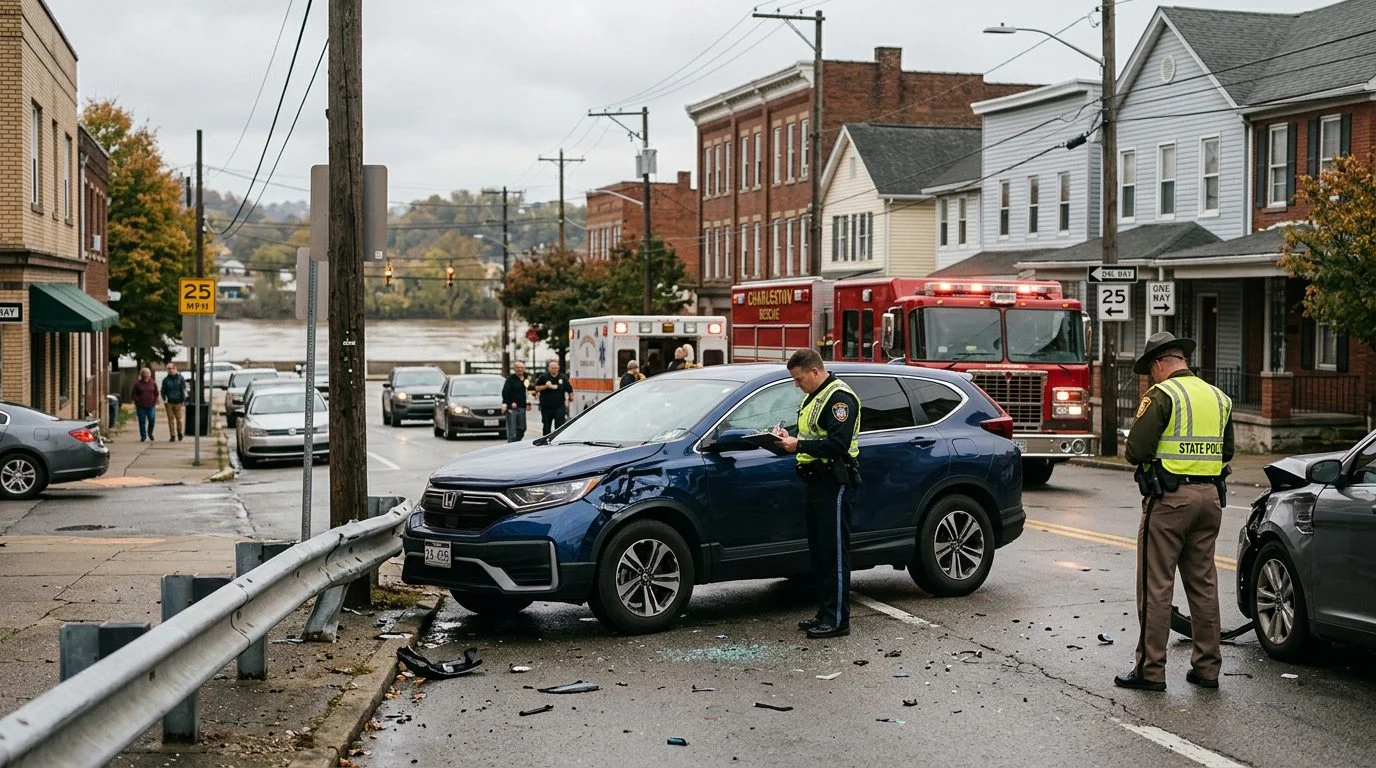
Family Safety Guide for West Virginia Parents
Your Teen Was in a Crash. Here Is What to Do Next.
A plain-language checklist for the first steps after a crash with a young driver, and how our firm can help your family think through what comes next.
Published November 17, 2026
Your teen was in a crash, and now you’re asking what to do first. This checklist puts the steps in the order that matters most for a West Virginia family.
The short answer: get your teen checked by a medical professional, record the crash facts, and understand insurance requests before you answer them. Each step ends in a yes or no and a next step.
Before You Work Through This Checklist
Work through these steps in order. Your teen’s health comes first, then the crash records, then insurance and legal questions.
Each step has yes or no tests. Answer them honestly. A no doesn’t mean you failed. It tells you what to do next.
Keep this list in one folder or one phone note, so every step stays in the same place. Background on brain and spinal cord injuries is covered on our traumatic brain injury and spinal cord injury pages.
If your teen was hurt while driving, or you wonder whether parental responsibility may apply, we can talk through your questions in a free case review. Talk it through with Big Bubba — the first case review is free, confidential, and carries no obligation.
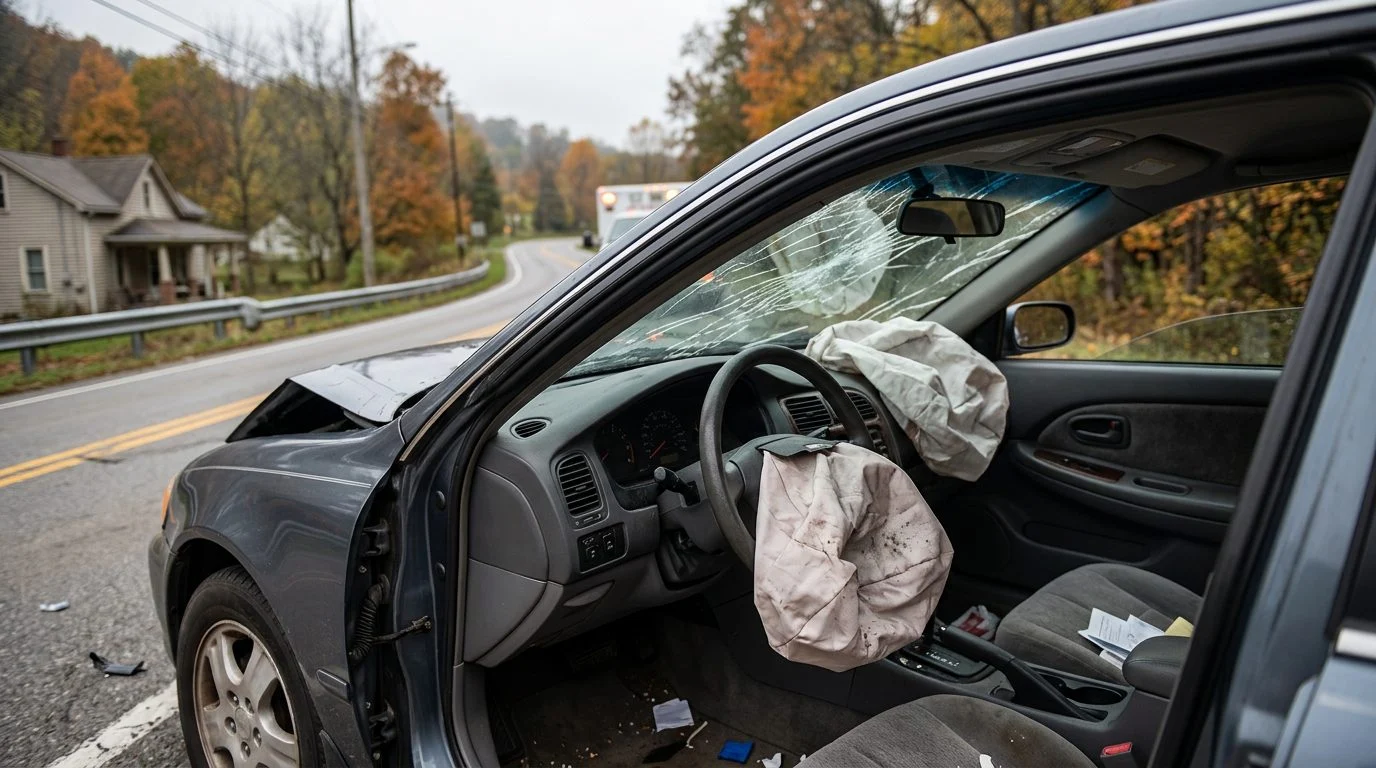
Checklist Step 1: Is Your Teen Getting Medical Care?
Your teen should be checked by a medical professional after any crash, even if they say they feel fine.
Teens often say they’re fine, especially when they want to get back to school, work or friends. Some head and spinal injuries may not show symptoms right away. A medical visit creates a record of how your teen was after the crash.
- Did your teen see a medical professional after the crash? If no, arrange an evaluation now. Tell the provider exactly how the crash happened.
- Have you watched for warning signs? Watch for a headache that gets worse, confusion, vomiting, unusual drowsiness, sudden changes in mood or behavior, or numbness or weakness. If you see any of these, get medical care right away.
Parents often notice changes before the teen does. Write down what you see, with dates and times. Keep every appointment note, discharge paper, prescription and test result in one folder.
Checklist Step 2: Are the Crash Facts Being Recorded?
The crash facts should be recorded while they’re fresh, starting with the names and insurance details of everyone involved.
West Virginia law requires a driver who is physically able to give the other driver their name, a valid phone number, the vehicle’s year, make, model and last four digits of the vehicle identification number, and proof of insurance (W. Va. Code § 17c-4-3). A crash with injury, death, or at least $1,000 in total property damage must be reported immediately, by the quickest means of communication, to the local police if it occurs within a municipality, otherwise to the county sheriff or the nearest West Virginia State Police office (W. Va. Code § 17c-4-6).
- Did you get every driver’s details, plus any passenger or witness names? If no, ask the investigating officer for the information and write down what you know.
- Did you take photos? Photos of the vehicles, the road, traffic signs, skid marks and visible injuries help. If you didn’t, take what you can now and note the date.
- If no, ask for the report number.
A police report is one record, not the final word on fault. Memory changes fast, especially after a head injury. If any answer is no, write down what your teen remembers today: time, weather, road conditions, and what happened just before the crash.
Checklist Step 3: Has Anyone Contacted an Insurance Company?
Before your teen gives any statement, understand who is asking and why, because some insurers may dispute a claim.
An insurance adjuster may ask for a recorded statement early. Those questions can be hard to answer while your teen is still recovering.
- Has your teen or your family given a recorded statement? If yes, write down the date, who asked, and what was said. Tell the firm so it can be reviewed.
- Did anyone offer a settlement or ask for a release in the first 20 days after the injury? West Virginia law restricts settlement talks in that window when an injured person is in the hospital or unable to work (W. Va. Code § 55-7-11a). Under W. Va. Code § 55-7-11a, a settlement, release or statement obtained in violation of that section, which covers the twenty days after a personal injury while the injured person is a hospital inpatient or partially or totally unable to work, may be disavowed by the injured person within one hundred eighty days from the date of the injury by executing a written statement of disavowal and forwarding a copy to the person who violated the section, and the settlement, release or statement is then not admissible in evidence, but only if any consideration paid is repaid or returned to the person who paid it at the time the copy is forwarded.
Avoid guessing about speed, apologizing, or describing injuries no doctor has checked yet. Stick to facts you know for certain. To check the insurance rules for drivers, the West Virginia Division of Motor Vehicles explains mandatory auto insurance and proof of coverage.
Checklist Step 4: Who Owns the Vehicle and Who Allowed the Driving?
Whether a parent may be responsible for a teen’s crash turns on the facts, including who owned the car and who allowed the driving.
West Virginia uses a modified comparative fault rule, which means fault can be shared. Fault does not bar recovery unless it is greater than the combined fault of everyone else (W. Va. Code § 55-7-13c). Under W. Va. Code § 55-7-13c(c), a plaintiff’s fault generally does not bar recovery unless it is greater than the combined fault of all other persons responsible for the damages, and otherwise any recovery is reduced in proportion to the plaintiff’s degree of fault.
- Is the vehicle titled in your name or your household’s name? If yes, gather the title and registration.
- Did you give permission to drive, or help buy the car or its insurance? Write down who knew your teen was driving, and when.
- Were there known problems before the crash? Examples include earlier tickets, an earlier crash, or warnings that were not acted on. If yes, write them down with dates.
If any answer is yes, bring the documents to a free case review so the questions can be looked at against your facts.
Checklist Step 5: Were the Driving Limits Followed?
Young drivers often have licensing limits, so check whether any applied at the time of the crash.
Look at your teen’s license or permit paperwork to see what restrictions were in place.
- Was your teen driving under a permit or license with restrictions? If yes, write down exactly what those restrictions were.
- Were there more passengers than allowed, or was the car driven during a restricted time? If yes, note the number of passengers, the time, and who was in the car.
If a limit may have been broken, note it in your records. A violation may matter to how the crash is reviewed, so the details should be reviewed carefully.
Not sure what your next step is?
Talk it through with Big Bubba — the first case review is free, confidential, and carries no obligation.
Checklist Step 6: Are the Deadlines and Your Records in Order?
West Virginia generally allows two years to file a personal injury lawsuit, and waiting can shorten the time you have (W. Va. Code § 55-2-12).
The law sets a two-year period for personal injury claims (W. Va. Code § 55-2-12). Exceptions may apply. If someone has died, a wrongful death claim must be brought by the personal representative and generally within two years after the death (W. Va. Code § 55-7-6).
- Have you written a simple timeline? Include the crash, medical visits, insurance calls and letters received, with dates.
- Have you kept every record tied to the crash? Keep texts, emails, social media posts and phone records. Do not delete them, even if they upset you.
Keep copies in one place and bring your timeline to a free case review. Our wrongful death pages explain that claim in more detail.
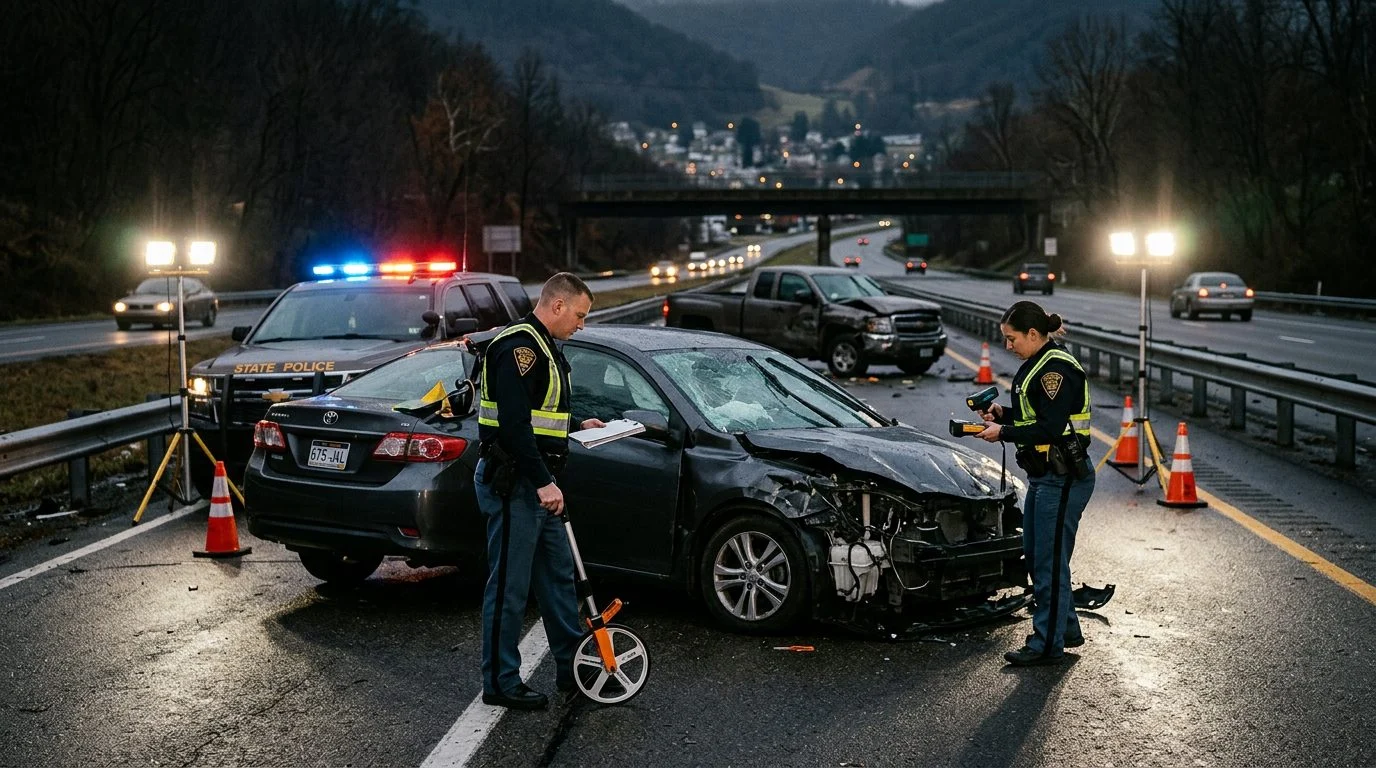
What to Do With Your Results and When to Reach Out
If most of your answers are yes, you have a solid base of records. If several are no, start with those items this week, in the order they appear above.
If a commercial truck or other commercial vehicle was involved, that company’s records may matter. Our truck accident and commercial vehicle pages explain more. We serve families across West Virginia with car accident, truck accident, catastrophic injury and wrongful death claims.
If your teen was hurt while driving, or you’re unsure whether parental responsibility may apply, reach out to us to request a free case review. The review is confidential and carries no obligation to continue.
Quick Answers
How long do we have to file?
West Virginia generally allows two years for personal injury claims, and exceptions may apply.
Can a parent be held responsible for a teen’s crash?
It turns on who owned the vehicle, who allowed the driving, and what was known beforehand.
Should we talk to the insurer?
Understand the request first. Some insurers may ask for a recorded statement early.