
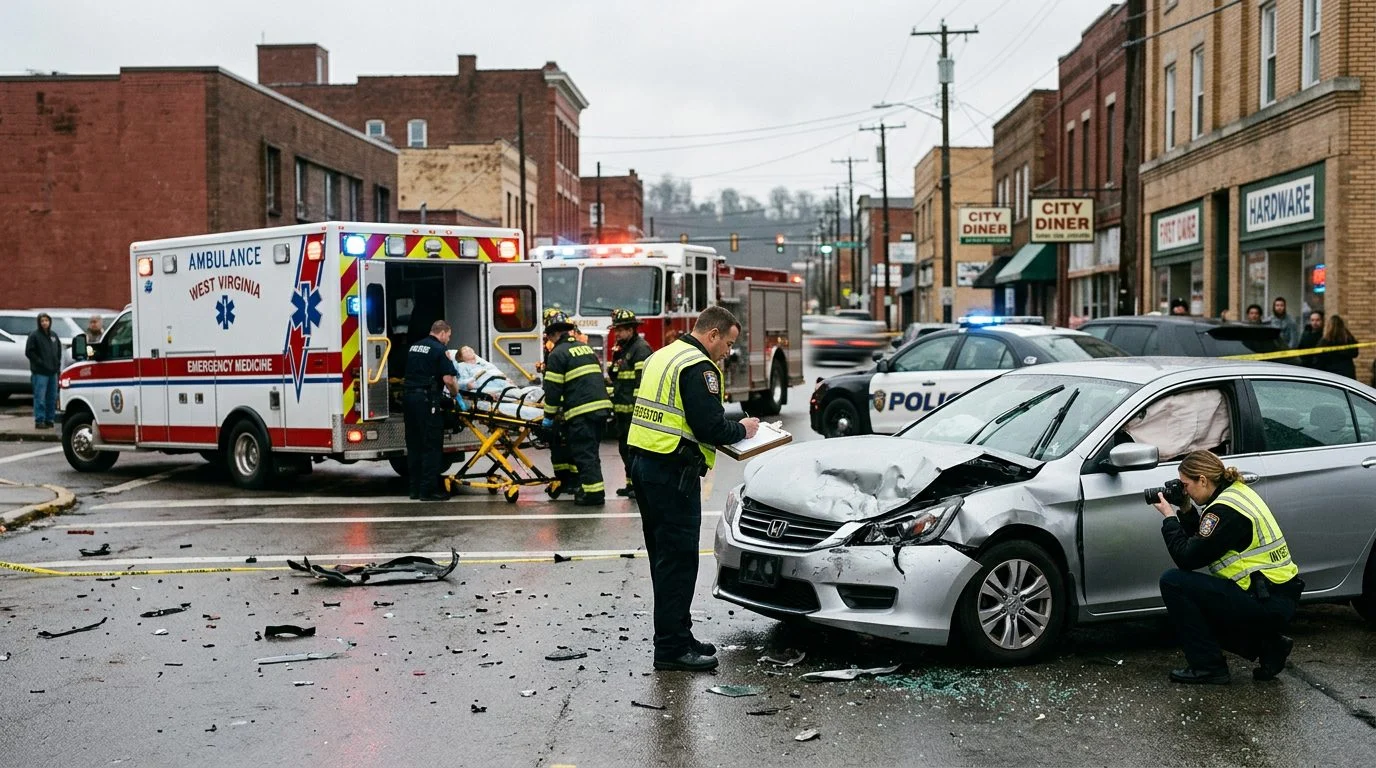
Car Accident Injuries | West Virginia
Hurt in a Crash? Get Checked, Then Get Answers
An emergency room visit after a car accident protects your health and documents your injuries. We help injured people across West Virginia, including Charleston, Huntington and Morgantown, understand their options.
Published November 8, 2026
An emergency room visit after a car accident is often the first medical record of the crash. This page explains what that record shows, which emergency room car accident injuries West Virginia drivers and passengers may face later, and how the firm can help. You can read at your own pace. You don’t have to decide anything today.
What an Emergency Room Visit After a Car Accident Means
An emergency room visit after a car accident creates the first medical record of what happened to you. Many people feel shaken but not badly hurt right after a crash. The ER is often where a full check starts.
This page is for the person who was hurt, a family member, or someone helping a loved one. You may be reading this while someone you care about is home or still in the hospital. You may not be ready to choose anyone yet, and that’s okay.
Pain and stress can make it hard to remember details in the hours after a crash. Writing things down early, or having a family member take notes at appointments, can help.
The ER is also where a provider may first notice an injury that isn’t obvious. A short visit doesn’t always show the full picture. If head injury is your main worry, our traumatic brain injury accident guide explains what to watch for.
If someone you love was taken to the emergency room after a crash, you don't have to sort out the records alone. Reach out for a free case review. Talk it through with Big Bubba — the first case review is free, confidential, and carries no obligation.
Why the Emergency Room Record Matters
The emergency room record is usually the earliest written account of your injuries and how the crash happened. It often includes triage notes, your account of the crash, exam findings, imaging orders, and discharge instructions.
Each part matters. Triage notes capture your first symptoms. Your account shows what you said soon after the crash. Exam findings and imaging show what the providers checked.
Tell staff about every symptom, even small ones like a mild headache or a sore neck. A symptom left out at intake can make it harder to connect later problems to the crash.
After you leave, keep copies of the discharge papers, prescriptions, and referral letters. Ask the hospital for its complete records, and keep a list of the people you spoke with.
Follow-up care matters too. If the discharge plan includes a referral to another doctor or a repeat visit, keep those appointments. Gaps in treatment may be questioned later.
The ER record may be relevant to a claim, depending on the facts.
Injuries That May Show Up at the ER or Later
Some emergency room car accident injuries West Virginia families see are obvious right away, such as broken bones and visible cuts. Others may not show up until hours or days later.
Common injuries after crashes include:
- Concussion and other traumatic brain injury
- Neck and back injuries
- Spinal cord injury
- Broken bones
- Internal injuries
Delayed symptoms can include headache, dizziness, memory or concentration trouble, and numbness or tingling. Report any new symptom to a medical provider promptly, and describe it in your own words.
The NINDS spinal cord injury overview covers how these injuries are described, diagnosed, and treated. Spinal cord injuries higher in the neck can affect breathing, which is one reason emergency care matters after a serious crash.
For readers facing long-term effects, the firm’s spinal cord and catastrophic injury information covers those concerns.
What the Firm Can Help With
The firm handles car accident claims and truck accident claims, including crashes involving commercial vehicles, for people hurt across West Virginia. Much of the early work focuses on records and evidence that show what happened.
Here’s what that can include:
- Gathering emergency room, hospital, and follow-up treatment records.
- Requesting the police crash report. The issuing agency may charge its own fee for a copy.
- Identifying evidence that may be relevant, such as photos, witness contact details, vehicle damage, and trucking company records in commercial crashes.
- Communicating with insurers for the injured person. Some insurers may dispute a claim, so having a representative handle those calls can help the injured person focus on recovery.
- Explaining options for families after a fatal crash, including funeral and burial expenses after a fatal car accident.
- Explaining when an employer vehicle car accident claim or a road hazard claim in West Virginia may apply.
For wrongful death, West Virginia generally requires the action within two years after the death, and exceptions may apply, under the wrongful death statute. The personal representative of the estate brings that action.
Steps to Protect Your Position After an ER Visit
The most useful steps are to report the crash, write down what you remember, and track your symptoms. Doing these early keeps the details clear.
- Report the crash to police. Ask for the report number, since the crash report is one record of what happened.
- Write down the details. Note the time, place, weather, direction of travel, and what each driver said.
- Keep a daily symptom log. Record symptoms, missed work, and activities you cannot do.
- Keep damaged items. Save clothing, phone photos, and any damaged property from the crash.
West Virginia law restricts certain statements an injured person is asked to make within twenty days after a personal injury, while that person is an inpatient in any hospital or partially or totally unable to engage in his or her usual trade, profession or occupation. See W. Va. Code § 55-7-11a. Some insurers may ask for a recorded statement early, so you can ask to speak with the firm first.
Under federal rules, a motor carrier may generally have to test a commercial truck driver for alcohol and drugs after a crash in which someone is hurt and treated away from the scene, but only when the driver also receives a citation for a moving traffic violation arising from the crash. The post-accident testing rule sets time limits for those tests. Under 49 C.F.R. § 379.3, companies subject to that part must keep certain records for the minimum retention periods listed in its appendix, and after those periods the records may be destroyed at the company’s discretion; whether any of these records bear on a particular claim depends on the facts.
Deadlines matter too. West Virginia generally allows two years to file a personal injury claim, and exceptions may apply, under W. Va. Code § 55-2-12.
Common Questions About an ER Visit After a Crash
I felt fine at the scene. Do I still need to be checked?
Many injuries are not obvious right after a crash. A medical provider can check symptoms that appear later.
What if the ER visit was my only medical care so far?
Tell a medical provider about any new or ongoing symptoms. Tell the firm about the visit so the records can be requested.
Can the firm help with a truck crash?
The firm handles truck accident and commercial vehicle accident claims. The facts of each crash decide what is relevant.
Who can reach out for a loved one who was hurt?
A family member may reach out for an injured loved one and ask about a free case review. The injured person can also share details directly.
What should I bring to a free case review?
Bring your discharge papers, the crash report number if you have it, and a written list of your symptoms. Notes about the crash help too.
Does a police report decide who is at fault?
No single record decides fault. A crash report is one piece of evidence. Under West Virginia’s comparative fault statute, recovery in a personal injury or wrongful death action is based on comparative fault, and each person’s liability is allocated in direct proportion to that person’s percentage of fault.
Not sure what your next step is?
Talk it through with Big Bubba — the first case review is free, confidential, and carries no obligation.

Talking Through Your Situation
A free case review gives you a confidential place to talk through your crash, your injuries, and your records. You may be at home with pain, waiting on follow-up appointments, and unsure what the ER visit means for you. You may also be the person coordinating care for someone who cannot manage it alone. You don’t have to sort it out by yourself. Request a free case review to talk through what happened, or tell Bubba what happened in your own words.