
Traumatic Brain Injury
Traumatic Brain Injury in Beckley, West Virginia
If a crash or accident left you or a loved one with a brain injury, Big Bubba Injury Law is here to help. We serve Beckley and all of West Virginia.
Published October 05, 2026
A traumatic brain injury (TBI) is a sudden physical blow or jolt to the head that damages the brain, or a penetrating injury where an object pierces the skull and enters brain tissue. TBI can range from mild to severe, and recovery depends on the injury’s severity, the person’s age and health, and the quality of medical care and rehabilitation they receive.
If you suffered a traumatic brain injury in a car accident, truck collision, slip and fall, or other incident in Beckley or elsewhere in West Virginia, understanding what happened to your brain—and what your legal options are—matters for your recovery and your future.
What Is Traumatic Brain Injury?
A traumatic brain injury occurs when a bump, blow, or jolt to the head causes sudden damage to the brain tissue, or when an object penetrates the skull and injures brain matter directly. TBI is different from other head injuries because it involves actual damage to brain cells and their connections, not just a surface wound.
Doctors classify TBI by severity:
- Mild TBI (concussion): Brief loss of consciousness or no loss at all; confusion or dizziness; the person may seem fine but experience headaches, memory trouble, or sensitivity to light or noise.
- Moderate TBI: Loss of consciousness lasting minutes to hours; confusion lasting days or weeks; physical and cognitive symptoms that persist.
- Severe TBI: Loss of consciousness lasting hours or longer; profound confusion or coma; significant physical, cognitive, and behavioral changes.
Severity matters because it shapes recovery time, the need for rehabilitation, and whether long-term disability results. A mild TBI may resolve in weeks; a severe TBI can cause permanent changes in thinking, movement, and personality.
Not sure what your next step is?
Talk it through with our team — the first case review is free, confidential, and carries no obligation.
How Traumatic Brain Injury Happens in Beckley Accidents
TBI occurs in many types of accidents common in and around Beckley:
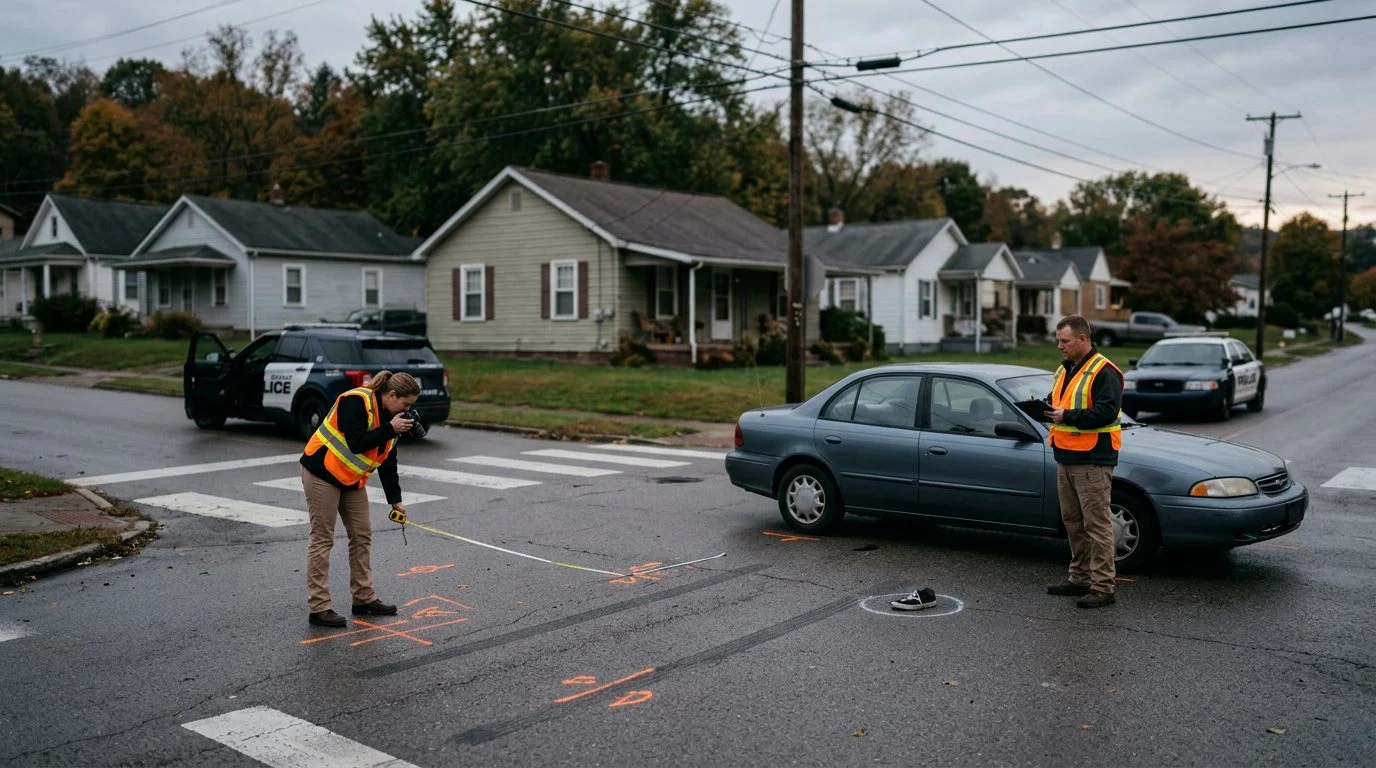
Car crashes cause TBI when your head strikes the steering wheel, dashboard, or window, or when the sudden stop or collision causes your brain to move inside your skull (called acceleration-deceleration injury). Even a moderate-speed crash can cause a brain injury if the impact is forceful enough.
Truck accidents involve higher speeds and heavier vehicles, creating more violent collisions. A rollover, underride crash (where a car slides under a truck), or high-impact rear-end collision can cause severe TBI.
Slip and fall incidents cause TBI when you fall and your head strikes the ground, a curb, a step, or another object. Falls are especially dangerous for older adults, but anyone can suffer a brain injury from a fall.
Other accidents—workplace incidents, commercial vehicle collisions, or accidents involving heavy machinery—can also cause TBI if the impact is severe enough.
Not every head bump causes a brain injury. The force of the impact, the angle of the blow, and the person’s age and health all affect whether TBI occurs. Some people lose consciousness; others don’t. Some symptoms appear immediately; others emerge over hours or days.
Symptoms and Signs of Traumatic Brain Injury
Symptoms of TBI vary by severity and may appear right away or develop over time.
Immediate or early symptoms include loss of consciousness (even briefly), confusion or disorientation, severe headache, dizziness, nausea or vomiting, and sensitivity to light or noise.
Physical symptoms can include balance problems, fatigue, difficulty sleeping, weakness or numbness, and slurred speech.
Cognitive symptoms—problems with thinking and memory—include difficulty concentrating, memory loss, slowed thinking, and trouble understanding or expressing words.
Emotional and behavioral changes include mood swings, irritability, depression, anxiety, and personality changes that weren’t present before the injury.
Some symptoms fade within days or weeks (especially in mild TBI). Others persist or worsen, particularly in moderate and severe cases. If you hit your head in an accident and develop any of these symptoms, seek medical attention promptly. Early diagnosis and treatment improve outcomes.
Do People With TBI Go Back to Normal?
Recovery from TBI varies widely and depends on the injury’s severity, your age, your overall health, and the quality of rehabilitation you receive.
Mild TBI: Many people recover fully within weeks to a few months. Symptoms resolve, and brain function returns to baseline. However, some people experience lingering effects—called post-concussion syndrome—that last longer.
Moderate to severe TBI: Recovery is often slower and may be incomplete. The brain has a remarkable ability to rewire itself and form new connections—a process called neuroplasticity—but severe injury can cause permanent changes. Some people regain significant function through intensive rehabilitation; others live with lasting cognitive, physical, or emotional effects.
Recovery depends on rehabilitation. Physical therapy, occupational therapy, speech therapy, and cognitive rehabilitation help retrain the brain and rebuild skills. Early intervention and specialized brain injury care improve the chances of better outcomes.
However, it’s important to be honest: severe TBI can result in permanent disability. Some people return to work and independent living. Others require ongoing support, modified work, or full-time care. Recovery is not always a return to exactly how things were before the injury.
Have questions about what happened?
Ask our team directly. The first conversation is free, confidential, and there is no obligation to continue.
Does Traumatic Brain Injury Qualify for Disability?
Severe TBI can result in permanent disability that prevents work and affects daily life. Whether you qualify for disability benefits depends on the severity of your injury and how it affects your ability to work.
Social Security Disability Insurance (SSDI) and Supplemental Security Income (SSI) are federal programs that provide benefits to people with severe, long-term disabilities, including TBI. To qualify, you must have medical evidence that your condition prevents substantial work for at least 12 months.
West Virginia workers’ compensation covers TBI if the injury occurred at work. Benefits include medical care, rehabilitation, and wage replacement if you cannot work.
Disability is assessed through medical testing, imaging (CT scan or MRI), neuropsychological testing, and documentation of how the injury affects your daily functioning and work capacity. Strong medical evidence is essential to support a disability claim.
Treatment and Recovery for Traumatic Brain Injury
Treatment depends on the severity of your TBI and begins immediately after injury.
Emergency care includes evaluation in the emergency room, imaging (CT scan or MRI) to detect bleeding or swelling, and monitoring for complications. Doctors may place you in the intensive care unit if your injury is severe.
Acute hospitalization focuses on stabilizing you, managing swelling and pressure in the brain, and preventing complications like infection or seizures.
Rehabilitation is crucial for recovery. Physical therapy rebuilds strength and balance. Occupational therapy helps you relearn daily tasks. Speech therapy addresses communication and swallowing problems. Cognitive rehabilitation helps retrain memory, attention, and problem-solving.
Long-term management includes ongoing medical follow-up, medication to manage pain, seizures, or mood, and mental health support. Some people need years of therapy; others benefit from shorter, focused rehabilitation.
Early intervention and access to specialized brain injury care—ideally at a center with experience in TBI—improve outcomes significantly.
The Cost of Traumatic Brain Injury
TBI is expensive. Medical costs include emergency care, hospitalization, surgery, imaging, and specialist visits. Rehabilitation and therapy—physical, occupational, speech, and cognitive—add up quickly. If your injury prevents work, lost wages mount. Severe TBI may require long-term care, home modifications, or full-time assistance.
Many families face bills they cannot pay and income they cannot replace. If your TBI resulted from someone else’s negligence—a reckless driver, a truck company’s failure to maintain its vehicle, a property owner’s neglect—you may have a legal claim to recover those costs.
When to Reach Out to a Lawyer About Your Traumatic Brain Injury
You should consider contacting a lawyer if:
- Your TBI resulted from a car accident, truck accident, commercial vehicle collision, slip and fall, or other incident caused by someone else’s negligence or wrongdoing.
- You are facing mounting medical bills, lost income, or permanent disability.
- You are unsure whether you have a legal claim or what it might be worth.
- The at-fault party’s insurance company has contacted you or denied your claim.
In West Virginia, a personal-injury lawsuit must generally be filed within two years after the right to bring the claim has accrued. This deadline matters: if you wait too long, you may lose the right to sue, and exceptions may apply.
West Virginia also follows a modified comparative fault rule: even if you were partially at fault for the accident, you can still recover damages—reduced by your percentage of fault—as long as you are 50% or less at fault. This means you may have a claim even if the accident wasn’t entirely someone else’s fault.
A lawyer can help you understand your rights, gather medical evidence, negotiate with insurance companies, and pursue fair compensation for your medical care, lost wages, pain and suffering, and long-term disability.
Want to know where you stand?
Tell us what happened and our team will walk you through the options available to you, at no cost.
Frequently Asked Questions
What’s the difference between a concussion and a traumatic brain injury?
A concussion is a type of mild TBI caused by a bump or jolt that changes how the brain works. All concussions are TBIs, but not all TBIs are concussions—moderate and severe TBIs involve more significant brain damage.
How long does it take to recover from a traumatic brain injury?
Mild TBI often resolves in weeks to months; moderate TBI may take months to a year or longer; severe TBI can involve years of recovery, and some effects may be permanent.
Can I still recover damages if I was partially at fault for the accident that caused my TBI?
Yes—under West Virginia’s modified comparative fault rule, you can recover even if you were partially at fault, as long as you are 50% or less at fault (W. Va. Code § 55-7-13c).
Should I accept an insurance settlement offer right after my TBI?
No—early offers are often low and don’t account for long-term medical needs, ongoing therapy, or permanent disability. Consult a lawyer before accepting any settlement.
If a car crash, truck accident, or fall left you with a brain injury and mounting medical bills, you may have a claim—reach out to tell us what happened.
Related practice areas
- Traumatic Brain Injury from Car and Truck Accidents in West Virginia
- Traumatic Brain Injury Parkersburg, West Virginia