
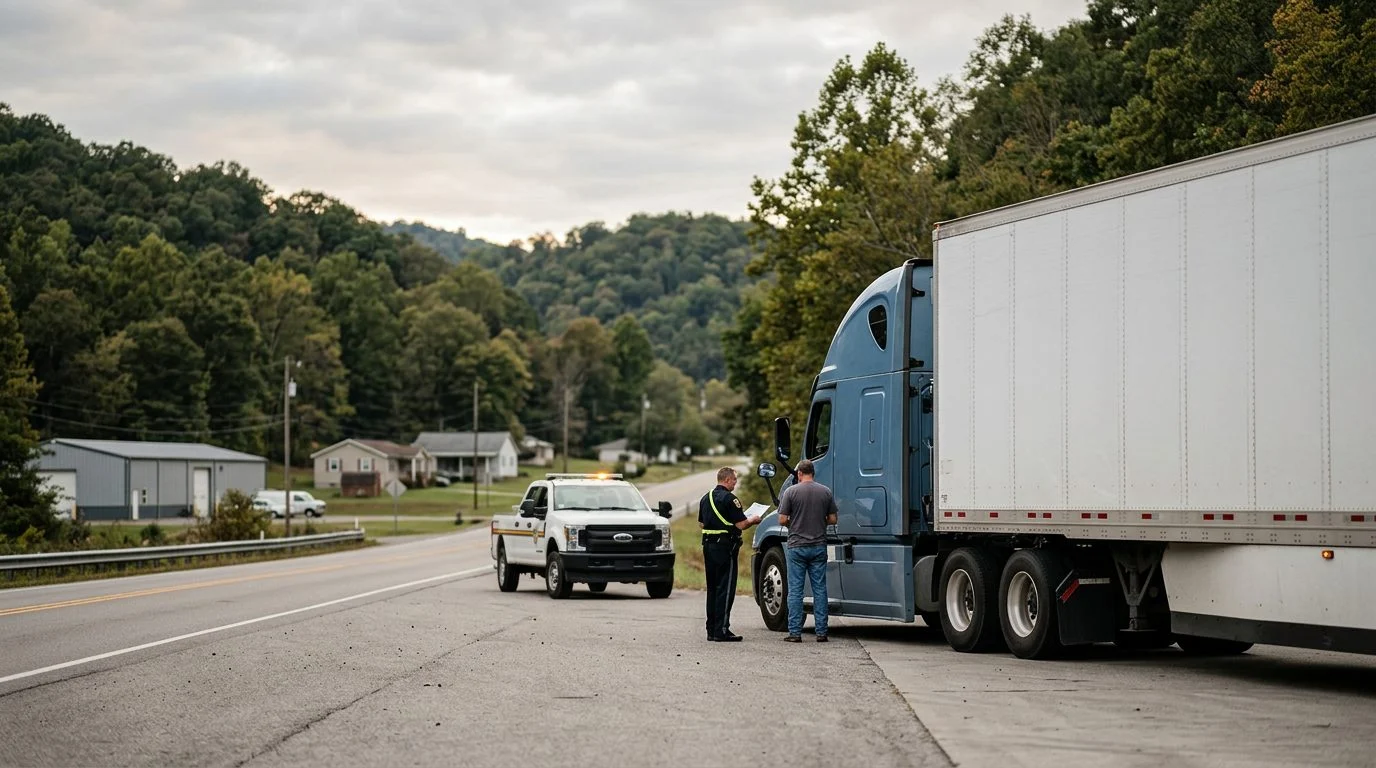
Truck Accidents | West Virginia
Who Can You Hold Responsible After a Truck Crash?
Serious truck crashes can involve more than one party. Here is how to think about the people and companies that may be part of a claim.
Published November 16, 2026
If a truck crash left you or someone you love hurt, you may be asking who can be held responsible. In many cases, a claim can be brought against the trucking company as well as the driver.
Depending on the facts, other parties may also be part of a claim. This page explains the main types of claims in West Virginia and the time limits that often apply.
The Short Answer: Who Can Be Held Responsible After a Truck Crash
A truck crash claim may name the trucking company, the driver, or both. Other parties whose work or products contributed to the crash may also be involved.
Most claims fall into three groups. The first is the company’s own decisions, such as how it hired, trained, and supervised its drivers, and how it maintained its trucks. The second is the driver’s conduct on the road. The third is outside parties, such as a maintenance contractor, a cargo loader, or a maker of a defective part.
West Virginia uses the term “employer defendant” in its commercial vehicle law. Under W. Va. Code § 55-7-32, that term includes the owner of the truck, the driver’s employer, and any other entity that holds legal control over the truck or its operator. That breadth is one reason the company is so often a named party.
Each group needs different proof. The sections below take them in turn. If the injuries are serious, the firm’s traumatic brain injury resource covers that area in more detail.
If a commercial truck hurt someone you love and you're still sorting out who may be responsible, you don't have to face those questions alone. Reach out to the firm for a free case review. Talk it through with Big Bubba — the first case review is free, confidential, and carries no obligation.
Claims Against the Trucking Company Itself
A trucking company may be liable for its own decisions, not only for what its driver did. Those decisions often involve who it hired and how it supervised them.
Under 49 C.F.R. § 391.23, federal rules generally require a motor carrier to investigate a new driver’s safety performance history, and the carrier’s inquiries and replies are due within 30 days of employment. The carrier must also investigate the driver’s safety performance history with Department of Transportation regulated employers during the preceding three years. Federal driver investigation rules set out these steps. If a company skipped them, that may be relevant to a negligent hiring claim.
Many courts also hold an employer responsible for an employee’s negligence on the job. It can mean the company answers for a driver’s mistakes made while working, though the details of each case matter.
Driver Conduct, Fatigue, and Hours-of-Service Violations
A driver’s own choices may support a claim. Common examples include speeding, distraction, impairment, and driving while exhausted.
Federal hours-of-service rules limit how long a property-carrying driver may be on the road. A driver generally may not drive until after 10 consecutive hours off duty. Driving then generally must happen within a 14-hour window, with 11 hours of driving allowed inside it. A 30-minute break is generally required after 8 hours of driving. Federal maximum driving time rules set out these limits, the weekly caps, and some exceptions.
Driver records may show whether those rules were followed. Logbooks, electronic logging device data, and dispatch records may all be relevant. If those records don’t match what happened on the road, that mismatch may matter in a claim.
Distraction is another common issue. West Virginia generally bars drivers from writing, sending, or reading text-based messages while driving. The state’s distracted driving statute includes exceptions, such as voice-operated and hands-free features. A violation may be relevant evidence in a crash claim.
Maintenance Failures, Equipment Defects, and Other Responsible Parties
Poor maintenance can support a claim against the company that controlled the truck. Federal rules require motor carriers to inspect, repair, and maintain their vehicles on a regular basis.
Federal maintenance rules say parts that affect safety must be kept in safe and proper operating condition at all times. The rule names suspension systems, axles, wheels and rims, and steering systems among them. If those parts failed because of neglect, the failure may point back to the company.
Some crashes involve a defective part instead. The part’s maker may be a responsible party if a design or manufacturing flaw played a role in the failure.
Other parties may also share responsibility. A third-party maintenance shop may have done faulty work. A loader may have secured cargo improperly. Each of these questions turns on the specific facts.
A defective-part claim is a different legal theory than a driver-conduct claim. The theories can sometimes be pursued together, and each needs its own proof. The focus should stay on who may be liable and what records show about the truck’s condition.
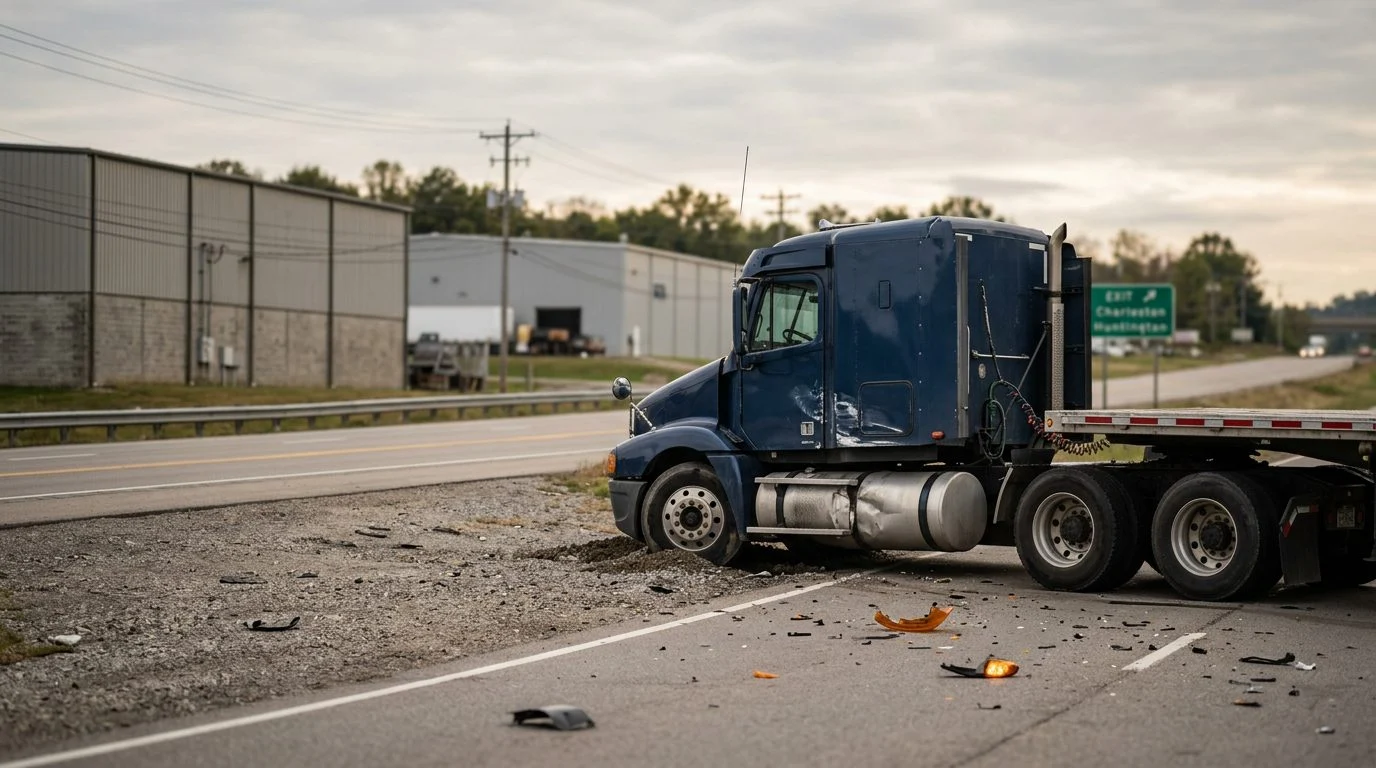
What Damages You May Be Able to Recover
Injured people may seek economic and non-economic damages. Families may seek wrongful death damages after a fatal crash. The categories that apply depend on the injuries and losses involved.
Economic damages are money losses you can measure. These can include medical bills, rehabilitation, future care needs, lost wages, lost earning capacity, and property damage.
Non-economic damages cover harms that are harder to put a number on. Examples include pain and suffering, emotional distress, and loss of enjoyment of life. Clear records of daily life before and after the crash may help explain these losses.
West Virginia limits certain non-economic damages against an employer defendant in many commercial vehicle cases. The limit has exceptions, including where the driver was impaired or acted in willful or wanton disregard for safety. The commercial vehicle damages statute sets out the details.
When a crash causes a death, West Virginia law generally requires the case to be brought by the decedent’s personal representative. West Virginia’s wrongful death statute lists the losses a jury may consider. These include sorrow, mental anguish, and loss of society and companionship. Under W. Va. Code § 55-7-6, the jury’s verdict shall include, but may not be limited to, damages for reasonably expected loss of the decedent’s income, loss of the services, protection, care and assistance the decedent provided, expenses for the care, treatment and hospitalization of the decedent incident to the injury resulting in death, and reasonable funeral expenses. The section does not apply to actions brought for the death of any person occurring prior to July 1, 1988.
West Virginia law also addresses a spouse’s claim for loss of consortium, which is the loss of a partner’s companionship and support. The loss of consortium statute provides that a married woman may sue and recover for loss of consortium to the same extent and in all cases as a married man. The firm’s loss of consortium page explains the idea in more detail.
How Negligence Is Proven and Time Limits to Know About
The four-conditions guide explains each one.
West Virginia uses a modified comparative fault rule. Under W. Va. Code § 55-7-13c, an injured person’s own fault does not bar recovery unless it is greater than the combined fault of everyone else responsible. If it is smaller, the recovery is reduced by that share.
Each defendant is generally liable only for its own percentage of fault. The same statute makes some defendants jointly and severally liable. That includes a defendant whose impaired driving was a proximate cause of the damages.
Time limits matter. West Virginia generally allows two years to file a personal injury claim, and the personal injury limitation statute sets that period. Exceptions may apply. A wrongful death action is generally required to be commenced within two years after the death under W. Va. Code § 55-7-6. W. Va. Code § 55-7-6 reads: “The provisions of this section shall not apply to actions brought for the death of any person occurring prior to July 1, 1988.” W. Va. Code § 55-7-6(d) provides that every such action shall be commenced within two years after the death of the deceased person, subject to the provisions of section eighteen, article two, chapter fifty-five.
Trucking cases may involve federal rules and West Virginia law at the same time. That combination can make a claim more involved than a typical car crash. Deadlines and proof-preservation steps should be reviewed early.
Not sure what your next step is?
Talk it through with Big Bubba — the first case review is free, confidential, and carries no obligation.
Evidence That May Matter Early After a Truck Crash
Early evidence matters because some records are kept only for limited periods. The crash report, photos of the scene and vehicles, witness names, medical records, and any dashcam footage may all be relevant.
Federal driver record-keeping rules require a driver to submit each day’s record of duty status to the motor carrier within 13 days. Maintenance and inspection records must be kept for at least one year, and for six months after the vehicle leaves the carrier’s control, under the federal maintenance rules.
Some trucks also store electronic data about engine and driving activity. That data may be relevant, but it may also be overwritten over time.
Injured people often hear from insurance companies early. Some insurers may ask for a recorded statement soon after a crash. It can help to think through what you say before speaking with any insurance representative.
Talking Through Your Situation With the Firm
You may be reading this after a crash with a commercial truck. You may be dealing with pain, bills, and questions you didn’t expect. Some readers are a family member trying to understand a brain or spinal cord injury and what recovery may involve. Others are a family trying to make sense of a sudden death.
The firm handles truck accident and commercial vehicle claims, catastrophic injury cases, and wrongful death claims. We serve Charleston, Huntington, Morgantown, and Beckley, along with other communities across West Virginia.
If you’re trying to work out whether a trucking company may be part of your claim, you can request a free case review. The firm will look at the facts of your situation with you, and no result is promised.