
Car Accidents | West Virginia
Hurt in a Crash? Here Is What Comes Next
A calm, plain-language guide for West Virginia drivers and families facing insurance calls, medical bills and hard questions after a collision.
Published November 14, 2026
Crashing your car is stressful, and it’s harder when you believe the crash was your fault. Many people in this spot wonder about insurance, legal trouble, and what to do next.
Short answer: if the crash was your fault, you may still have options. Here’s how that works, step by step.
What “At Fault” Means After a Car Crash in West Virginia
Fault means who caused the crash, and it is usually decided from evidence rather than from what anyone says at the scene.
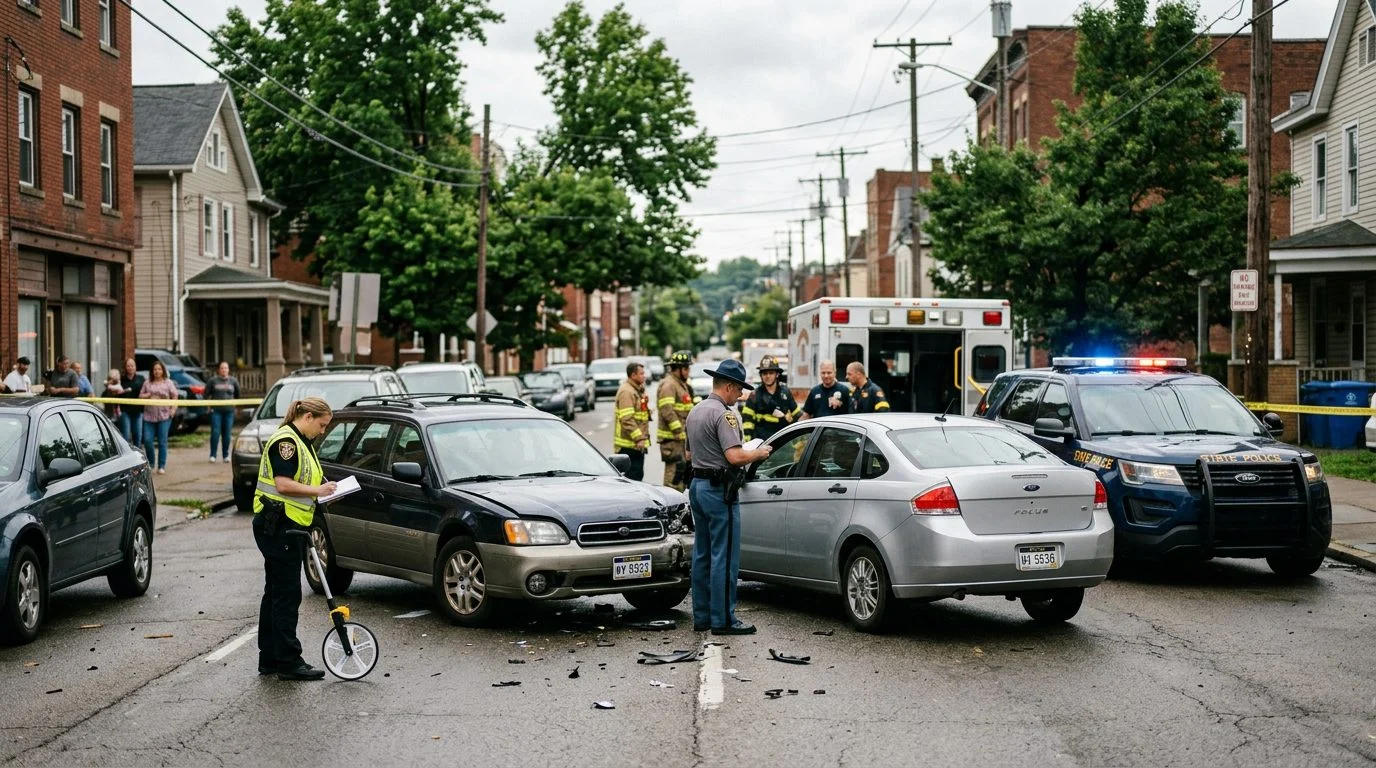
Investigators and insurers commonly look at the crash scene, vehicle damage, witness accounts, and the police report. You can usually request the report from the agency that investigated the crash.
Many drivers feel certain they caused a crash, then learn the full picture is more complicated. Road conditions, another driver’s choices, and a vehicle problem can all play a role.
West Virginia measures fault as a percentage. Each person’s liability is allocated in direct proportion to that person’s share of fault, under W. Va. Code § 55-7-13a.
Feeling responsible is common. It doesn’t settle the legal question, though. Taking it one step at a time is a reasonable way to start. The first few days often bring calls from insurers and questions from family. A clear picture of the process can make those conversations easier to handle.
If you're worried about a crash you may have caused, you don't have to sort out the insurance and fault questions alone. Reach out to us to request a free case review. Talk it through with Big Bubba — the first case review is free, confidential, and carries no obligation.

How Your Auto Insurance Responds When the Crash Was Your Fault
When the crash was your fault, your liability coverage generally pays what you are legally responsible for, up to your policy limits.
West Virginia sets minimum amounts of financial responsibility. W. Va. Code § 17d-4-2 W. Va. Code § 17d-4-2
Those figures are minimums, and serious injuries can lead to claims above a policy limit. Report the crash to your insurer as your policy describes.
Other people hurt in the crash may bring claims against the at-fault driver’s liability coverage. That can include passengers in your car, depending on the facts.
Your own collision or medical payments coverage, if you carry it, follows its own policy terms. Policies differ, so read yours closely before you make decisions.
Some insurers offer accident forgiveness programs. Terms vary by policy and by insurer, so check your own rather than assume.
How Insurers and Investigators Decide Who Was at Fault
Insurers and investigators weigh the evidence as a whole, not a single statement from either driver.
Evidence commonly reviewed includes the police report, photographs, vehicle damage patterns, witness statements, traffic camera or dashcam footage, and phone records where relevant.
Some insurers may dispute a claim when the facts point in more than one direction. An adjuster’s first view is not always the final one.
Fault findings can change as more evidence arrives. That is one reason early records matter. Photos taken at the scene and names of witnesses may be harder to find later. Keep your own notes of what you remember while it’s fresh.
If a commercial truck was involved, the trucking company’s records can matter a great deal. Federal rules set how long motor carriers must keep certain records, and that period can be short. Federal Motor Carrier Safety Regulations
For a deeper look at evidence in car crash claims, read our car accident claims overview.
Partial Fault: How Comparative Fault Can Reduce Compensation
In West Virginia, shared fault usually reduces a recovery rather than ending it, though the result depends on the facts.
Many crashes involve shared responsibility. One driver may run a light while another drives too fast for the road conditions.
West Virginia uses a comparative fault rule. An injured person’s own fault bars recovery only if it is greater than the combined fault of everyone else responsible. If it is less, the recovery is reduced in proportion to that person’s fault. W. Va. Code § 55-7-13c
Under W. Va. Code § 55-7-13c, a plaintiff’s own fault generally does not bar recovery unless it is greater than the combined fault of all other persons responsible for the damages. If it is less, the recovery is reduced in proportion to the plaintiff’s degree of fault, and exceptions and conditions in the statute may apply. Their fault is not greater than the others’ combined share.
Fault percentages are often argued in negotiations and, when needed, in court. The evidence behind each argument can decide how the numbers land.
What to Say and Not Say After an At-Fault Crash
Keep what you say short and factual, and don’t guess about speed, distance, or cause.
Statements at the scene, to police, to the other driver, or to an insurance representative can be used when fault is evaluated.
Stay calm and exchange the required information. Describe what you saw and did. Say you’re not sure about things you didn’t see.
A statement made while you’re shaken or hurt may be questioned later. Some people find it hard to clarify an earlier account once it’s on paper, so correct mistakes early and in writing when you can.
Admitting fault is a legal question, not only a courtesy. Words like “I’m sorry” can be read in different ways, so think before you speak.
Before giving a recorded statement to any insurer, understand what it covers and how it may be used. Keep your photos and phone records safe, since they may show what happened.
Injuries When You Are the At-Fault Driver
The at-fault driver can be hurt too, and some injuries take hours or days to show.
Head and spinal injuries may have delayed symptoms. Getting checked by a medical professional after any crash is a sensible step, even when you feel fine at first.
Serious injuries, including traumatic brain injury and spinal cord injury, can change the timing and path of a claim.
An injured at-fault driver may still have options. Their own coverage, or claims involving other responsible parties, may apply depending on the facts.
West Virginia generally allows two years to file a personal injury claim. A wrongful death action is generally brought within two years after the death. Exceptions may apply. W. Va. Code § 55-2-12 and W. Va. Code § 55-7-6
Missing a deadline may limit or end a claim, so timing matters early. Deadlines can be complicated when a crash involves a death or several injured people.
Not sure what your next step is?
Talk it through with Big Bubba — the first case review is free, confidential, and carries no obligation.

Next Steps If You Are Worried About a Crash You Caused
If you caused a crash, the next steps are to gather the facts, understand your coverage, and avoid guessing about fault.
Fault is examined through evidence. Insurance responds under policy terms. Partial fault can change a recovery. Statements matter.
Quick answers
Can I still recover if I was partly at fault?
Generally yes, if your fault is not greater than the combined fault of everyone else, though the amount is reduced (W. Va. Code § 55-7-13c).
How long do I have to file?
West Virginia generally allows two years for personal injury and wrongful death claims, and exceptions may apply.
We serve West Virginia injury victims, including drivers and families facing hard questions after a crash.
If you’re worried about a crash you may have caused, you don’t have to sort out the insurance and fault questions alone. Reach out to us to request a free case review.