
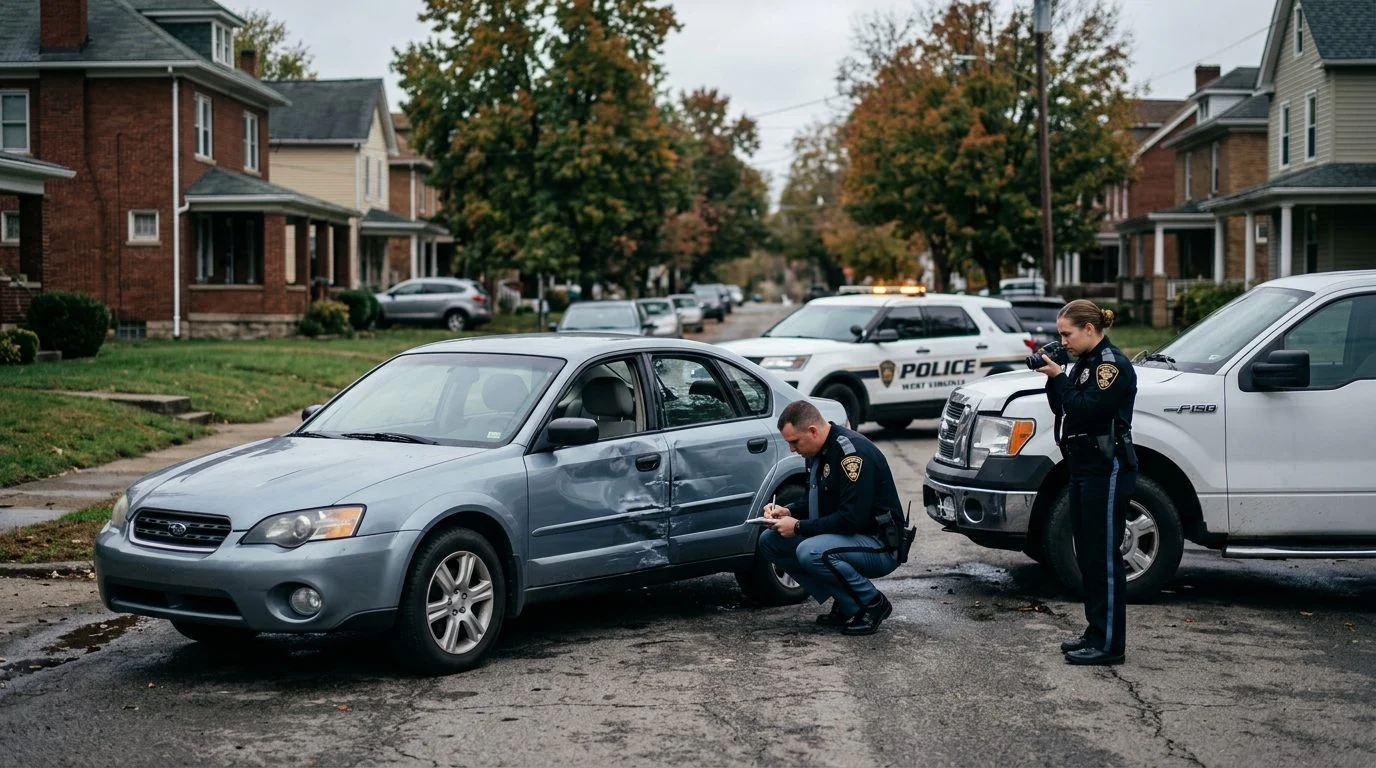
Car and Truck Accident Claims | West Virginia
Not Reported Yet? Your Crash Can Still Matter
Skipping the police or the insurer does not always end the questions. Here is how to think through what comes next.
Published November 20, 2026
You may be wondering whether a crash still matters when nobody called the police or an insurer. It can. An unreported crash can still create legal duties, insurance questions, and gaps in evidence.
This page explains what West Virginia law asks drivers to do after a crash. It also covers what can go wrong when those steps are skipped, and what to do now.
What Counts as an Unreported Accident?
An unreported accident is a crash with no police report, no notice to an insurer, or neither. Many crashes end up this way for ordinary reasons. The impact may look minor. The other driver may have driven away. A driver may also be too shaken to know what to do next.
Feeling fine at the scene does not settle the question. Some people walk away from a crash with no visible damage. Later, they feel sore, dizzy, or confused. Others see damage on their car and assume the other driver will handle everything. Either way, the crash may still carry legal steps.
Some crashes are never reported after a quick exchange of words. Others are left alone because no one seems hurt. Those choices can leave the crash without an official record.
West Virginia’s rules depend on what the crash caused. Injury, death, and damage to a vehicle each bring different duties. That is why the details matter.
If you’re asking for someone else, you may know only part of the story. That’s common. Writing down what you do know now can help later.
If you were hurt in a crash that was never reported, you don't have to sort out the next steps alone. We're glad to talk through your situation with you. Talk it through with Big Bubba — the first case review is free, confidential, and carries no obligation.

When Does West Virginia Law Require a Police Report?
West Virginia law requires a driver to notify police after a crash that causes injury or death. It also applies to certain crashes with significant property damage. If the crash happens inside a city, the notice goes to the local police department. Otherwise, it goes to the county sheriff or the nearest West Virginia State Police office. W. Va. Code § 17C-4-6 sets that duty.
The investigating officer has duties too. The officer must prepare a report within 24 hours after finishing the investigation. Each party’s insurance information must be given on request, at no cost. W. Va. Code § 17C-4-7 covers those steps.
Some departments publish their own steps for requesting a copy. The Beckley Police Department explains how to request a crash report from its records.
If no one called the police, there may be no official report at all. That leaves the crash to be proved in other ways.
What Penalties Can a Driver Face for Leaving the Scene?
A driver who intentionally leaves the scene of a crash with injuries, knowing or having reason to believe that another person has suffered physical injury in the crash, can face misdemeanor charges. W. Va. Code § 17C-4-1 sets out that offense. The charge can rise to a felony when the crash causes serious bodily injury to another person, or when a crash proximately causes another person’s death within one year.
A conviction under that section leads to a license revocation for one year. The one year runs from conviction or release from incarceration, whichever is later. Failing to notify law enforcement can also lead to a license suspension. W. Va. Code § 17C-4-10 lets the commissioner suspend a license for that failure.
Crashes with only vehicle damage also carry a duty to stop and stay. Failing to do so is a misdemeanor under W. Va. Code § 17C-4-2.
If a driver is physically unable to give notice, another occupant who can must do it. W. Va. Code § 17C-4-8 says so.
Criminal questions and injury claims are separate tracks. A driver’s decision to leave can raise its own legal issues. Those issues may run alongside any injury claim.
How Does a Missing Report Affect an Insurance Claim?
A missing report can make an insurance claim harder to document. Some insurers may dispute a claim when the crash was never reported or recorded. Many auto policies also ask drivers for prompt notice of a crash. Late notice can create questions, even when the crash was real.
Two steps are often mixed up. The first is telling your own insurer about the crash. The second is making a claim against another driver’s insurer. These are separate steps, with separate rules.
At the scene, a driver must share proof of financial responsibility if physically able. W. Va. Code § 17C-4-3 sets out the information to exchange.
Insurance coverage can affect how a car crash claim is handled. The West Virginia Division of Motor Vehicles explains mandatory coverage and proof of insurance.
If the other driver has no insurance, your own policy may matter. W. Va. Code § 33-6-31 requires motor vehicle policies to include uninsured motorist provisions.
What Evidence Can Be Lost Without a Report?
Evidence from a crash can disappear quickly, and a police report is only one way to record it. Vehicles get repaired or sold. Skid marks fade. Road work can change the scene. Nearby cameras may record over old footage. Witnesses move on, and their memories blur.
Gathering details at the scene is easier than weeks later. Names, phone numbers, and the plates of nearby vehicles can be hard to track down afterward. The same is true for where the cars stopped and where debris landed.
Photos, video, and written notes can help document what happened. Take photos of vehicle damage, the road, signs, and weather as soon as it’s safe. Write down the time, the place, and what each person said.
Text messages, app records, and phone location history may also show when and where a trip happened. These records can be useful, depending on what exists.
A police report is one form of documentation. It is not the only one.
Can Delayed Symptoms Make a Claim Harder to Prove?
Some injuries may not show symptoms right away, including some brain and spinal cord injuries. Headaches, dizziness, numbness, or trouble concentrating may appear hours or days later.
When the first medical visit comes days later, the records may show a gap. That gap can make it harder to connect symptoms to the crash. A provider may ask when symptoms began and what happened. Clear, specific answers help.
Encourage prompt medical evaluation after any crash, even if you feel fine. Keep a written log of symptoms, appointments, and missed work. Keep every discharge paper and bill.
A medical provider can explain what an evaluation shows about a person’s condition. That explanation can be part of the record that follows the crash.
Not sure what your next step is?
Talk it through with Big Bubba — the first case review is free, confidential, and carries no obligation.
Can a Claim Still Move Forward Without a Police Report?
No single record usually decides the question alone. Several records together often tell the story better.
Records that may help include medical records, repair estimates, photos, witness statements, and phone or app records. Each one adds a piece of the picture.
Time limits matter. West Virginia generally allows two years to file a personal injury claim, and exceptions may apply. W. Va. Code § 55-2-12 sets that general rule for personal actions. Section 55-2-12 requires that every personal action for which no limitation is otherwise prescribed be brought within two years for property damage or personal injuries, and within one year for other matters that, if a party died, could not have been brought at common law by or against a personal representative.
Acting sooner generally keeps more evidence available. Waiting makes it harder to find witnesses and records.
If another driver was at fault, that driver’s insurer may be involved.
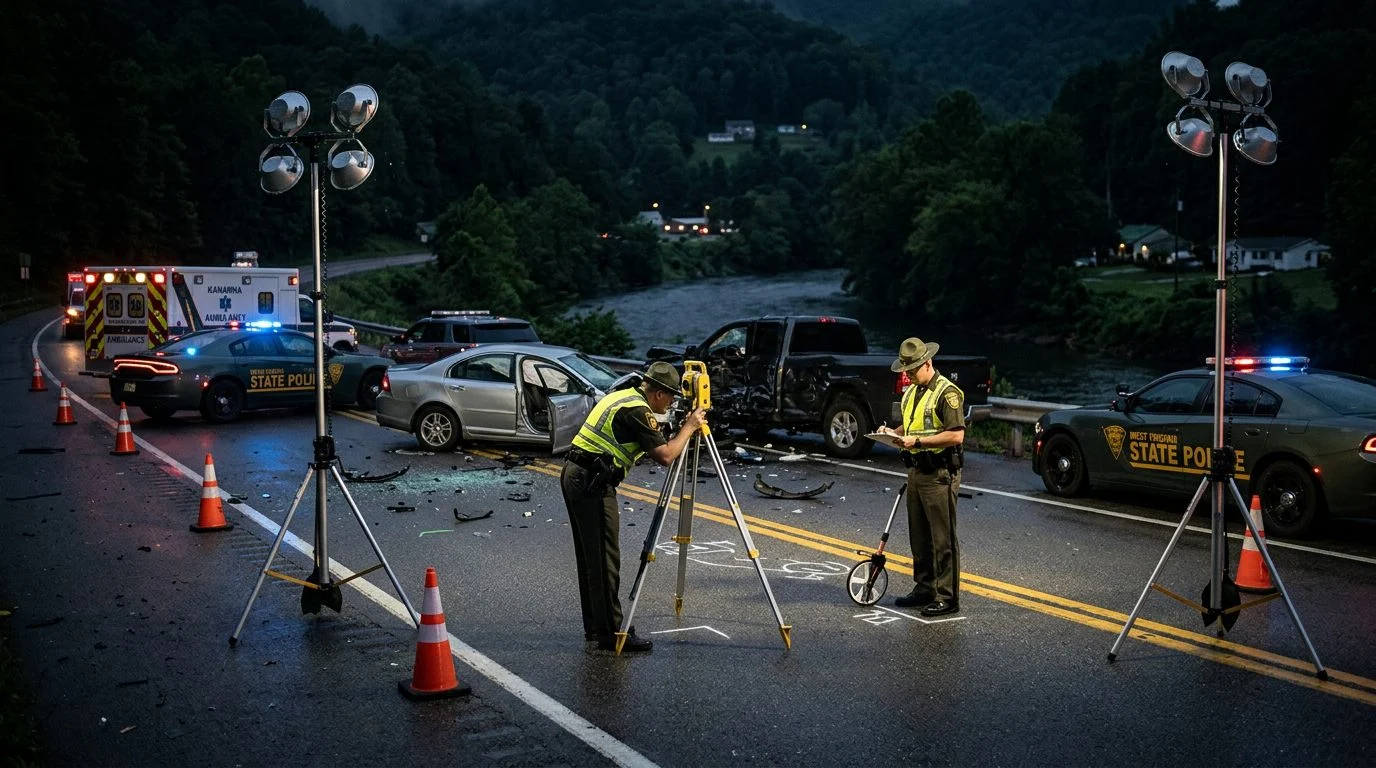
Steps to Take Now
The first steps are to get medical care, write down what you remember, and gather names and photos. Do these before the details fade.
If the owner or operator of the vehicle that caused your injury or damage is unknown, and you are physically able to report the crash, report it to police or a judicial officer within twenty-four hours after you discover it, unless a police officer has already investigated the accident; this report is required to recover under your uninsured motorist coverage. Note the date and time of each report. Keep a copy of any reference number you receive.
If you’re looking into this for someone you love, you may be carrying stress, paperwork, and questions all at once. You don’t have to hold all of it by yourself.
The firm handles car and truck crash claims, commercial vehicle crashes, catastrophic injuries, traumatic brain injury, spinal cord injury, and wrongful death matters. We serve injury victims across West Virginia.
If you were hurt in a crash that was never reported, request a case review and talk through what happened.