
Wrongful Death | West Virginia
No Single Average Tells a Wrongful Death Family's Story
Here is how a claim is shaped by the person who was lost, the losses left behind, and the facts of the crash, so you can see what really drives the numbers.
Published November 18, 2026
Losing someone in a crash is painful, and the money questions can feel urgent. You may be asking what a family can actually expect to receive.
There is no reliable average payout in a West Virginia wrongful death suit. Each claim turns on the person who died, the losses the family has suffered, who was at fault, and what insurance is available.
Online articles often list “average” settlements, but those numbers come from cases with very different facts. This page explains the factors that shape a claim under West Virginia’s wrongful death statutes.
Why There Is No Single Average Payout
A single average cannot reflect the facts behind a wrongful death claim. Consider two hypothetical families. One lost a parent who supported young children. The other lost an adult child with no dependents. Their losses are different, so their claims should not be compared as if they were the same.
West Virginia’s statute does not name a standard amount. It lets the jury or court award damages it considers fair and just. § 55-7-6
Settlement numbers from other cases also leave out details like the age, health, earnings, and family of the person who died. Those details may matter in your case.
If you are reading this after a death in your family, you may feel pressure to find a number fast. Understanding the factors is usually more helpful than a figure from someone else’s case.
Not sure what your next step is?
Talk it through with Big Bubba — the first case review is free, confidential, and carries no obligation.
Who Can Bring a Wrongful Death Claim in West Virginia
Generally, the personal representative of the person who died brings the claim. A personal representative is the person a court has appointed to manage the estate. The statute requires the action to be brought in that person’s name. § 55-7-6
The law then addresses who shares in any damages. The jury or court may direct how damages are split among the surviving spouse and children, including adopted children and stepchildren, brothers, sisters, parents, and any persons financially dependent on the person who died or who would otherwise be equitably entitled to share in such distribution.
Who receives what can affect family decisions, and those questions depend on the facts.
West Virginia generally requires a wrongful death action to start within two years after the death. W. Va. Code § 55-7-6 reads: “The provisions of this section shall not apply to actions brought for the death of any person occurring prior to July 1, 1988.” Under W. Va. Code § 55-7-6(d), a wrongful death action “shall be commenced within two years after the death of such deceased person, subject to the provisions of section eighteen, article two, chapter fifty-five.” Exceptions may apply, so it helps to get timing questions answered early. wrongful death statute
The Losses a Wrongful Death Claim May Include
A wrongful death claim may include economic losses, like lost income, and non-economic losses, like the loss of guidance and companionship. The statute lists the categories a verdict may include. § 55-7-6 The jury may award such damages as to it may seem fair and just. The categories below are examples, not a complete list.
- Sorrow, mental anguish, and solace, which may include society, companionship, comfort, guidance, and advice of the person who died.
- Lost income the person who died would reasonably have provided, and lost services, protection, care, and assistance.
- Expenses for care, treatment, and hospitalization tied to the injury that led to death.
- Reasonable funeral expenses.
The jury must also list separately any amount for funeral, hospital, and medical expenses caused by the crash.
Which losses matter most turns on the relationship to the person who died, their age and earnings, and how the crash happened. Bills and receipts give concrete proof of some losses. Others are shown through family testimony, such as stories about daily life, shared routines, and the role the person played at home.
The Survival Action and the Estate’s Claim
A survival action is a separate claim for harm the injured person suffered before death. West Virginia law allows one in some cases.
In a wrongful death action, the jury must set forth separately the amount of damages awarded for reasonable funeral, hospital, medical and other expenses, as W. Va. Code § 55-7-6 provides. § 55-7-8
West Virginia law also keeps certain injury claims alive after a death. § 55-7-8a
Under W. Va. Code § 55-7-8, there shall be but one recovery for each element of damages.
What Tends to Shape the Value of a Claim
Fault and insurance are the main factors that shape what a claim may be worth.
West Virginia uses modified comparative fault, which means each person’s share of fault is weighed. Under § 55-7-13a, recovery is based on each person’s percentage of fault.
Under § 55-7-13c, a person’s own fault does not bar recovery unless it is greater than the combined fault of all others responsible. If it is less, recovery is reduced in proportion to that person’s fault. Liability for compensatory damages is generally several, not joint.
Depending on the facts, a company whose driver was on the job at the time of a crash may share legal responsibility for it, and West Virginia law may limit certain damages in some claims against employer defendants, with conditions and exceptions that can apply.
Insurance matters too. § 33-6-31 Some insurers may dispute fault or the value of a claim.
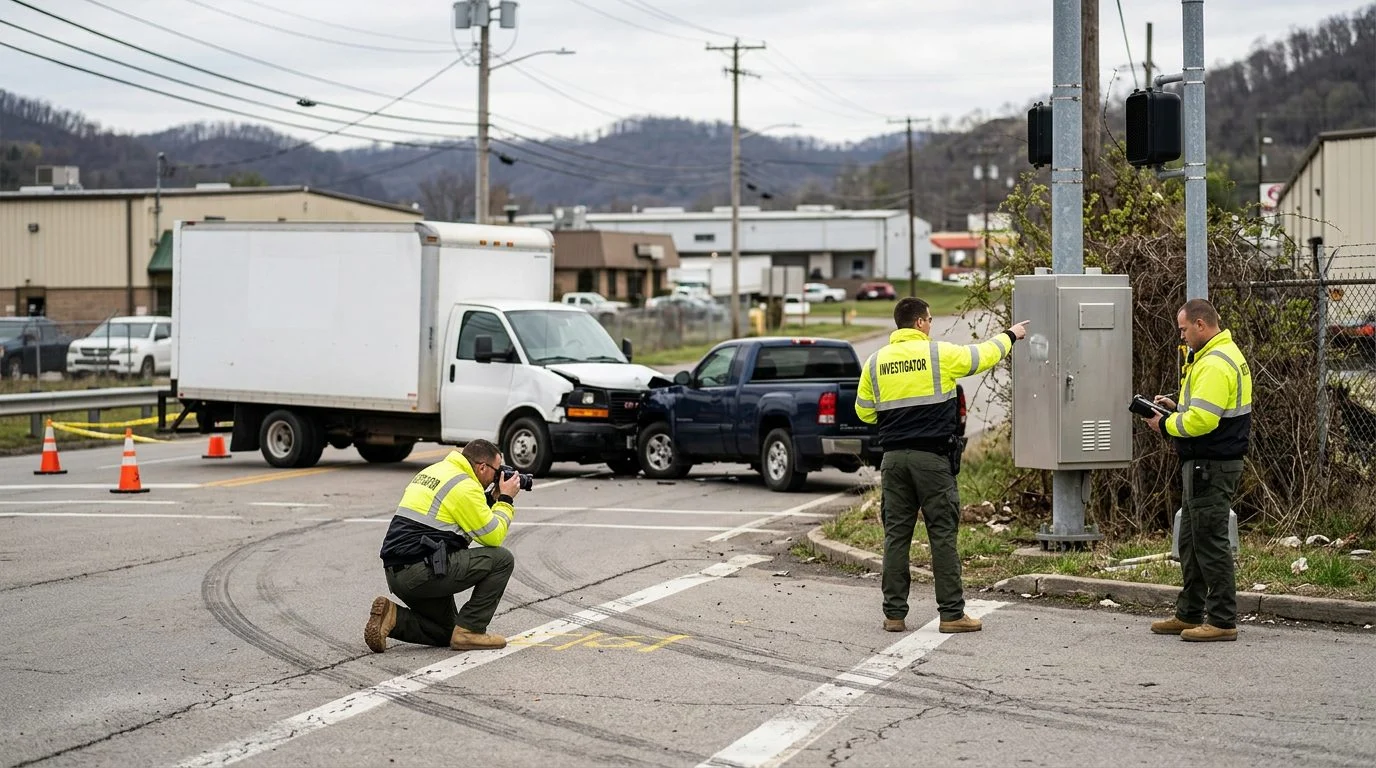
Crash reports, vehicle data, and witness statements may be relevant in some cases.
How Wrongful Death Claims Are Typically Resolved
Some wrongful death claims settle through negotiation, while others go to court. Negotiation means the parties talk about terms and try to reach an agreement.
A personal representative may settle the claim before or after a lawsuit is filed. The court must approve the settlement and decide how the money is shared. § 55-7-7
Disputes over fault or the value of losses can slow things down. The length of any claim varies with the parties involved and the issues in dispute.
Families often find that the process has many steps, and each one takes time.
Not sure what your next step is?
Talk it through with Big Bubba — the first case review is free, confidential, and carries no obligation.
Next Steps for a Family Facing a Wrongful Death Claim
Keep organized records of the crash, medical and funeral bills, and any letters from insurers. Those papers help show the losses a claim may include. Crash reports, photos, and notes of phone calls with insurers may also be useful.
You may be looking into this for someone who has died, while also making hard decisions and carrying grief. That is a lot to hold at once.
We handle wrongful death claims in West Virginia, including those from car, truck, and commercial vehicle crashes. We also handle catastrophic injury cases, such as traumatic brain injury and spinal cord injury.
If you are grieving and want to understand what comes next, you can request a free case review to talk through your family’s situation.