
Spinal Cord Injury | West Virginia
Traumatic Spinal Cord Injury, Explained in Plain Language
A spinal cord injury can change daily life in a single moment. Here is how these injuries happen and how they are described, so you can begin to make sense of what you are facing.
Published November 15, 2026
When a crash or a fall injures someone’s back or neck, families often hear the term traumatic spinal cord injury for the first time.
A traumatic spinal cord injury is damage to the spinal cord caused by a sudden physical force, such as a crash. The damage can change movement, sensation and bodily functions below the point of injury. This page explains the terms doctors use, how these injuries happen and what recovery generally looks like.
What a traumatic spinal cord injury is
A traumatic spinal cord injury is damage to the spinal cord from an outside force, such as a hard impact or a fall. The word “traumatic” means the injury came from a sudden event. Injuries from diseases, such as infections or tumors, fall into a different group.
The spinal cord is a bundle of nerves inside the spine. It carries signals between the brain and the rest of the body. When the cord is bruised, partly torn or fully torn, those signals can slow or halt below the damaged area.
The spine and the spinal cord are separate parts. The spine is the stack of bones called vertebrae, along with discs and ligaments. A fracture or torn ligament can happen to the spine with or without damage to the cord. A bone injury alone does not show the whole picture.
For a plain overview of how the injury happens, the Christopher & Dana Reeve Foundation explains the phases and mechanism of traumatic spinal cord injury.
If a crash has left someone you love facing a spinal cord injury, you can reach out to talk through what happened and whether another party may be responsible. Talk it through with Big Bubba — the first case review is free, confidential, and carries no obligation.
How traumatic spinal cord injuries happen
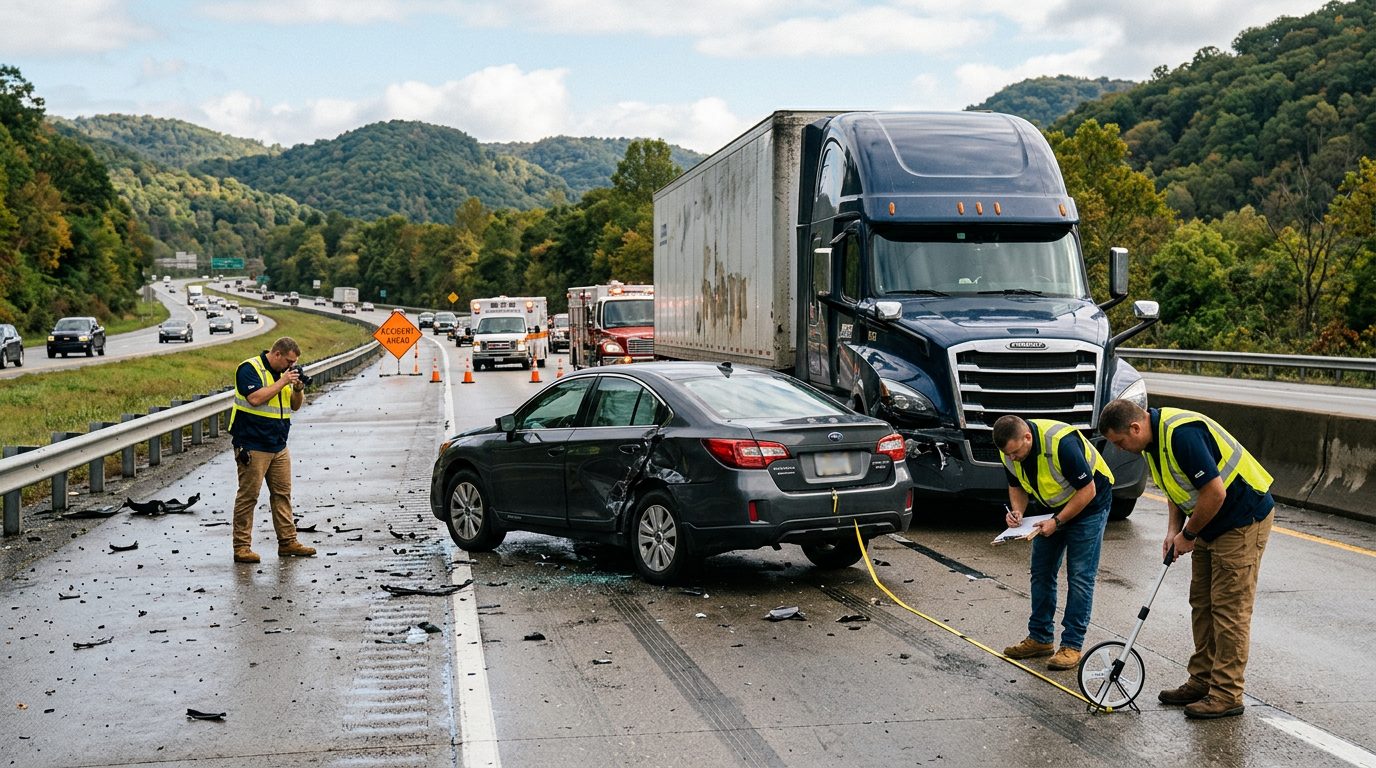
Car crashes, commercial truck crashes and falls can all cause a traumatic spinal cord injury. High-energy impacts can push the spine out of its normal position or press on the cord. Rollovers and sudden stops can create similar forces.
A collision with a heavy commercial truck can involve greater force than a crash between two passenger cars. That does not mean every truck crash causes a spine injury. The crash facts and the medical findings show how an injury happened.
Other causes include falls, sports injuries, diving into shallow water and acts of violence. Each cause brings different forces to the spine. The mechanism matters to doctors, and it matters to anyone looking into a claim.
Federal law also sets minimum insurance levels for many commercial motor carriers.
Complete and incomplete spinal cord injuries
A complete injury leaves no movement or sensation below the level of injury. An incomplete injury leaves some signals passing through the damaged area.
Doctors use this split to describe what a patient can and cannot do. The label matters for treatment planning. It also shapes how the care team explains the injury to the family.
Doctors check the cord with a standard neurological exam. The exam tests movement and sensation on both sides of the body, from the head down to the legs. Results are recorded in a standard way so different doctors can compare them.
The label can change over the first days and weeks as swelling settles. An early label is a snapshot, not a final answer.
Dorsal column injury is one pattern of incomplete injury. The dorsal columns form the back part of the cord. They carry touch, vibration and position sense. When they are affected, a person may notice more change in those senses than in strength or movement.
Whether an injury is complete or incomplete is decided through the medical evaluation in each case.
Levels of injury: tetraplegia, paraplegia and where the injury sits
The level of injury is the spot on the spine where the cord was damaged. It shapes which parts of the body may be affected.
Doctors describe four regions. The cervical spine is the neck. The thoracic spine is the upper and middle back. The lumbar spine is the lower back. The sacral spine sits at the base of the spine, near the pelvis.
Tetraplegia, sometimes called quadriplegia, means impairment affecting the arms, trunk and legs. It usually follows an injury in the neck, which is the cervical region.
Paraplegia means impairment affecting the legs and lower trunk. It usually follows an injury below the neck, in the thoracic, lumbar or sacral region.
Higher injuries generally affect more of the body, because more signals pass through the damaged area. How much a person is affected is decided through medical evaluation, and it may change over time.
Primary and secondary injury in the first hours and days
The primary injury is the damage from the impact itself. The secondary injury develops in the hours and days that follow.
Secondary injury can come from swelling, inflammation and reduced or absent blood flow to the cord. Reduced blood flow can worsen tissue damage. That is one reason the early period focuses on stabilizing the spine and watching the patient closely.
Emergency teams work to keep the spine stable while they assess the injury. Doctors watch most closely during this window because the picture can change quickly.
Families who read about secondary injury may become alarmed. Care decisions belong to the treating medical team, and that team explains the patient’s condition step by step.
How a spinal cord injury is diagnosed and treated
Doctors diagnose a traumatic spinal cord injury with a neurological exam and imaging. Imaging can include X-rays, CT scans and MRI.
X-rays show bone alignment and fractures. CT scans give detailed pictures of bone. MRI scans show the spinal cord, discs and ligaments, which helps doctors see pressure on the cord.
Treatment is individualized. Common steps include immobilizing the spine, surgery when needed to relieve pressure or stabilize the spine, and medical care for blood pressure and swelling. Rehabilitation follows, and it focuses on movement, daily tasks and adapting to changes in the body.
The treating medical team sets the plan for each patient. The plan may change as the patient’s condition changes.
A brain injury can happen at the same time as a spinal cord injury. We also handle traumatic brain injury and catastrophic injury claims.
Not sure what your next step is?
Talk it through with Big Bubba — the first case review is free, confidential, and carries no obligation.
Signs of recovery and why the outlook varies
Recovery after a traumatic spinal cord injury varies widely. No single timeline fits everyone.
Doctors may watch for returning sensation, movement or reflex activity in the weeks and months after the injury. They may also track bladder, bowel and breathing function where those are affected.
A review of natural recovery after traumatic spinal cord injury looks at the expected timing of recovery and the factors that affect it. The review covers partial paralysis and prognosis.
A West Virginia study on traumatic spinal cord injury examines how injury severity, completeness of injury, rehabilitation access, insurance status and discharge setting relate to long-term function and mobility.
Rehabilitation and ongoing medical follow-up are part of care for many people. Medical findings, the level and completeness of the injury, and access to rehabilitation are among the factors researchers study. Recovery is rarely a straight line, and progress can look different at different points.

When a crash has caused a spinal cord injury
If another driver, a truck operator or another party was at fault, the injured person and their family may have legal options. Families in this position often face medical decisions, time away from work and questions about money at the same time. Handling one piece at a time can help.
Under W. Va. Code § 55-7-13a, “comparative fault” means the degree to which a person’s fault was a proximate cause of an alleged personal injury, death, or damage to property, expressed as a percentage. See W. Va. Code § 55-7-13c.
State law also restricts early settlement talks. Under W. Va. Code § 55-7-11a, no person generally may negotiate a settlement with an injured person within twenty days of the injury while that person is hospitalized or unable to do usual work.
Some insurers may dispute a claim. Keeping copies of medical records and the crash report can be useful later.
We serve injury victims in all 55 West Virginia counties. We handle car accident, truck accident, commercial vehicle, catastrophic injury and wrongful death claims.
Who may be able to bring a claim after a crash?
The injured person, or a family member acting for them, may have a claim, depending on the facts of the case.
Does a spinal cord injury always mean paralysis?
Not always. An incomplete injury leaves some signals passing through, so some movement or sensation may remain.
If a crash has left someone you love facing a spinal cord injury, you can request a free case review with us to talk through what happened and whether another party may be responsible.