
Car and Truck Accident Claims in West Virginia
Who Was at Fault? Understanding Your Crash Claim in West Virginia
Fault shapes many of the next steps after a serious crash. Here is how to think it through, and how the firm can talk with you about your situation.
Published November 15, 2026
If you were hurt in a crash, or someone you love was, you may be asking who caused it. An at-fault accident is a crash where a driver’s careless or unlawful conduct is found to have caused the collision. Fault affects who may pay for losses, so the question matters early. This guide explains how West Virginia looks at fault, what evidence is used, and how truck crashes can differ.
What Does At-Fault Mean in a Crash?
An at-fault driver is the person whose conduct caused the crash. Fault is about what happened on the road. It is not about who was hit or who drove the larger vehicle. Being hit from behind does not automatically make the other driver at fault, and the answer depends on the facts of each crash.
West Virginia law defines fault broadly. It means an act or omission of a person that is a proximate cause of injury or death to another person or persons, damage to property, or economic injury, including negligence (W. Va. Code § 55-7-13b). A proximate cause is a direct cause of the harm, not just something that happened first.
Several sources may weigh in on fault. A police report, an insurer’s review, and a court can reach different conclusions about the same crash. A police report is important evidence, but it is not always the final word. An insurer’s view is not a court ruling.
Not sure what your next step is?
Talk it through with Big Bubba — the first case review is free, confidential, and carries no obligation.

The Basic Elements of Negligence
Negligence claims usually turn on four elements: duty, breach, causation, and damages. Each one has to connect to the crash.
- Duty of reasonable care. Drivers owe others on the road the care a reasonable driver would use under the same conditions.
- Questions about how a driver acted behind the wheel, such as speed or attention to the road, may be part of a crash claim, depending on the facts.
- Causation. The breach was a proximate cause of the crash and the injuries that followed.
- Damages. The injured person suffered real losses, such as medical bills, lost wages, and pain and suffering.
Take a driver who runs a red light and hits a car in the intersection. The duty was to obey the signal. Running it was a breach. The collision and injuries flow from that breach, and the victim’s losses show the damages.
These elements are a general framework. How they apply can change with the facts and with West Virginia’s statutes and case law.
Common Driver Actions That Can Make a Driver At Fault
Many of these rules sit in Chapter 17C of the West Virginia Code, the state’s motor vehicle code. Insurers and investigators often look to these rules when a traffic violation is alleged.
A traffic ticket can be relevant evidence of fault. It is not always conclusive on its own.
A driver can also be at fault even if no ticket was issued. Officers do not see every collision. A crash can be caused by conduct no officer witnessed, such as a driver glancing at a phone for a moment before a lane change.
Fault in Commercial Vehicle and Truck Crashes
In a truck or commercial vehicle crash, fault can reach beyond the person behind the wheel. Depending on the facts, more than one party may be connected to the crash.
Federal safety rules can also matter. Under 49 C.F.R. § 390.11, when a duty or prohibition in part 325 of subchapter A or in this subchapter applies to a driver, the motor carrier must require the driver to observe it (49 C.F.R. § 390.11). Drivers of commercial motor vehicles may not text while driving, except when necessary to communicate with law enforcement officials or other emergency services (49 C.F.R. § 392.80).
Records can be relevant. Motor carriers must keep driver vehicle inspection reports for three months from the date the written report was prepared (49 C.F.R. § 396.11), but these rules do not apply to a private motor carrier of passengers (nonbusiness), a driveaway-towaway operation, or any motor carrier operating only one commercial motor vehicle. Because that period is short, early attention to these records can matter. Hours-of-service rules limit how long a driver may drive after rest, and driver logs can be relevant to that question (49 C.F.R. § 395.3).
How West Virginia’s Comparative Fault Rules Work
West Virginia generally uses modified comparative fault. Fault is split by percentage among everyone who contributed to the harm (W. Va. Code § 55-7-13a). Each person’s share follows that person’s percentage of fault.
An injured person’s own fault generally does not bar recovery unless it is greater than the combined fault of all others responsible; if it is less, recovery is reduced in proportion to the plaintiff’s fault (W. Va. Code § 55-7-13c).
Fault can also be assigned to people who are not named in a lawsuit. Under W. Va. Code § 55-7-13d, fault of a nonparty shall be considered if the plaintiff entered into a settlement agreement with the nonparty, or if a defending party gives notice no later than one hundred eighty days after service of process upon that defendant that a nonparty was wholly or partially at fault. The statute also states that nothing in it is meant to eliminate or diminish defenses or immunities that existed as of its effective date, except as expressly noted in the section.
Evidence Used to Determine Fault
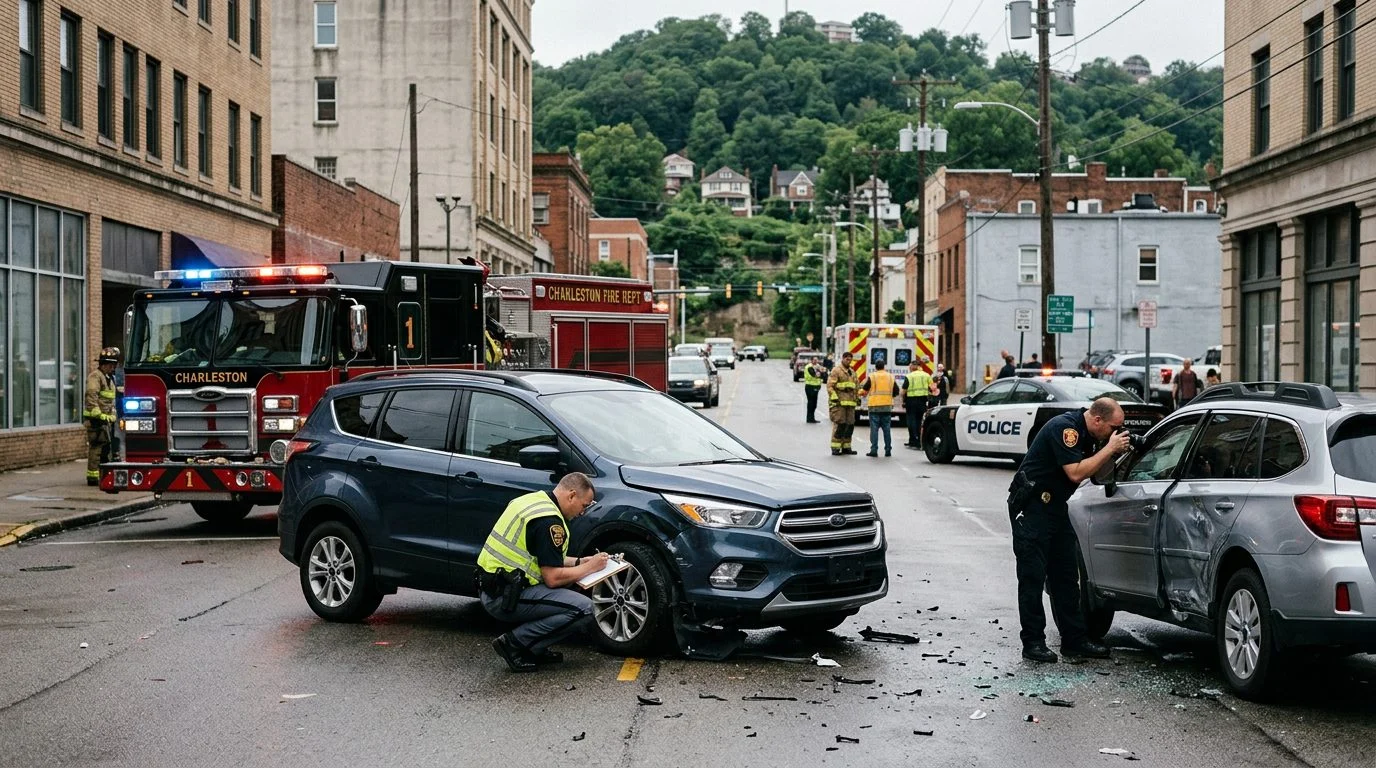
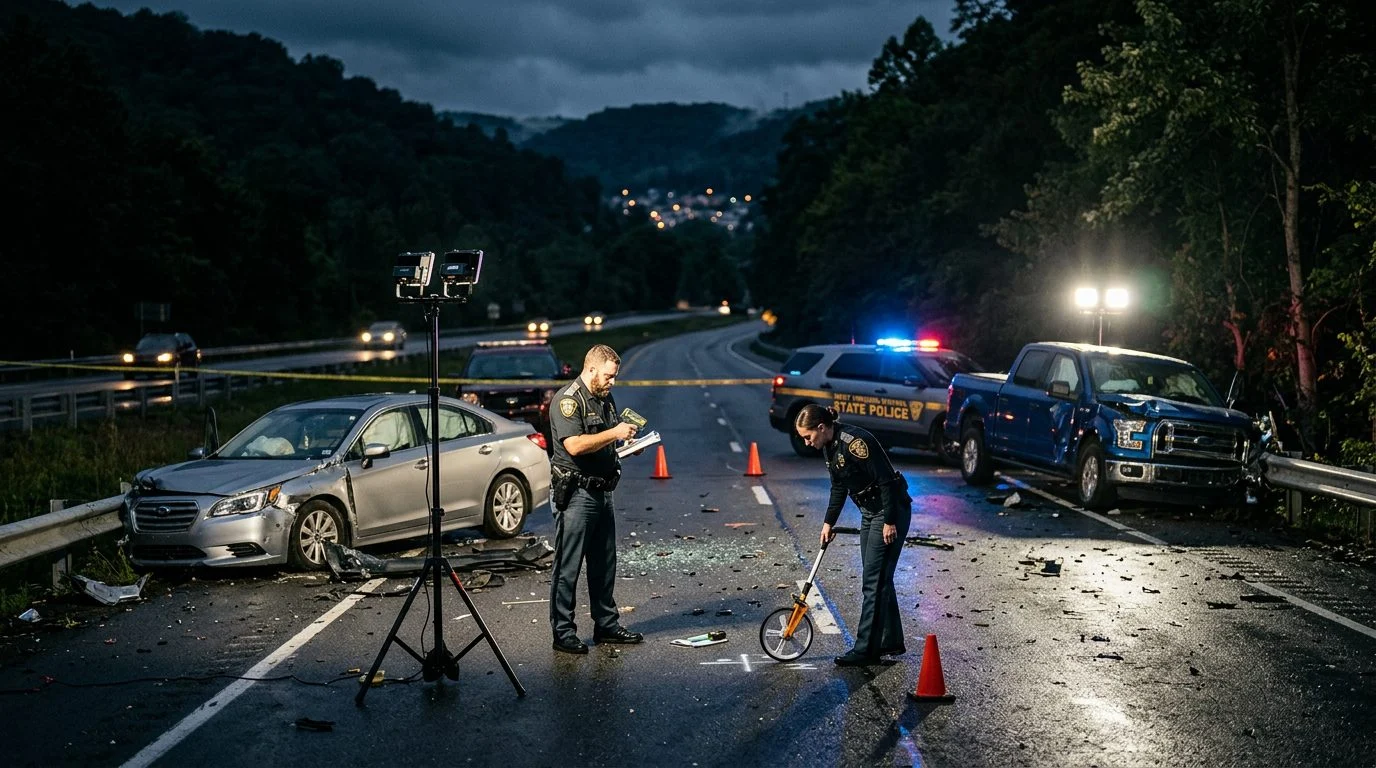
Fault is usually decided with several types of evidence, starting with the police crash report. Other common evidence includes scene photos and measurements, witness statements, vehicle damage patterns, traffic camera footage, and vehicle event data. Damage on the front of one car and the side of another can show how the collision happened.
Cell phone records and dashcam footage can be relevant to showing distraction or the order of events. These records are often more useful when they are gathered early.
A crash report can be requested from the investigating agency, which may charge its own copy fee. The report’s conclusions are not always final. A report can be challenged or supplemented with other evidence.
Evidence can be relevant to fault, and preserving it early can matter. Keep photos, messages, and records from the day of the crash.
Not sure what your next step is?
Talk it through with Big Bubba — the first case review is free, confidential, and carries no obligation.
When Insurers Dispute Fault and What to Do Next
Some insurers may dispute a claim or assign partial fault to a driver. The reasons for that position can be requested in writing.
Insurance rules generally work this way: an at-fault motorist’s liability insurance may pay another road user’s medical and property-damage costs. State law sets minimum financial-responsibility requirements (Insurance Information Institute).
Keep a copy of every letter, the crash report, photos, and medical records. Write down what you remember about the crash while it is still fresh. Think before giving a recorded statement about who was at fault.
If you’re still trying to figure out who was to blame, whether you were hurt or you’re worried about a family member after a crash, you can request a free case review. The firm handles car accident, truck accident, and commercial vehicle claims, and we serve Charleston and Huntington injury victims. Request a free case review to talk through the facts of your crash.
Related practice areas
- Traumatic Brain Injury from Car and Truck Accidents in West Virginia
- What happens if I crash my car and it’s my fault?
- Cell Phone Records and Dashcam Footage After a Car Accident in West Virginia
- Does an MRI Increase a Settlement? West Virginia Guide