
West Virginia crash guidance
The Driver Who Hit You Left? Here's What to Do Next
Get medical care, write down what you remember, and reach out to a firm that helps people hurt in hit-and-run and other crashes across West Virginia.
Published November 20, 2026
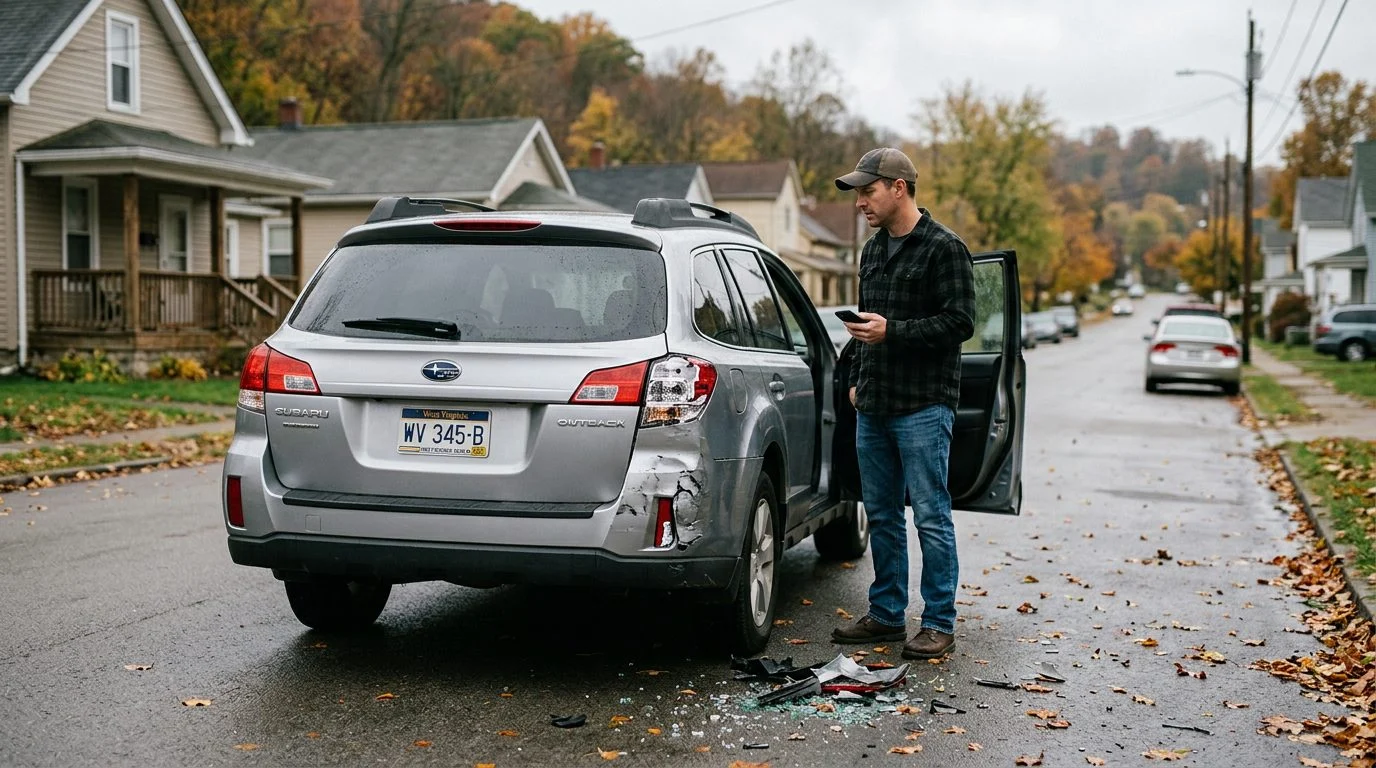
If the driver who hit you drove away, you may be hurt, shaken, and unsure what to do first. Start with your safety and your medical care. Then report the crash, record what you can, and check your own insurance coverage.
West Virginia law requires drivers to stop after a crash and sets duties for drivers who leave. This page explains what to do if the driver left the scene in West Virginia, step by step. Each situation depends on its own facts, so treat these steps as a guide, not a script.
Why a Driver Leaving the Scene Changes Your Next Steps
A hit-and-run crash raises questions that an ordinary crash does not. The first question is who was driving. Without a name or license plate, the other driver may be hard to identify.
That gap can change which insurance may respond to your claim. In some cases, your own auto coverage becomes part of the picture. You may also need to act on deadlines sooner than you expect.
Think of this guide as a checklist of questions to answer. It is not a verdict on what happened. Many people find it easier to work through the steps in order, one at a time.
If you are caring for someone who was hurt, you are not alone in sorting this out. Family members often handle the calls, the paperwork, and the medical visits at the same time. If the injury involves the head, read our page on traumatic brain injury for more detail.
If a driver left you hurt and you are still sorting out what comes next, you can reach out to the firm to request a free case review. Talk it through with Big Bubba — the first case review is free, confidential, and carries no obligation.

What West Virginia Law Generally Requires of a Driver After a Crash
West Virginia law generally requires a driver in a crash that causes injury or death to stop at the scene. The driver must stay until the legal duties are met, unless they leave to help an injured person. West Virginia Code § 17c-4-1 sets out that rule.
West Virginia Code § 17c-4-3 covers these duties and the duty to help an injured person get medical care.
Under § 17c-4-6, the driver may have a duty to notify police right away, depending on the facts, including whether the crash involved injury, death or apparent property damage of $1,000 or more. Depending on where the crash happened, that means the local police department, the county sheriff, or the State Police. West Virginia Code § 17c-4-6 describes this notice requirement.
Leaving the scene can lead to criminal charges. In some cases, it may be a felony. A conviction also brings license consequences: under W. Va. Code § 17c-4-1(f), a convicted driver’s license or driving privilege must be revoked for one year from the date of conviction or the date of release from incarceration, whichever is later.
Those penalties apply to the driver. They are separate from your own right to seek help for your injuries. How a driver’s decision to flee the scene may bear on a claim depends on the facts of each case.
Immediate Steps at the Scene If You Are Able
If you can, get to safety first. Turn on your hazard lights. If your vehicle can move safely, pull it out of active traffic. If it cannot, stay buckled in and wait for help unless staying puts you in danger.
Check on everyone in your vehicle. Ask passengers about pain, dizziness, or neck and back problems. Do not wait for symptoms to grow before you ask for help.
Call 911 and ask for police and medical help. Tell the dispatcher that the other driver left. Make the call even if injuries seem minor. An officer can document the scene while details are still fresh.
Describe the other vehicle as completely as you can. Include the direction it was traveling, its color, make, model, and body damage. Note any part of the license plate you saw.
Stick to facts when you speak with responders. Say what you saw and felt. Avoid guessing about speed, fault, or what the other driver intended. The investigation will sort those details out.
If the driver is physically unable to report the crash, a passenger may need to make the call. West Virginia Code § 17c-4-8 places that duty on an occupant who is able to make the notice.
Information and Evidence to Gather Right Away
Start with details you can record now. Write down the time, the exact location, the road name, and the weather and lighting. Memory fades quickly, so do this as soon as you safely can.
Record everything you can about the other vehicle. Note any partial plate, make, model, color, and any distinctive features like stickers, dents, or missing parts. If you saw a commercial vehicle, note any company name or markings.
Identify witnesses. Ask for names and phone numbers. Note nearby businesses that may have security cameras. Some camera systems overwrite footage over time, so ask about it quickly.
Photograph the scene from several angles. Capture vehicle damage, road conditions, skid marks, and debris. Keep the original photos with their timestamps. Do not edit or crop them.
Look for paint transfer, broken glass, or plastic pieces left on the road. Tell the investigating officer about them. Physical evidence can help show what happened, and it may be harder to find later.
Reporting the Crash and Getting the Police Report
Report the crash to police, even if you already called 911 from the scene. A report creates an official record. It also gives you a way to confirm what the officer documented.
Under West Virginia Code § 17c-4-7, the investigating officer generally must prepare a crash report within 24 hours after completing the investigation.
Ask the investigating agency for a copy once it is available.
A police report may include the officer’s observations, witness names, and any details about the other vehicle. It is one piece of evidence, not the final word. Read it carefully for accuracy. If you see an error, ask the agency how to request a correction.
Medical Evaluation and Why Symptoms Can Be Delayed
See a medical provider as soon as you can, even if you feel fine. A prompt evaluation creates records of your injuries and the date you first reported them. Those records may be relevant later, depending on the facts.
Some symptoms can appear hours or days after a crash. Concussions and other brain injuries can be easy to miss at first. Tell your provider about every symptom, even small ones.
Seek emergency care right away for severe headache, confusion, repeated vomiting, weakness, trouble walking, or loss of coordination. Those signs need urgent attention. Do not wait for a scheduled appointment.
Report new numbness or tingling to a medical provider as well. A separate page on numbness and tingling after a car accident covers that symptom in more detail.
Keep copies of all medical records, bills, and visit notes. Write down your symptoms each day. Note what you could not do, such as work, sleep, driving, or caring for your family.
Not sure what your next step is?
Talk it through with Big Bubba — the first case review is free, confidential, and carries no obligation.
Checking Your Own Insurance Coverage
Your own auto policy may include uninsured motorist coverage. That coverage may matter when the other driver cannot be identified. Whether it applies depends on your policy and the facts of your crash.
West Virginia Code § 33-6-31 generally requires motor vehicle policies to include an endorsement for uninsured motorist coverage, within set limits. The statute also contains conditions for recovery, so read the policy carefully.
Find your declarations page. It lists your coverage limits and the types of coverage you bought. Then ask your insurer which coverage may apply to a hit-and-run crash.
Insurers may ask for a recorded statement or documents. You can ask questions before you answer. Some insurers may dispute a claim, so keep your own copies of everything you send and receive.
Time Limits and Why Early Action Matters
West Virginia generally allows two years to file a personal injury lawsuit. Exceptions may apply. West Virginia Code § 55-2-12 sets this general period for personal injury claims.
Wrongful death claims have their own rules. Under West Virginia Code § 55-7-6, a wrongful death action is generally brought by the personal representative of the deceased person’s estate. It generally must begin within two years after the death.
Families should not wait to learn these limits. Waiting can make it harder to act in time. Exceptions may apply, but the safest approach is to learn your deadline early.
Evidence also changes over time. Video can be overwritten. Witnesses forget details. Damaged vehicles get repaired or sold. Acting early helps protect what still exists.
Keeping Track of Evidence and Records
Keep everything in one place from the start. A folder, a shared drive, or a labeled box all work. Include photos, the police report number, medical records, and receipts for related costs.
Track missed work and lost pay. Keep pay stubs and a note from your employer if you were unable to work. Save records of any help you needed at home.
Keep a daily journal of symptoms, appointments, and limits. Describe how the injury affects sleep, concentration, driving, and family life. Write it in your own words, close to the day it happens.
Preserve physical items too. Keep the vehicle if you can, along with damaged clothing and personal items. Do not throw them away without thinking about what they may show. Our guide on evidence to preserve after a semi truck crash in West Virginia covers this in more detail.
Connecting With a Firm That Handles These Cases
If a driver left the scene, you may still be dealing with medical bills, missed work, and questions about insurance. A law firm can help you sort out those questions. The firm handles car accident, truck accident, commercial vehicle, catastrophic injury, traumatic brain injury, spinal cord injury, and wrongful death matters across West Virginia.
We serve injury victims in Charleston, Huntington, Morgantown, Wheeling, Martinsburg, Parkersburg, Beckley, Clarksburg, Fairmont, and Weirton. We also serve families in wrongful death cases throughout the state.
The firm offers a free case review to people who want to talk through what happened. It is confidential, and there is no obligation to continue. You can bring your police report number, your notes, and your medical questions.
If you are still working through the steps above after a driver left you hurt, you can request a free case review with the firm. Taking that first conversation can help you decide what comes next.