
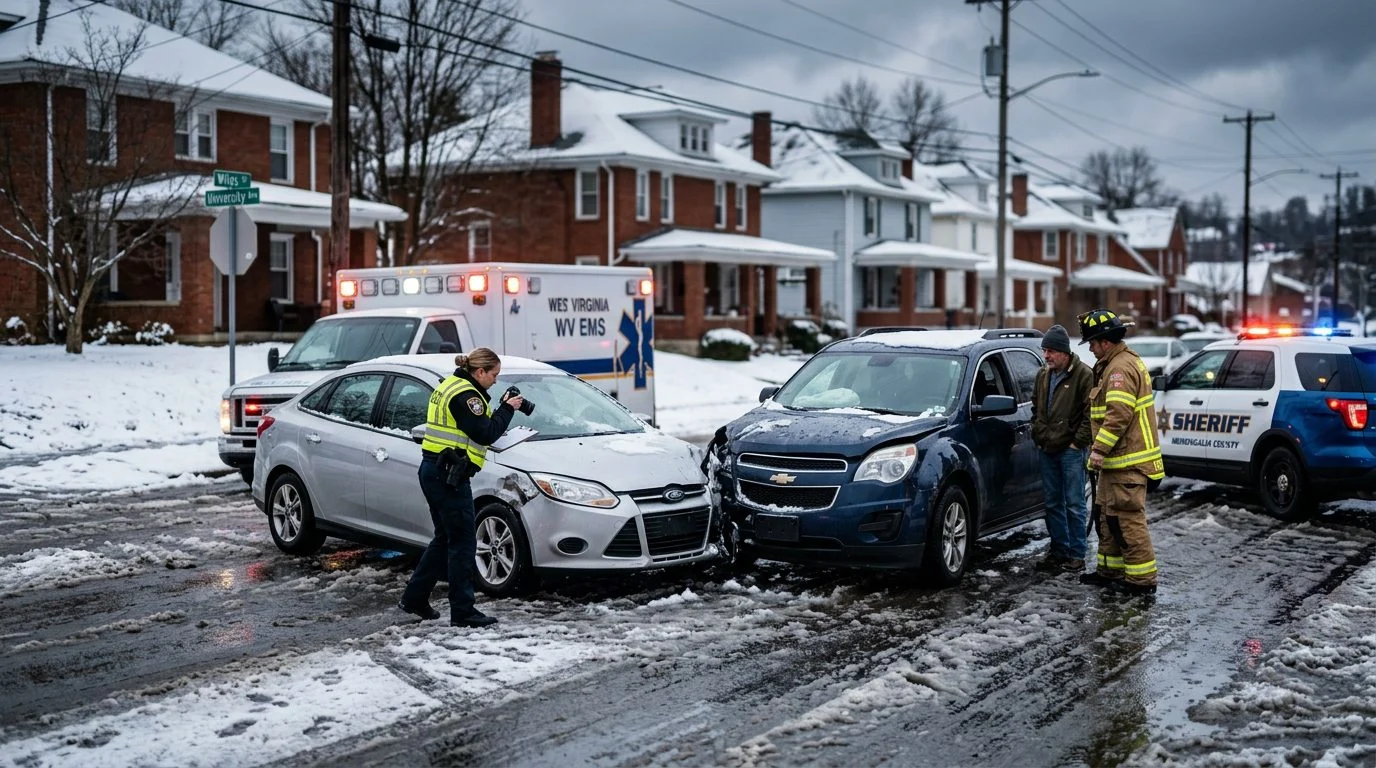
West Virginia Car Accidents
Hurt in a Winter Crash? Know Your Next Steps
Icy roads can turn a routine drive into a serious emergency. Here is how to protect your health and your options after a crash.
Published November 15, 2026
Your car slid on ice or snow, and now you may feel shaken, sore, or unsure what comes next. Stay safe, get help, and write down what happened while it is still fresh.
This page covers what to do if your car slides on snow, what to do if you get stuck in a snowstorm, and what to do right after a car accident on ice or snow in West Virginia. It also explains how winter conditions can affect fault and which injuries may show up later.
Why Winter Crashes Happen on West Virginia Roads
Ice and snow reduce the grip your tires have on the road, so stopping takes longer. Bridges, overpasses, shaded curves, and hilltop roads often freeze first. Black ice can be nearly impossible to see until a car is already on it.
Crashes can happen even when a driver is careful. A road that looked clear at the start of a trip can turn icy within a few miles. Conditions can change quickly as you climb out of a valley or drop into the shade of a ridge.
West Virginia’s mountain and river valley roads present winter hazards that differ from flat interstates. Steep grades, sharp curves, and long shaded stretches can freeze while the road ahead still looks wet. Local conditions matter when you look back at what happened.
Sliding can also continue after the pavement looks clear again. A driver who thinks the worst is over may still be carrying too much speed into the next curve. That is why the road surface and each driver’s speed can matter later.
If an icy slide left you or someone you love hurt, you can reach out to us for a free case review and talk through what happened. Talk it through with Big Bubba — the first case review is free, confidential, and carries no obligation.
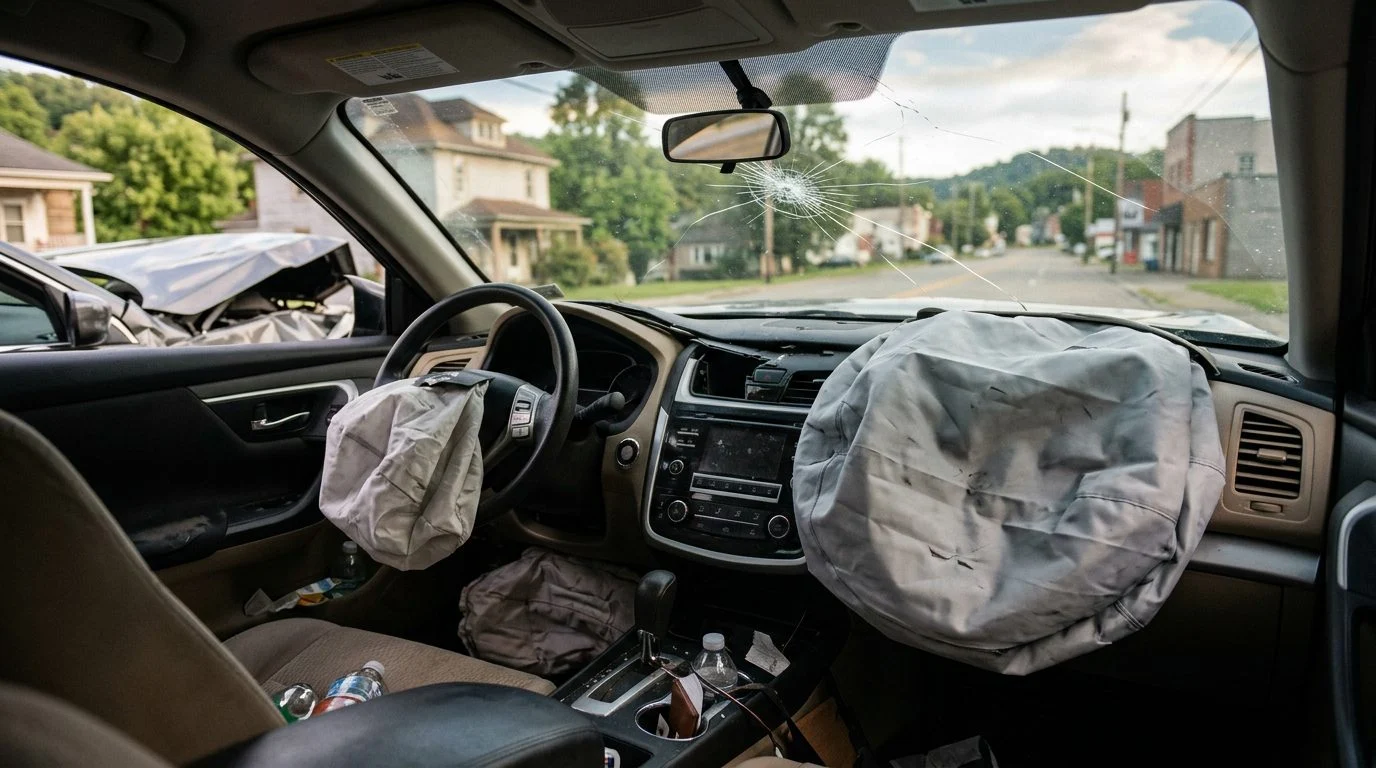
What Should You Do If Your Car Slides on Snow or Ice?
Ease off the accelerator, avoid hard braking, and steer gently in the direction you want the car to go. Hard braking can lock the wheels and take away steering control. A steady hand usually works better than a sudden stop.
If your car has anti-lock brakes, the owner’s manual explains how they work. Knowing what to expect before you need them can help you stay calm and keep steering.
Automatic cars need care too. Use a gentle, steady throttle when starting or climbing a hill on snow. If your car has a lower gear or a snow setting, using it may limit wheel spin. Smooth inputs often work better than quick corrections.
Keep extra space between your car and other vehicles. Slow down before curves, bridges, and hills. Leave more following distance than you would on dry pavement, because sliding can continue after the road looks clear.
What Should You Do If You Get Stuck in a Snowstorm?
If help is not close and shelter is out of reach, stay with your car. A stopped vehicle is easier for rescuers to spot than a person walking in cold, blowing snow.
Keep a winter emergency kit in the car before you need it. Useful items include a phone charger, blankets, bottled water, non-perishable food, a flashlight with spare batteries, a shovel, and warm clothing.
Run the engine only as needed. Keep the tailpipe clear of snow, and crack a window for fresh air. Snow blocking the exhaust can let dangerous fumes build up inside the car, so check it often.
Tell someone where you are headed and when you expect to arrive. Use your hazard lights. If it is safe, hang a bright cloth from the antenna or a window so other drivers can see the vehicle. Passengers should sit close together under blankets to stay warm.
What Should You Do Right After a Winter Car Accident?
Check everyone in every vehicle for injuries first. Call 911 when someone is hurt or the road is blocked.
Notify the police. Under § 17c-4-6, a driver in a crash with injury, death, or total property damage of $1,000 or more must give notice right away. Notice goes to the local police in a town, or to the county sheriff or the State Police outside a town.
Share your information with the other driver. Under § 17c-4-3, a driver who is physically able should give their name, a valid phone number, the year, make, model, and last four digits of the VIN, and proof of insurance. You can also give this to an officer at the scene.
If you are able, give reasonable help to anyone hurt. That can include arranging a ride to a doctor or hospital when treatment appears necessary or when the injured person asks for it.
Avoid saying who caused the crash at the scene. Road conditions and each driver’s view may not be clear in the moment. Photograph the vehicles and where they stopped, the road surface, signs, traffic controls, and any skid marks. Get the names and contact details of any witnesses.
Which Records Help Support a Winter Crash Claim?
Ask the investigating agency for a copy of the crash report. Under § 17c-4-7, for a motor vehicle crash on a public street or highway resulting in bodily injury or death, or total property damage of $1,000 or more, the investigating officer must prepare the report within 24 hours after finishing the investigation. The report may describe the scene and the conditions.
Write down the time, the location, the weather, and your memory of how the slide or impact happened. Do it soon, while details are fresh. Keep notes short and factual.
Keep every medical visit record, discharge instruction, and bill. Save photos of any injuries and note how they change over time. Record any time you missed from work, along with repair estimates. These may be relevant, depending on the facts.
Insurance coverage can be one of the sources that may be relevant to a car accident claim. The state’s West Virginia DMV insurance information explains those requirements. Write down the other driver’s insurer and policy number, if you have them.
How Does Winter Weather Affect Who Is Responsible?
Weather alone may not decide who is at fault. Fault in a crash may depend on what each driver did and the conditions that existed at the time. West Virginia’s comparative fault statute, W. Va. Code § 55-7-13a, defines comparative fault as the degree to which a person’s fault was a proximate cause of an alleged personal injury, death, or property damage, expressed as a percentage, and provides that fault is determined under section thirteen-c of the same article.
Under § 55-7-13c, an injured person’s fault generally bars recovery only when it is greater than the combined fault of everyone else responsible. If the injured person’s fault is less, recovery is reduced in proportion to that fault.
In a multi-vehicle crash, fault may be shared among several drivers. Speed, following distance, and lane position may all be part of the review. If another driver was at fault, those details can help show how the crash happened.
If poor road maintenance may have played a role, different rules can apply. West Virginia law says a political subdivision, such as a county or city, may be liable for negligent failure to keep public roads open, in repair, or free from nuisance, as § 29-12a-4 describes, subject to the statute’s other provisions. W. Va. Code § 29-12a-4 reads: “(3) Political subdivisions are liable for injury, death, or loss to persons or property caused by their negligent failure to keep public roads, highways, streets, avenues, alleys, sidewalks, bridges, aqueducts, viaducts, or public grounds within the political subdivisions open, in repair, or free from nuisance, except that it is a full defense to such liability, when a bridge within a municipality is involved, that the municipality does not have the responsibility for maintain or inspecting the bridge.”
Claims against a political subdivision generally must be brought within two years after the cause of action arose or after the injury, death or loss was discovered or reasonably should have been discovered, whichever last occurs, and a shorter period may apply, but for a minor who was under the age of ten at the time of injury, the deadline may instead run until the minor’s twelfth birthday if that is the longer period, under § 29-12a-6. The period may also be tolled if the political subdivision committed fraud or collusion by concealing or misrepresenting material facts about the injury. Because deadlines can be short, reviewing them early is important. Some insurers may dispute a claim, so the scene notes and the crash report can be useful.
Not sure what your next step is?
Talk it through with Big Bubba — the first case review is free, confidential, and carries no obligation.
Which Injuries Can Show Up Days After a Snow or Ice Crash?
Some injuries are not obvious at the scene. A crash on ice can involve a sudden stop, a rollover, or an impact with a guardrail or another vehicle. Pain and shock may hide symptoms in the first hours.
Warning signs of a possible traumatic brain injury include headache, confusion, dizziness, memory problems, sensitivity to light, and changes in mood or sleep. Get a medical evaluation even when symptoms seem mild. Some symptoms may appear hours or days after the crash.
Back and neck pain, numbness, or tingling may need prompt evaluation. Do not wait to see whether these signs fade on their own. Seeing a medical provider can help sort out what is happening.
The firm handles traumatic brain injury and spinal cord injury claims. For more on symptoms that can surface later, see the firm’s guide on delayed pain after a car accident in West Virginia.
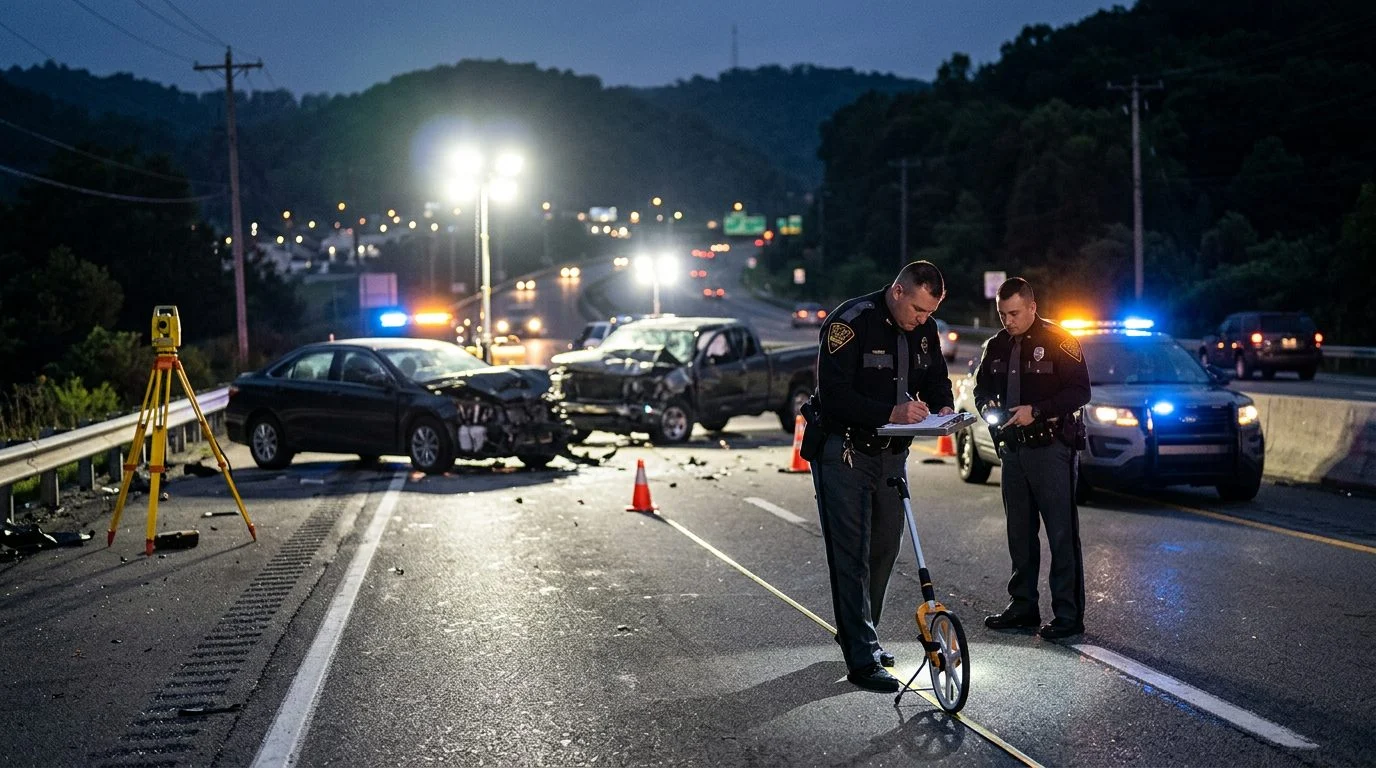
What Details May Matter After a Winter Crash in West Virginia?
If you are still deciding what to do, you can reach out to the firm to talk about your winter crash. It is reasonable to gather information before you choose your next step.
You may be dealing with your own injuries, or with a parent’s or spouse’s injuries after a crash you never expected. Big Bubba represents people seriously hurt in car and commercial truck crashes, people with catastrophic brain and spinal cord injuries, and families in wrongful death cases across West Virginia. We serve injury victims throughout the state.
You can share what happened and learn what information may help.