
Brain Injury, Car Accident and Wrongful Death Claims in West Virginia
Serious Injury and Wrongful Death Claims Across West Virginia
A crash can change your health, your work and your family in a single day. Here is how the firm can help you take the next step.
Published November 17, 2026
Losing a family member after a car crash is painful, and a brain injury can make the story harder to follow.
In West Virginia, a wrongful death claim may be brought when another person’s wrongful act causes a death. The claim is filed by the decedent’s personal representative, for the benefit of certain surviving family members. This page explains how that works when a crash leads to a traumatic brain injury and a later death.
What a wrongful death claim is and who may bring it
A wrongful death claim is a lawsuit that follows a death caused by another person’s wrongful act, neglect, or default.
Under W. Va. Code § 55-7-6, a wrongful death action shall be brought by and in the name of the personal representative of the deceased person, and the amount recovered shall be recovered by that personal representative and distributed in accordance with the statute.
The jury, or the court in a case without a jury, may decide how damages are shared. Those who may share include the surviving spouse and children, including adopted children and stepchildren. Brothers, sisters, parents, and any persons financially dependent on the person who died, or who would otherwise be equitably entitled to share, may also share, as the jury or court directs.
A wrongful death claim is not the same as the injured person’s own injury claim. If the person lived for a time after the crash, a separate claim for damages between the injury and the death may exist. W. Va. Code § 55-7-8
This page is written for spouses, children, parents, and other relatives who are caring for someone hurt in a crash or grieving a loved one after one.
If your family is piecing together a crash, a brain injury, and a death, you can tell Big Bubba what happened in a free case review. You do not have to sort it out alone. Talk it through with Big Bubba — the first case review is free, confidential, and carries no obligation.
How a brain injury can connect a crash to a later death
A brain injury can link a crash to a death that happens at the scene, or days, weeks, or months later. Medical records are what usually show that link.
The Administration for Community Living describes traumatic brain injury as severe brain damage caused by an external force. It notes that automobile accidents can cause these injuries.
Records usually tell the story in order:
- EMS and emergency department notes from the day of the crash
- Imaging results, plus neurosurgery and intensive care notes
- Rehabilitation and discharge records
- The death certificate, and an autopsy report if one was done
Coroners in West Virginia must report traffic crash deaths in writing to the Division of Highways on or before the tenth day of each month, covering the preceding calendar month. The report lists the victim’s name, the date, time, and place of the crash, and the circumstances. W. Va. Code § 17c-4-11
Treating physicians usually explain how the injury progressed and whether it may have led to the death. Their opinions often sit at the center of the medical story. They are usually stated with words like “can” or “may,” not certainty.
Family members often notice changes in memory, mood, or daily tasks after a brain injury. Dated notes about those changes can add background. They do not replace medical records.
How fault is examined in car and truck crashes
Questions about fault are often looked at in terms of the facts of each crash. Common examples include distracted driving, speeding, impaired driving, and running a red light.
West Virginia uses modified comparative fault. Under that rule, a person’s own share of fault generally does not bar recovery unless it is greater than the combined fault of others. Under W. Va. Code § 17c-4-11, coroners must report traffic crash deaths in writing to the Division of Highways on or before the tenth day of each month. W. Va. Code § 55-7-13c
Defendants are generally liable only for their own percentage of fault. Who may be held responsible can depend on the facts of each case.
Truck crashes may involve more records. Federal rules require drivers to record their duty status for each 24-hour period, so hours-of-service logs may be relevant. 49 C.F.R. § 395.8 Maintenance files, dispatch messages, and company safety policies may also matter, depending on the crash.
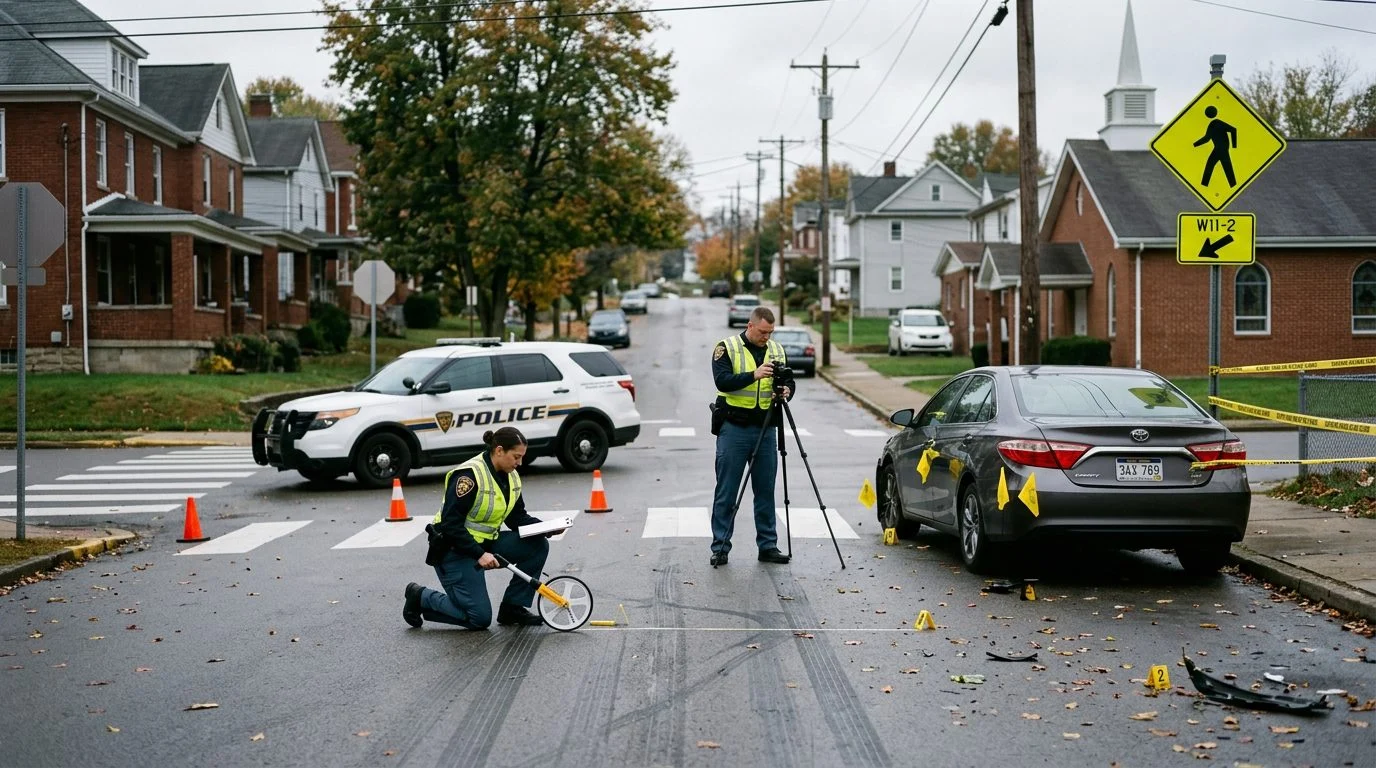
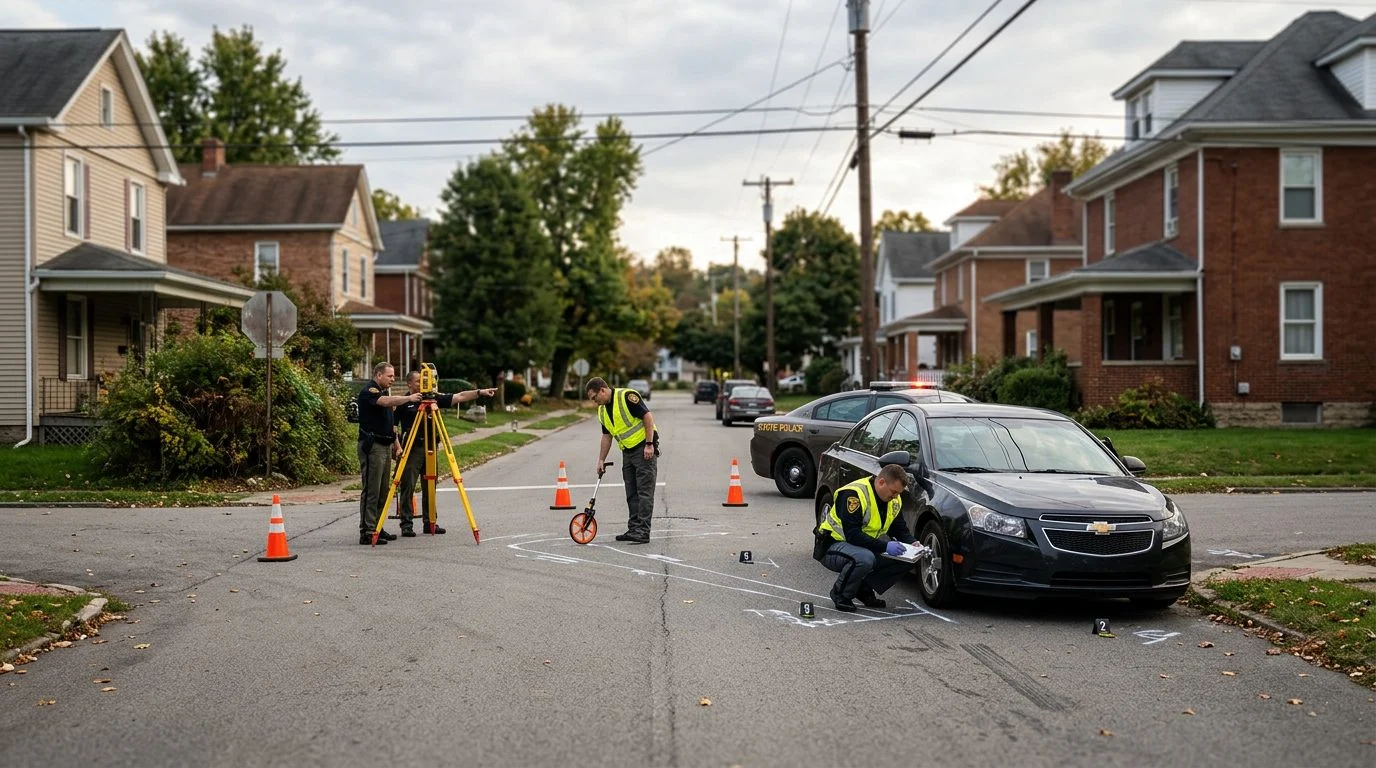
West Virginia requires an officer to prepare a crash report when a crash causes bodily injury or death, or total property damage of $1,000 or more. W. Va. Code § 17c-4-7 Witness names, photos, and insurance details from the scene can add early detail. Some insurers may dispute fault, so early records matter.
What damages families may pursue
West Virginia’s wrongful death statute names the kinds of damages a jury may consider.
- Sorrow, mental anguish, and solace, which can include companionship, guidance, and advice
- Income the person was reasonably expected to earn
- Compensation for reasonably expected loss of services, protection, care, and assistance provided by the decedent
- Care, treatment, and hospital costs tied to the injury that led to the death
- Reasonable funeral expenses
W. Va. Code § 55-7-6 lists these categories. The jury must also state funeral, hospital, and medical expenses separately in its verdict.
Which categories apply depends on the family and the evidence in that case. A general page cannot predict a dollar figure or a result. The value of any claim depends on its own facts.
Keep records of what the person earned and contributed, such as pay stubs and tax returns. Those records help show lost income and support. Effects of the brain injury before death must be shown through records, not assumed.
Time limits and the first steps that protect evidence
West Virginia generally allows two years to file a wrongful death action, and exceptions may apply. W. Va. Code § 55-7-6 says the action must be commenced within two years after the death, subject to other provisions of state law. W. Va. Code § 55-7-6 reads: “The provisions of this section shall not apply to actions brought for the death of any person occurring prior to July 1, 1988.” A missed deadline may end a claim, so timing matters early.
Early steps can help protect the claim and the evidence:
- Keep the crash report number and any copies you receive.
- Ask before selling or scrapping a vehicle, since it may hold evidence.
- Keep discharge papers, bills, and insurance letters.
- Write down names and phone numbers of witnesses.
- Start a dated timeline of the medical course, from the crash to the death.
Trucking companies must keep some records only for set periods. After those periods, a company may destroy them at its own discretion. Early written requests to preserve logs and other company records may matter. 49 C.F.R. § 379.3
A typical claim often moves through a free case review, record gathering, investigation, presenting the claim, negotiation, and a lawsuit if needed. Timelines vary from case to case.
How Big Bubba Injury Law handles these matters
Big Bubba Injury Law represents people seriously hurt in car and commercial truck crashes, people with catastrophic brain and spinal cord injuries, and families in wrongful death cases across West Virginia.
The firm handles car accidents, truck accidents, commercial vehicle accidents, catastrophic injuries, traumatic brain injury, spinal cord injury, and wrongful death.
We serve injury victims across all 55 West Virginia counties, including Charleston, Huntington, Morgantown, Wheeling, Parkersburg, Beckley, Clarksburg, Fairmont, Weirton, and Martinsburg.
The free case review is a confidential conversation. A family can describe what happened and ask questions about its options. It carries no obligation to continue.
Not sure what your next step is?
Talk it through with Big Bubba — the first case review is free, confidential, and carries no obligation.
Frequently asked questions
Here are short answers to questions families often ask.
Can a brain injury that leads to death be part of a wrongful death claim?
It may be, when medical records connect the crash to the death. That link is shown through records, not assumed.
Who files a wrongful death claim in West Virginia?
The decedent’s personal representative files it for the family members the statute covers. Who qualifies depends on the family.
How long do families have to act?
West Virginia generally allows two years, and exceptions may apply. Early action helps protect timing.
Does the police crash report matter?
It is an early record of how the crash happened. It can also help identify witnesses.
What changes when a commercial truck is involved?
Logs, maintenance files, and dispatch records may be relevant. Some may need to be requested quickly.
Caring for someone after a crash, and then losing them, leaves many families with questions they never expected to ask. If you want to describe what happened, you can request a free case review with Big Bubba Injury Law. Tell Big Bubba what happened, and take the next step at your own pace.