
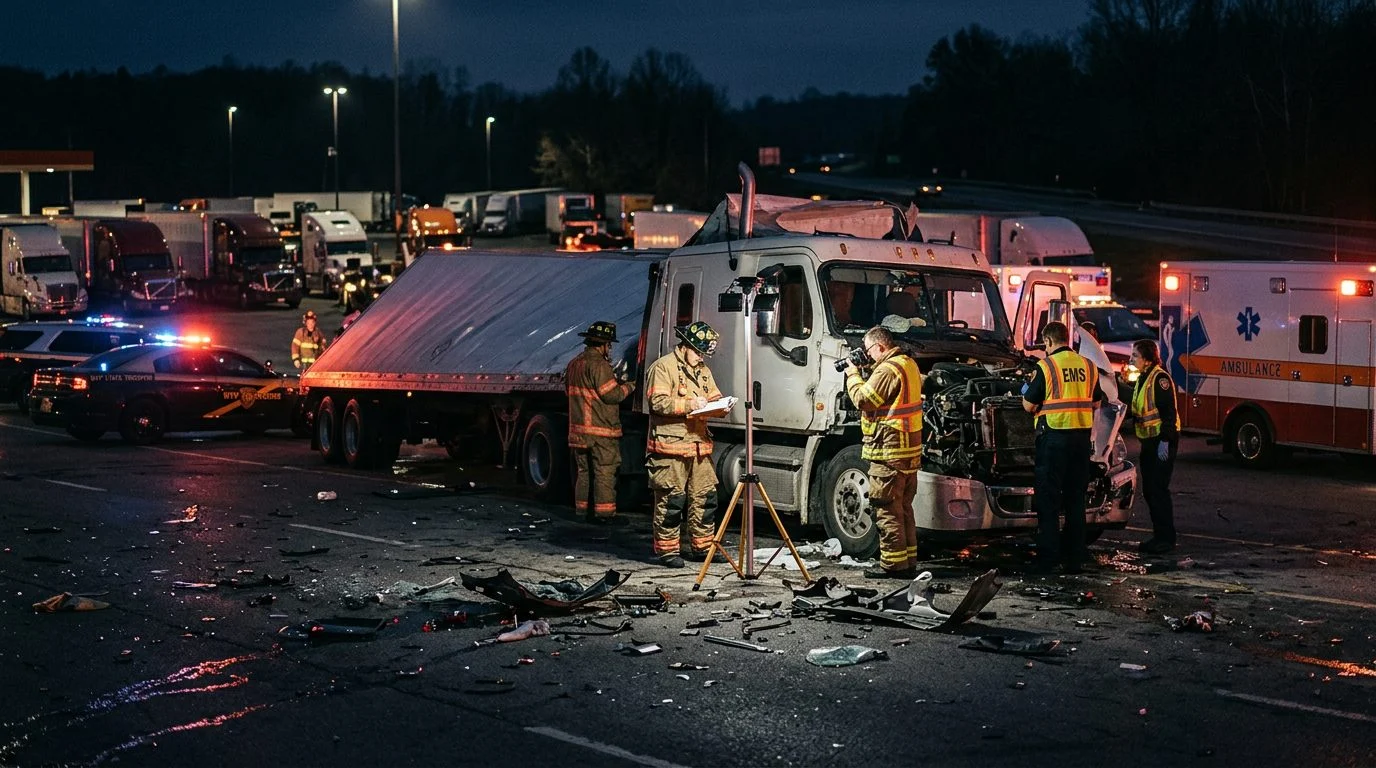
West Virginia Truck Crash Claims
Commercial Truck Crash Injury Claim Checklist for West Virginia
After a serious truck or commercial vehicle crash, the details you gather early can help. Use this checklist to organize what you have, then reach out to the firm to talk about your situation.
Published November 3, 2026
Who This Checklist Is For and What It Covers
This commercial truck crash injury claim checklist West Virginia residents can use helps you sort the facts after a crash. Each yes or no answer points to one next step.
It is written for injured people and for family members gathering information for someone else. Many people do this from a hospital bed, a recovery room, or the kitchen table while insurance calls keep coming.
The checklist covers six areas: whether a claim may be worth reviewing, the first days after the crash, evidence, medical records, wrongful death family questions, and deadlines with insurer contact. The firm handles car accidents, truck accidents, commercial vehicle accidents, catastrophic injuries, traumatic brain injury, spinal cord injury, and wrongful death. We serve injury victims across West Virginia.
A yes answer is not a prediction about how any claim will turn out. It only shows where to look next.
If a commercial truck left you or someone you love hurt, you do not have to sort out the paperwork alone. Tell us what happened and request a free case review. Talk it through with Big Bubba — the first case review is free, confidential, and carries no obligation.

Checklist: Is Your Claim Worth Reviewing?
Start here to see whether your crash may be worth a closer look. Answer each question yes or no.
Did a commercial truck or other commercial vehicle take part in the crash? Tractor-trailers, box trucks, and logging trucks are examples. The vehicle type often shows which companies and records may be involved.
Was anyone hurt, including a passenger, pedestrian, or driver of another vehicle? Injuries that seemed minor at first are still worth writing down.
Did someone die in the crash? Wrongful death claims are brought for the family under their own rules, covered below.
Did the crash happen in West Virginia? We serve injury victims in communities such as Charleston, Huntington, Morgantown, Wheeling, Martinsburg, Parkersburg, Beckley, Clarksburg, Fairmont, and Weirton. Local records and courts may matter.
What to do with your answers: If most answers are yes, work through the sections below. If you are unsure, bring what you have to your free case review.
Checklist: The First Days After the Crash
Basic facts are easiest to capture in the first days. Write them down while they are fresh.
Do you have the crash report number? The investigating agency’s report usually lists the parties, vehicles, and officer observations.
Were photos or video taken? Capture the scene, vehicles, road, weather, and any visible injuries. Conditions change quickly after a crash.
Do you have the names and insurance details for the driver, the trucking company, and any other drivers? A commercial truck may be insured or operated by a company other than the driver.
Did you write down witness names and phone numbers? Memories fade. Written notes help.
What to do with your answers: Keep everything in one folder, paper or digital. Bring it to your free case review.
Checklist: Evidence That May Matter in a Truck Crash Claim
Truck crash evidence often sits in company files that a family cannot see on its own. Some of those files are kept only for limited periods.
Do you know whether the driver’s hours were logged? Federal rules generally limit driving time. Under 49 C.F.R. § 395.3, a driver generally may drive a total of 11 hours during a 14-hour period that begins after 10 consecutive hours off duty. Logs can show whether those limits were followed.
Do you know whether the company kept maintenance, inspection, and driver files? Federal rules generally require driver qualification files to be kept while the driver works for the company and for three years after. 49 C.F.R. § 391.51 These files can show training and records relevant to a crash.
Did anyone send a preservation letter asking the trucking company to keep its records? A preservation letter asks the company to keep evidence that may be relevant. Timing matters, because records are not kept forever.
What to do with your answers: Ask about preservation letters at your free case review. Whether a given record matters depends on the facts.
Checklist: Medical Records and Injury Documentation
Medical records are often the clearest link between a crash and an injury. Start collecting them early.
Did you get medical care the same day or in the first few days? Early treatment records show when symptoms first appeared.
Did you describe every symptom to the doctor? Include headaches, dizziness, numbness, memory trouble, and neck or back pain, even if they seem small.
Do you have discharge papers, imaging results, prescriptions, and follow-up notes? Together, these show how treatment changed over time.
Has a doctor described a brain or spinal cord injury? Some symptoms may appear or change days or weeks after a crash. Keep records as they develop.
Did Medicare pay for any treatment? Whether Medicare paid for any treatment can be relevant in a truck accident claim, depending on the facts. Medicare recovery process
What to do with your answers: Keep a symptom and missed-work journal. Bring the records to your free case review.
Checklist: Wrongful Death and Family Considerations
West Virginia generally requires a wrongful death action to be brought by the personal representative of the person who died. W. Va. Code § 55-7-6 generally requires it to start within two years after the death, and exceptions may apply.
Did a family member die in the crash? The personal representative brings the claim for the family. The statute also sets how any damages are shared among survivors.
Do you have the death certificate, funeral bills, and records of lost income and household help? The statute lists categories such as lost income, services and care the decedent provided, and reasonable funeral expenses.
Does the family have the crash report, photos, and letters from the trucking company or insurer? The family may hold evidence the person who died could not gather.
Has anyone in the family spoken with an insurance adjuster? Statements made early may be used later. Ask questions before giving a recorded statement.
What to do with your answers: List the documents you have and the ones still missing. Bring the list to your free case review.
Not sure what your next step is?
Talk it through with Big Bubba — the first case review is free, confidential, and carries no obligation.
Checklist: Deadlines and Insurance Contact
Deadlines are one of the most important items on this list. For personal injury, West Virginia generally allows two years to file under W. Va. Code § 55-2-12, and exceptions may apply.
Do you know the crash date and the key deadline? Write both dates at the front of your folder.
Have you received calls or letters from an insurer or trucking company? Some insurers may dispute a claim or ask for statements and records. Keep notes of each contact.
West Virginia law generally requires that a personal injury action for which no other limitation is prescribed be brought within two years next after the right to bring the same shall have accrued, as set out in W. Va. Code § 55-2-12, and exceptions may apply.
What to do with your answers: Log every call and letter with dates and names. Avoid signing anything before it has been reviewed, and bring those notes to your free case review.
What Happens After You Reach Out
Contacting the firm starts the free case review, which is confidential and carries no obligation to continue.
- Share your basics. Give the firm the crash date, the vehicles involved, and where the crash happened.
- Bring your folder. Include the crash report number, medical records you have, insurer contacts, and your deadline dates. Missing items are common and can be discussed.
- Talk through the facts. Discuss the injuries, the questions you have, and how the claim process may apply to your situation.
- Decide at your own pace. No step is required. The firm does not promise any result.
Frequently Asked Questions
Do I need to know who was at fault before I reach out?
No. Bring the facts you have. If another driver was at fault, that driver’s insurer may be involved too.
Can I use this checklist if I am gathering information for a family member?
Yes. Family members often gather records for someone who is hospitalized or recovering.
What if I don’t have every document on the list?
Bring what you have. Missing records can often be requested, and the firm can explain which ones may matter.
Does the crash need to involve a truck?
No. The firm also handles car accidents and commercial vehicle accidents. Describe the vehicles involved when you reach out.

Understanding Your Next Steps
If you are still sorting out what happened, you do not have to organize every detail alone. A crash with a commercial truck can bring hospital visits, missed work, and insurance calls while you are still trying to understand the facts. When you are ready, tell us what happened and request a free case review through our contact page.