
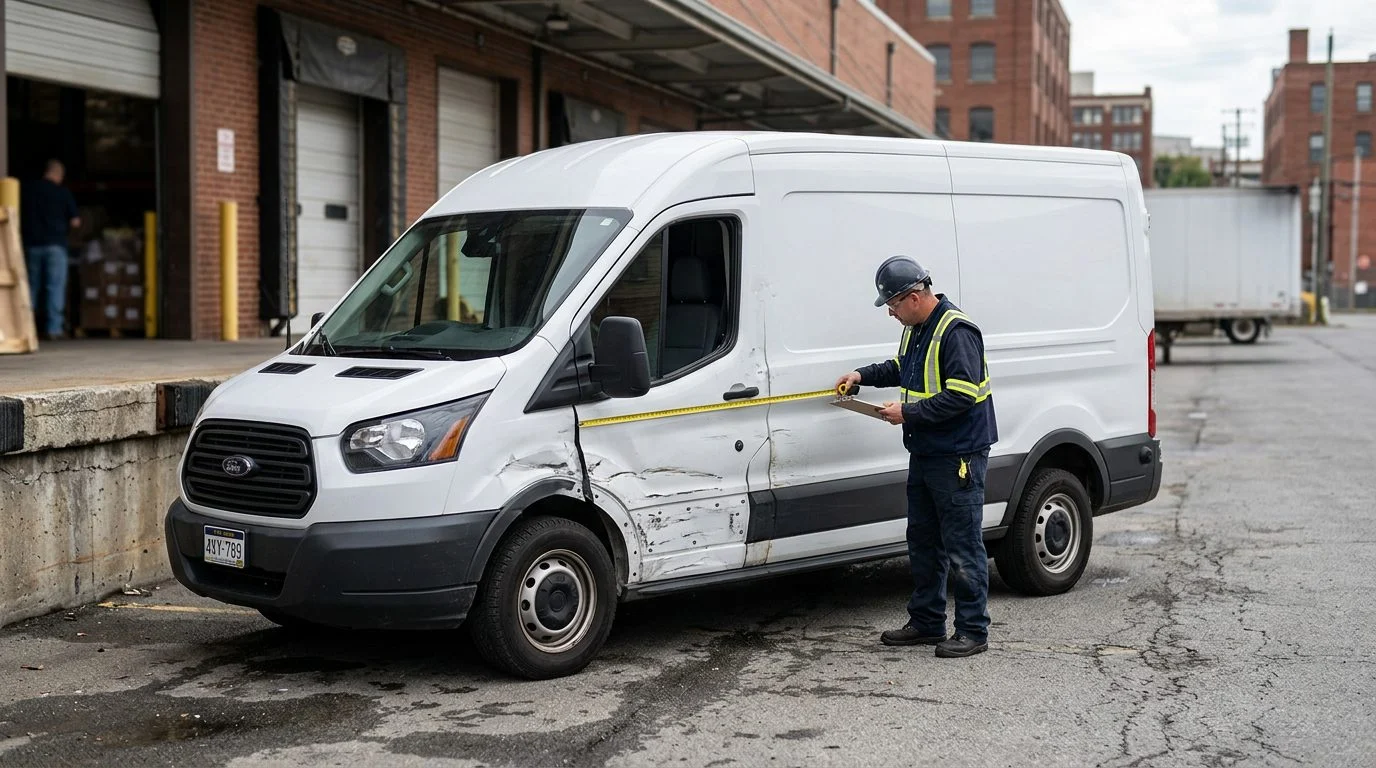
Commercial vehicle accidents | West Virginia
Start With a Clear Checklist
Published November 10, 2026
A company van crash can hurt someone and put your business under pressure fast. The first steps you take matter most.
In short, make sure everyone is safe, keep the vehicle and records intact, and notify your insurer promptly. If your company van is involved in a crash in West Virginia, it helps to know what to do next, and the steps below go through them in order. Work through each yes or no test, then follow the action listed for your answer. These steps are general information about common practice.
Who This Checklist Is For and What It Covers
This checklist is for employers whose company van, work pickup or commercial vehicle was in a crash that injured someone. The injured person may be the driver, another motorist or a pedestrian.
The main focus is the third-party claim. That is a claim an injured person may bring against an at-fault driver or company.
The checklist has four parts: the first 24 hours, the records to keep, who to notify, and what the company may and may not do. Each part opens with a short answer, followed by yes or no tests.
Each yes or no test has a result. A yes means the step is covered. A no tells you what to do next.
Talk it through with Big Bubba — the first case review is free, confidential, and carries no obligation.
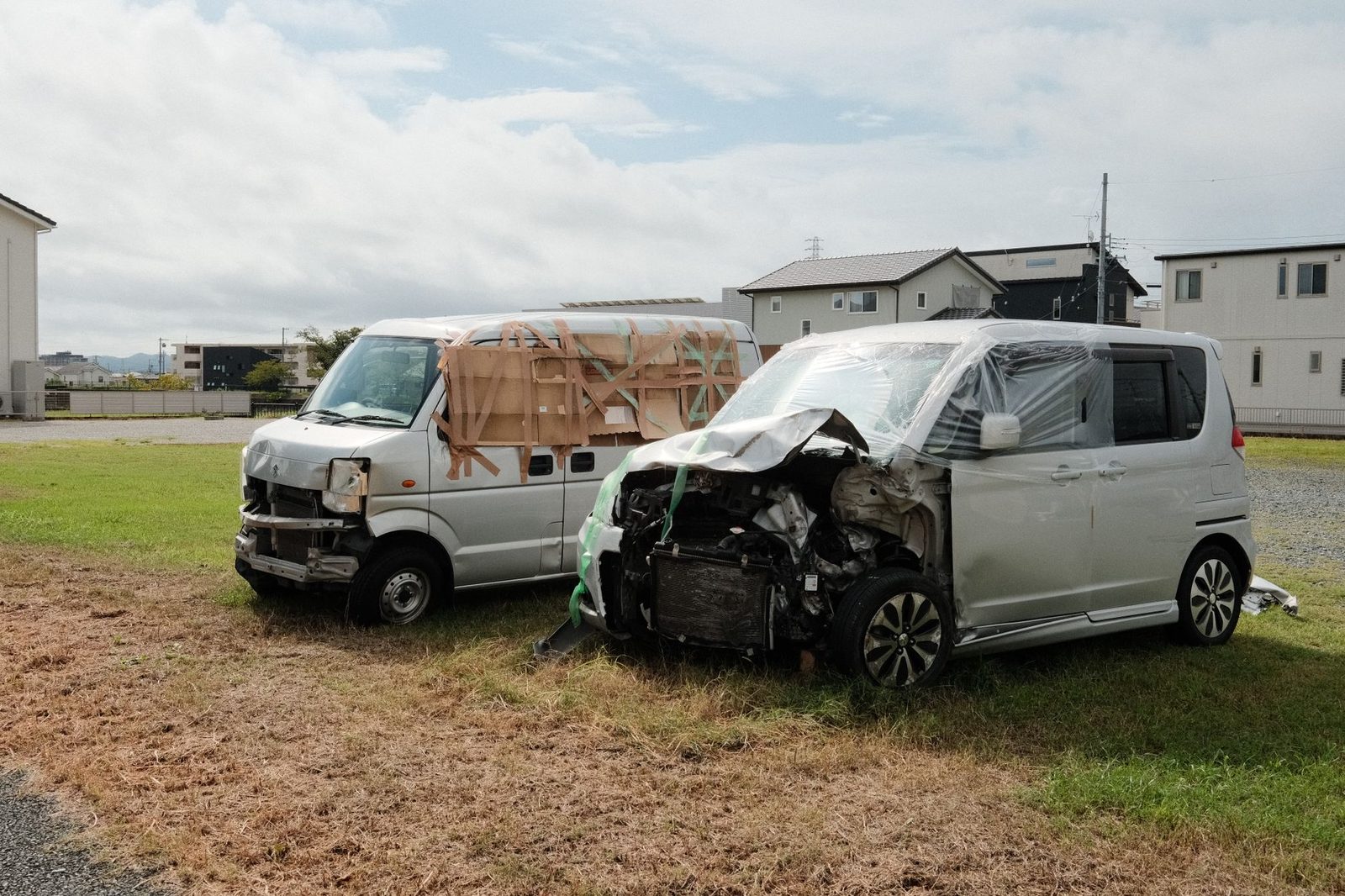
First 24 Hours: Scene and Immediate Steps
The first day is about safety, facts and fast notice. Work through these tests in order.
- Did someone call 911 and check everyone for injuries? If not, call for medical help now. Care for people comes before any paperwork.
- Did the driver get the other driver’s name, insurance details, plate number and any witness names? If not, write down what the driver still recalls while it is fresh.
- Were photos taken of both vehicles, the scene, skid marks, traffic signals and road conditions? If not, ask any witness who offered photos to send them to the company.
- Has someone requested the police crash report? If not, ask the reporting agency directly how to request a copy.
- Result: If any answer is no, list what is missing and add it to the records list in the next section.
Records to Preserve Before Anything Is Overwritten
Keep the vehicle, its data and the trip records unchanged until the crash facts are documented. Losing or destroying crash evidence can hurt a company’s position in a lawsuit.
- Is the vehicle still unrepaired and unsold? Do not repair, sell, salvage or clean it out until the facts are documented and any inspection is complete.
- Do you have GPS, telematics or dash camera data from the trip? Some systems overwrite on a set schedule, so export that data now.
- Do you have dispatch, route and hours records for the driver that day? Federal duty-status rules require a motor carrier subject to these rules, other than a private motor carrier of passengers (nonbusiness), to require each driver it uses to record the driver’s duty status for each 24-hour period.
- Is the driver qualification file complete? A motor carrier must keep it while the driver is employed and for three years after, under federal driver file rules.
- Do you have periodic inspection reports for the vehicle? Federal inspection rules require these reports to be kept for fourteen months from the inspection date.
- Do you have company phone and messaging records for the trip window? Save them as they exist now.
- Result: Records may be preserved by any technology that accurately reflects all of the information in the record, as long as they remain accessible in a form that can be accurately reproduced later, under federal records-preservation rules.
Who to Notify and in What Order
Notify your own insurer first, promptly, then the driver and your broker. Early notice gives your carrier time to respond.
- Your commercial auto or liability insurer: Notify promptly, as your policy requires, with the facts you have confirmed. Some insurers may dispute a claim.
- The driver: Tell the driver to route all outside contact to the company and the insurer.
- Your broker or agent: They can answer coverage questions early, before the claim grows.
- Before giving any written account beyond the insurer notice: Injured people may wish to reach out to the firm first.
- Result: Keep a dated log of every notice, who received it and how it was sent.
What Employers May and May Not Do After a Crash
You may cooperate with your insurer and share records, but you may not change them. Keep your conduct limited to confirmed facts.
- You may cooperate with your insurer and provide records when asked.
- You may keep staff informed, using confirmed facts only.
- You may not destroy, alter, backfill or selectively edit logs, data or maintenance records once a claim is likely.
- You should not give a written opinion on fault until the facts are gathered.
- Route conversations with the injured person or their family about fault or money through your insurer or counsel.
- Early contact limit: For twenty days after a personal injury, while the injured person is an inpatient or partially or totally unable to engage in his or her usual trade, profession or occupation, no person may negotiate or attempt to negotiate a settlement, obtain or attempt to obtain a partial or general release of liability, or obtain or attempt to obtain a statement for use in negotiating a settlement or release. The exception applies only to obtaining a statement from the injured person: a person acting for the injured person may obtain a statement, oral or written, upon the injured person’s express request, under West Virginia’s settlement timing statute.
How a Third-Party Claim Usually Moves Forward
A third-party claim usually moves from notice to evidence, insurer review, negotiation and, if needed, a lawsuit.
- Notice: The injured person or their representative notifies the at-fault party and insurers.
- Evidence: Crash reports, photos, records and witness statements are gathered.
- Insurer review: The carrier reviews liability and the injuries before responding.
- Demand and talks: A written demand may be followed by back-and-forth discussion.
- Lawsuit: If the claim does not resolve, a suit may be filed. Timing depends on the facts and the injuries involved.
West Virginia generally allows two years to file a personal injury lawsuit, and exceptions may apply. Timing should be reviewed early, as West Virginia’s limitation statute explains.
Under West Virginia’s comparative fault rules, an injured person’s own share of fault does not bar recovery unless it is greater than the combined fault of all other persons responsible; if it is less, recovery is reduced in proportion to the injured person’s degree of fault.
Not sure what your next step is?
Talk it through with Big Bubba — the first case review is free, confidential, and carries no obligation.
Common Questions From Employers
These are questions employers often ask after a company vehicle crash.
Does a company van crash automatically make the company liable?
Liability generally turns on who was at fault and on the relationship between the driver and the company. The answer depends on the facts.
Should we wait for the other driver’s insurer to contact us?
No. Notify your own insurer promptly, because some insurers may dispute a claim.
Can we give the injured person a copy of the vehicle data?
Route that request through your insurer or counsel so records are produced in an orderly way.
What if the driver was a contractor?
Control of the driver, ownership of the vehicle and the insurance terms can all matter. Review them for your specific crash.

Request a Free Case Review After a Company Vehicle Crash
If you were hurt in a crash involving a company van or work truck, you can request a free case review to talk through your next steps. We serve West Virginia injury victims and handle claims that arise from commercial vehicle crashes.
If you are deciding your next steps after a crash, request a free case review with the firm. The review is confidential and carries no obligation to continue.