
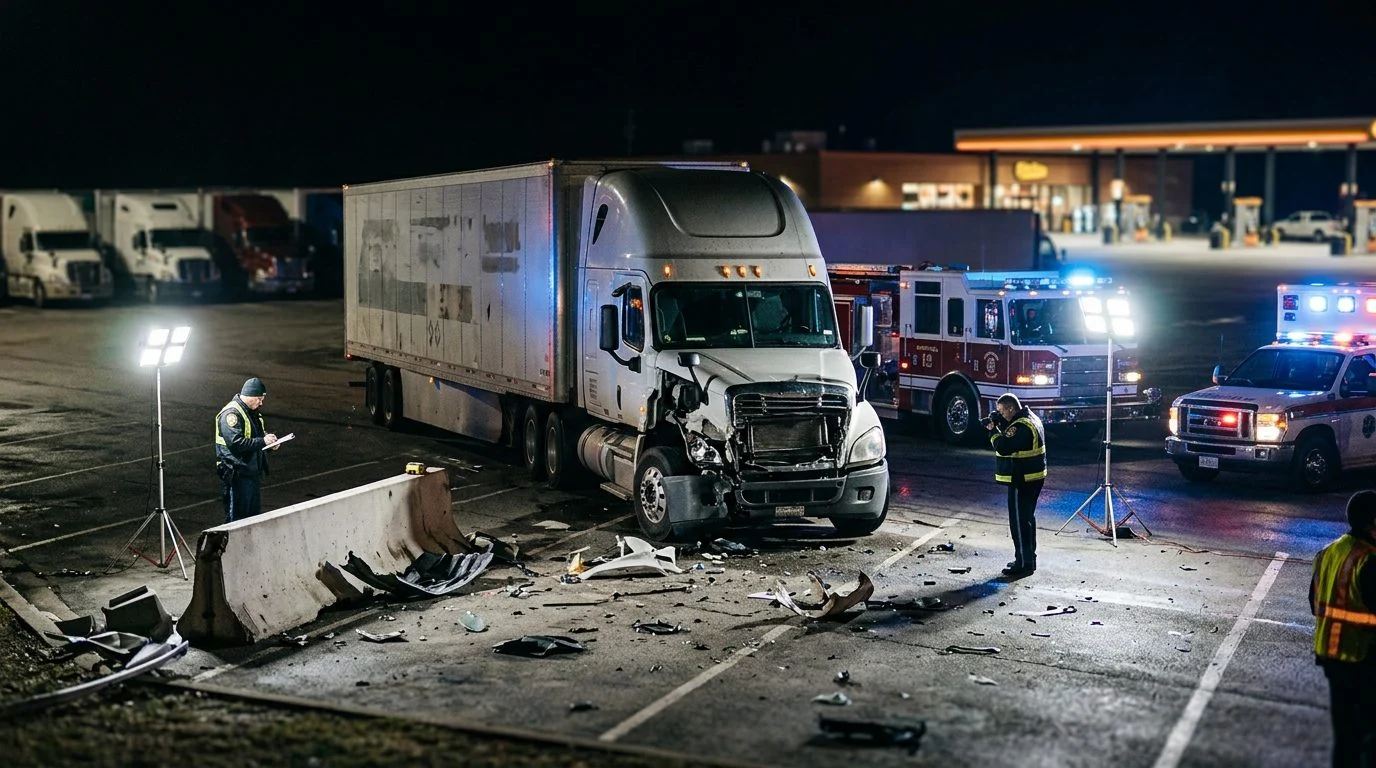
Truck Accidents | West Virginia
Who Pays After a Truck Crash in West Virginia?
A truck crash can involve the driver, the trucking company, and insurers. Learn what questions come up and how the firm can help you understand your options.
Published November 5, 2026
Do truck drivers pay for damages? Sometimes they do, and sometimes the trucking company pays too. The answer depends on who was at fault, who employed the driver, and who owned the truck. This guide explains the general rules in West Virginia.
Short answer: who pays when a truck driver causes a crash
A truck driver may be personally responsible for the harm he or she causes. The trucking company may also be responsible, especially when the driver was doing the company’s work.
Fault decides who pays. Investigators and courts look at speed, following distance, compliance with driving rules, vehicle maintenance, and how the load was secured. Most claims are resolved through insurance. Some go to court.
Fault can also be shared. West Virginia uses comparative fault, which divides responsibility by percentage among everyone who contributed to the harm, including nonparties § 55-7-13a. A driver, a company, and another motorist may each carry a share.
Think of this page as a plain-language map of the general rules. It is not a forecast for any single crash.
If a company truck hit you or took someone you love, you may have a claim, and we can review the crash facts with you in a free case review. Talk it through with Big Bubba — the first case review is free, confidential, and carries no obligation.

Driver liability versus company liability
A driver who negligently causes a crash can be held liable for the injuries and property damage he or she caused.
The company’s role is a separate question. When a driver is acting within the scope of the job, West Virginia courts may hold the employer answerable for that negligence.
Employment status matters. So do the driver’s role and whether he or she was on company business at the time. Each can change who is liable.
State law also defines an “employer defendant” in commercial truck cases. The term can cover the truck’s owner, the driver’s employer, and anyone who controls the truck or driver § 55-7-32. For some crashes, the law caps noneconomic damages, such as pain and suffering, against those defendants. The cap does not apply in every case. The statute lists exceptions, including certain impaired-driving, hours-of-service, and willful-disregard situations. It also makes the cap unavailable to an employer defendant that does not have commercial motor vehicle insurance in the aggregate amount of at least $3 million for each occurrence covering the personal injury that is the subject of the action. The statute took effect on July 1, 2024, and applies only to claims arising after that date.
Federal rules add duties. A motor carrier must require its drivers to follow federal driver rules 49 C.F.R. § 390.11. Commercial trucks must follow state law and any stricter federal safety standard 49 C.F.R. § 392.2. Federal hours-of-service rules are separate from 49 C.F.R. § 392.2, which requires that every commercial motor vehicle be operated in accordance with the laws, ordinances, and regulations of the jurisdiction where it is operated. Evidence of a violation may matter in a claim.
Can you sue the trucking company if its truck hits you?
Often, an injured person can bring a claim against both the driver and the trucking company. The company’s commercial insurance is often part of the claim. Which parties are proper defendants can turn on who employed the driver, who owned the truck, and who leased it.
Gather this information early:
- The carrier name and USDOT number, often painted on the truck’s doors or rear
- The driver’s name, license number, and employer details
- The insurance information the driver or company provides
- The police crash report, which records the parties and the scene
- Names and contact details for witnesses
West Virginia generally allows two years to file a personal injury lawsuit, and exceptions may apply § 55-2-12. Don’t wait to collect these details.
Can a company make a driver pay for damage to the truck?
A company may have policies about damage to its truck.
Damage to the company’s own truck is an employment and insurance question. Harm a driver causes to other people or their property is a liability question. These two issues are separate, and they can have different answers.
Many commercial trucks carry physical damage coverage for the truck itself. The policy terms decide how damage to the company’s own truck is paid. A driver who receives a deduction notice should keep a copy. Write down the date, the amount, and the reason given. Read any repayment agreement before signing it.
What an injury or wrongful death claim can cover
An injury claim may seek compensation for losses the crash caused. A wrongful death claim may seek losses a family suffers after a loved one dies.
Injury claims may include:
- Bills for treatment and recovery that may follow a serious crash
- Missed paychecks, or limits on the jobs a person may be able to do afterward
- Damage to the vehicle and other property
- The physical and emotional toll an injury may take on daily routines
Catastrophic injuries, such as traumatic brain injury and spinal cord injury, often require long-term care. Their effects may be evaluated over time, not all at once. Early medical records matter for that reason.
Under West Virginia law, a wrongful death claim must be brought by the personal representative of the deceased person’s estate § 55-7-6. West Virginia generally requires that it start within two years after the death, and exceptions may apply. The jury’s verdict must include damages for sorrow, mental anguish, and solace. The jury’s verdict must also include, but is not limited to, damages for reasonably expected loss of income and services, expenses for the decedent’s care, treatment and hospitalization, and reasonable funeral expenses § 55-7-6.
What to do after a truck crash and how the firm can help
Get medical care first, and keep every record. Then protect the evidence and your timeline.
- Get medical care for every symptom, even minor ones.
- Ask for the police crash report.
- Photograph the scene, the vehicles, and visible injuries.
- Write down witness names and contact details.
- Keep a written timeline and records of lost work time.
Insurers may contact you soon after a truck crash. Some insurers may dispute a claim.
We handle car accident claims, truck and commercial vehicle accident claims, catastrophic injury claims, traumatic brain injury and spinal cord injury claims, and wrongful death cases. We serve families and injured people across West Virginia, including Charleston, Huntington, and Morgantown.
Our free case review is confidential, and there is no obligation to go forward. We review the crash facts and your injuries with you, and you decide what comes next.
Not sure what your next step is?
Talk it through with Big Bubba — the first case review is free, confidential, and carries no obligation.
Frequently asked questions
Do truck drivers pay for damages?
A driver who negligently causes a crash may be personally liable. The trucking company may be liable too, when the driver was working within the scope of the job.
Does the trucking company pay if its driver caused the crash?
It may. West Virginia can hold an employer answerable for an employee’s negligent acts done on the job.
Read any deduction notice and ask what rule supports it.
What should I bring to a free case review?
Bring the crash report, photos, medical records, insurance letters, and a written timeline of the crash and your treatment.
If a truck crash left you hurt or took someone you love, tell Big Bubba what happened. You can request a free case review today.