
Truck Accident Documentation | West Virginia
How to Document a Truck Accident in West Virginia
Collecting the right evidence at the scene protects your claim and strengthens your case.
Published October 01, 2026
How to Document a Truck Accident in West Virginia: A Step-by-Step Guide
Thorough documentation of a truck accident scene creates a permanent record of what happened before details fade, memories shift, or evidence is lost. Photographs, witness statements, and written accounts collected at the scene become the foundation of your insurance claim and any legal action—and they’re often the difference between a fair outcome and a disputed one.
This guide walks you through exactly what to document, how to collect it safely, and why it matters for protecting your interests after a serious truck crash in West Virginia.
Not sure what your next step is?
Talk it through with our team — the first case review is free, confidential, and carries no obligation.
Why Documenting a Truck Accident Scene Matters
Documentation preserves the facts as they existed at the moment of impact, before anyone’s memory fades or details change. Insurance companies and legal proceedings rely on contemporaneous evidence—information recorded at the scene or immediately after—because it’s more reliable than recollections made weeks or months later. When liability is disputed, photos, witness statements, and your own written account become the evidence that either supports or undermines your claim. Thorough documentation also protects you from being blamed for details you didn’t witness or from having your account contradicted by the truck driver’s version of events.
What to Do Immediately After a Truck Accident
Your safety and medical care come first—everything else follows.
Check for injuries and call 911 immediately if anyone is hurt. Do not delay emergency care to take photographs or collect information. Once emergency responders are on the way, move yourself and your passengers to a safe location if it’s safe to do so. Turn on your hazard lights and, if you have them, set up warning triangles or flares to alert oncoming traffic.
Do not admit fault or apologize for the accident. Even a casual “I’m sorry” or “I didn’t see you” can be interpreted as an admission of liability. Stick to the facts: what you were doing, what you saw the truck do, and what happened. Be polite but don’t explain or speculate about why the accident occurred.
Exchange information with the truck driver and any other drivers involved. Get their names, phone numbers, and addresses before you leave the scene.
Information to Collect from the Truck Driver and Other Parties
Write down or photograph the following details from the truck driver and any other vehicles involved:
- Full name, phone number, and address
- Driver’s license number and state of issue
- Trucking company name and contact information
- Commercial vehicle license plate and Vehicle Identification Number (VIN)
- Insurance company name and policy number
- USDOT number (a unique identifier for the trucking company, visible on the truck’s door or side)
- A brief description of what the driver says happened
The USDOT number is especially important in truck accident cases because it allows investigators to look up the carrier’s safety record, maintenance history, and regulatory compliance. Don’t skip it.
Photographing and Recording the Accident Scene
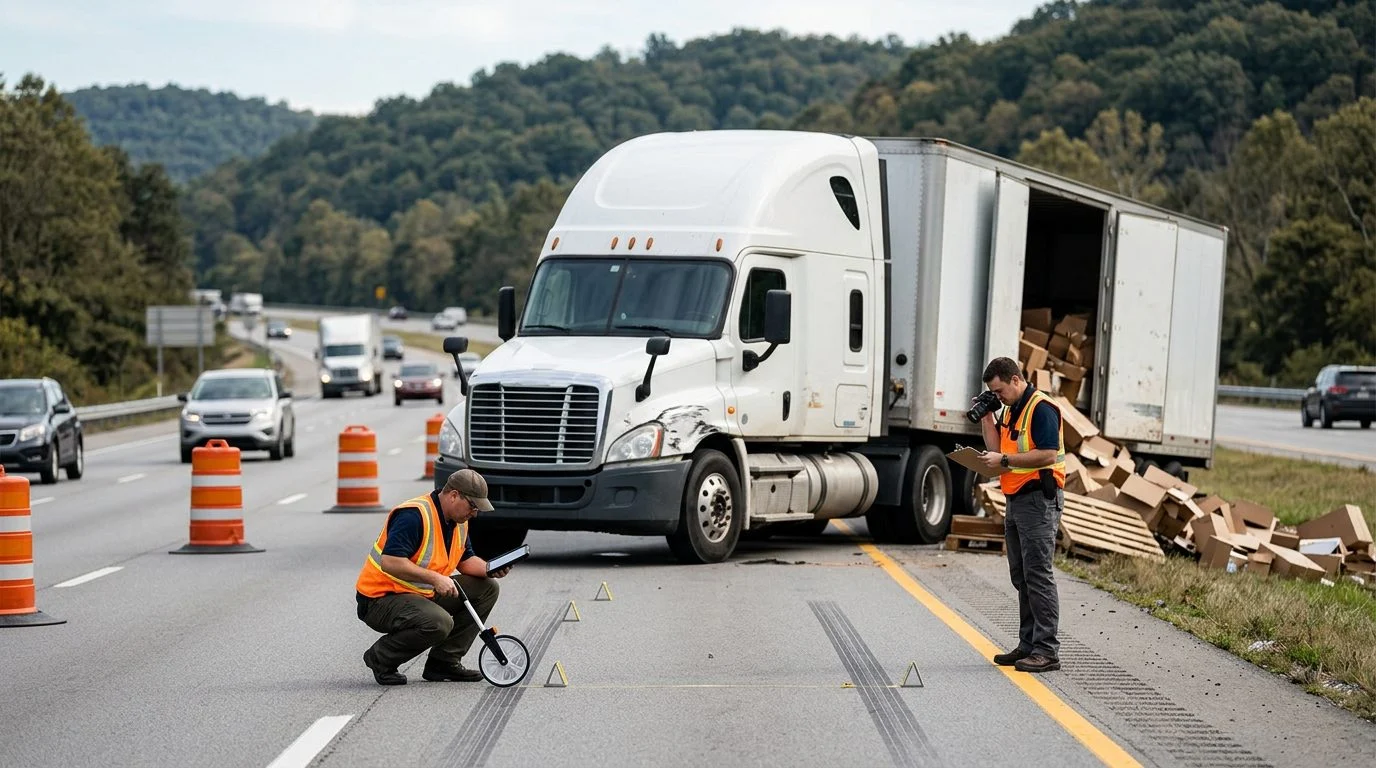
Take as many photos as you safely can. Photograph all vehicle damage from multiple angles, including close-ups of impact points. Document the truck’s cargo area, load, and any spilled materials. Capture road conditions, weather, traffic signals, lane markings, and the final resting positions of all vehicles. Take wide-angle shots showing the overall scene and how vehicles are positioned relative to each other.
If you have visible injuries, photograph them—but do not delay or avoid medical care to do so. Photograph injuries again over the next few days as bruising and swelling develop; these progression photos are valuable evidence. Record the time, date, and location with each photo or in your notes. If it’s safe and appropriate, take a short video walking around the scene to establish context and show the relationship between vehicles and the surrounding area.
Collecting Witness Information
Ask anyone who saw the accident to stay and provide their account. Get each witness’s full name, phone number, and address. Ask them to briefly describe what they saw and heard, and note where they were standing when the accident occurred. Ask if they’re willing to speak with insurance or legal representatives later. Do not coach or lead witnesses—let them describe events in their own words without suggestion or correction.
Have questions about what happened?
Ask our team directly. The first conversation is free, confidential, and there is no obligation to continue.
Writing Down Your Own Account of the Accident
Write a detailed description of what happened as soon as possible while details are fresh. Include the sequence of events, the time and date, the location, and weather conditions. Describe what you were doing immediately before the accident. Explain how the accident occurred and what you saw the truck doing—was it speeding, changing lanes without signaling, following too closely, or braking suddenly? Document any injuries you or your passengers sustained and when you first noticed them.
Write down the truck driver’s behavior, statements, or apparent condition. Did they seem alert? Were they eating, using a phone, or distracted? Note any unusual cargo, truck condition, or maintenance issues you observed. This account is your contemporaneous record and becomes part of your case file.
Documenting Medical Care and Injuries
Keep all medical records, emergency room reports, and doctor’s notes. Photograph visible injuries over the following days as they develop. Document all medical appointments, treatments, and prescribed medications. Keep receipts for medical expenses, transportation to appointments, and any equipment purchased (braces, pillows, ice packs, etc.). Note how injuries affect your daily activities, work, and quality of life. Obtain copies of diagnostic imaging (X-rays, MRI, CT scans) and test results.
Injuries from truck accidents can be severe and may not be immediately apparent. The National Institute of Neurological Disorders and Stroke identifies traumatic brain injury as a potential outcome of serious vehicle crashes, with symptoms that may develop or worsen over days or weeks. Truck accidents can also cause serious spinal cord injuries. Thorough medical documentation protects you if your injuries prove more serious than initially apparent.
Preserving Physical Evidence
Do not repair your vehicle immediately. Insurance adjusters and attorneys may need to inspect it to evaluate the damage and understand how the accident occurred. Keep all damaged clothing, personal items, and equipment from the accident. Preserve any medical devices, medications, or supplies damaged in the crash. If the truck was carrying commercial cargo, document what it was and how it was loaded. Keep bills of lading or shipping documents if available. Do not discard or alter any evidence, even if it seems minor or insignificant.
What Not to Do: Protecting Your Documentation
Do not post about the accident on social media. Statements, photos, or comments can be used against you by the insurance company or the truck driver’s attorney. Anything you write is discoverable—meaning it can be requested and used in legal proceedings.
Do not discuss fault or liability with anyone except your attorney. Conversations with the truck driver, witnesses, or insurance adjusters can be misinterpreted or used to undermine your claim.
Do not sign anything other than a police report without legal advice. Insurance companies may ask you to sign releases or settlement agreements before you understand the full extent of your injuries.
Do not communicate with the truck driver’s insurance company without representation. Adjusters are trained to minimize claims. Let an attorney handle those conversations on your behalf.
Do not delete text messages, emails, or photos related to the accident. These are evidence and deleting them can harm your case.
Do not accept a settlement offer without understanding the full extent of your injuries. Some injuries develop over time, and accepting an early settlement may leave you without compensation for ongoing treatment.
Obtaining the Official Accident Report
Request a copy of the police accident report from the West Virginia State Police or the local law enforcement agency that responded to the scene. The report will include the officer’s observations, measurements, and preliminary findings about how the accident occurred. Note the report number and the responding officer’s name and badge number. Review the report for accuracy and contact the officer if information is incorrect or incomplete. Keep the report with your other documentation.
When to Reach Out for Legal Guidance
If the truck accident resulted in serious injury, hospitalization, or ongoing medical treatment, legal guidance early in the process can help preserve evidence and protect your rights. If liability is unclear or the truck driver disputes what happened, an attorney can investigate and gather evidence before it’s lost. If the insurance company delays, denies, or offers an inadequate settlement, legal representation can advocate for you. If multiple parties are involved or the truck was carrying hazardous materials, the case may be complex and require in-depth knowledge of Federal Motor Carrier Safety Regulations and commercial vehicle liability.
Want to know where you stand?
Tell us what happened and our team will walk you through the options available to you, at no cost.
Frequently Asked Questions
What information is most important to collect at a truck accident scene?
The truck driver’s name, phone number, USDOT number, insurance information, and the trucking company’s contact details are essential. Photographs of vehicle damage, the scene, and road conditions are equally critical.
How long do I have to file a claim after a truck accident in West Virginia?
West Virginia law sets strict deadlines for injury claims, so contact an attorney promptly to understand your timeline and protect your rights.
Should I talk to the insurance company before consulting an attorney?
It’s best to consult an attorney first. Insurance adjusters are trained to minimize payouts, and anything you say can be used against you.
What if I can’t remember all the details of the accident?
That’s why contemporaneous documentation matters. Your photos, witness statements, and written account recorded at the scene preserve details your memory alone cannot.
Can I recover damages if I was partially at fault for the truck accident?
West Virginia recognizes comparative fault (shared responsibility) (W. Va. Code § 55-7-13c). An attorney can evaluate your case and explain how fault affects your potential recovery.
If you’ve been in a serious truck accident in West Virginia and you’re unsure what happens next with your documentation or your claim, the team at Bubba’s firm can review what happened and walk you through your options. You can reach out to discuss your case—there’s no obligation, and understanding your rights early makes a real difference.
What to Document at the Scene
Driver & Vehicle Information
Get the truck driver's name, phone number, address, and driver's license number. Record the trucking company name and contact details. Note the USDOT number (visible on the truck's door) and the commercial vehicle's license plate, make, model, and VIN.
Insurance & Liability Details
Collect the truck driver's insurance company name, policy number, and agent contact information. Ask for the name and phone number of the trucking company's dispatcher or safety manager. Take photos of all insurance cards and documents.
Scene & Damage Photos
Photograph the overall accident scene from multiple angles. Document all vehicle damage, road conditions, weather, traffic signals, and lane markings. Include close-ups of the truck's cargo area, brakes, tires, and any visible defects. Capture skid marks, debris, and the final resting positions of both vehicles.
Witness Information
Record names, phone numbers, and addresses of anyone who saw the accident. Ask each witness for a brief account of what they observed. If possible, take photos or video of witnesses willing to provide statements.
Do Not Delay—Preserve Evidence Now
Truck accident scenes change quickly. Evidence disappears, memories fade, and the trucking company may move or repair the vehicle. The sooner you document everything, the stronger your record becomes. If you are injured, seek medical attention first—then contact Big Bubba as soon as you can.
Additional Documentation Steps
Medical Records & Treatment
Seek immediate medical evaluation, even if you feel fine. Injuries from truck accidents can develop over hours or days. Keep all medical records, test results, prescriptions, and bills. Document any ongoing pain, limitations, or symptoms in a journal with dates.
Police Report & Official Records
Request a copy of the official accident report filed by law enforcement. Note the report number and the officer's name and badge number. Obtain records from the trucking company's logbook, maintenance records, and the driver's hours-of-service logs—your attorney can request these through discovery.
Communications & Correspondence
Save all text messages, emails, and voicemails related to the accident. Do not post about the accident on social media. Write down your own account of the accident while details are fresh, including the time, weather, road conditions, and what you remember about the truck's behavior before impact.
Vehicle & Property Damage
Photograph your vehicle before it is repaired or towed. Keep repair estimates and invoices. If personal property was damaged or lost, document it with photos and receipts. Preserve your vehicle if possible—it is evidence.
Why Documentation Matters in Truck Accident Cases
Protects Your Rights
Thorough documentation creates an independent record of what happened, separate from the trucking company's account or insurance adjuster's version.
Supports Your Claim
Photos, witness statements, and scene details provide concrete evidence of fault, impact, and the severity of the accident.
Reveals Violations
Documentation can uncover safety violations, equipment failures, driver fatigue, or maintenance neglect—factors that strengthen your case.
Prevents Evidence Loss
Scenes are cleaned, vehicles are repaired, and memories fade. Early documentation preserves evidence that may disappear forever.
Injured? Let Big Bubba Handle the Rest
You should focus on recovery, not investigation. Big Bubba can identify the evidence that matters in your West Virginia truck accident case and work to obtain it. We handle the documentation, investigation, and negotiation—so you don't have to.
Ready to Protect Your Case?
Related practice areas
- Traumatic Brain Injury After Car & Truck Accidents in WV