
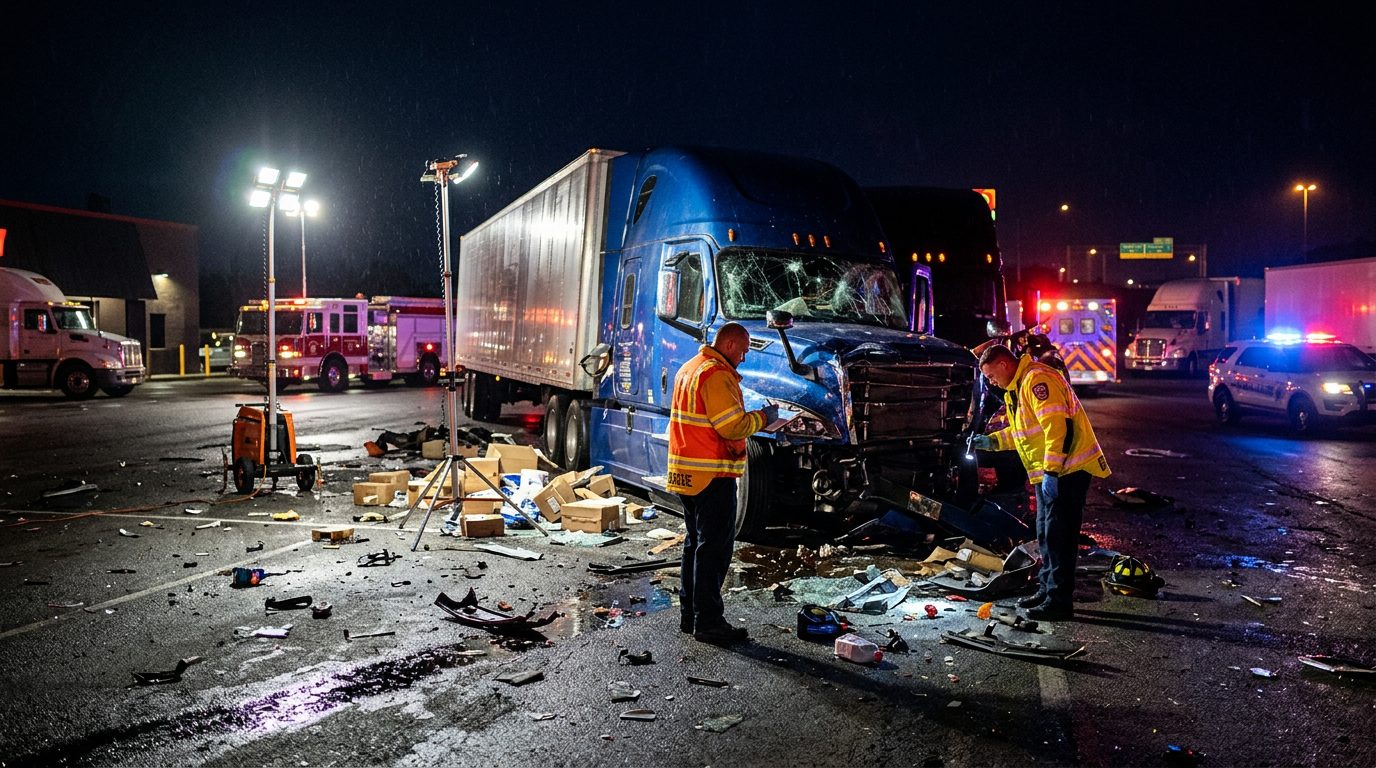
Truck Crash Injuries | West Virginia
Hurt in a Truck Crash? Get Checked at the ER, Then Talk to Us
Big Bubba Injury Law represents people seriously hurt in car and commercial truck crashes, along with families in wrongful death cases. We serve Charleston, Huntington, Morgantown, Wheeling, Martinsburg, Parkersburg, Beckley, Clarksburg, Fairmont and Weirton.
Published October 30, 2026
What emergency room care after a truck crash covers, and who it is for
An emergency room visit after truck crash West Virginia drivers and passengers face is usually the first step in finding out how hurt they are. Emergency teams sort patients by how urgent their injuries are. Then they check breathing, heart rate, and blood pressure.
After that, the care team may order X-rays or CT scans, run lab tests, clean and close wounds, and watch for changes over time. Some patients go home the same day. Others are admitted or moved to a higher level of care.
Truck crashes often cause injuries that don’t show right away. Commercial trucks are much heavier than passenger vehicles, so impact forces can be severe. Head injuries, internal bleeding, and neck or back damage can hide behind a patient who seems alert. The emergency visit is where those problems get checked.
This page is for two groups. The first is the injured driver or passenger. The second is family members or friends who are making decisions for someone who can’t speak for themselves right now.
If you just left an emergency room after a truck crash with pain, paperwork, and open questions, you don't have to sort it out alone. Reach out to the firm for a free case review. Talk it through with Big Bubba — the first case review is free, confidential, and carries no obligation.

Why the first emergency visit matters for your records
The emergency room chart is often the first written record of your injuries. It shows how you described the crash, when symptoms started, and what the exam found. Those notes matter later for your medical care and for any claim.
Ask for copies of key records as they become available. Useful records include:
- Triage notes from intake
- Imaging reports from X-rays or CT scans
- Lab results
- Discharge instructions and referrals
- Prescription records
- Itemized bills
Tell providers exactly what happened, in plain and accurate words. Say where it hurts, what you were doing, and what you noticed right after the crash. If you don’t know something, say so. Guessing about speed or distance can cause problems later.
Trucking companies have their own record clocks. Medical records are the main way injuries get documented after any crash.
Injuries that truck crash emergency teams commonly evaluate
Emergency teams look for several kinds of injuries after a truck crash. Some are easy to see, like broken bones. Others, like brain and spinal cord injuries, can take time to reveal themselves.
Traumatic brain injury means the brain was hurt by a blow, jolt, or penetrating injury. Watch for headache, confusion, dizziness, nausea, memory gaps, or changes in sleep or mood. These signs need prompt evaluation, even when the person seems alert.
Spinal cord injury affects the nerves that control movement and feeling. Warning signs include numbness, tingling, weakness, and loss of bladder or bowel control. Doctors usually check the neck and back carefully after a high-impact crash, because those injuries can hurt without obvious pain.
Other common injuries include:
- Broken bones and fractures
- Soft-tissue injuries such as sprains and strains
- Internal bleeding that may not show at first
- Crush or pinning injuries and burns, which can occur in large vehicle crashes
Delayed symptoms and why follow-up care matters
Some injuries don’t cause symptoms right away. Concussion and soft-tissue injuries are common examples. Symptoms can take hours or days to appear.
Report new or worsening symptoms to your doctor. Common delayed signs include:
- Stiffness or pain in the neck or back
- Headaches that get worse over time
- Vision or hearing changes
- Pain that spreads or grows stronger
- Trouble sleeping, concentrating, or remembering
Go to the follow-up visits listed in your discharge papers. Follow-up care lets your doctor track recovery and catch problems early. It also builds a clear medical timeline.
A gap in treatment can be questioned later by insurers or other parties. Keep your appointments, and tell your doctor about every symptom, even small ones. Write down the date each symptom started and whether it’s getting better or worse.
What to expect: a step-by-step timeline from the scene to discharge
Timing varies by injury and by how busy the hospital is. Here is the usual order of events.
- At the scene: Call 911 and ask for medical help. Tell responders about any pain, confusion, or numbness, even if it seems minor.
- Transport: You may travel by ambulance or another vehicle. Staff will ask about the crash and your medical history.
- Triage and first checks: Staff check vital signs and sort patients by urgency.
- Evaluation and treatment: The team may use X-rays, CT scans, or lab tests, then provide wound care, medication, or observation. Serious injuries can mean transfer to a higher level of care.
- Discharge: You receive written instructions, prescriptions, and follow-up appointments.
- The first days after: Keep a daily symptom log, save every bill and form, and report new or worsening symptoms.
After some truck crashes, federal rules require the employer to test the surviving driver for alcohol. The test should happen as soon as practicable. If it isn’t given within two hours, the employer must keep a record of why, under 49 CFR § 382.303.
How the firm helps injured people and families after an ER visit
The firm handles car accidents, truck accidents, commercial vehicle accidents, catastrophic injuries, traumatic brain injury, spinal cord injury, and wrongful death. It serves injured people and families across West Virginia, including Charleston, Huntington, Morgantown, Wheeling, Martinsburg, Parkersburg, Beckley, Clarksburg, Fairmont, and Weirton.
Deadlines matter. A personal injury claim generally must be brought within two years after the right to bring it accrues, under W. Va. Code § 55-2-12. A wrongful death action must be brought by the decedent’s personal representative and commenced within two years after the death, subject to the provisions of section eighteen, article two, chapter fifty-five, under W. Va. Code § 55-7-6. By its terms, W. Va. Code § 55-7-6 does not apply to actions brought for the death of any person occurring prior to July 1, 1988.
West Virginia uses modified comparative fault. An injured person’s recovery is reduced by their own share of fault. They are barred only if their fault is greater than the combined fault of others, under W. Va. Code § 55-7-13c.
Under W. Va. Code § 55-7-32, in a civil action for personal injury or wrongful death involving the operation of a commercial motor vehicle requiring a commercial driver’s license, the maximum amount recoverable by each person injured or killed against the employer defendant as compensatory damages for noneconomic loss may not exceed $5 million for each occurrence, regardless of the number of claims or theories of liability, and the section applies only to causes of action arising after July 1, 2024. The cap also increases for inflation each year beginning January 1, 2026, but not to exceed 150 percent of the original amount. The limit is not available to an employer defendant that does not carry commercial motor vehicle insurance of at least $3 million for each occurrence covering the injury. That cap is not available to an employer without at least $3 million in commercial motor vehicle insurance per occurrence, and it has listed exceptions. Subsection (d) of W. Va. Code § 55-7-32 sets out exceptions to the cap: it does not apply when an operator or driver is found to have engaged in listed conduct, such as operating a commercial motor vehicle in willful or wanton disregard for the safety of persons or property.
A free case review is a confidential first conversation about the crash, the injuries, and the records. There is no obligation to continue. If you have just left an emergency room after a truck crash, you may still be sorting through pain, paperwork, and new symptoms. You can request a free case review or tell the firm what happened.
Not sure what your next step is?
Talk it through with Big Bubba — the first case review is free, confidential, and carries no obligation.

Common questions about an ER visit after a truck crash
Should I go to the emergency room after a truck crash even if I feel fine?
Yes. Some injuries don’t cause pain right away, and an evaluation can find hidden problems early.
What kind of doctor should I see after an ER visit?
The emergency physician starts your care. Follow-up usually goes to the doctor named in your discharge papers, or to another doctor they refer you to.
What are delayed symptoms after a truck crash?
They are signs that appear hours or days later, such as stiffness, headaches, dizziness, vision changes, or new numbness. Report any of them to your doctor right away.
What should I do if the truck driver left the scene?
Get medical care and tell responders what you remember right away. Write down the company name, markings, and any plate numbers you saw.
Do I need to keep my ER paperwork?
Yes. Keep discharge papers, bills, prescriptions, photos of your injuries, and a daily symptom log. Together they show what happened and when.
Related practice areas
- Truck Accident Claims in West Virginia | Big Bubba Legal
- Car Accident Statute of Limitations West Virginia Guide