
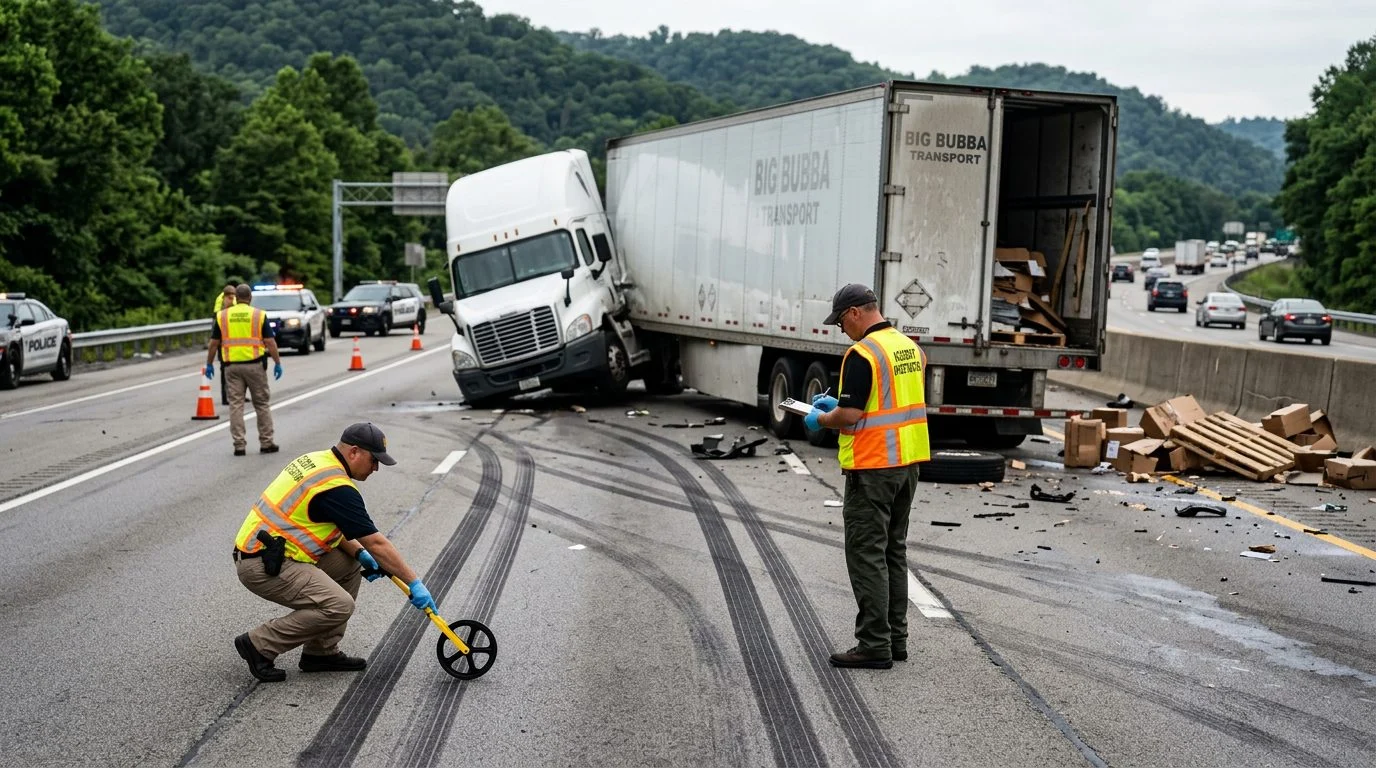
Truck Accidents | West Virginia
Jackknife Truck Accidents: Help for West Virginia Crash Victims
When a tractor-trailer jackknifes, the crash can cause serious injuries and long recoveries. Big Bubba helps people across West Virginia understand their options after a truck crash.
Published October 24, 2026
A jackknife truck accident happens when a tractor-trailer folds sharply in the middle, with the trailer swinging toward the cab in a V shape. If you or someone you love was hurt in a jackknife truck accident in West Virginia, you may have options under state law. This page explains how these crashes happen, what injuries they can cause, who may share responsibility, and which evidence matters most. Big Bubba Injury Law handles car and commercial truck crashes, catastrophic injuries, traumatic brain injury, spinal cord injury, and wrongful death cases.
What Is a Jackknife Truck Accident?
A jackknife is a crash where the trailer and cab fold toward each other, like a pocketknife closing. The trailer often pushes sideways after its wheels lose traction, and the rig ends up in a V.
A jackknife truck accident in West Virginia can happen on interstates such as I-64 and I-79, on two-lane state roads, and on steep mountain grades. Once the trailer swings, it can cross lanes, strike guardrails, or hit vehicles beside or behind the truck. Other drivers often have little time to react.
Jackknife crashes are a type of commercial vehicle crash. They can involve the driver, the tractor, the trailer, the cargo, and nearby motorists.
Not sure what your next step is?
Talk it through with Big Bubba — the first case review is free, confidential, and carries no obligation.
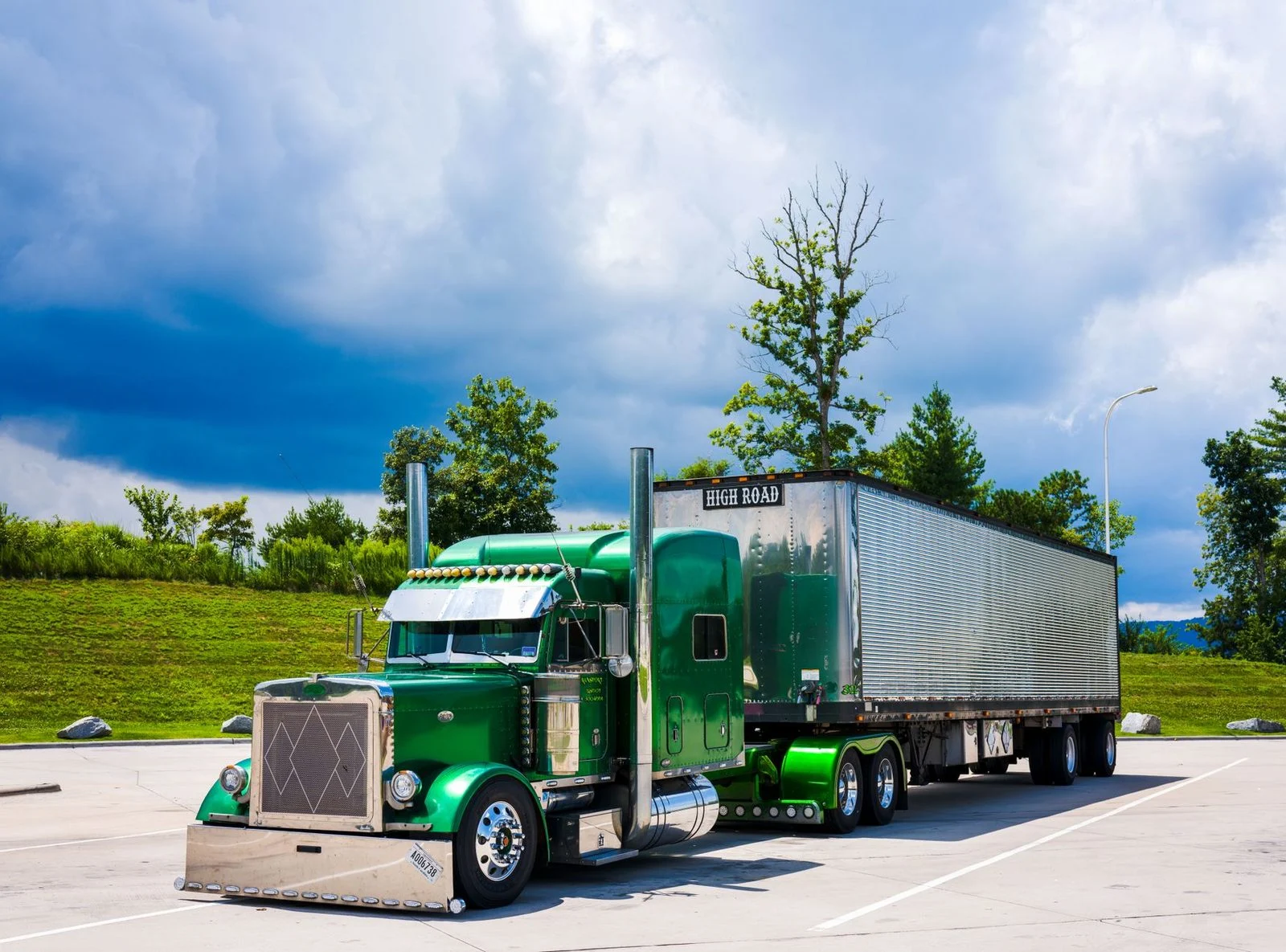
What Causes a Jackknife, and How Is It Prevented?
A jackknife starts when the trailer loses traction and pushes the cab out of line. Several common factors can cause that loss of control.
- Hard or sudden braking, especially when the trailer brakes grab harder than the drive wheels.
- Speed on curves, ramps, and downgrades.
- Wet, icy, or snowy pavement, a common concern on West Virginia mountain routes.
- Sudden steering, lane changes, or swerves to avoid another vehicle.
- Shifting or poorly secured cargo, which changes how the trailer behaves.
- Brake defects, worn tires, or mismatched equipment.
- Fatigue or illness. Federal rules say a driver may not operate a commercial vehicle when fatigue, illness, or another cause makes it unsafe (49 C.F.R. § 392.3).
Prevention comes down to habits. Drivers can slow on wet or downhill grades, leave more following distance, brake smoothly, and check equipment before each trip. Good habits lower risk, but they cannot remove it.
Injuries Commonly Seen in Jackknife Crashes
Jackknife crashes can cause serious injuries because a loaded trailer is heavy and moves in unpredictable ways.
- Traumatic brain injury, from striking the steering wheel, a window, or a door, even without losing consciousness.
- Spinal cord injury, including paralysis, from crush forces or twisting during the fold or rollover.
- Broken bones, including pelvic and rib fractures, and crush injuries.
- Internal bleeding that may not show right away.
- Burns, if fuel or electrical systems catch fire.
- Delayed symptoms, such as headaches, dizziness, neck pain, or numbness, that appear days later.
Early medical evaluation protects your health. It also creates a record of what hurt and when. If a crash causes a death, the family may have a wrongful death claim, covered in the questions below.
Who May Be Liable After a Jackknife Crash?
The truck driver is not always the only party who may share responsibility. Several parties may be involved, depending on the facts.
- The driver, if speed, braking, following distance, or steering contributed.
- The truck owner, when ownership is separate from the carrier.
- Repair shops that serviced brakes, tires, or other equipment.
- The cargo loader, when improper loading shifted weight.
- Parts makers, when a defective brake, tire, or coupling played a role.
Under W. Va. Code § 55-7-13a, recovery for personal injury or wrongful death is based on comparative fault, so each person who caused the damages, including the injured person, is assigned liability in direct proportion to their percentage of fault.
West Virginia law limits the noneconomic damages that each injured person can recover against an employer defendant in a civil action involving a commercial motor vehicle that requires a commercial driver’s license. The cap amount is set and adjusted over time under the statute, and the limit reaches only claims that arise after the date the statute provides. That cap is lifted when an operator or driver is found to have, at the time of the incident, operated a commercial motor vehicle in excess of the hours of operation established under state or federal regulations. Other listed cases also remove the cap, including alcohol, controlled substance, willful or wanton disregard, and distracted driving situations, and the cap is not available to an employer without at least $3 million in commercial motor vehicle insurance for each occurrence (W. Va. Code § 55-7-32).
Evidence That Can Show How the Crash Happened
Early evidence helps show what caused the fold. These records matter most.
- The crash report, which records the officer’s observations, the parties, and witnesses. Ask for it using the report number.
- Hours-of-service and electronic logging device data. Except for a private motor carrier of passengers (nonbusiness), motor carriers must require drivers to record duty status, and carriers operating commercial vehicles must install and require drivers to use electronic logging devices, subject to limited manual-recording exceptions (49 C.F.R. § 395.8). Driving limits appear in 49 C.F.R. § 395.3.
- Post-accident drug and alcohol testing. After certain crashes, employers must test surviving drivers as soon as practicable (49 C.F.R. § 382.303).
- Engine and control module data, which can record speed, braking, and throttle before a crash.
- Maintenance, inspection, and repair records for the brakes, tires, and trailer.
- Photos, dashcam or surveillance video, and witness contact details gathered early.
Records can be lost or overwritten over time. Early action matters. Get medical care, keep a journal of symptoms and treatment, and talk with someone before giving detailed statements to an insurer.
Time Limits and What to Expect in a Claim
Personal injury claims generally must be filed within two years (W. Va. Code § 55-2-12). Wrongful death actions must be brought within two years after the death, subject to the provisions of section eighteen, article two, chapter fifty-five (W. Va. Code § 55-7-6). W. Va. Code § 55-7-6 reads: “The provisions of this section shall not apply to actions brought for the death of any person occurring prior to July 1, 1988.”
Early settlement deals have limits too. For 20 days after an injury, no one may negotiate a settlement or obtain a release from an injured person who is hospitalized or unable to work. Under W. Va. Code § 55-7-11a, any settlement, release of liability, or statement entered into, obtained, or made in violation of that section may be disavowed by the injured person at any time within one hundred eighty days from the date of the personal injury by executing a written statement of disavowal and forwarding a copy of it to the person violating that section (W. Va. Code § 55-7-11a).
A typical path looks like this:
- Free case review. The firm listens to what happened, reviews available records, and explains possible paths.
- Investigation. The firm requests the crash report, logs, vehicle data, and maintenance records, and asks parties to preserve evidence.
- Medical documentation. Treatment records show the injuries and how they affect daily life.
- Negotiation or suit. The firm works toward a fair resolution with insurers. If that fails, a lawsuit may be filed.
How long a claim takes depends on the facts, the injuries, and how quickly records arrive.
We serve injury victims and families across all 55 West Virginia counties, including Charleston, Huntington, Morgantown, Wheeling, Martinsburg, Parkersburg, Beckley, Clarksburg, Fairmont, and Weirton.
Not sure what your next step is?
Talk it through with Big Bubba — the first case review is free, confidential, and carries no obligation.
Frequently Asked Questions About Jackknife Truck Crashes
How it applies depends on the facts of your crash.
Does the truck company’s insurance cover my injuries?
Coverage depends on the policies and the facts of the crash. The firm can explain how coverage may apply in your case.
Should I give a recorded statement to the trucking company’s insurer?
Many people wait until they have talked with someone about their rights and injuries first.
What if I can’t remember the crash because of a head injury?
Memory gaps are common after a head injury. The crash report, witness accounts, and vehicle data can help fill them in.
Can a family bring a claim after a fatal jackknife crash?
A wrongful death action is brought by the personal representative of the deceased person’s estate, and it generally must start within two years of the death, subject to other provisions of West Virginia law (W. Va. Code § 55-7-6).

Understanding Your Legal Options After a Crash
You may be recovering, waiting on test results, dealing with a damaged vehicle, or making decisions for a family member who cannot speak for themselves. Gather the crash report number and any hospital discharge papers you have. Then tell the firm what happened, in your own words, during a free case review.