
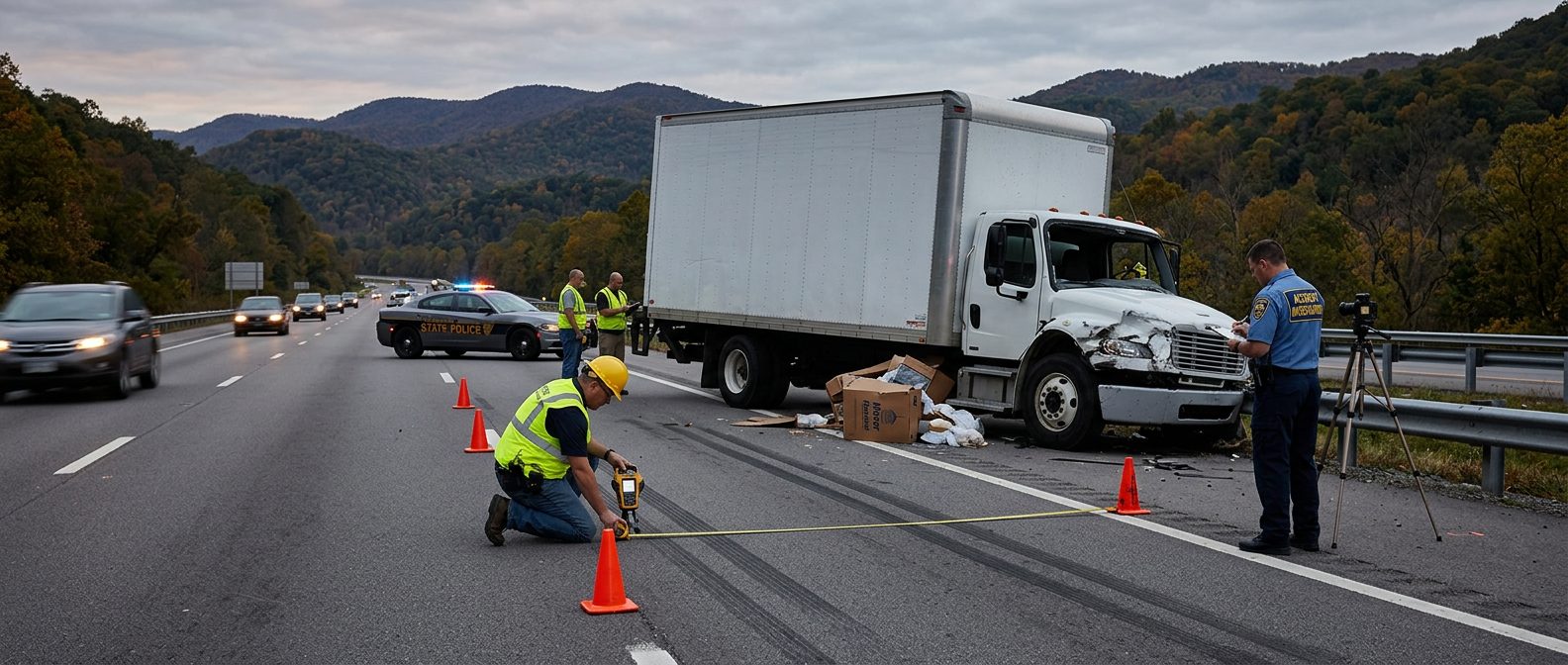
Moving Truck Accident Claims · West Virginia
Hurt in a Moving Truck Crash? Talk With the Firm About Your Options
Moving trucks and rental trucks are large and heavy, and injuries from a crash can change daily life quickly.
Published November 9, 2026
A moving truck or rental truck crash can leave you hurt, unsure who is responsible, and dealing with insurers you have never met. The short answer is that more than one party may be responsible. That can include the driver, the company that owns or rents the truck, and the employer or contractor whose work the truck was doing.
Which parties apply depends on the facts, the paperwork, and who was operating and controlling the truck. This page covers the questions that matter most and what to gather early.
What Counts as a Moving or Rental Truck Accident
A moving or rental truck accident involves a box truck, moving van, or pickup-and-trailer rental used for a move. It can also involve a commercial truck run by a company or contractor. These vehicles differ from a personal car because the trip often involves several parties. The renter, the rental company, a moving company, and the driver may each have a role.
Federal trucking rules apply to certain vehicles that transport property in interstate commerce, under 49 C.F.R. § 390.3T. Whether those rules reach your crash depends on the vehicle, how it was used, and where it was traveling.
If a rented or moving truck was part of your crash, someone other than the driver may be responsible, and you may have a claim. Reach out for a free case review. Talk it through with Big Bubba — the first case review is free, confidential, and carries no obligation.

Who May Be Responsible in a Rented or Leased Truck Crash
The driver is the first party to look at. A customer who rented a truck for a move may have been the one driving it.
The owner or lessor may also be involved. West Virginia law defines an “employer defendant” for certain commercial motor vehicles to include the owner, the operator’s employer, and any person that owns, leases, rents, or holds legal control over the truck or its operator (W. Va. Code § 55-7-32). Federal law can also require a motor carrier that uses vehicles it does not own to transport property under an arrangement with another party to be responsible for operating them safely (49 U.S.C. § 14102).
A moving company or contractor hired to haul goods may also be a party. So may another driver whose conduct contributed to the crash. If another driver was at fault, that driver’s insurer may be involved.
Steps to Take After a Moving or Rental Truck Crash
Get a medical evaluation soon, even if you feel fine at first. Some injuries, including brain and spinal injuries, may show symptoms later.
Get the police report number. Ask the driver for the company name, the rental agreement number, and any USDOT number on the truck. Photograph the scene, the damage, the truck’s markings and plate, and your injuries over time. Collect witness names and contact details. Keep a written record of symptoms, missed work, and out-of-pocket losses.
Be careful with early insurer contact. West Virginia law restricts certain settlement contacts within twenty days from the date of the personal injury while an injured person is in the hospital or unable to work, under § 55-7-11a. Do not sign a release until you understand your claim.
Evidence That Can Matter in a Truck Crash Claim
Start with the rental or lease agreement. It may name the renter, the owner, and any other authorized drivers. Federal lease rules require certain carrier leases to state who handles loading and unloading and items like fuel and tolls (49 C.F.R. § 376.12).
Trip, dispatch, or driver logs and GPS data may show speed, location, and timing, where they exist. Maintenance and inspection records can also matter.
If a drug test is not given within 32 hours, the employer must stop trying and keep a record of why (49 C.F.R. § 382.303).
Also keep the police report, any dashcam or surveillance footage, medical records, bills, and proof of lost income. Some of this evidence sits with the trucking or rental company, so requests may need to be made quickly.
How a Moving or Rental Truck Claim Generally Proceeds
Most claims move through investigation, documentation, presentation, and then settlement talks or a lawsuit. First, identify the owner, operator, employer, and insurers, and the policies that may apply. Next, gather medical, financial, and crash evidence. Then notify the responsible parties and insurers and present the claim in writing.
Many claims resolve without a lawsuit, but some require one. West Virginia generally allows two years to file a personal injury lawsuit, under § 55-2-12, and exceptions may apply. Check timing early.
Under W. Va. Code § 55-7-13a, in a tort action seeking damages for personal injury, property damage, or wrongful death, recovery is based on comparative fault, and each person’s liability is allocated in direct proportion to that person’s percentage of fault. Generally, each person’s share of fault is set as a percentage, and liability is divided in proportion (W. Va. Code § 55-7-13a). Each phase depends on the facts, so no single timeline fits every claim.
How the Firm Can Help With These Claims
The firm handles truck accident claims and commercial vehicle claims for people injured across West Virginia. It also handles catastrophic injury, traumatic brain injury, spinal cord injury, and wrongful death matters that arise from crashes.
We serve injury victims in Charleston, Huntington, Morgantown, Wheeling, Martinsburg, Parkersburg, Beckley, Clarksburg, Fairmont, Weirton, and across the state.
The free case review is a confidential first conversation with no obligation to continue. During it, the firm can review the crash facts and outline the questions that matter for your situation.
For families, a wrongful death action in West Virginia is generally brought by the personal representative of the deceased person’s estate (W. Va. Code § 55-7-6). That action generally must be started within two years after the death, subject to exceptions. W. Va. Code § 55-7-6 reads: “The provisions of this section shall not apply to actions brought for the death of any person occurring prior to July 1, 1988.”
Not sure what your next step is?
Talk it through with Big Bubba — the first case review is free, confidential, and carries no obligation.
Frequently Asked Questions About Moving and Rental Truck Crashes
Can I bring a claim if I was a passenger in a rented truck?
Passengers may have claims against responsible drivers or other parties, depending on the facts.
Can the person who rented the truck be responsible?
A renter’s responsibility depends on how the truck was operated and the facts of the crash.
Does the rental company’s insurance apply?
Rental agreements and insurance coverage vary, so the actual documents need to be reviewed.
What if the driver was a worker or contractor for a moving company?
Employer and contractor relationships can affect who may be liable, so gather those details early.
Can symptoms that appear days later still matter?
Some symptoms appear days after a crash, so prompt medical evaluation is recommended.

Moving and Rental Truck Crashes
If a rented or moving truck was part of your crash, you may be dealing with medical care, time away from work, and unclear questions about who owned or drove the truck. Those questions are easier to sort out with the facts in front of you.