
West Virginia Truck Accident Claims
More Than One Party May Be Involved in Your Truck Accident
When a commercial truck crash injures you or a loved one, the claim may reach beyond the driver. The firm helps people across West Virginia understand who may be responsible.
Published November 5, 2026
The Short Answer: Yes, More Than One Party May Be Responsible
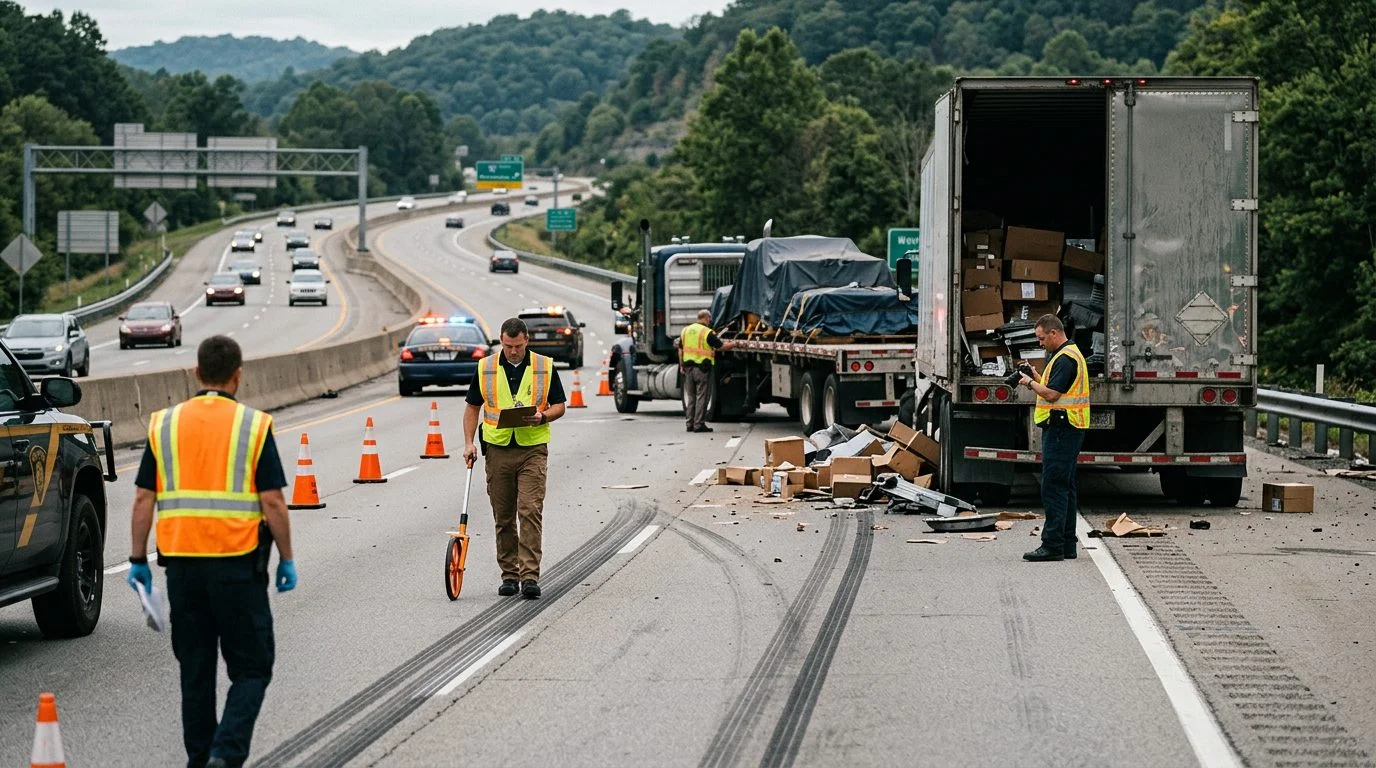
In a multiple defendants truck accident in West Virginia, more than one party may be responsible. Which parties are named depends on the facts of the crash. The driver is only one part of the picture.
A trucking company, a vehicle owner, a repair shop, or another party may have played a role. Think of a truck crash as a chain of decisions. Who hired the driver, who kept the truck in working order, and who loaded the cargo can all matter.
For the broader overview of these claims, see truck accident claims in West Virginia.
If a truck crash left you hurt or took someone you love, you can reach out for a free case review to talk through which parties may be relevant. Talk it through with Big Bubba — the first case review is free, confidential, and carries no obligation.
Parties That May Be Named Besides the Driver
Other parties may be considered in a commercial vehicle crash. The list below describes who may be looked at.
- The motor carrier that operates the truck
- The truck’s owner or lessor
- Maintenance, inspection, and repair companies
- Cargo loaders and shippers
- Freight brokers who arrange the haul
- Other drivers involved in the crash
- Parts manufacturers, if a defective part failed
- Government entities, in limited cases
Each party’s role is looked at on its own. Some parties on this list may not be involved in a given crash at all. The facts of each crash decide which parties matter.
When the Trucking Company May Be Liable for Its Own Decisions
A trucking company may face claims based on its own choices, not only the driver’s. These are often called direct negligence claims. They focus on what the company did or failed to do.
Federal rules require motor carriers to keep a federal driver file rule record for each driver they employ. That file may include the driver’s application and motor vehicle records. What those records show depends on their contents.
Employer Responsibility for a Driver’s Work
An employer may be held responsible for a driver’s negligence on the job, depending on the facts. The key question is usually whether the driver was working for the company at the time of the crash.
West Virginia’s commercial vehicle statute defines an “employer defendant” to include the truck’s owner, the driver’s employer, and any entity that holds legal control over the vehicle or its operator. See W. Va. Code § 55-7-32. That definition shows the law looks beyond the driver’s own company.
Owners, Lessors, and Maintenance or Repair Companies
The company that owns or leases the truck may be a party. This can be true even when it did not dispatch the driver. An owner or lessor may hold legal control over the truck.
Federal rules require motor carriers to systematically inspect, repair, and maintain the vehicles they control. See the federal vehicle maintenance rule. Carriers must keep maintenance and inspection records for one year, and for six months after the vehicle leaves their control.
When a mechanical problem may have contributed to a crash, a third-party repair shop may also be relevant. Its work orders and inspection notes may help show what was done and when. Whether the shop belongs in the claim depends on the facts.
Cargo Loaders, Shippers, and Freight Brokers
Cargo that is loaded or secured poorly may shift during a trip. A shift can contribute to a rollover or a loss of control. When that happens, the party that loaded or secured the cargo may be relevant.
Bills of lading list what was shipped and who arranged it. They may help show each party’s role. Freight brokers arrange hauls between shippers and carriers. A broker’s role may be considered in some cases, depending on how it chose and directed the carrier.
In Montgomery v. Caribe Transport II, the U.S. Supreme Court addressed a state-law claim that a broker negligently hired an unsafe motor carrier. How that ruling applies to other cases depends on the facts.
Not sure what your next step is?
Talk it through with Big Bubba — the first case review is free, confidential, and carries no obligation.
Other Drivers, Manufacturers, and Government Entities
In a multi-vehicle crash, another driver may share responsibility. If another driver was at fault, that driver’s share may be part of the analysis. Fault is decided on the facts and the proof.
A defective brake, tire, or other part may bring a manufacturer into the picture. Whether a part was defective usually depends on examining the part itself and the records around it.
Government entities are named less often. Claims against cities, counties, and other political subdivisions can follow separate rules. These parties are considered only where the facts support them.
How West Virginia Fault Rules Affect Multiple Defendants
West Virginia generally uses a modified comparative fault system, depending on the facts of the case. An injured person’s own share of fault does not bar recovery unless it is greater than the combined fault of all other persons responsible. If it is smaller, recovery is reduced in proportion to that share. See W. Va. Code § 55-7-13c.
Under the same statute, each defendant is generally liable only for its own percentage of fault. Joint liability has exceptions. One exception applies to driving under the influence when that conduct is a proximate cause (the direct cause) of the harm.
A release to, or settlement with, one or more joint trespassers or tort-feasors generally does not bar a claim against another joint trespasser or tort-feasor for the same cause of action, under W. Va. Code § 55-7-12.
Deadlines and Records That Help Identify Each Responsible Party
West Virginia generally allows two years to file a personal injury claim, and exceptions may apply. See W. Va. Code § 55-2-12. A wrongful death action is brought by the personal representative of the deceased person’s estate. See W. Va. Code § 55-7-6.
Records help show which party did what. Useful records may include:
- Police crash reports
- Bills of lading
- Driver logs and hours-of-service records
- Maintenance and inspection records
- Photographs and dashcam video
- Electronic data from the truck
Federal hours-of-service rules limit driving time. Under the federal hours-of-service rules, a driver may not drive after a 14-consecutive-hour period that begins when the driver comes on duty following 10 consecutive hours off duty. The driver may drive a total of 11 hours in that period. See 49 C.F.R. § 395.3.
Federal drug and alcohol testing rules may apply after some commercial vehicle crashes, depending on the facts. FMCSA guidance explains when testing may be required. Because some record-keeping periods are limited, early attention to records may be relevant.
Talking With the Firm About Your Truck Crash
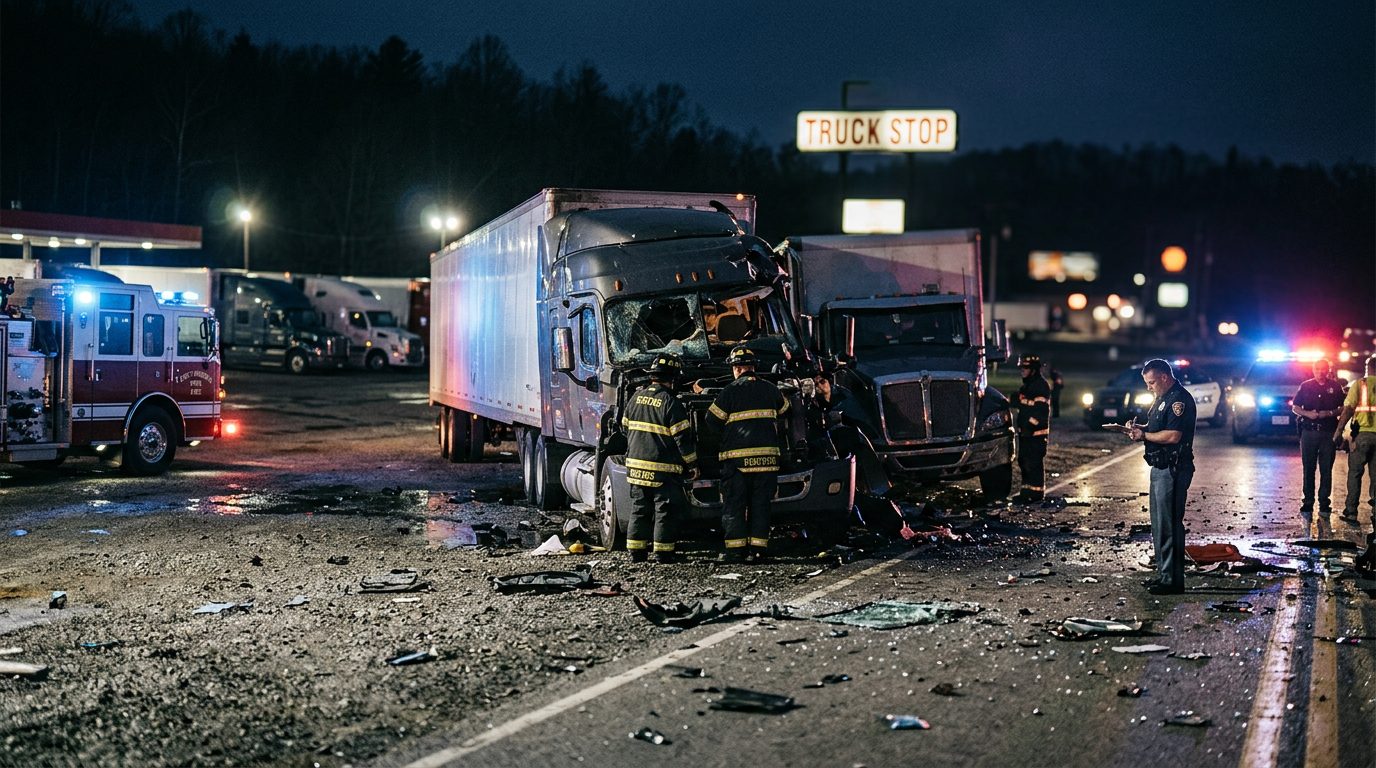
A truck crash may involve several parties, and sorting them out early can help. The questions below cover common concerns.
Can the trucking company be sued along with the driver?
It may be, depending on the facts. A trucking company can face its own negligence claims, as well as claims tied to the driver’s work.
Does each defendant pay only its own share in West Virginia?
Generally, yes. Under the comparative fault statute discussed above, each defendant’s liability is generally several and based on its percentage of fault, with exceptions (W. Va. Code § 55-7-13c).
How long does a family have to file a wrongful death claim?
West Virginia generally requires a wrongful death action within two years after the death, and exceptions may apply (W. Va. Code § 55-7-6).
If a truck or commercial vehicle crash has left you hurt or has taken someone you love, you don’t have to sort out every party alone. You can reach out to the firm for a free case review, and it can look at which companies and drivers may be relevant to what happened. Request a free case review.